Kent Hovind goes to jail…again!

These hardened criminals and repeat offenders…Kent Hovind has been found guilty, guilty, guilty of domestic violence in the third degree for throwing his girlfriend/”wife” to the ground. He’s been sentenced to a year in jail, but will only have to serve 30 days, and pay a fine.

This is going to punch a hole in his daily YouTube posting schedule. I checked the one from yesterday — it contains a long rant about the US prison system in which he claims the system of Biblical punishments was better, that getting a fine and 40 lashes was more humane than locking someone up. I kind of agree with him — US prisons are all kinds of fucked up, but not with whipping people — but I didn’t hear him say anything about the injustice of beating a spouse up.

It’ll be interesting to see what he complains about when he gets out.

Maybe it was the infusion of Pinkerism that helped atheism fizzle out

I’m going to call the relentless, performative celebration of something called “rationality” Pinkerism now. I’ve noticed it before: every YouTube channel that considers it a sufficient declaration of their worthiness to simply label themselves “The <insert adjective for “smart” here> Atheist”, all the lists of logical fallacies, the books about how everyone else is so stupid, the insistence that we get better by just being more logical (even when they’re contradicting themselves), the Mr Spock envy. It got old. It just seemed so joyless.

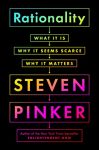
Well, you can trust good ol’ Steven Pinker to come along and dial it all up to 11. His new book is titled Rationality, and every smug wanker in the fading atheist movement will snatch it off the shelves. I won’t be one of them, so I’m going to have to rely on getting my impressions second hand, unfortunately. But oh boy, this review is stinging.

For someone who so frequently and serenely proclaims that he’s right, Steven Pinker can get curiously defensive. In “Rationality: What It Is, Why It Seems Scarce, Why It Matters,” Pinker writes as if he’s part of an embattled minority, valiantly making the case that “the ability to use knowledge to attain goals” is so underappreciated these days that the reading public needs a new book (by Pinker) “to lay out rational arguments for rationality itself.”

He’s very disappointed that we aren’t all down on our knees praising Saint Steven.

Still, Pinker is troubled by what he sees as rationality’s image problem. “Rationality is uncool,” he laments. It isn’t seen as “dope, phat, chill, fly, sick or da bomb.” As evidence for its diminished status, he quotes celebrations of nonsense by the Talking Heads and Zorba the Greek. (Pinker is also vexed by the line “Let’s go crazy,” which he says was “adjured” by “the Artist Formerly Known as Prince.”) It’s precisely this cultural derision of reason, he says, that prevents us from appreciating rationality’s spectacular accomplishments. “Human progress is an empirical fact,” he writes. “‘Progress’ is shorthand for a set of pushbacks and victories wrung out of an unforgiving universe, and is a phenomenon that needs to be explained. The explanation is rationality.“

You know the Talking Heads is a rather cerebral band, right? That dadaism was an intellectual movement? And that Prince was a joyful celebrant of art? I guess we’re not supposed to be happy. We’re supposed to be like Martians, with “intellects vast and cool and unsympathetic”.

No one would have believed in the last years of the nineteenth century that this world was being watched keenly and closely by intelligences greater than man’s and yet as mortal as his own; that as men busied themselves about their various concerns they were scrutinised and studied, perhaps almost as narrowly as a man with a microscope might scrutinise the transient creatures that swarm and multiply in a drop of water. With infinite complacency men went to and fro over this globe about their little affairs, serene in their assurance of their empire over matter. It is possible that the infusoria under the microscope do the same. No one gave a thought to the older worlds of space as sources of human danger, or thought of them only to dismiss the idea of life upon them as impossible or improbable. It is curious to recall some of the mental habits of those departed days. At most terrestrial men fancied there might be other men upon Mars, perhaps inferior to themselves and ready to welcome a missionary enterprise. Yet across the gulf of space, minds that are to our minds as ours are to those of the beasts that perish, intellects vast and cool and unsympathetic, regarded this earth with envious eyes, and slowly and surely drew their plans against us. And early in the twentieth century came the great disillusionment.

We all know how the Martians ended up.

Some of Pinker’s observations on racial issues are similarly blinkered. Are mortgage lenders who turn down minority applicants really being racist, he muses, or are those lenders simply calculating default rates “from different neighborhoods that just happen to correlate with race?” (A long history of racist redlining may “happen” to have something to do with this too, but Pinker doesn’t get into it.) He goes on to ask why “race, sex, ethnicity, religion and sexual orientation have become war zones in intellectual life, even as overt bigotry of all kinds has dwindled.”

Anyone paying attention to what’s been happening in the last few years might wonder where he got his information. In support of his vague claim, Pinker directs the reader to a footnote citing two sources: a study, whose data ended in 2016, that measured a person’s “explicit attitudes” based on self-reporting (i.e. the respondents had to admit their bigotry); and a few (unhelpful) pages from “Enlightenment Now.”

It looks like he’s well on the path to self-referential insertion of his head up his own rectum. Perhaps the walls of his colon prevent him from noticing the increases in hate crimes in the US.

Poverty is also negligible in Pinker’s brain, and he’s always ready to indulge in the small pleasure of wagging a finger at fat people enjoying lasagna. He’s very petty that way.

The trouble arrives when he tries to gussy up his psychologist’s hat with his more elaborate public intellectual’s attire. The person who “succumbs” to the “small pleasure” of a lasagna dinner instead of holding out for the “large pleasure of a slim body” is apparently engaged in a similar kind of myopic thinking as the “half of Americans nearing retirement age who have saved nothing for retirement.” His breezy example elides the fact that — according to the same data — the median income for those non-saving households is $26,000, which isn’t enough money to pay for living expenses, let alone save for retirement.

So what’s the source of these “problems”? If you’ve read any right-wing media in the last few decades, you know the answer: education. I’m a little surprised that a Harvard professor would so readily find common cause with Prager U.

He repeatedly says that by promoting rationality he’s promoting “epistemic humility,” but you’d be hard-pressed to find much humility here, as he pronounces that among the biggest barriers to rationality’s triumph is “the universities’ left-wing suffocating monoculture.”

Oh, I know. I’ve noticed that biology departments across the country suffer from a suffocating monoculture of evolutionists, and math departments still persist in suffocating students with calculus, and chemists, those old fuddy-duddies, still strangle students with stoichiometry and bonds and thermodynamics. I dare not look across campus to the humanities and social sciences, where everyone is in zombie-like lockstep, there is never any dissent, and no one has any ideas, other than ones that might make comfortable Harvard professors uncomfortable, and which may therefore be ignored and belittled.

Has he ever considered that maybe left-wing philosophies thrive on college campuses because a) we like diverse ideas, and b) we like to challenge those ideas, two principles that are anathema to conservatives? And, apparently, anathema to Pinker, who has The Answer to everything. Rationality. Don’t you dare go crazy or question the status quo. Same as it ever was. Same as it ever was. Same as it ever was. That’s “epistemic humility”.

But don’t worry. Pinker is a smart man who will make a good sum of money out of his schtick. And that’s what matters, although I have to recommend that he put on Remain in Light or Purple Rain and listen for a while. He’d be a better person for it.

What took them so long?

Finally, a few quacks are getting banned by YouTube.

YouTube is taking down several video channels associated with high-profile anti-vaccine activists including Joseph Mercola and Robert F. Kennedy Jr., who experts say are partially responsible for helping seed the skepticism that’s contributed to slowing vaccination rates across the country.

As part of a new set of policies aimed at cutting down on anti-vaccine content on the Google-owned site, YouTube will ban any videos that claim that commonly used vaccines approved by health authorities are ineffective or dangerous. The company previously blocked videos that made those claims about coronavirus vaccines, but not ones for other vaccines like those for measles or chickenpox.

That’s nice. But Mercola, for instance, has been grifting for over a decade, peddling quack nostrums over the internet to the point where he has a net worth of over $100 million. Mercola still has a Facebook page featuring a prominent ad for his latest book, which claims you can prevent and cure COVID-19 with vitamin supplements. He sells little bottles of water with labels that claim they are homeopathic medicines. And now, belatedly, YouTube does the obvious?

I am tapping the tips of my little fingers together in the tiniest clap I can do.

I need those bugs to feed my spiders!

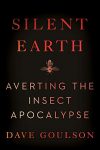
GrrlScientist reviews a book, Silent Earth: Averting the Insect Apocalypse by David Goulson, and it looks like this is another one I have to add to my pile.

In this book, we learn that insects have already declined recently by as much as 75% — which is probably not news to those of us whose automobile windscreens and grills lack the typical ‘bug spatter’ of yesteryear, particularly after long-distance drives at night. This dearth of insects translates into far fewer insectivorous birds for birders and nature photographers to chase. Yet weirdly, most people — even many birders, who should be aware of and alarmed by this steep decline in birdlife — remain blithely oblivious to these dramatic changes. This is thanks to two errors in human perception: first, shifting baselines, where we mistakenly think that the current state of the world is normal. Second, this is also attributable to a peculiar form of gaslighting where we downplay the extent of the changes that we experience around us. (Self-gaslighting?)

Up until a few years ago, I would have classified myself as a lab rat, a denizen of an environment defined by air conditioning and fluorescent lighting, but then I decided I needed a radical change and started going outdoors (!) and walking around in empty fields and woods (!!) looking at spiders. My first project (which remains unfinished because of the damned pandemic) was justified as an attempt to use measurements of spider populations as a proxy for the larger and more complex populations of insects, so this book is right there in my interests.

Despite being new to this field, and despite only paying attention in the last 5 years, even I am noticing the changes. It used to be that if I were walking home at night, there’d be a cloud of flying insects around every streetlight, and you’d hear the happy clicking of bats flitting around their hunting ground. Now we’ve only got silent dead lights. There is a crabapple tree near the walkway home, and every Fall I’d be annoyed because the rotting fruit would attract swarms of yellowjackets…but this year, nothing. In fact, I used to dread that path home because it was surrounded by trees that blocked the wind, and vast clouds of midges and mosquitos would accumulate there. Not this year, though. I’m still seeing house spiders, though, I would guess that if you’re adapted to human environments, you’re still doing OK, but I’m finding fewer, and smaller, orbweavers outside.

To GrrlScientist’s list of excuses, I’d add that we expect some natural variation. This has been a summer of drought, so maybe it’s just a temporary situation — if we get good rains next year, maybe they’ll bounce back. Maybe it’s also a targeted attack. A few years ago I learned that the university employs a pesticide company, which was specifically called in when those harmless, bumbling grass spiders would dart into university offices, looking for mates (to no avail — the ladies were outside, fellas), and so the shrubbery would get sprayed, to my horror (sorry, fellas, the ladies are all dead). While prowling around buildings looking for spiders, I noticed piles of dead yellowjackets, which tells me what happened to the insects that usually feasted on rotting crabapples. They’ve been murdered.

Will people stop spraying insecticides all over farm country? I doubt it.

Fortunately, the book provides some solutions.

Although our current situation is serious, it can still be reversed, Professor Goulson maintains, because insects reproduce extremely quickly. All we need to do is support them as their populations recover. Some of the actions that we all can take include: reduce the space occupied by lawn and replace it with flowering plants, mow the remaining grass less often and allow a corner of your garden to “grow wild” and “get messy”; incorporate a wide range of native plants that flower throughout the season into your garden, along road verges and in roundabouts to attract beneficial insects; avoid pesticide use whenever possible by giving predatory insects a chance to take care of a problem first; create your own “insect hotels” and clean them periodically to reduce the accumulation of mites and fungi that can harm bees, and reconsider beekeeping as a hobby because of the many threats that domesticated European honeybees, Apis mellifera, pose to native bees. Professor Goulson also proposes a number of actions that farmers, city dwellers, and politicians can take or enact to support the recovery of local insect populations.

Oh, yeah. We’ve got a lawn, and I hate it. It’s not exactly thriving, anyway — the drought has killed big patches of it. My wife has created a couple of native plant patches in the back, and I wouldn’t mind expanding them. We have a sort-of vegetable garden that has been neglected and is overgrown with weeds, and maybe we can pretend that’s intentional. We don’t use pesticides. Of course we encourage predatory spiders to take care of any insect problems, and even transplanted a few spiders from other locales to our home.

Previous owners of our place were much more meticulous in maintaining the traditional American monoculture of boring grass in our lawn. We even have vestiges of an automatic underground watering system, a network of pipes and sprinklers connected to a fancy-ass timer system in our garage. That died a few years after we moved in, when a break in the water mains meant the city brought in a backhoe and dug a trench across the lawn. It might be a good project to finish the job, go in and dig out the PVC pipes in part of the lawn, tear out the grass, and plant prairie grasses and forbs and encourage more wild insects to move in, before they all die off.

I’d call it military cowardice and award them a dishonorable discharge

This anti-vax insanity makes no sense. There are soldiers who are balking at getting a COVID-19 vaccine.

In a recent viral video, a senior airman in the Air Force asks viewers to help find jobs for service members leaving the military because they refuse to take the mandatory COVID-19 vaccine.

The unidentified senior airman, who posted her video on TikTok on Sept. 16, speculated that “a lot of the military is about to take an administrative discharge” for refusing the vaccine, which means they’ll be out of a job and presumably in need of work.

“Some people are doing it for medical reasons, some people are doing it for personal reasons, beliefs, whatever it may be, it’s about to suck,” the airman said. “What I’m looking for right now is if you’re an employer or you know employers that will undoubtedly employ us, a lot of us are looking at discharge and we weren’t expecting this so we have no idea what to plan for and I’m sure a lot of people are trying to plan for their future right now.”

You voluntarily enlisted in a job in which you can be ordered to charge into situations where people are shooting at you, and you will obey. You’re in a job where you can be ordered to kill other people, and you will do it. When you show up for training, they will give you a battery of vaccinations, and you accept it. You may get assigned to serve in tropical locations, and you will get vaccinated against diseases like yellow fever and Japanese encephalitis. You may get vaccinated against anthrax; I’ve never had the anthrax vaccine, how many of us civilians have?

And yet here’s an exceptionally useful vaccine that millions of civilians have taken with negligible deleterious side effects, that prevents a disease that is sweeping through the population, that protects against death and prolonged intensive care, and now you want to chicken out, and further, beg civilian employers for a job?

Or worse, this sanctimonious bullshit.

Earlier this month, Army Lt. Col. Paul Hague claimed that he would resign his commission just short of retirement, saying that he believed that mandatory COVID-19 vaccinations were an “unlawful, unethical, immoral, and tyrannical order.”

You could be ordered to drop a bomb on an Afghan village, and that’s OK, but taking personal responsibility and getting a nearly painless shot that protects the lives of your fellow soldiers and citizens, and suddenly that’s “unlawful, unethical, immoral, and tyrannical”? Jesus. That’s a new level of hypocrisy.

I have no sympathy with George Patton slapping a soldier with PTSD (a soldier who had faced far more serious threats to his life than a needle in the arm, and no, more violence isn’t a treatment for trauma), but by god we need another Patton in this case.

What sorting algorithm is that?

Interesting. An animated graph COVID-19 cases in the top 25 states, color-coded by party affiliation. Watch the chart gradually bleed red.

Diseases should not afflict people on the basis of who they voted for, but there they are.

This is how you advertise your Christian attraction?

With a Donald Trump impersonator?

That’s a disincentive. Also, they’re promoting a crappy movie by those Christian hacks, the Kendrick brothers. It’s not even original — it’s a re-edited release of a ten year old movie that you’re better off listening to the Godawful Movies review than wasting time on this one.

Anti-vaxxers have come to this

They aren’t just refusing to get vaccinated themselves, they aim to waste vaccines so others can’t get them.

A disturbing post has been circulating on Facebook which encourages anti-vaxxers to book Covid-19 vaccination appointments and not show up in a bid to ‘waste’ supply.

The Facebook user has screenshot a Geelong Advertiser article about hundreds of vaccine no-shows in Victoria and written “How to play their game” over the image.

Comments on the post, which is captioned “do it!”, include “great idea”, “just made a booking” and “maybe we should flood their phones with fake bookings and fake names and phone numbers.”

First of all, fuck Facebook.

But secondly, what slime-filled dark cave are these people crawling out of? How have we ended up with a significant fraction of the people denying the efficacy of modern medicine (not even that modern, actually), and why can’t they just die already?

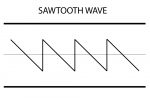
The creationist sawtooth function

If you combine creationist dishonesty and the limited, niche appeal of their subject, you get a predictable result. They hype some weird novelty, they get a surge of attention, and then it fades away until they have to come up with something new…but they lie constantly about how no, they are immensely popular and they will conquer all of science and evolution is on its last legs now!

Answers in Genesis is demonstrating the phenomenon now. Ken Ham keeps declaring that their premiere exhibit, the Ark Encounter, is thriving and has to deal with packed crowds…but are they, really? We’ve got the attendance figures.

And here’s what we see when it comes to Ark attendance (and note that we don’t have the numbers for 2016, which is the year the Ark opened):

Summer 2017 248,787 (note: these numbers are for July/August)
Summer 2018 347,929
Summer 2019 388,704
Summer 2020 144,628 (note: COVID impact)
Summer 2021 328,465
Aug 2017 106,161
Aug 2018 98,106
Aug 2019 104,350
Aug 2020 46,452 (note: COVID impact)
Aug 2021 83,826
One does not have to look very hard to see that, whatever the AiG fog machine might be spewing, Ark Encounter is not experiencing record crowds. In fact, this past August saw the lowest attendance in the Ark’s history (save for the COVID year).

They aren’t doing badly — a few hundred thousand every season, especially when the exhibit (and parking!) is grossly overpriced, is bringing them lots of money. I think the handwriting is on the wall, though. Early on, they had novelty and so much free advertising, with every newspaper printing articles about “Can you believe what kind of stupid shit they do in Kentucky?”, but that’s not happening any more, and further, only the fanatical Christian core is going to make repeat visits. The Ark Park is boring! It’s a big wooden box with static displays and hectoring pedantic signs full of words. They aren’t growing at all, figures are mostly static with, if anything, a slow decline since 2019.

But you can trust creationists to be cunning. They’re raking in the dough, because they charge a lot and operating costs are relatively low (unlike real museums, which charge fairly little and have big expenses in, for instance, paying for qualified expert staff and maintaining collections), and they can extrapolate. They did the same thing with the Creation “Museum”. When attention starts to fade, what do you do? Open a big new attraction, make a splash, perk up the reporters who’ll write about the yokels, and get another spike of attendees. And lie.

Ken Ham, founder and CEO of Answers in Genesis, owner and operator of the Ark Encounter and its sister attraction, the Creation Museum, noted: “Compared to other national attractions right now, we are blessed. We don’t know of any that are seeing numbers equivalent to or better than their 2019 attendance. Ark attendance will only increase as more international visitors resume traveling and as bus tours return to levels we’ve experienced before, such as up to 50 tour buses in a day. I believe this summer will be our best season ever, particularly with our 40 days and nights of gospel music, August 2–September 10.”

Nah, they aren’t having record attendance. They’re flat-lined, at best.

But don’t you worry, AiG is already talking about building a Tower of Babel to help people understand genetics research and, most importantly, generate more attention and more suckers. They aren’t going to go the way of failed Christian theme parks, at least not yet.

After the Tower of Babel peaks, they can always go on to build their Golden Calf exhibit. There is no end of Bible myths they can monetize.