Distractions

Can’t you see I’m working here? The birds have taken over. My wife has set up multiple bird feeders, and she also sows seeds on the snow, so all day long it’s flocks of birds flitting past my office window. I’m trying to get these exams graded, but I get these constant visual distractions.

Also, bird butts.

You might ask, “why not close your window shades?”. I answer that it doesn’t help, because these birds are flighty and numerous. They swoop in, peck as a mob at the seeds, and then after 10 or 15 seconds, they abruptly rise with a whooshing whirr that is quite loud and audible in my office, indoors.

Also, there’s a hawk that occasionally darts in for a snack and sends everyone in frantic flight, and I’d like to catch it in the act.

Gay cartoon ducks killed David Menton

Ken Ham is very concerned about sin, and cartoon ducks, and the curse of homosexuality — more than he is concerned about the pandemic, apparently. Pink News wrote about his fury over gay ducks appearing in the cartoon Duck Tales, prompting him to condemn gay reporters for not being more concerned about sin than COVID-19.

In a new Facebook post, Ham said: “A gay news source wrote an article about me with this headline: ‘Thousands of people are dying from coronavirus every day, but this Christian fundamentalist is raging over two gay cartoon ducks.’”

He suggested that he would have preferred the headline to be “150,000 people die each day in the world, and Ken Ham is concerned for their spiritual state and their eternity because of the raging pandemic of sin”, but added, while knowing nothing about the journalist’s religious beliefs, that they would not understand because “God of this world has blinded the eyes of those who don’t believe”.

He then, bizarrely, went on to speculate about the journalist’s death and whether they even cared about people dying from COVID-19.

Ken Ham wrote: Yes, the worst pandemic of all – sin – is raging about us and the death toll is 100 per cent. I predict the writer of the article about me will one day die.

From a perspective of a non-Christian, why do they care if people die?… If you die and that’s it and you won’t know you ever existed, why do they care about people dying?

It’s true: Ken Ham doesn’t care much about the pandemic. From Dan Phelps: “From early in the pandemic the Ark Encounter amusement park only “suggested” the use of masks and complained bitterly about closures and Kentucky mask mandates. YouTube videos by Ark visitors indicate mask wearing is practiced by a small fraction of visitors.” So yes, he is not at all inconsistent here — he really does believe that sin is a greater worry than dying of COVID-19. He has even claimed that viruses are a good thing for humanity.

Evolution, on the other hand, says that death has always been a part of nature. This view, found nowhere in the Bible, was actually embraced in a recent article by the editor-in-chief of Christianity Today. His belief in evolution led him to declare that it is a biological reality that “bacteria and viruses are not bitter fruits of the fall, but among the first fruits of good creation itself.” But this idea makes God the author of bad things.

Even in a fallen world, God remains omnipotent and perfectly capable of sustaining and protecting His fallen creation. But when Adam sinned, the world was cursed. Suffering and death entered into His creation. The whole universe now suffers from the effects of sin.

In the biblical worldview, viruses had an originally good purpose in creation. In fact, many viruses today are being investigated for their positive benefits, including possible symbiotic relationships and the regulating of populations of bacteria in our gut. Viruses are also used for gene therapy. Such modern-day research offers us a glimpse into the original created purpose for viruses.

Cool cool cool. So what sin was David Menton guilty of, and what virtue has he acquired?

If you don’t recall, David Menton was one of Ken Ham’s pseudoscientific minions — I’ve mentioned him a few times. He’s a guy who got a Ph.D. in biology, and used it to lie for Jesus. Ken Ham has now announced that David Menton died “after a brief illness”. He doesn’t say what that illness was, but the newspaper obituary does.

Dr. David Norman Menton, 83, of Petersburg, KY passed away from Covid Saturday, December 11, 2021 in Edgewood, KY.

Hmmm. Maybe if Ham had been a bit more diligent and rational in policing all those people strolling around his “museum” and Ark Park, his great friend would still be alive today.

Behold my mountain of digital papers!

All the final exams have been turned in, so now it’s time to sit my butt down and read them all. I’ve got two classes with about 25 students each, so here’s what I am to complete this weekend. These were all due on Friday, yesterday.

Comprehensive Final Exam for Fundamentals of Genetics, Evolution, and Development. This is the monster, 7 pages of questions in different formats that cover the topics in the title of the course and also a bit of the history and philosophy of science. FunGenEvoDevo is a first year overview course that doesn’t dig too deeply, but prepares them with the general background (there is also another intro course, Evolution of Biodiversity, that hits them with evolution again and also basics of ecology and systematics). I started on this one yesterday, and am a bit more than halfway through; I plan to finish it by this afternoon.

Lab Final for Cell Biology. Another longish exam, this one emphasizes basic quantitative skills they should have learned in the lab. So lots of questions about unit conversions, calculating concentrations, interpreting data, etc. For instance, they get some measurements of reaction rates, and they then have to calculate enzymatic Km and Vmax. There are a lot of parts to this one, too, but most of the answers are short, specific, and numeric, which are relatively easy to grade.

Required Final Essay for Cell Biology. Oh boy, this will be challenging. I gave them a paper to read (“How energy flow shapes cell evolution” by Nick Lane) and asked them to summarize it and relate it all to the content of the course. On this one, I demand high writing standards and coherence in addressing the subject, so we’ll see how that goes.

Optional Final Exam for Cell Biology. Another big ol’ comprehensive exam, but this one is optional for the students: whatever score they get on the final will replace their lowest midterm score. Everyone has a bad day, so this is their opportunity to vindicate themselves. It’s a long exam, but grading it might not be too bad — only about a third of the class has opted to do it.

So that’s my weekend! This is all I’m doing for a few days. I hope to get it all done by Sunday evening and get all those grades submitted to the registrar early.

Then on Monday I have one more class to grade, Biological Communications II, in which students spend the semester writing a 10+ page review paper under my tutelage, so I already have a good idea of what they’ve done — I just have to go over what is supposed to be the final polished draft of the paper. And then I’m ALL DONE!

I guess I better buckle down and get to work now.


10:45 Saturday: FunGenEvoDevo done! Grades submitted! Students mostly did OK, but a few of them may have learned that skipping an exam or two is a good way to fail a course.


3:45 Saturday: Lab final done! Starting on the required final essay.


1pm Sunday: Required lab final done! Now to polish off the optional final.

Tell me he’s doing a bit. It’s a bit, right?

John Cleese wishes to register a complaint (see? It must be an old Monty Python routine). He is complaining to the BBC that, in a recent interview, he came off sounding “old-fashioned, uncaring and basically harmful”.

In other words, the BBC was dead-on accurate. Given the BBC’s recent record on these matters, that is surprising.

Cleese’s comedic routine is rather rusty, though, since he stomped out in a huff at being asked questions on subjects he’s been shouting about lately, like cancel culture and trans rights. He only wants to talk about those things when he’s the only voice, and the interviewer is only a stenographer.

Cleese then removed his headphones, as it was “not the interview I had agreed to,” he noted.

“Karishma had no interest in a discussion with me. She wanted only the role of prosecutor. The BBC needs to train her again.”

He had only “agreed to” a fluff piece, I guess. Oh, for the days when media interviews were challenging and interesting and put people on the spot…

WTF, UM?

I just got an email from the president of the University of Minnesota. They’re going to ‘compensate’ us for the efforts we’ve made.

Throughout the most fluid, uncertain, and challenging days of the global pandemic, you have consistently responded with an unequaled focus to serve our students and support your colleagues. Your personal and professional excellence is undeniable and your sacrifices have been significant, including for many, a reduction in pay.

As a gesture of our appreciation for your service and commitment, we have proposed, and the Board of Regents has since approved, a one-time plan that would award each of you two additional personal holidays that may be used at any time through June 30, 2022. As a result, all eligible full-time employees will receive two days added to their paid time off inventory, and all eligible part-time employees will receive time away proportional to the hours they work. Faculty and P&A staff on 9- and 10- month appointments who currently receive personal holidays will receive this additional time away.

This time is effective for any employee on active payroll as of December 6, and it also follows a similar approach to that used by a number of our peer institutions. You will be able to find this noted in MyU, within your “My Time” tab effective late Monday, Dec. 20, 2021.

I extend my sincerest appreciation for everything you’ve done for our University these past 20 months and all you will do in the weeks and months ahead. I hope you are able to use these days to relax, recharge, and reflect on the difference you have made in the lives of our students, your colleagues, and our great state and beyond.

I’m happy for the staff who will benefit, but I had to screw up my eyes to try and interpret what this means for me. I have a salaried appointment. I do not currently receive any personal holidays. I won’t get any extra days to relax. I will not get any extra pay. The university is giving me…diddley squat, and similarly, nothing to all the other regular faculty.

I think I’m insulted. I sure don’t feel grateful.

Don’t die for me!

This is an actual exchange between an Amazon delivery driver and dispatch during the recent catastrophic weather.

7:08 p.m.

Driver: Radio’s been going off.

Dispatch: OK. Just keep driving. We can’t just call people back for a warning unless Amazon tells us to do so.

Driver: Just relaying in case y’all didn’t hear it over there.

7:40 p.m.

Driver: Tornado alarms are going off over here.

Dispatch: Just keep delivering for now. We have to wait for word from Amazon. If we need to bring people back, the decision will ultimately be up to them. I will let you know if the situation changes at all. I’m talking with them now about it.

Driver: How about for my own personal safety, I’m going to head back. Having alarms going off next to me and nothing but locked building around me isn’t sheltering in place. That’s wanting to turn this van into a casket. Hour left of delivery time. And if you look at the radar, the worst of the storm is going to be right on top of me in 30 minutes.

Driver: It was actual sirens.

Dispatch: “If you decided to come back, that choice is yours. But I can tell you it won’t be viewed as for your own safety. The safest practice is to stay exactly where you are. If you decide to return with your packages, it will be viewed as you refusing your route, which will ultimately end with you not having a job come tomorrow morning. The sirens are just a warning.

Driver: I’m literally stuck in this damn van without a safe place to go with a tornado on the ground.

Dispatch: Amazon is saying shelter in place.

Dispatch: I will know when they say anything else to me.

Dispatch: [Driver name] you need to shelter in place. The wind just came through the warehouse and ripped the rts door and broke it so even if you got back here, you can’t get in the building. You need to stop and shelter in place.

Driver: Okay.

Isn’t it curious that the US Postmaster General, Louis DeJoy, is a corrupt Republican who has been slowing down mail delivery, while corporations like Amazon are cracking the whip and compelling their workers to risk their lives to get packages shipped faster and faster?

Here’s the deal: nothing I ever order from Amazon is so time-critical that I’ll get upset if it’s a day or two or three late. Next-day delivery is not a big issue to me — I’m not ordering live organs and human tissue, ever. At least not yet. I don’t want any drivers to die so I can get a rush of gratification.

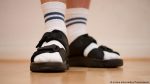
There’s a reason Minnesotans don’t wear sandals in Winter

I’m still required to wear backless shoes as I recover from Achilles tendinitis, and the only such shoes I have are a pair of sandals. I also still have to take a very short walk to the lab to take care of spiders and flies. Today, while wearing my heaviest, warmest socks and making only a short shuffle from parking lot to science building, I discovered that this combo, despite being awesomely stylish, provides no protection for one’s toes on even a mild Minnesota winter day.

Said toes are now snorgled down in a hot heating pack. You could get frostbite really quickly out there if you aren’t properly prepared!

Resign yourself to the new normal

All of my final exams came due last night at midnight — they were all fortuitously scheduled for the last day of finals week — so I got to open my mailbox this morning to find an expected mountain of papers to grade. Oh joy. There goes my weekend. Also, my flies arrived late yesterday, so I’ve got to go in to the lab today and get the stocks set up for my spring genetics course. That course, by the way, is going to be taught entirely in person, because my university has been applying some gentle pressure on the faculty to pretend the pandemic is completely over and we can all go back to normal. To be fair, I really want to get back to normal, too, but I’m also realistic enough to know that what I desire isn’t necessarily what I’ll get. The university is not adjusting any of its policies to deal with the threat of the new Omicron variant, and is in fact loosening them. As usual, we’ll wait until a crisis is upon us and only then start changing things, too little and too late, to try and catch up to a disease that’s running ahead of us right now. And my university is relatively progressive compared to the western Minnesota community, and the Minnesota governor!

My next few days are going to be bogged down in work, and then my so-called Christmas “break” I’m going to be tied up in that magic word, preparation, for the next semester, which I’m required to take seriously, unlike the administration. Wouldn’t it be nice if I could submit my grades next week and then take a nap or play with spiders or you know, just relax, until 18 January, when classes resume? Nope, isn’t going to happen. Especially since I have a looming dread that this is going to be an abortion of a semester, that we’ll go in assuming an air of nonchalant normalcy, and at some point we’re going to get screaming panicky emails from the administration telling us the quarantine spaces are all full, the local hospital is full, the pandemic is spiking, change your class management and go into lockdown. I figure I’ve got to prepare for two classes, not just one, an in-person version and a remote version. Thanks, procrastinators on high!

And then Ed Yong has to come along and splash stinky reality all over me.

OK, I can’t blame him. I know this stuff, but hey, I’ve been trying to close my eyes and pretend it isn’t as bad as it probably will be. Omicron should open everyone’s eyes to the new normal, that because we refuse to do what needs to be done, we’re going to get new variants every year, and we’re going to have to learn to live with new levels of unpredictability.

America was not prepared for COVID-19 when it arrived. It was not prepared for last winter’s surge. It was not prepared for Delta’s arrival in the summer or its current winter assault. More than 1,000 Americans are still dying of COVID every day, and more have died this year than last. Hospitalizations are rising in 42 states. The University of Nebraska Medical Center in Omaha, which entered the pandemic as arguably the best-prepared hospital in the country, recently went from 70 COVID patients to 110 in four days, leaving its staff “grasping for resolve,” the virologist John Lowe told me. And now comes Omicron.

Will the new and rapidly spreading variant overwhelm the U.S. health-care system? The question is moot because the system is already overwhelmed, in a way that is affecting all patients, COVID or otherwise. “The level of care that we’ve come to expect in our hospitals no longer exists,” Lowe said.

Because we don’t know what is going to happen, we need more discipline, more cohesive action, more cooperative behavior in our communities. That’s not the American way!

The real unknown is what an Omicron cross will do when it follows a Delta hook. Given what scientists have learned in the three weeks since Omicron’s discovery, “some of the absolute worst-case scenarios that were possible when we saw its genome are off the table, but so are some of the most hopeful scenarios,” Dylan Morris, an evolutionary biologist at UCLA, told me. In any case, America is not prepared for Omicron. The variant’s threat is far greater at the societal level than at the personal one, and policy makers have already cut themselves off from the tools needed to protect the populations they serve. Like the variants that preceded it, Omicron requires individuals to think and act for the collective good—which is to say, it poses a heightened version of the same challenge that the U.S. has failed for two straight years, in bipartisan fashion.

We’re not ready for omicron. How about pi, and rho, and sigma, and phi, and…we’re going to run out of Greek letters long before this is over. Oh, wait, “over”? It may not ever be over, at least, not until the recalcitrant and deluded are all dead. I was letting my guard down after I got my third booster, but I’m going to have to look forward to my fourth, and fifth, whatever it takes (at least we run no risk of running out of numbers), and I’m going to have to be less cocky. He says, while preparing to abandon isolation and spend 16 weeks in a classroom.

First, the bad news: In terms of catching the virus, everyone should assume that they are less protected than they were two months ago. As a crude shorthand, assume that Omicron negates one previous immunizing event—either an infection or a vaccine dose. Someone who considered themselves fully vaccinated in September would be just partially vaccinated now (and the official definition may change imminently). But someone who’s been boosted has the same ballpark level of protection against Omicron infection as a vaccinated-but-unboosted person did against Delta. The extra dose not only raises a recipient’s level of antibodies but also broadens their range, giving them better odds of recognizing the shape of even Omicron’s altered spike. In a small British study, a booster effectively doubled the level of protection that two Pfizer doses provided against Omicron infection.

Second, some worse news: Boosting isn’t a foolproof shield against Omicron. In South Africa, the variant managed to infect a cluster of seven people who were all boosted. And according to a CDC report, boosted Americans made up a third of the first known Omicron cases in the U.S. “People who thought that they wouldn’t have to worry about infection this winter if they had their booster do still have to worry about infection with Omicron,” Trevor Bedford, a virologist at Fred Hutchinson Cancer Research Center, told me. “I’ve been going to restaurants and movies, and now with Omicron, that will change.”

I guess I’ll be self-isolating at home from now on, except every day when I go in to work.

Omicron might not actually be intrinsically milder. In South Africa and the United Kingdom, it has mostly infected younger people, whose bouts of COVID-19 tend to be less severe. And in places with lots of prior immunity, it might have caused few hospitalizations or deaths simply because it has mostly infected hosts with some protection, as Natalie Dean, a biostatistician at Emory University, explained in a Twitter thread. That pattern could change once it reaches more vulnerable communities. (The widespread notion that viruses naturally evolve to become less virulent is mistaken, as the virologist Andrew Pekosz of Johns Hopkins University clarified in The New York Times.) Also, deaths and hospitalizations are not the only fates that matter. Supposedly “mild” bouts of COVID-19 have led to cases of long COVID, in which people struggle with debilitating symptoms for months (or even years), while struggling to get care or disability benefits.

And even if Omicron is milder, greater transmissibility will likely trump that reduced virulence. Omicron is spreading so quickly that a small proportion of severe cases could still flood hospitals. To avert that scenario, the variant would need to be substantially milder than Delta—especially because hospitals are already at a breaking point. Two years of trauma have pushed droves of health-care workers, including many of the most experienced and committed, to quit their job. The remaining staff is ever more exhausted and demoralized, and “exceptionally high numbers” can’t work because they got breakthrough Delta infections and had to be separated from vulnerable patients, John Lowe told me. This pattern will only worsen as Omicron spreads, if the large clusters among South African health-care workers are any indication. “In the West, we’ve painted ourselves into a corner because most countries have huge Delta waves and most of them are stretched to the limit of their health-care systems,” Emma Hodcroft, an epidemiologist at the University of Bern, in Switzerland, told me. “What happens if those waves get even bigger with Omicron?”

Ha ha, I know! Nothing! Nothing will change! The people in charge will keep pushing everyone to go back to work, the media will amusingly report without condemnation on all those assholes protesting against basic hygiene, and Republicans will be passing laws against accurate information and public health measures.

And then I die because I can’t get healthcare from a system clogged with people on ventilators who refused to get vaccinated. I’m calling it now.