Joanne! You have a friend!

I’m sure JK Rowling is thrilled to pieces to have such a prominent ally, a world leader no less, who appreciates her so much and even finds kinship with her.

Vladimir Putin is pretty upset that the United States and other Western nations have taken issue with him invading Ukraine and killing thousands of people. The murderous authoritarian took a page from the American right wing to air his grievances on Friday, comparing retaliation against the war to “cancel culture.” He even likened Russia to Harry Potter author J.K. Rowling, who has been widely criticized for expressing anti-trans sentiment — but still, lest we must remind you, continues to publish books and make millions of dollars.

“They canceled [J.K.] Rowling recently, the children’s author,” Putin said after complaining that the Red Army doesn’t get enough credit for defeating fascism in World War II. “Her books are published all over the world, just because she didn’t satisfy the demands of gender rights.”

She’s canceled, just like Putin! Still rolling in the dough, still on the lips of every intolerant authoritarian, but “canceled”, whatever that means.

Putin went on to compare Western nations “canceling” Russian “writers and books” to Nazis burning books 90 years ago. He did not mention reports that Russians are literally burning Ukrainian books, or the nation’s state-run media and longstanding suppression of free speech. He went on to claim there is “no place for ethnic intolerance” in Russia, where “cultural diversity is the pride of our society.” Putin did not mention that the Russian government has been trying to snuff out LGBTQ rights for years, most recently in a lawsuit arguing that an LGBTQ rights group is engaging in activity that goes against “traditional values.”

Man, if Putin said he admired me, I’d be scrambling to disavow it (and rushing to take a shower) and would be seriously reconsidering my life. I wonder what kind of rambling screed Rowling is going to write about this? I halfway expect that she will graciously thank him and express her appreciation. I hope she’s not that far gone.

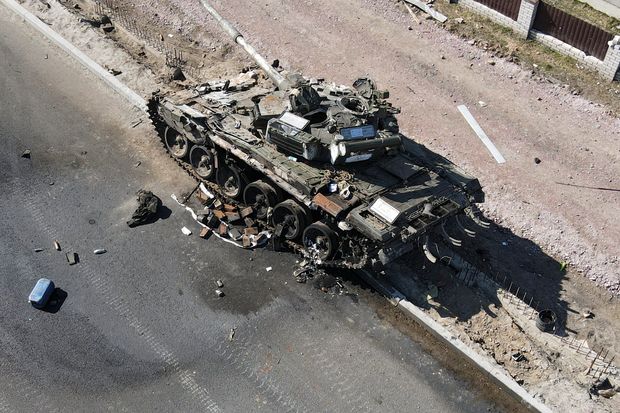
“A city the size of Minneapolis”

Did they have to compare the devastation with a city so close to home?

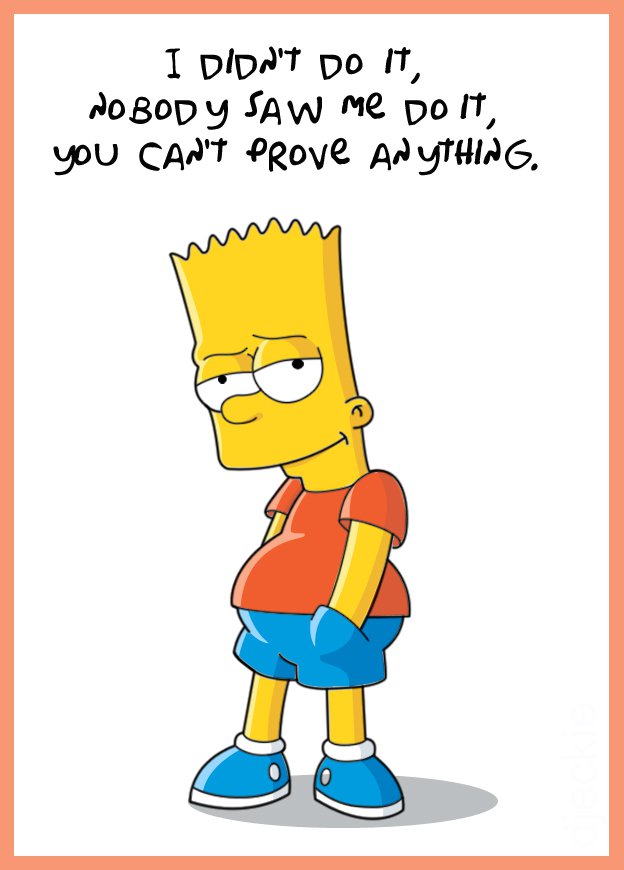
Don’t worry, though: the Russians say they didn’t do it. The Ukrainians blew up their own city.

If Minneapolis were flattened like that, I guarantee you we could come up with a better excuse. “St Paul must have done it.”

That’s an interesting way to lose tenure

Michael Palmer was an associate professor of chemistry at the University of Waterloo who was promoting some seriously cranky conspiracy theories. Here he is explaining that the pandemic was fake, that the virus was artificial and was supposed to be more lethal, that the tests were all fake, the vaccines are toxic, and that the entire scientific/medical literature has been corrupted. He’s a loon.

But, you know, professors are allowed to spout nonsense — it’s all part of the principle of academic freedom. Sure what he’s saying is complete bullshit, but you can’t get fired over that.

On the other hand, announcing that you will not follow any of the safety regulations set by the university is substantive grounds for concern.

This letter is to inform you that I categorically refuse to comply with any of the COVID vaccine-related mandates imposed on its employees by the University of Waterloo:

  1. I will not declare my COVID vaccination status, although you may be able to guess (see also point 3 below).
  2. I will not attend any of the virtual COVID re-education camps organized by UW’s or the province’s quack doctors and public health shamans in-chief. As an MD with board certification in medical microbiology, I consider myself sufficiently informed on the subject.
  3. I will not let myself be injected with any of the ineffective and poisonous concoctions that are misrepresented to the public as COVID vaccines.
  4. I will not ask for any “accommodation” or “exemption,” because doing so would only legitimize the lawless measures imposed by UW officials.
  5. I will not play for time by asking for medical leave due to distress or anxiety. I thankfully am in good health and retain my usual capacity for work.

I fully expect that my decision will result in sanctions against me, as spelled out in the weekly reminder so thoughtfully sent out by “UW Communications:”

Expectations met: he has been fired. Good riddance!

Also, an interesting addition from Jeffrey Shallit:

Palmer wrote a whole book on it, which you can read online. I don’t understand why it would have been faked, since we clearly had the technology, horrible as it is, and the US had clearly shown no hesitation in creating massive civilian casualties. I skipped to the end of his book to find his rationale…and it’s all a gigantic failed conspiracy to create one world government, just like the 9/11 attacks, which, by the way, were actually perpetrated by the CIA and Mossad. Did you know Oppenheimer came from a Jewish family, but he seems to have been preoccupied with oriental religious ideas? Also, Japan colluded in the effort to fake the atomic bomb.

Firing Palmer was clearly a win:win for the University of Waterloo. Again, you can’t fire a tenured professor for writing a schlocky book about an imaginary conspiracy theory, but when you proudly announce that will flout all health precautions, it’s goodbye Michael. He’s not going to get another job as a chemist anywhere, but at least he has now achieved martyrdom and will be hopping on the grifter’s gravy train.

An ugly way to lose a war

Huh. I’ve had my head down for a day — I’m getting back into the swing of classes and had to get a lot of new material together — and I check out the news today, and whoa:

NATO says that up to 40,000 Russian troops have been killed, wounded, taken prisoner or are missing in Ukraine, said a senior military official from the alliance.

The North Atlantic Treaty Organization calculates the figure based on information provided by Ukrainian authorities and information obtained from Russia–both officially and unintentionally, the official said.

NATO estimates that between 7,000 and 15,000 Russian soldiers have been killed since the invasion began on Feb. 24. Using statistical averages from past conflicts that for every casualty roughly three soldiers are wounded, NATO analysts reach their total figure.

Russia began its invasion with roughly 190,000 troops. It has since brought in additional troops from Chechnya, Syria and other locations.

That’s a lot of casualties. If that was an American army rather than a Russian one, we’d be backpedaling so fast, and the media would be blaming the president for their incompetence, and there would be massive protests in the streets. Russia, though, has a reputation for brute force and pouring men into a meatgrinder to accomplish their ends, so it’s probably too early to declare victory.

At best, they can hope for a Pyrrhic victory here. More likely they’re going to have to find an excuse to get out.

Who writes these things?

Here’s an article to make you wonder: Future evolution: from looks to brains and personality, how will humans change in the next 10,000 years?. In my case, what I wondered is who would write a long essay on the topic, because if I were to do it, it would be one line, either “I don’t know” or “Incrementally, probably imperceptibly.” But no, in this case it’s written by a “Senior Lecturer in Paleontology and Evolutionary Biology” — whoa, he’s qualified — but the answer is drivel.

Ten thousand years is nothing. Ten thousand years ago we looked roughly like we do now, and we have to go back a hundred thousand or more years before we might see some differences visible to the naked eye, and even those we wouldn’t be able to distinguish from environmental differences. Why would you expect major changes in the next ten thousand? Are you going to predict colossal environmental changes, which would make this a rather dire story? Again, no. It doesn’t talk about serious changes in climate, or catastrophic collapses of social structures…it’s all about mysterious trends that evolution predicts (it doesn’t).

So we get platitudes.

It’s hard to predict the future. The world will probably change in ways we can’t imagine. But we can make educated guesses. Paradoxically, the best way to predict the future is probably looking back at the past, and assuming past trends will continue going forward. This suggests some surprising things about our future.

If we’re basing everything on “trends”, how could that suggest anything surprising? Isn’t it going to be just more of everything going in the same direction?

We will likely live longer and become taller, as well as more lightly built. We’ll probably be less aggressive and more agreeable, but have smaller brains. A bit like a golden retriever, we’ll be friendly and jolly, but maybe not that interesting. At least, that’s one possible future. But to understand why I think that’s likely, we need to look at biology.

I’m at a loss. We’re going to be like golden retrievers? Why would you think we’re becoming less aggressive and more agreeable? I think he’s been reading Pinker.

I agree, though, let’s look at biology. Unfortunately, he doesn’t.

Some scientists have argued that civilisation’s rise ended natural selection. It’s true that selective pressures that dominated in the past – predators, famine, plague, warfare – have mostly disappeared.

Starvation and famine were largely ended by high-yield crops, fertilisers and family planning. Violence and war are less common than ever, despite modern militaries with nuclear weapons, or maybe because of them. The lions, wolves and sabertoothed cats that hunted us in the dark are endangered or extinct. Plagues that killed millions – smallpox, Black Death, cholera – were tamed by vaccines, antibiotics, clean water.

Would you believe that he wrote this in March of 2022? Pollyanna lives!

He goes on and on. We’re going to live longer. We’ll get taller. We’ll become more beautiful, thanks to sexual selection. The “trend” says that our brains will get smaller. We’ll become more conformist. But maybe we’ll speciate!

In the past, religion and lifestyle have sometimes produced genetically distinct groups, as seen in for example Jewish and Gypsy populations. Today, politics also divides us – could it divide us genetically? Liberals now move to be near other liberals, and conservatives to be near conservatives; many on the left won’t date Trump supporters and vice versa.

Could this create two species, with instinctively different views? Probably not. Still, to the extent culture divides us, it could drive evolution in different ways, in different people. If cultures become more diverse, this could maintain and increase human genetic diversity.

Aaargh. Is the current American political divide going to be lasting and worldwide? Does he think Trump is a trigger for a speciation event? I give up. This article is just too stupid.

If someone were to ask me to write such an article, my first response would be “go away.” If pressed, I would say that what matters are entirely contingent evolutionary responses to material conditions which we cannot predict and therefore can’t use to estimate changes to our genes. And if an editor suggested just extrapolating from past changes in the last ten thousand years, I would point out that they are assuming that the patterns are a product of inherent biological processes and assuming that environmental forces don’t exist, and neither assumption is likely to be true.

Like I say, my version of this article would be very, very short. I don’t understand the reasoning behind any scientist’s decision to accept such a commission.

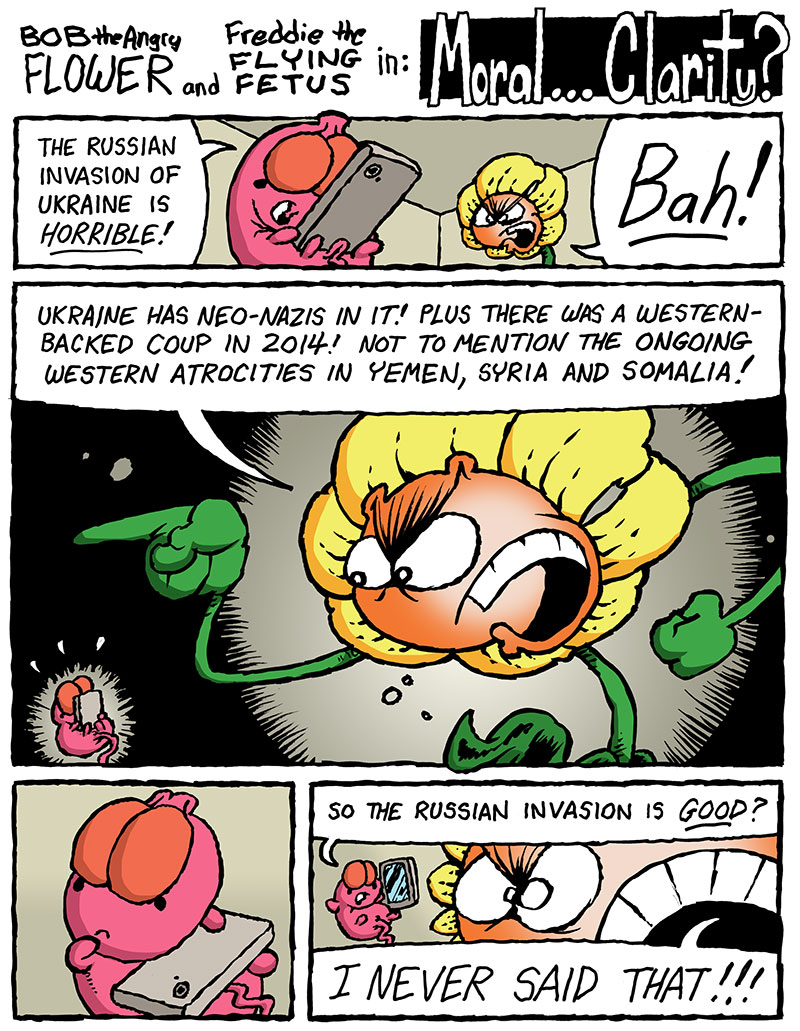
You won’t be surprised to learn where Freethoughtbloggers stand on the Ukraine war

I await the announcement from various regressives that this isn’t really “freethought” because we are unanimous in condemning the war.

Can everyone just go home now and begin to rebuild?

Peak Atlantic

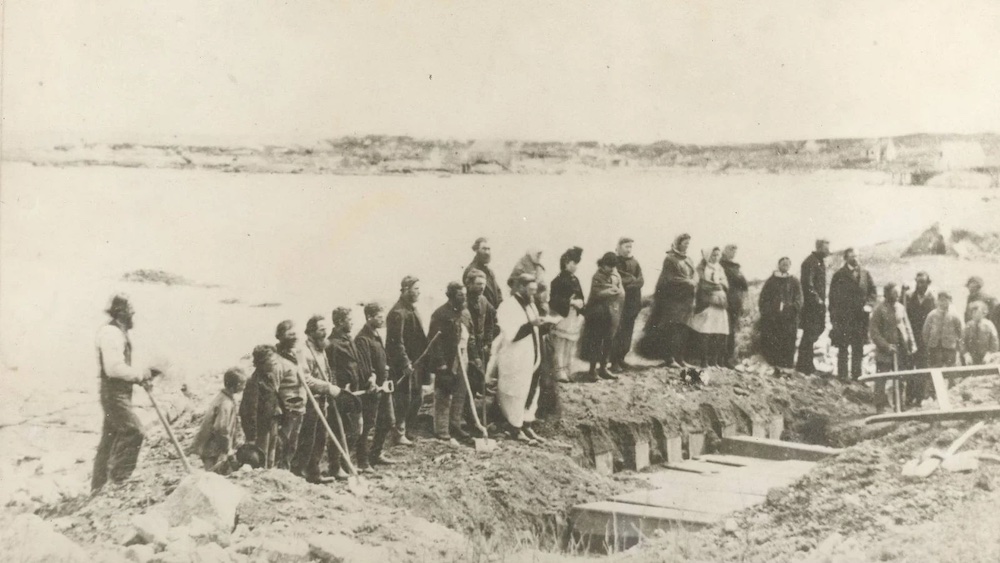
Burial service for victims of the SS Atlantic shipwreck, April 1873.

At last, I’ve finally reached the end of The Atlantic. I have read one article that is like a flawless, pure distillation of everything that annoys me about waffly liberal writing. Sarah Hepola writes a long rambling pointless essay titled The Things I’m Afraid to Write About. She starts off with a conversation in which she talks about a literary party in New York City that she had attended — already we’re deep into the territory of the cliche. Here’s what bothers her:

“So why were you there again?” he asked.

“Because I wanted to talk to other writers about the things you can’t write about anymore.”

His eyes narrowed. “What things can’t you write about?”

“Gender, sex, politics. The things you and I discuss.”

He ran a hand through his hair. “I’d think those would be the most interesting things to write about.”

I gave him an exasperated look. “Are you kidding? I’d get killed!”

His look wasn’t judgmental. I’d say it was disappointed. What he said was slow, and careful, and I’ve never forgotten it. “But I thought that’s what writers do.”

Then, the rest of the over-long pseudo-literary noise is Hepola whining about all the things she can’t write about, which she’s writing for a fairly prestigious magazine, and she somehow manages to squander this opportunity by not saying anything about what she thinks, except to say, gosh, here are topics I won’t write about. It is a colossal waste of time.

She ends with a promise to work up the courage to speak up more about her positions on all these vaguely stated topics. You know, the ones she couldn’t speak about in this tedious essay.

Maybe I’ll write something great this year. Maybe I’ll write something lousy. Maybe I’ll meet the love of my life, and maybe come April, I’ll be picking up groceries for the good people of North Texas who need those seven items, pronto. You can’t predict these things; it’s all guesswork. I know this: I’m finally ready to have a conversation with the world.

Ready? But she didn’t. How did this get published? Were the editors deeply impressed with her ability to say nothing at all at such great length? Most writers, when they write, write because they have something to say; this writer wrote because she had nothing to say, and didn’t say it. And The Atlantic published it.