Why you can’t trust Wikipedia

The entry for Chris Rodda is a lovely example of lies.

By 30th of April 2014, she gave up her writing presence on Freethoughtblogs due to the repeated cyberbullying by leftist social justice activists, instigated by Freethought Blog’s own head of operations, Paul Zacharias (PZ) Myers.

How many lies can you squeeze into one sentence?

There was no “cyberbullying”. Chris was very highly regarded here. If mere disagreement is “bullying”, then I’m the frequent victim of bullying. (Note: I do not think it is.)

I did not instigate anything. I made one comment questioning whether it was appropriate to treat being called an atheist “libel”. That was really it. Apparently several other people made similar objections.

She spontaneously and independently decided to leave. If I’d had my choice, I’d have asked her to stay — she was a good contributor.

I am not the “head of operations” here. If anyone fits that description, it’s Ed Brayton — who is a good friend of Chris Rodda. I am confident he would have liked her to stay on, but this is not a prison — if people elect to leave, they can.

My middle name is misspelled.

Wikipedia: where any hack can edit anything.

Phil Plait promises us a spectacular meteor shower on Friday!

Well, I’m exaggerating a bit — he hedges on it being a good possibility that might produce a good show.

Experts are predicting we may be in for quite a show: a brand spanking new meteor shower that will peak on the evening of Friday, May 23, 2014! Folks in the United States and Canada have the most favored viewing locations for this event (but that doesn’t mean you should forget about it if you’re elsewhere). Predicted rates for this new shower are quite high, about 100–400 meteors per hour, far higher than normal showers. And they’ll appear to be coming from an area of the sky near the north pole, so they should be visible raining down all over the sky!

I checked the weather report for my area, and it’s supposed to be “mostly sunny”, so I imagine that means patchy clouds in the evening, so not perfect viewing conditions. However, where I live, I can drive a mile out of town and find perfect darkness and a total absence of any artificial lighting, so that might offset the lack of flawless weather. I might give it a shot.

And if it doesn’t pan out, I can wag my finger at Plait on Saturday morning.

How to argue for evolution

Jerry Coyne reviews Genie Scott’s talk at the Imagine No Religion conference. It’s mostly positive — Genie always gives a thoughtful talk — but there are obvious points of disagreement.

In the talk, Genie said several times that if you want to change people’s minds—about either climate-change denialism or evolution—the most effective way to reach them is through someone who has a similar “ideology,” be that religious or political. In other words, to make a creationist Christian accept evolution, the best way is for an evolution-accepting Christian of the same denomination to convince them that evolution isn’t inimical to their religious beliefs. (That’s what the “Faith Project” of the NCSE is about.) I suppose this wouldn’t work very well for fundamentalist believers, since no other fundamentalists accept evolution!

I vaguely recall some psychological research showing that people are more convinced in the “lab” under such circumstances, and certainly Dan Barker, in his talk, began his road to apostasy by pondering statements by fellow Christians. But I’m still not sure Genie was right.

I’m not so sure either. I don’t think it’s true that the person doing the convincing has to share the same ideology — it’s messier than that. And what do you know, I had just read a very good article on why people persist in believing things that just aren't true. I suspect that the psychological research Coyne vaguely recalls is the work of Nyhan and Lewandowsky.

False beliefs, it turns out, have little to do with one’s stated political affiliations and far more to do with self-identity: What kind of person am I, and what kind of person do I want to be? All ideologies are similarly affected.

It’s the realization that persistently false beliefs stem from issues closely tied to our conception of self that prompted Nyhan and his colleagues to look at less traditional methods of rectifying misinformation. Rather than correcting or augmenting facts, they decided to target people’s beliefs about themselves. In a series of studies that they’ve just submitted for publication, the Dartmouth team approached false-belief correction from a self-affirmation angle, an approach that had previously been used for fighting prejudice and low self-esteem. The theory, pioneered by Claude Steele, suggests that, when people feel their sense of self threatened by the outside world, they are strongly motivated to correct the misperception, be it by reasoning away the inconsistency or by modifying their behavior. For example, when women are asked to state their gender before taking a math or science test, they end up performing worse than if no such statement appears, conforming their behavior to societal beliefs about female math-and-science ability. To address this so-called stereotype threat, Steele proposes an exercise in self-affirmation: either write down or say aloud positive moments from your past that reaffirm your sense of self and are related to the threat in question. Steele’s research suggests that affirmation makes people far more resilient and high performing, be it on an S.A.T., an I.Q. test, or at a book-club meeting.

Normally, self-affirmation is reserved for instances in which identity is threatened in direct ways: race, gender, age, weight, and the like. Here, Nyhan decided to apply it in an unrelated context: Could recalling a time when you felt good about yourself make you more broad-minded about highly politicized issues, like the Iraq surge or global warming? As it turns out, it would. On all issues, attitudes became more accurate with self-affirmation, and remained just as inaccurate without. That effect held even when no additional information was presented—that is, when people were simply asked the same questions twice, before and after the self-affirmation.

Still, as Nyhan is the first to admit, it’s hardly a solution that can be applied easily outside the lab. “People don’t just go around writing essays about a time they felt good about themselves,” he said. And who knows how long the effect lasts—it’s not as though we often think good thoughts and then go on to debate climate change.

I think the simpler version of that is that if you’re trying to persuade a religious person to accept the truth, you can’t come at it with the approach, “Religious people are stupid. You must accept evolution, or you are stupid.” They resist. They don’t think of themselves as stupid, so they immediately know you are wrong. Or alternatively, they immediately identify with religion, and what they hear you saying is confirmation that religious people do not accept evolution, therefore you have just told them what position a good religious person must accept in this argument.

To address this concern does not require that the evolutionist also be a Christian. I don’t usually go all barking attack dog on creationists, one on one, either — the art of persuasion involves finding common ground, and then showing that to be consistent with their own values, they should recognize that one position is wrong. (Note that the sole value some Christians hold is that the Bible is authoritative and literally true — I can’t really find common ground with them, they’re too far gone. But the majority just have vaguely sympathetic feelings for God and church — they can be reached.)

Coyne also has some ire for the theistic evolutionist perspective, as well. So do I. I think it distorts the science in an ugly way. It’s effective with some soft creationists in the same way the approach I mentioned in the last paragraph works. You find common ground: “I believe in God, too!” Then, unfortunately, to bring them around to your side, what you then do is produce a mangled, false version of evolution — “It’s guided by a higher power!” — in order to get them to accept “evolution”. A gutless, mechanistically compromised version of evolution.

No thanks. Darwin’s great insight was that you don’t need an overseer guiding evolution — that local responses to the environment will produce efficient responses that will yield a pattern of descent and diversity and complexity. To replace “intent was unnecessary” with “God provided intent” does deep violence to the whole theory, and completely misses the point.

The sexbots are everywhere!

After that short post yesterday pointing out the abuse of photoshop to distort women’s bodies, I was briefly harangued by a loon who announced that I obviously did not understand the concept of sexual selection.

women’s bodies today are changing due to sexual selection whether you like it or not. Humans use tools to sculpt their bodies into appealing forms, so it’s not just left to inherent biological changes. And, women are abiding our wishes whether you like it or not. As biologists say, evolution is merciless. So why all the whining?

Actually, I do understand sexual selection quite well. I fail to see how making images of bodies plastic with photoshop is an example, or how you leap from manipulating pixels to how we can “sculpt…bodies into appealing forms”. Perhaps he thinks it is a kind of sympathetic magic, that if you paint a picture of a woman with balloon breasts and a wasp waist, women will simply comply with your wishes?

I am also impressed with the obliviousness. Sexual selection works both ways — has he ever wondered why some men are obsessed with women’s body parts, wanting them to be a certain size and shape? Exactly who’s brain is being sculpted by nature here?

I should also introduce him to the concept of the supernormal stimulus, the idea that a species can evolve to respond to a triggering stimulus that can be inappropriately strengthened by an exaggerated stimulus. This isn’t necessarily a good thing; for instance, Lorenz found that birds would enthusiastically nurture large fake eggs at the expense of their normal-sized real eggs, which at least isn’t a serious concern in nature, usually (although cuckoos can take advantage of it). There’s also the serious concern about human diet: give a person the choice of a twinkie or a carrot, and guess which one will be most attractive?

Or we could talk about RealDolls, these “life-like” (more like corpse-like) full-sized rubbery plastic dolls with conveniently compliant orifices. Is that an example of “sexual selection”? I suppose you could make a case for it, although it’s not affecting women, but rather selecting out males who waste their time in futile coupling with an infertile assortment of artificial stimuli — futile in both the sense that reproduction will not occur, nor will any bonding with another human being.

Besides, apparently those RealDolls are over-engineered. Simpler models will do the job just fine.

According to a Murfreesboro Police Department report, an officer was dispatched to the bar, where a witness said that Hutton walked to the ATM and “pulled down his pants and underwear exposing his genitals.” Officer M. Rickard added, “Mr. Hutton then attempted to have sexual intercourse with the ATM.”

After his encounter with the ATM, Hutton “then began to walk ‘nude’ around the bar thrusting his hips in the air,” Rickard reported.

Behold the latest generation of sexbot!

atm

Is that an example of selection? Or just a case of drunken disinhibition exposing the simpler driving machinery of the male sexual urge?

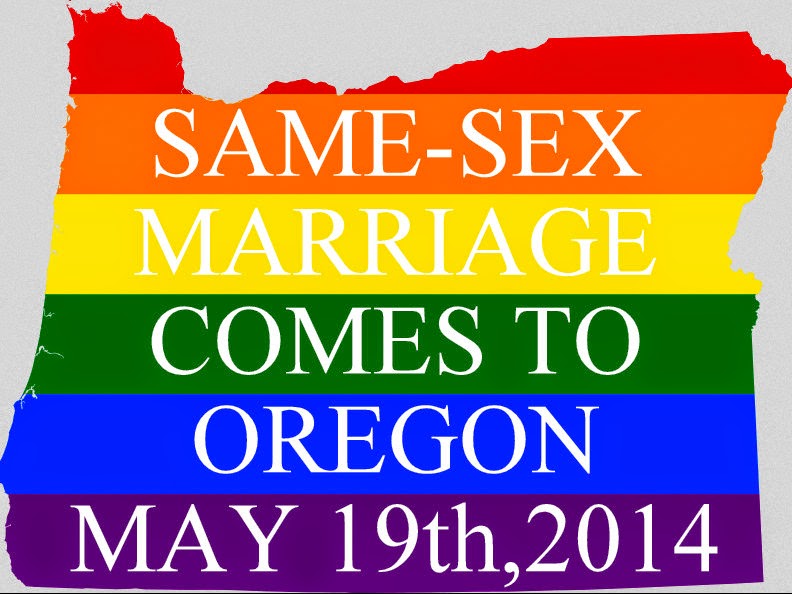
About time, Oregon

rainboworegon

Where will this all lead? I know that many suggest we are going down a slippery slope that will have no moral boundaries. To those who truly harbor such fears, I can only say this: Let us look less to the sky to see what might fall; rather, let us look to each other…and rise.

That’s the concluding paragraph to the federal judge’s decision that the same sex marriage ban in Oregon must be struck down. I’m glad to see this happening all across the country — the rights of the minority should not be subject to majority vote.

The horror! The video they don’t want you to see!

Emily Letts recorded her abortion. You know what you expect to see: Anguish! Pain! Screaming! Bloody body parts flying around the room! Regret!

Oh, wait.

She’s comfortable with the choice, she smiles through the procedure, and it’s so quick — having watched my wife go through three childbirths, the contrast is striking. I suffered far more than Letts in having a cyst removed last week, but what I went through was trivial compared to what women experience in labor.

There is so much fuss over something that ought to be regarded as a fairly simple decision for most women.

The perfect picture of privilege

smugasshole

You will enjoy superb food and drink and be cosseted in a private compartment with a sliding door, a lie-flat seat with mattress, a vanity, a personal minibar and flat-screen television set, and a luxury bathroom down the aisle where you can take a shower.

The cost of this one round trip flight in first class? $32,840. That’s more than half my yearly salary. And some of you are sitting there thinking Myers is awfully privileged, because it’s more than your entire yearly income. You’re right, I don’t deny it.

I don’t blame the airline, it’s a symptom of a system that is so screwed up that some people are granted such astronomical wealth that they think nothing of spending so much on a single luxurious outing while others scrabble at two jobs to try and make enough to simply live.

Women in…

When you hear those two words, prepare to cringe. We’ve got Women in Secularism going on today, and while I’ve missed this one, I am embarrassed every time I see one of those asshole men intruding on the conference #hashtag with snide remarks. And now, on the Women In Astronomy site, I’m embarrassed by my manly colleagues in astronomy. Caitlin Casey had to work with this kind of idiocy.

Another male colleague felt comfortable enough to joke about how sexy I was in front of dozens of colleagues at departmental social events.  His overt stares at my breasts (and at ALL women’s bodies in the department) combined with lewd comments were a common topic of coffee break chatter for years. “Oh, he’s always been that way,” folks would tell me, “so-and-so lodged a complaint about him with HR ten years ago and nothing was ever done.”  So I accepted it, until he ratcheted it up a notch to unwelcome hugs and cat calling in the hallway.  He’s the reason I stopped wearing dresses and heals to work, because the experience of wearing them transformed my 10am workplace into a dark, threatening alley I knew better than to walk down.

That was just one guy. There was another professor who pressured her into going on a date with him…it did not go well.

How’d I get myself in this bind? Suffice to say, I was afraid of telling him to back-off since, even though I didn’t work with him or for him, he had direct power over the success of my research program at the time through his administrative role.  Direct. Power.  He ended up testing the waters one last time, asking me on a real date after cornering me during a department social function, and I finally worked up the guts to get the message across: NO.

Then came the avalanche of hate.  His opinion of me took a 180, he started bad-mouthing me and questioning my competence and ability around the department, and before long I began to feel real impact on my research program.  Things were going downhill fast, all the while I had to keep playing a game of ‘Whac-a-Mole’ with the other creeps.  My workplace became a toxic cesspool, but in a way that was invisible to most.

The site has featured a full week of harassment stories: there’s the harasser’s playbook, recommended procedures to handle harassment, legal rights & obligations, and a challenge to those with power to change their behavior. Read them all.