Time for you all to open your lunchboxes.
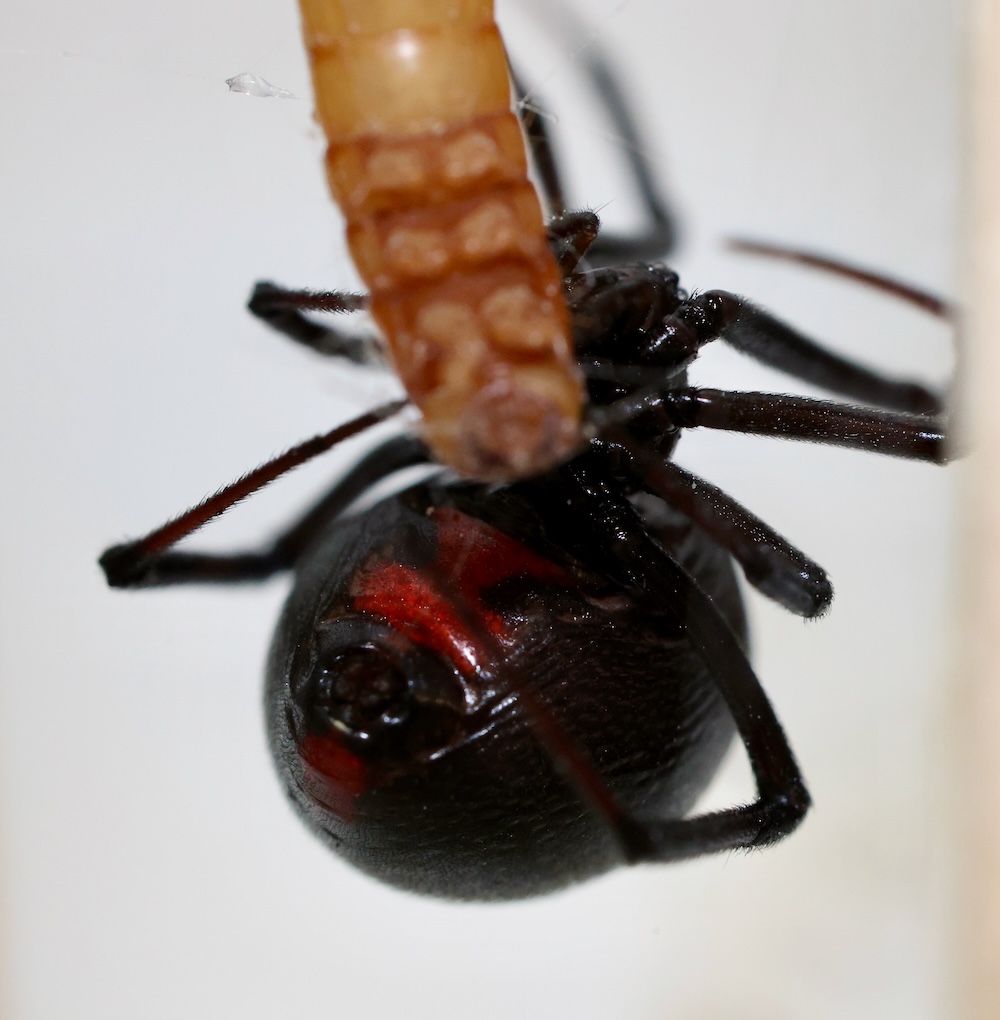
They were hungry, devoured their super-sized hot dogs immediately.

Time for you all to open your lunchboxes.
They were hungry, devoured their super-sized hot dogs immediately.

This was a triumph, although these photos are rather lackluster. I walked around my backyard without the aid of a cane, crutches, or walker! My knee is improving fast, although I can’t walk over rough ground very well, and I definitely can’t crouch. I saw a zebra:

Zebra Jumping Spider
And a wall jumper:
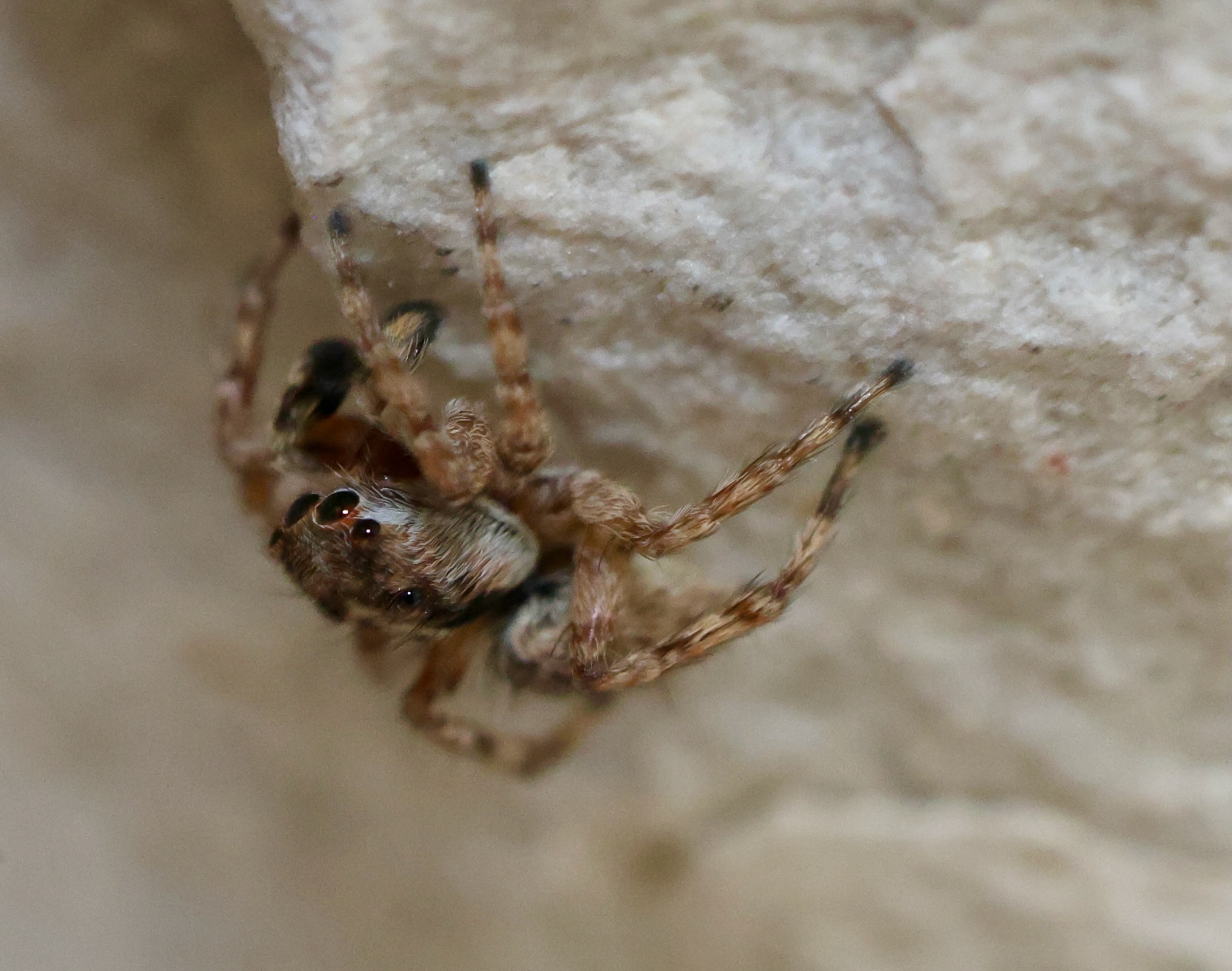
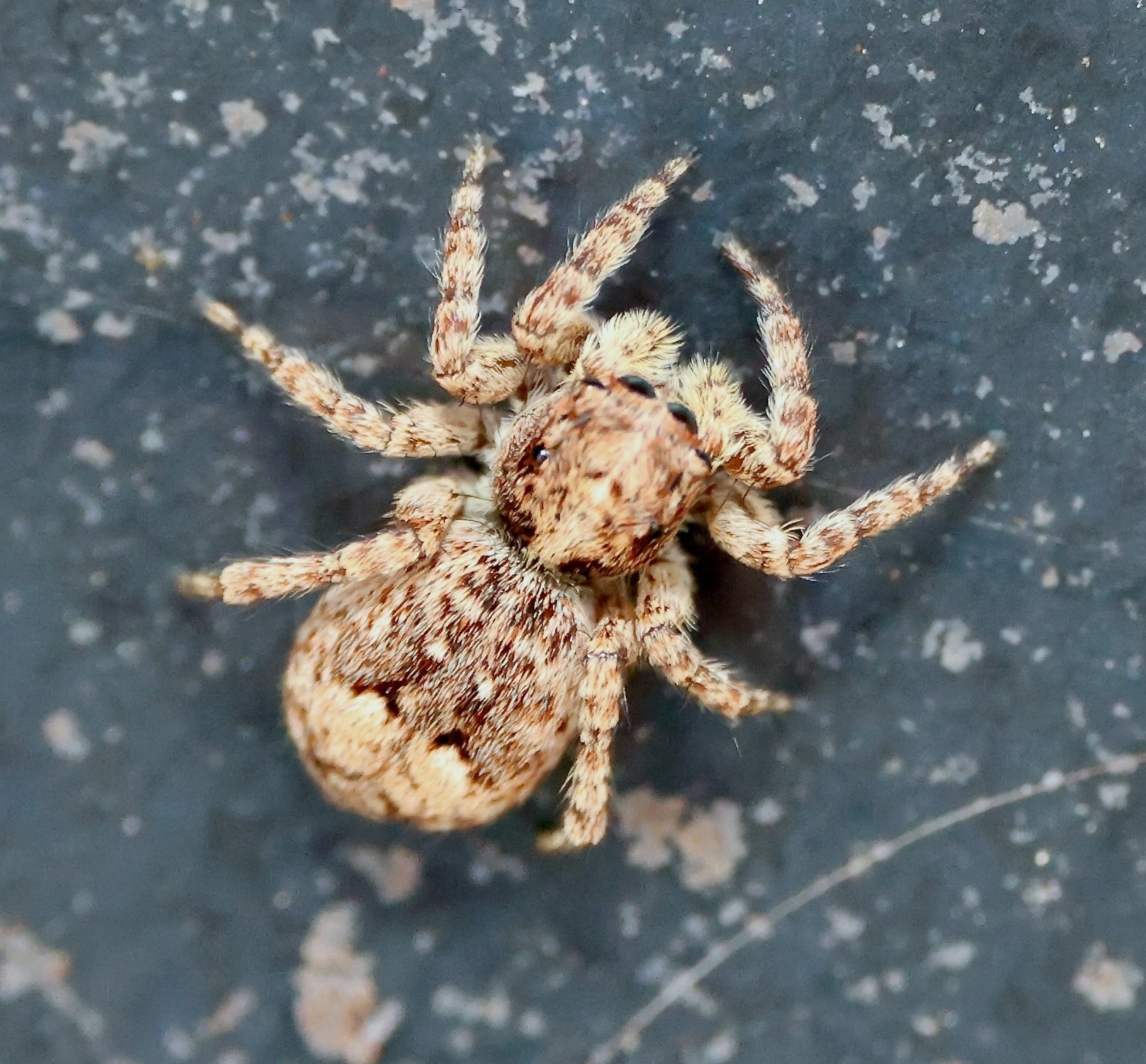
Asiatic Wall Jumping Spider
I didn’t fall down even once, although I was pushing it a bit.

I was trying to read while sitting in my sunny garden, but I kept getting distracted by all the spiders out there, in particular, all the jumping spiders. They kept hopping on my book, trying to get an education in biology, and they were hopping on me, trying to figure me out. It was distracting.
I finally tried taking a photo of one, but all I had was my iPhone, which isn’t great for these kinds of pictures. Next time, I’ll bring my Canon R8 with the 100mm macro lens…but then I won’t get any reading done!


The sun is out, the spiders are flourishing. Maybe it will be a good summer?
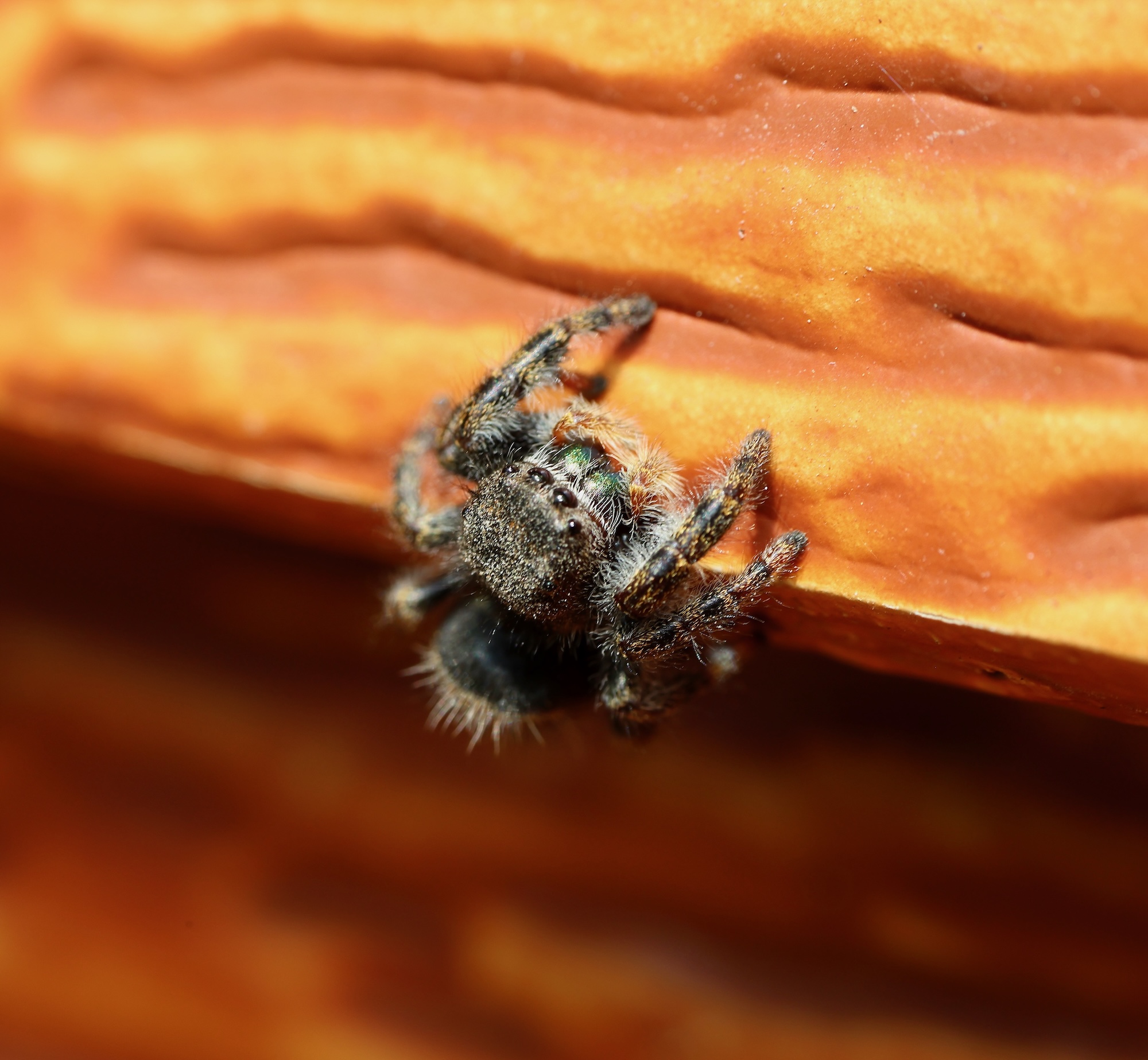
Phidippus audax

Greg Laden has an excellent post on that Rittenhouse ‘spider bite’. It looked to me like he had a rash on his leg, which could be caused by any number of wicked little beasties — most likely a tick. Rittenhouse did brag about bravely killing a spider, but that could have been a scapegoat he found and killed without evidence, a common practice among right-wingers.
Greg makes a good point, that brown recluses actually are often scapegoats. They are reclusive (it’s even in the name!) and non-aggressive, and as one of the few spiders most people can name, it gets named without cause.
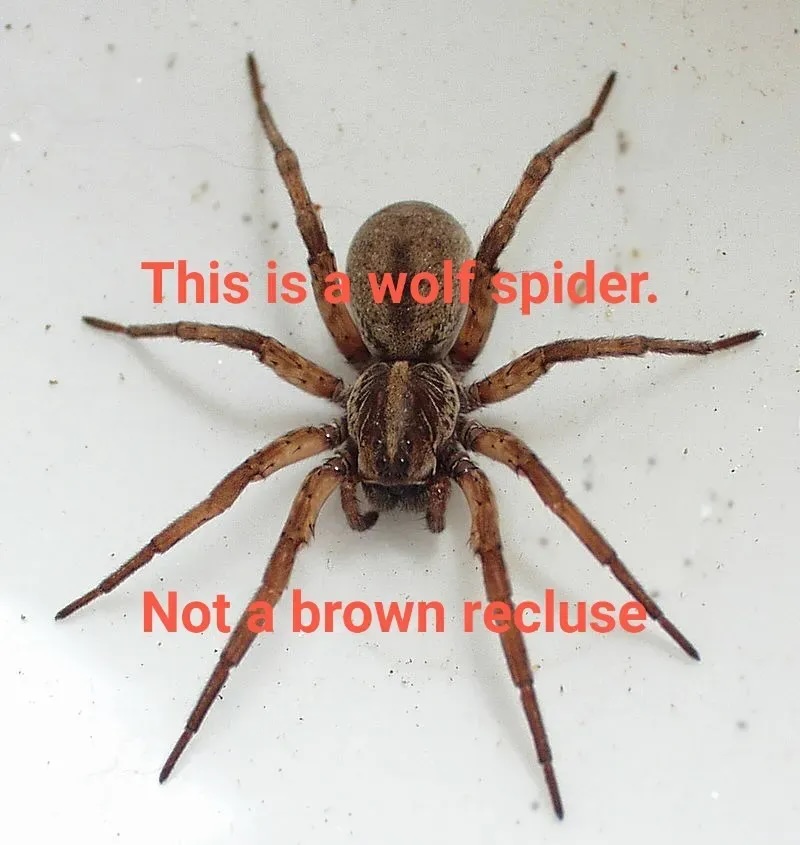
There was even an account on old Twitter to which you could send spider photos for judgment on whether they were a recluse or not. It was entertaining, because most of the photos sent in were not of recluses, and were mostly innocent, harmless spiders that were then murdered by ignorant people. Recluses and black widows are the witches of the spider world.
I had to wonder where Rittenhouse was running into recluses, because they sure aren’t found in Wisconsin. I guess he has moved to Texas. I think Texas is a black hole sucking all the notorious bad actors into it’s gravitational well, but it does have recluses.

And a fresh mealworm.
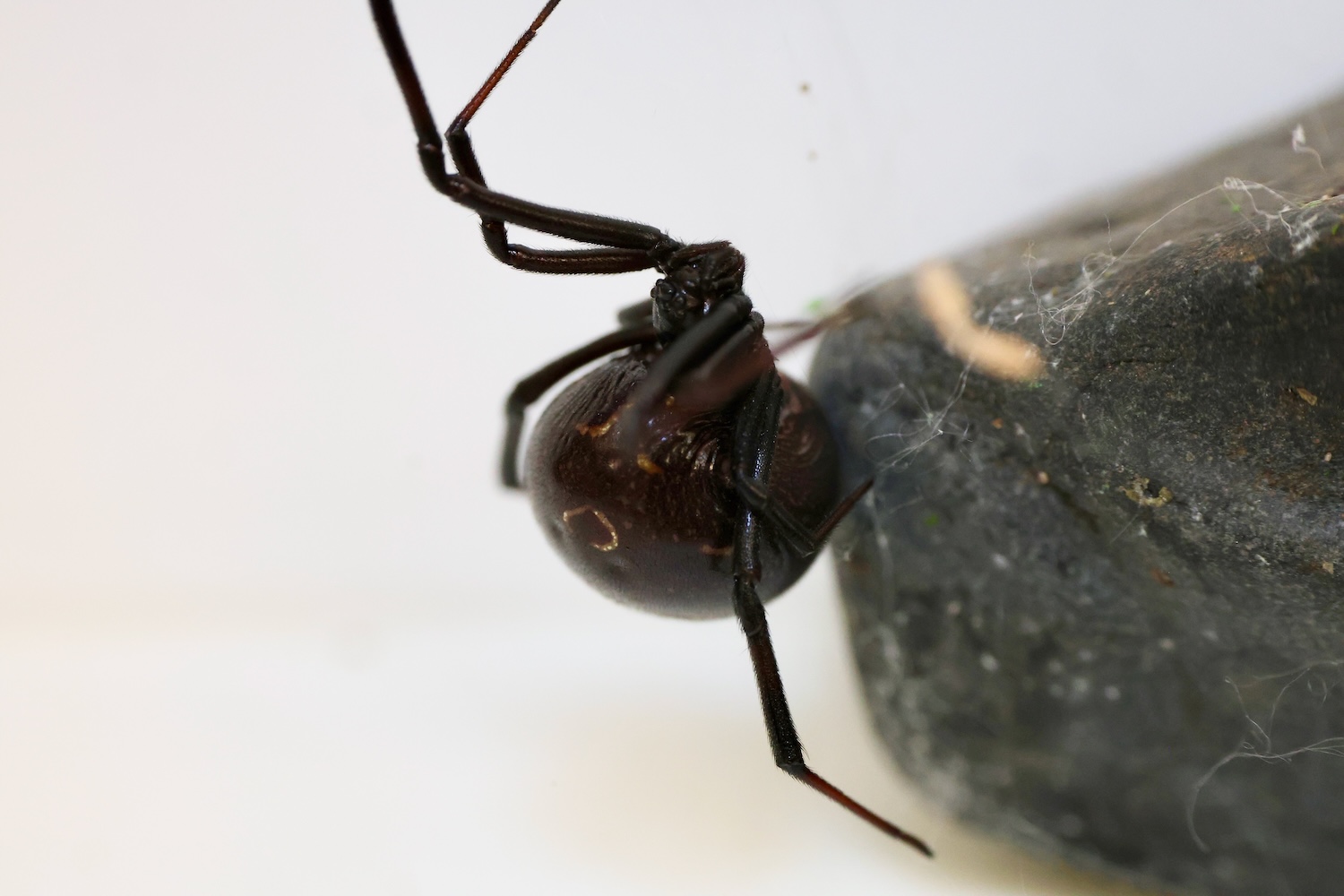
I didn’t forget the spiders in my big lab cleanup! They’ve all been moved into temporary quarters while I clean up their permanent homes. Of course you don’t just throw them into an empty box, you’ve got to provide some environmental enrichment, and some food.

Little hints, you know.
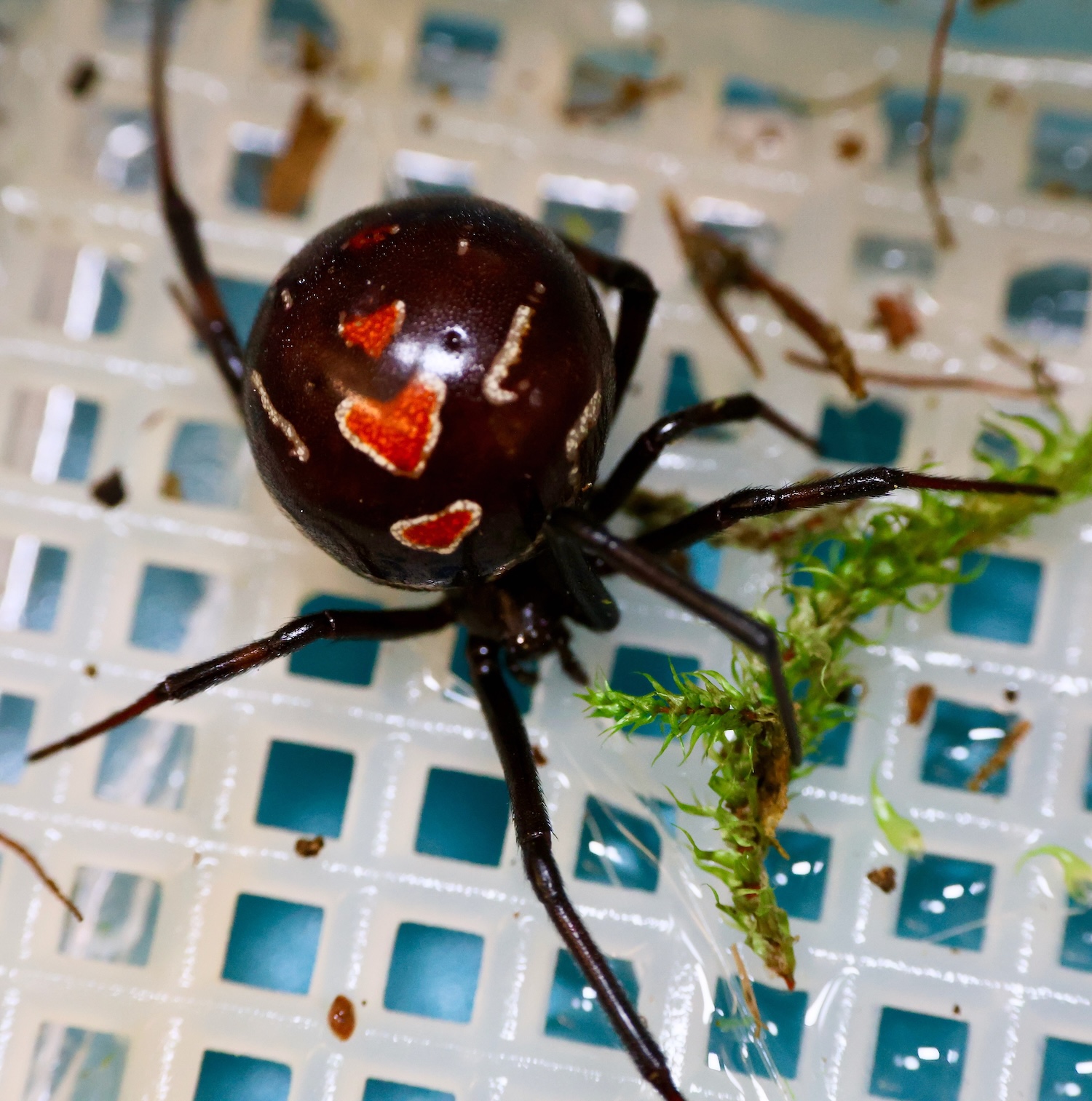

A pair (not really a pair, they were of two different species) spent a few months on the International Space Station. The article about them says “Two ‘spidernauts’ were studied to see how they adapted to microgravity – with surprising results,” but doesn’t bother to say what the surprise was.
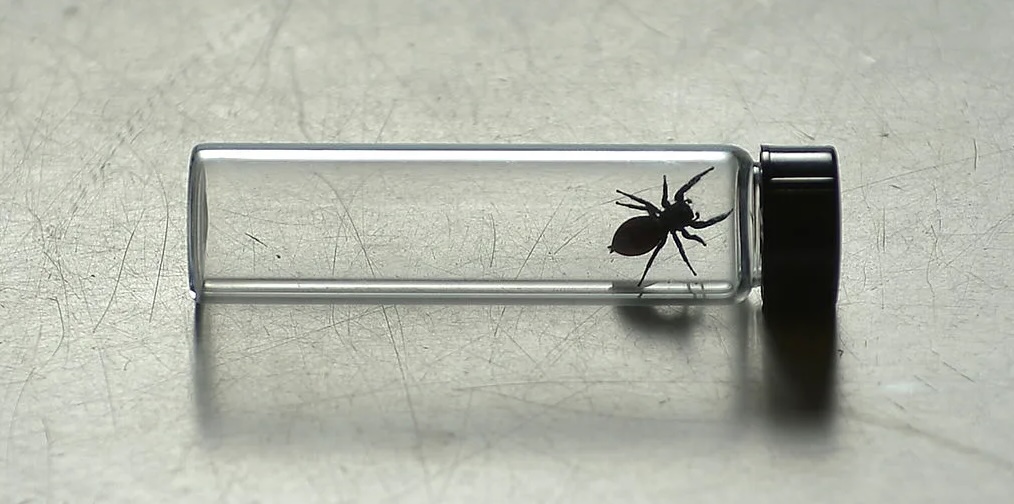
WASHINGTON, DC – NOVEMBER 29:at the Smithsonian National Museum of Natural History on November 29, 2012 in Washington, D.C. Nefertiti, the Johnson jumping spider, has found a new home at the Insect Zoo in the Museum of Natural History, after a 100 day voyage in space as a resident aboard the International Space Station. (Photo by Ricky Carioti/The Washington Post)
I think the surprise was that there was no surprise — they adapted to microgravity easily, which is what I’d expect. These are two animals who go through life constantly tethering themselves to their environment with a silken dragline. Of course they were able to cope with a space environment. They orient themselves with tactile senses, and were probably just surprised at how much easier and more effective their jumping was.
Sadly, they did not last long on return.
The mission set a record for longest time spent in space by a spider (100 days). While Cleopatra died on returning to Earth, Nefertiti would also become the first spider to survive the voyage home, and successfully readjusted to gravity.
After her marathon mission, she was destined for a long, cosy retirement. She was put on display at the National Museum of Natural History in Washington, where she was placed in a custom enclosure and died four days later.
Again, this is not surprising. Jumping spiders are not long-lived species even when not launched up into orbit on a rocket.
However, I do not appreciate hearing about death shortly after retirement, with my own retirement only a year away.

Probably not what you think it means. To me, it means cold, a terrible chill in my lab that makes it uncomfortable to work there, just as I’m getting the freedom to work there. Every summer, when the physical plant starts working to cool the building, they seem to start with refrigerating my lab space. The whole building is out of balance, so while my lab is sitting at a chilly 15°C, the lab right next to mine is a feverish 27°C. It has been driving me mad for years, and nothing ever gets done to fix it.
It’s not good for the spiders, these Southern belles that were collected in Florida and dragged up to Minnesota.
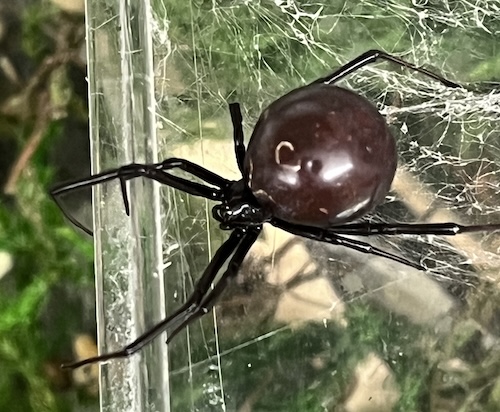
They’ve all got heating pads under their cages, but there’s a steep gradient from the floor of the cage to the top, so no wonder they’re all huddled as low as they can get all the time. The babies are in incubators, so they don’t care, yet…but once they get to a size that demands more space, I have to move them out into the main lab.
It’s not good for me, either. I have to wear my winter coat every day to keep warm at the microscope and computer. I have to yell at the administration, but maybe you’ve noticed that I’m rather soft-voiced and apparently totally ineffectual.
My plan for this week, as my teaching responsibilities diminish, is to pack up all the adult spiders and bring them home. Don’t worry, I’ve already cleared it with Mary.
Maybe I should pack up all the microscopes and computers and bring them home, too. The university isn’t making the effort to create a livable working environment, so they can’t complain if I abscond with all the gear and instruments, right?

Wouldn’t want you to think I’d forgotten.
Attulus fasciger
