Quick! Do some community science before winter strikes!

There are two fun projects you can do right now.

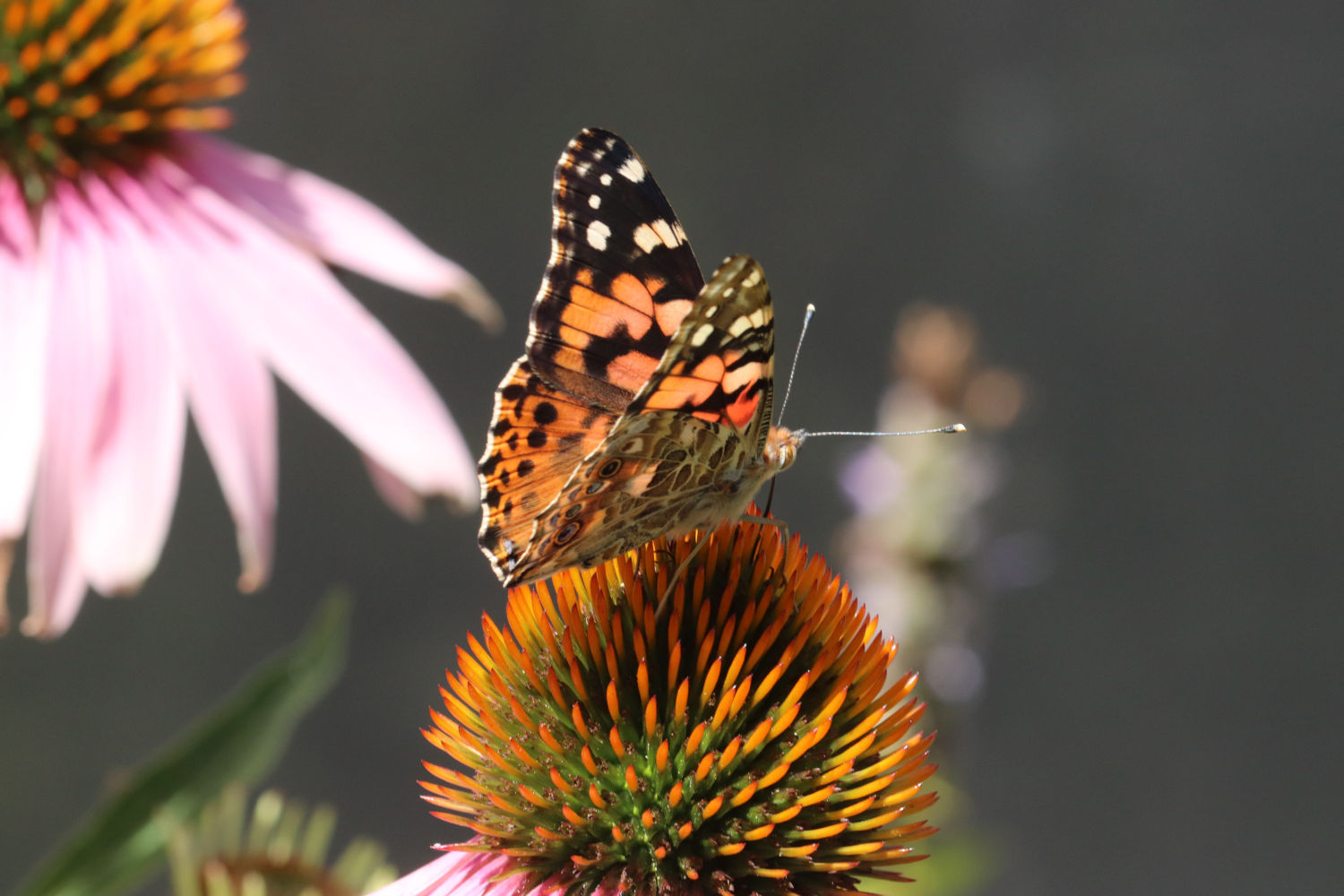
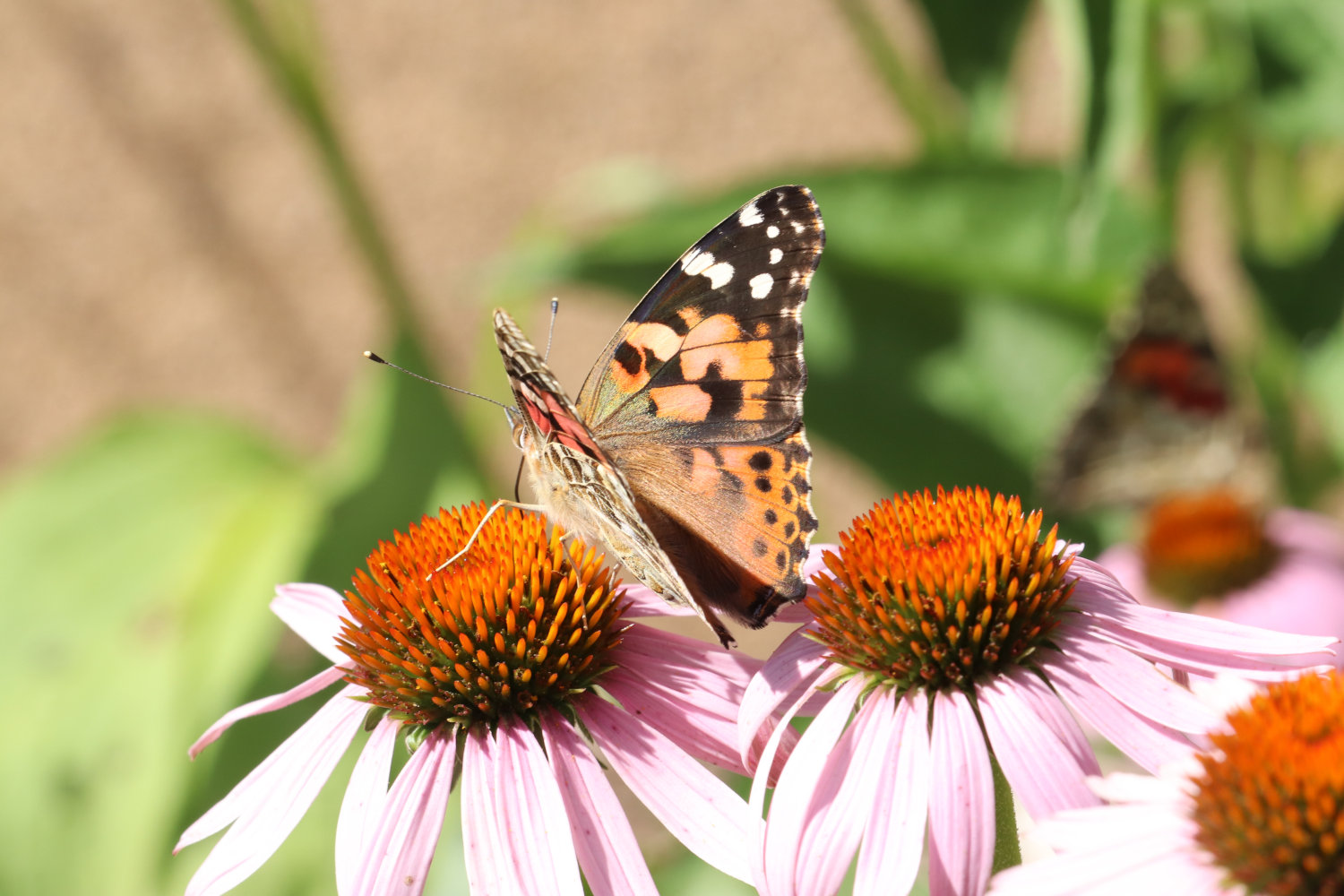
  • #Invertefest begins today! All you need to do is wander around your home or parks or wherever and take photographs of any invertebrates (mammals, birds, reptiles, amphibians, and fish do not count) and post them. Any invertebrates! It doesn’t have to be spiders! You’ve got bumblebees in your yard, cockroaches in your kitchen, lice in your hair, those are all good.
  • Eight-Eyed Expedition is a new one. They want you to get out and observe California tetragnathids, a kind of orb-weaving spider. They’re easy to recognize with their long skinny bodies. You can also photograph them and post them, but there’s an additional request: they want you to write to them and request a collecting kit. They’ll send you vials of alcohol and more instructions, and in this case what they want you to do is find them, photograph them, record their exact location, and then kill them humanely and send their little preserved bodies back to Berkely. This does seem to be a California-exclusive project, which breaks my heart because one of the things they’ll give you is a “Certified Arachnologist” sticker, and I ache for the validation.

At least I’m going to get out and take photos of Minnesota invertebrates today, even though my wife snuck around and erected another bird feeder right outside my office window.

This vertebrate does not count.

#InverteFest is coming

This weekend! If you’re wondering what Invertefest is, it’s an excuse to crawl around and get on your knees and get dirty rummaging around your house and yard and the park, looking for all kinds of miscellaneous invertebrates. If you’re on the coast, get out to the beach! The whole point is just to notice all the bugs and spiders and jelly fish and worms and beetles and grubs and flies that surround you. The instructions:

  1. Find invertebrates. This can be in your basement, your yard, the local park, the beach, an alley or anywhere near where you live.
  2. Share observations. Share photos, videos or art of your discoveries on Twitter using the hashtag #invertefest.
  3. Interact. Search the #invertefest hashtag for tweets and share, comment and learn.
  4. Bonus – citizen science. To contribute your observations for science, upload your photos to iNaturalist.

Huh. I do all that all the time already. I guess I’ll just do it more this weekend.

Safety first

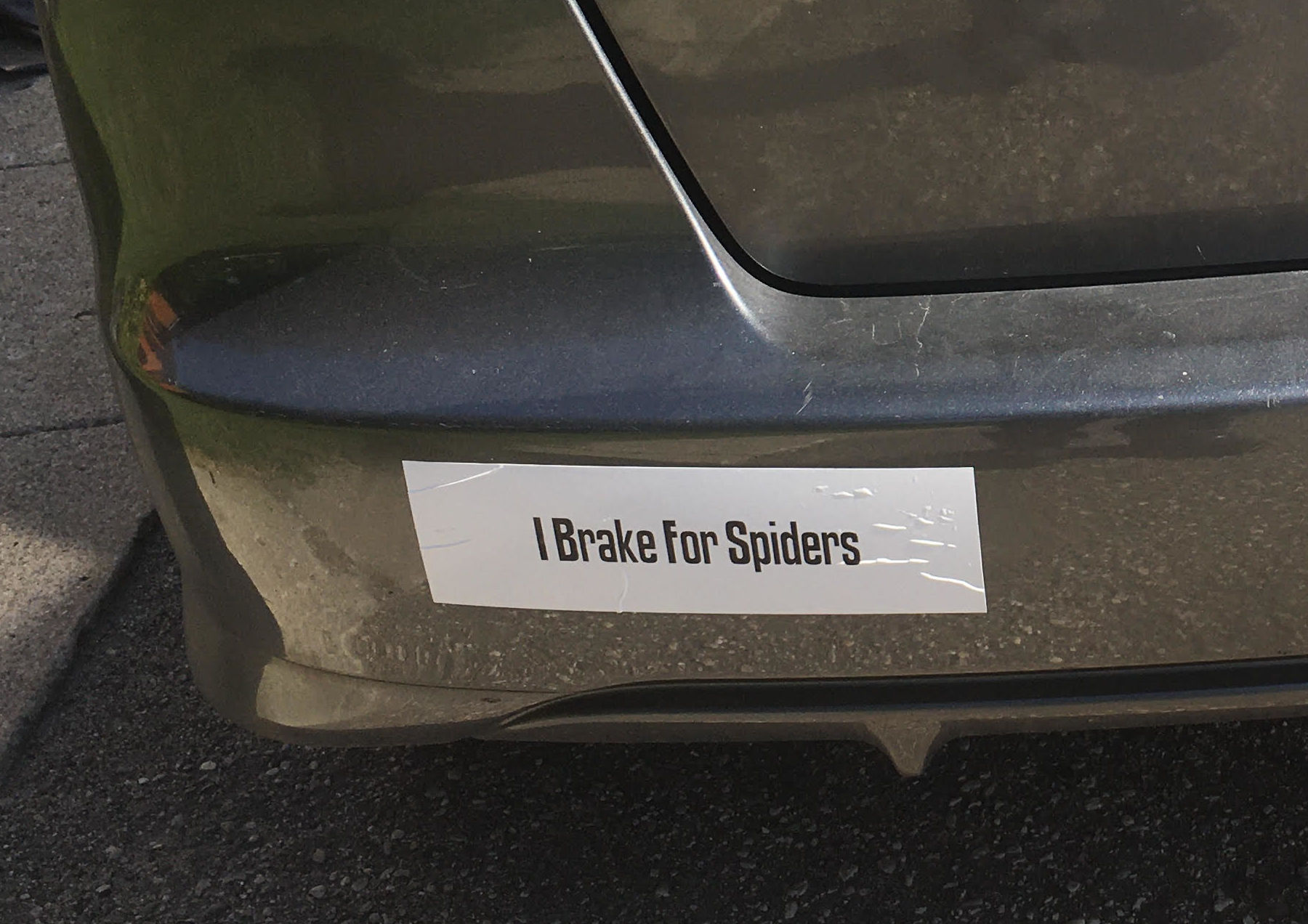
Since we’re doing a lot of scouting around on country roads nowadays, I decided our car needs a warning sticker.

I’m wondering if it’s enough — maybe I should get some roof-mounted flashing yellow lights?

My terrible game

I just finished feeding my spider horde,and I have developed a cruel strategy that gets the job done efficiently.

  • Dump a large number of flies into a cup. I just invert a fly jar over it, and pitter-patter all the wingless Drosophila fall in like rain. I use a petri dish as a lid.
  • Remove the foam plugs from a half dozen spider vials. No hurry, the spiders won’t leave, they’ve got nice webby homes in there.
  • Incline the cup over each vial — the flies see this as an opportunity to escape, and begin streaming to the exit.
  • It’s a race! As each fly reaches the lip, I use a paintbrush to flick them into a spider vial, move to the next vial, flick another in, etc. I cheer them on. “You win! First place! You escape!”
  • The vials are criss-crossed with webbing. The spiders are not inclined to leave, and the flies are immediately snared and can’t escape.
  • Give the cup a tap to knock all the flies back down to restart the race.
  • Repeat until every spider has a frantically thrashing fly trapped in their vial.

I’m getting to the point where it only takes about 10 seconds per spider. The competitive aspect helps me get through it reasonably quickly. The labor isn’t the bottleneck on the colony, it’s mainly the space — I could easily fill up a half dozen incubators, I think.

Looking for Argiope in West Central Minnesota

Sorry, but I didn’t include the photos here, which are all closeups of great big hairy spiders with bold coloring. The complete illustrated story is on Patreon, and the photos are on two posts on Instagram.

Mary and I went on a little spider hunting loop yesterday, looking for Argiope. We took a southeastern route, heading off to Swift county, then detouring a bit south to clip through Chippewa county, then due east to Kandiyohi, and finally north and back west through Pope county to home. Our strategy was simple: drive through farm country on state and county roads, keeping an eye on the ditches that parallel all roads around here. When we saw lots of grass and brush filling the ditch, and when there was a safe place to pull over in the car, we’d stop and stroll about, looking for webs.

We really needed an “I Brake for Spiders” bumper sticker, because we were probably annoyingly slow. Good thing the roads were nearly empty!

One catch to this approach is that good grassy roadsides were scarce. Apparently, good Republican farmers have little to do and lots of tractors, so they trim everything. Have you ever seen a drainage ditch that looks like a manicured lawn? We did, everywhere. The best places had 1-2 meters of grass, where we’d walk in and be in the weeds to chest height or over our head. Actually, the best places were nature preserves and restored prairie.

We persevered, though, and found Argiope in every county we visited. They’re common, but they really don’t seem to like the kind of place where big bipedal mammals frequently bumble around. Living near people is OK, but they better not ever come over to visit.
So here’s one from Swift county:

Classic Argiope aurantia. Big, black and yellow, and a meter wide orb web with stabilimentum zig-sagging down the center.
Chippewa county is the emptiest place we visited, lacking any large towns and consisting of nothing but farms. They do have Argiope aurantia, though.

Kandiyohi county is kind of the inverse. It does contain one big town, Willmar, which was right in the way of our route, and Argiope does not like cities much. We finally found one as we were driving away by our usual expedient of pulling into farm access roads where the residents weren’t overzealous lawn fanatics.

We’d actually planned to hit up a couple more counties, but the weather turned grim, all gray and rainy. Even as I write this I’m listening to thunder. We’d decided to skip a northern loop of our drive and go home through Pope county, where we found Argiope trifasciata in a nature preserve.

One cool thing about this one is that there were two other webs in the same little patch, only a few centimeters away, and they were occupied by males, hopeful consorts I would guess.

We’re going to do it again next weekend, aiming for a western and northern loop, passing through Big Stone, Traverse, and Grant counties. Also on our list is another trip to the Ecostation in Ottertail county.