
This was the wrong day to discover this study.
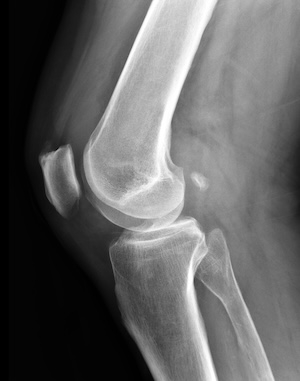
A major 10-year clinical trial is turning one of the world’s most common knee surgeries on its head. Researchers found that trimming a damaged meniscus—a procedure long believed to relieve pain—offers no real benefit over placebo surgery. Even more surprising, patients who had the operation actually fared worse over time, with more symptoms, poorer function, faster progression of osteoarthritis, and a greater likelihood of needing additional surgery.
Shortly, I’m going in to the local hospital to get an MRI to update the status of my knees before I get that same surgery in less than two weeks.
Fuck. I have been eager to get an operation that promised to ease pain and improve mobility just in time for the summer field season, and now there’s evidence that is also going to diminish the placebo effect.

It should be informative to hear what your surgeon says in light of this, and how they frame it.
Argh, I’m sorry, PZ. It seems like a substantial study, too. A small upside might be if you end up canceling the surgery because of this and avoid making it worse.
I’ve had knee problems since my right knee gave out while marching in formation in the US Army when I was 21 years old. I totally understand your frustration, PZ.
But I am concerned about how the Finnish study did ethical “sham” surgeries. How is that done?
The following negativity is not meant to upset anyone, just being honest about what
I understand after 40 years in the medical field.
I had read about the ineffectiveness of these surgeries, maybe one or two years back. Never saw any follow-up to it. Now there is a new article making similar claims. Not surprised. My close friend had torn cartilage and had a surgical clean up, two years later he had to have a Total Knee Replacement. This always crosses the line with me; doctors basically get paid be piece work. The more patients they can squeeze in, or procedures they can perform, the more money they make. Their practices also have companies come in and financially evaluate each doctor, the report shows how much each doctor brings into the practice. This setup encourages doctors to perform as many procedures as possible with the patient’s wellbeing as a secondary thought. Our medical system has been ruined by Capitalism.
My wife blew her knee skiing > 35 years ago, and had excellent “terrible triad” surgery at Vail Valley – there’s a good reason many sports players use them. Later on, she had several follow-ups, including a medial meniscus trim, which did help.
Finally, last year, she got a total replacement on that knee. It has been fantastic, so if you want to skip intermediate steps, you can look forward to that. :-)
Plus, the scar looks totally cool…
“Placebo surgery?”
Ughhh! That’s a tough call. I had knee surgery for a ligament AND meniscus injury in my late teens, which probably doesn’t translate to someone who is much older now in success rate. I have a kinda messed up back that troubles me on occasion and I had heard similar things about the success of back surgery versus non-surgical therapy.
If you went a different route I wonder what any needed weight loss and a hip and knee strength/stability/flexibility regimen might do for you in the long term. Not sure if knee replacement necessitating osteoarthritis will become a concern, or if any osteoarthritis could be mitigated by non-surgical means.
I got a little carried away with my own self-imposed strengthening program and irritated my knee for almost a month…same one as the late teen surgery. It went away (maybe because some not recommended seiza posture or on its own). I dialed back my routine a little in daily frequency. But while my knee was troubling me I looked into costs of knee replacement versus basic knee surgery and balked! Yipes.
When doing figure 4s and noting the tightness in one of my hips vs the other I wonder if hip surgery will also be in my future despite my routine. Years of sitting at a desk did me no favors.
So anyway, I have no idea which way you should go on surgery. Hoping there is a way forward though so you can enjoy your retirement with much less debilitating pain.
The article uses “may” a lot…perhaps there’s a reason for caution about the assertion.
At least it doesn’t mention complete knee replacement which my wife had done a year ago. Before the surgery she could barely walk and was in constant pain. A year after the surgery, she still has pain but at least she can walk.
I suggest that without getting into the details of the study itself that it is best to discuss it with your surgeon. After all, the article doesn’t appear to distinguish between the sizes of the tear of the meniscus. If the study was on small tears they may have a point, but it may not be valid for larger damage.
In my 20’s I had a small tear on the meniscus on my right knee. I was without health insurance at the time, but went to a doctor anyway. Simply due to the cost I didn’t have anything done. But there wasn’t a great deal of pain and I limped around for a couple weeks before it disappeared entirely. The pain returned at decreasing intervals over the next 15 years, but for the past 15 years it hasn’t bothered me at all.
If the study focused on whether surgery helped small tears which had a high chance of healing on their own as compared to the same small tears which were not surgically treated, it may be perfectly valid. But it would not apply to large tears, or to people who have chronic pain. I wouldn’t trust that this study applies to your case.
@4 stuffin
I am way more cynical than you. I think “insurance companies” are way more short sighted and greedy than this, and are constantly making the calculation, “What is the cheapest thing we can pay for and approve, with the greatest likelihood that the patient will either a) not need further procedures, and/or b) die before we have to pay for them.” You don’t make a profit, as an insurance company, by actually “paying for” real medical help, you do so by denying things that maybe work vastly better, actually solve the problem, but would be much more expensive. That this, in say 25% of cases backfires, and they end up having to pay out even more later (but, again, the cheapest solution possible as well that “next time”) still means they profited the other 75% of the time, by the patient either dying before they needed it, and/or just not bothering to go in for further treatment, because its personally costly, not covered “yet” (if at all), and/or they don’t trust it will work any better than the last one. Its still a gain for the assholes that deny the more expensive, but actually effective, solution they should have paid for in the first damn place.
That this also produces a string of repeated visits, procedures, etc., all of which, again, “cost less” than the real solution, at least in theory, but definitely in the short term, may be merely a simple matter of shear accident. Until/unless they do a clear analysis that says, “This is costing us more doing it wrong, than fixing it in one go.”, there is no incentive for them to spend more in one single procedure, which might actually fix things.
Case in point – everyone, if they have insurance that covers it, has yearly doctors visits. Monitoring something like a plugged up gall bladder, for when it becomes critical enough that they “have to” do something, and paying out a small amount for Pepcid to reduce the symptoms, is a) something patients will be doing anyway, and b) costs way less in all practical senses than just “approving the surgery to fix it”, when the problem is first detected. The older the patient, the more “the patient” have to spend on medication, and mitigation of symptoms, and the more likely they will just die from something, before any approval is given to fix the real problem. A stupid situation I am dealing with myself – and which is explicitly about whether or not the “insurance company” thinks its “necessary” to fix, not how the F much it costs the patient between when the problem is identified, and when it becomes bad enough that the can no longer delay actually fixing the problem.
You really need to read more than one paper to get an idea of how well meniscus repair of the knee works.
Here is one example of a recent paper that has a more positive view.
The potential outcome is going to depend a lot on the details.
How bad is the tear, where exactly is it. Patient age. surgical techniques, arthroscopic or open, etc..
Every patient is going to be different.
Read some papers, talk to your surgeon, and ask some questions.
I don’t claim any knowledge of the subject, other than having had a meniscus repair about 20 years ago. I am currently 82 and the repaired knee hasn’t bothered me since the surgery. Three tiny scars are the only reminder.
#10 @ Kagehi
QFT
PZ, the other question you need to ask is ‘how likely in all seriousness is this going to need a knee replacement and is my insurance only going to cover such a thing if I already did/tried this tmeniscus thing we’re doing now first’.
I had torn meniscus in both knees. Doc said surgery was too invasive and gave me steroid cream.
For the next 8-9 months, I had a 2 or 3 most days, sometimes up to 5, then I’d use the cream. It seemed to help (or was a placebo).
Then one day I got in the pool to do laps. OMG, all the way up to 8. It felt like someone stabbed me in the knee with every kick.
Then, about a month later, I did something really stupid and tore my ACL—and was able to get my two torn meniscus repaired.
It’s been about 7 years and I haven’t had any pain at all. Maybe I’ll make it to 10?
I think there s a major issue that this study avoids.
Yes, in the long term, meniscus trimming doesn’t prevent knee degeneration. That’s pretty obvious. However- what it does do in the short-term is allow you to actually walk without crippling pain. Yes, it means you may need that knee replacement a little faster, but at least you’re not in excruciating pain every time you take a step.
One of my menisci tore- an age-related tear- and I was pretty much unable to walk more than a few steps for months, despite extensive physical therapy. The day after the surgery I was walking without ain, and a couple months afterwards was walking 18,000 steps a day on vacation with no issues. My surgeon was clear that this isn’t a long-ter solution and I may need knee replacement down the road. But for now, I can still exercise!
What concerns me greatly is the possibility that, if we stop meniscus surgeries, people will be left in extreme pain with no solutions- not enough damage to qualify yet for knee replacement but in intolerable pain.
If the study is good, don’t have the operation done (right? what am I missing?).