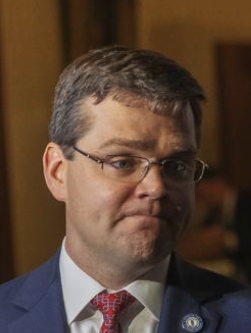
Dumbass wannabe martyr
This is the time of year many of us are working on our syllabi, and one common feature nowadays is a land acknowledgment. For instance, I mention that UMM is on the original homelands of the Dakota, Lakota and Anishinaabe peoples; no big deal, recognizing our history and the identity of the people who have a legitimate claim on these lands. But what would you think of this peculiar acknowledgement by a computer science instructor at the University of Washington?
I acknowledge that by the labor theory of property the Coast Salish people can claim historical ownership of almost none of the land currently occupied by the University of Washington.
Labor theory of property? What does that have to do the brute fact of the reality of UW’s history? Then denying that fact is simply offensive.
The university asked him to take it down. They even offer a recommended alternative.
The University of Washington acknowledges the Coast Salish peoples of this land, the land which touches the shared waters of all tribes and bands within the Suquamish, Tulalip and Muckleshoot nations.
It’s very silly to oppose a straightforward statement of fact like that, and offensive to post a denial. But Stuart Reges sees an opportunity to leap on the right-wing gravy train.
“University administrators turned me into a pariah on campus because I included a land acknowledgment that wasn’t sufficiently progressive for them,” said Reges in a press release issued Wednesday by FIRE, a nonprofit that supports free speech on campuses and elsewhere. “Land acknowledgments are performative acts of conformity that should be resisted, even if it lands you in court,” added Reges.
That’s it. The university asked an employee to refrain from offending students, which is entirely reasonable — academic freedom does not mean you can posture abusively and not be criticized. He has a job to do, and a meaningless but unproductive statement does interfere with that.
Of course, he is now suing the university, claiming his civil rights have been violated, which is why he’s partnering up with FIRE. Nothing has happened to him, except that his own actions have generated some adverse publicity; the university has not taken any material action against him. He’s not tenured, so the university is free to not renew his contract. I don’t understand what grounds he has for any kind of lawsuit. He’s just trying desperately to become yet another right-wing martyr, but the university hasn’t bothered to nail him up on any cross.
Of course, now he’s stuck his head up and made it obvious to the administration how stupid he is. He may have effectively screwed himself.
He’s tried this before. Would you believe he he published an article on Quillette, Why Women Don’t Code, in which he says I believe that women are less likely than men to want to major in computer science and less likely to pursue a career as a software engineer and that this difference between men and women accounts for most of the gender gap
, and also tried to hoist himself on that cross again:
Saying controversial things that might get me fired is nothing new for me. I’ve been doing it most of my adult life and usually my comments have generated a big yawn. I experienced a notable exception in a 1991 case that received national attention, when I was fired from Stanford University for “violating campus drug policy” as a means of challenging the assumptions of the war on drugs. My attitude in all of these cases has been that I need to speak up and give my honest opinion on controversial issues. Most often nothing comes of it, but if I can be punished for expressing such ideas, then it is even more important to speak up and try to make the injustice plain.
Try and try and try again to provoke your employers so you can land that juicy lawsuit that will please the regressives who hate universities, and fail and fail and fail. That Quillette article did have the effect of getting his three-year contract getting demoted to a one year probationary contract. “Contract”. “Probationary”. That he has been straining to violate the terms of a probationary agreement for years seems to me to provide adequate grounds for letting him go while cancelling out any reason to sue his employers.