I’ll be handing out festive spider balls to all the trick-or-treaters coming by my house tonight.
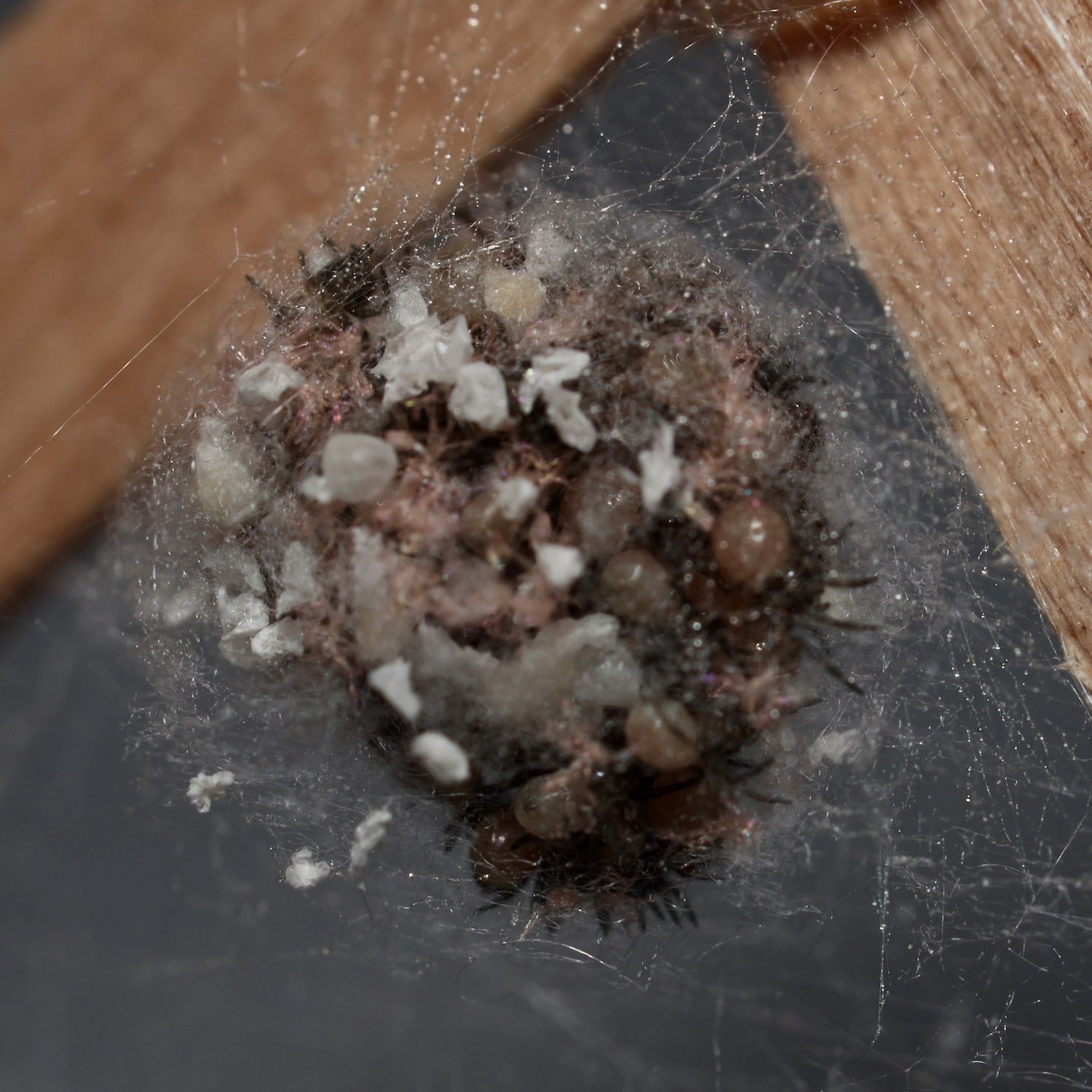
Unless they request a trick, in which case they get something more venomous.
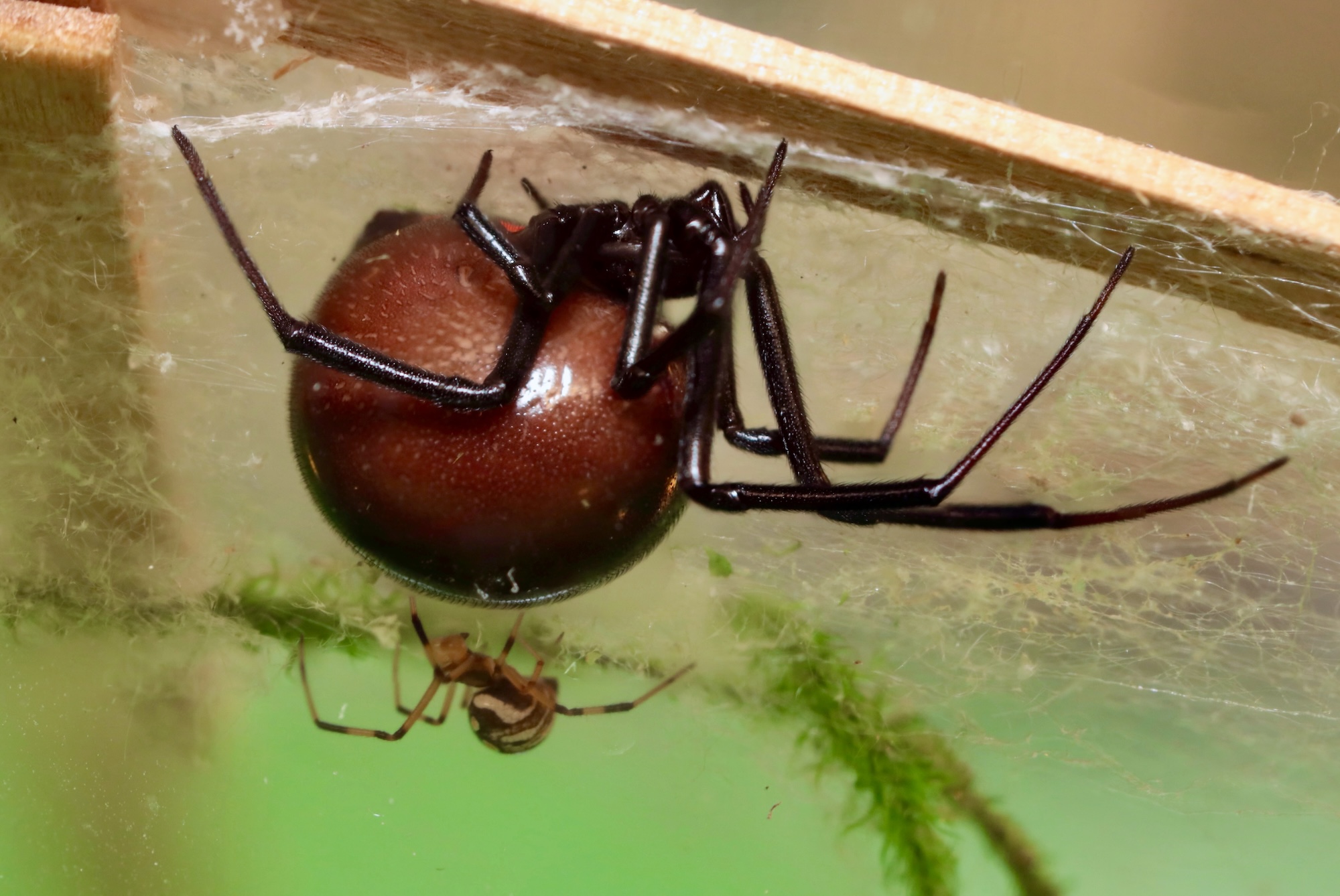

I’ll be handing out festive spider balls to all the trick-or-treaters coming by my house tonight.
Unless they request a trick, in which case they get something more venomous.

Many Shubs and Zuuls knew what it was to be roasted in the depths of a Sloar that day, I can tell you!

This article leads with a photo of a spectacularly beautiful joro spider.

Beautiful. I’d love to see more, but I am content with our native Argiope, we don’t need to import invasive species.
The title of the article, though, is this troubling claim.
Studies show Joro spiders are easy to kill and virtually harmless
That’s a disturbing juxtaposition: Harmless! and Easy to Kill!
Well, great. If they’re harmless, leave them alone, you don’t need to kill them. They tested how to kill them, anyway.
Coyle and a team of co-authors from Clemson, Southern Adventist University and Union College tested various products, some of which are labeled as spider killing products, while others came from scouring the internet to see what people were telling others to use, such as water, isopropyl alcohol, foaming dishwashing detergent, window cleaners, bleach, hair spray, vinegar and WD-40.
Those labeled as insecticides were effective in killing the spiders. Coyle said that while some household products did kill the Joro spiders, he would not recommend using them.
“They are not labeled as insecticides, therefore it is illegal to use them as such,” Coyle said. “Beyond that, it is not safe, both from a personal standpoint, or ecologically. It’s not good to be spraying machine lubricant or some household cleaner all over where your dog or child might be playing. We strongly encourage people if they must use an insecticide, use a labeled, legitimate one.”
Aaaargh. I would not be able to carry out a study like that — collect healthy animals, and ask students to kill them with random products from the garage and kitchen? It’s not ethical, and also, we already know the answer: our homes are full of industrial glop that can kill animals. I also don’t need to test whether dropping a big rock on a bug would kill it. I also wouldn’t do the study and then recommend that you use a commercially available insect neurotoxin to hose down a place where your dog and child might play.
I also wouldn’t be able to do the other part of the study.
For the second part of the study, the researchers forced the spiders to bite volunteers, who then ranked the pain based on the Wong-Baker FACES Pain Rating Scales, a pain assessment used in pediatrician offices where six faces ranging from a neutral expression (no pain) to a crying face (worst pain) are used to identify the pain level.
“We asked participants their pain level at several time points,” Coyle said. “It was never more than a 4 for anyone. Most were in the 1 range, which would be similar to a mosquito bite to most people. We also measured redness around the bite. Our conclusion was that Joro spider bites don’t do much and it doesn’t hurt most people.
I already have enough trouble recruiting research students.
But OK, the studies have been done, time to stop torturing spiders. Leave them alone.

We have a home Pholcus phalangioides living under our kitchen cupboard, who occasionally emerges when they’ve caught something in their cobweb. In this case, a ladybug, who has been trapped under there for the past day.

The spider is clearly fang deep in a gap under the beetle’s armor, but what adds a frisson of horror to the scene is that the beetle was still alive, it’s mouthparts and forelimbs slowly writhing as Mlle. Pholcus sups on her fluids.

I’ve been experimenting with feeding regimens for the spiders. What I’ve been doing is feeding twice a week with an excess of fruit flies until I feel like they’re big enough for mealworms. My feelings about their readiness for larger food are not reliable, and lately I’ve been seeing that these spiders are eager to hunt big game. Maybe I’ve been underestimating them.
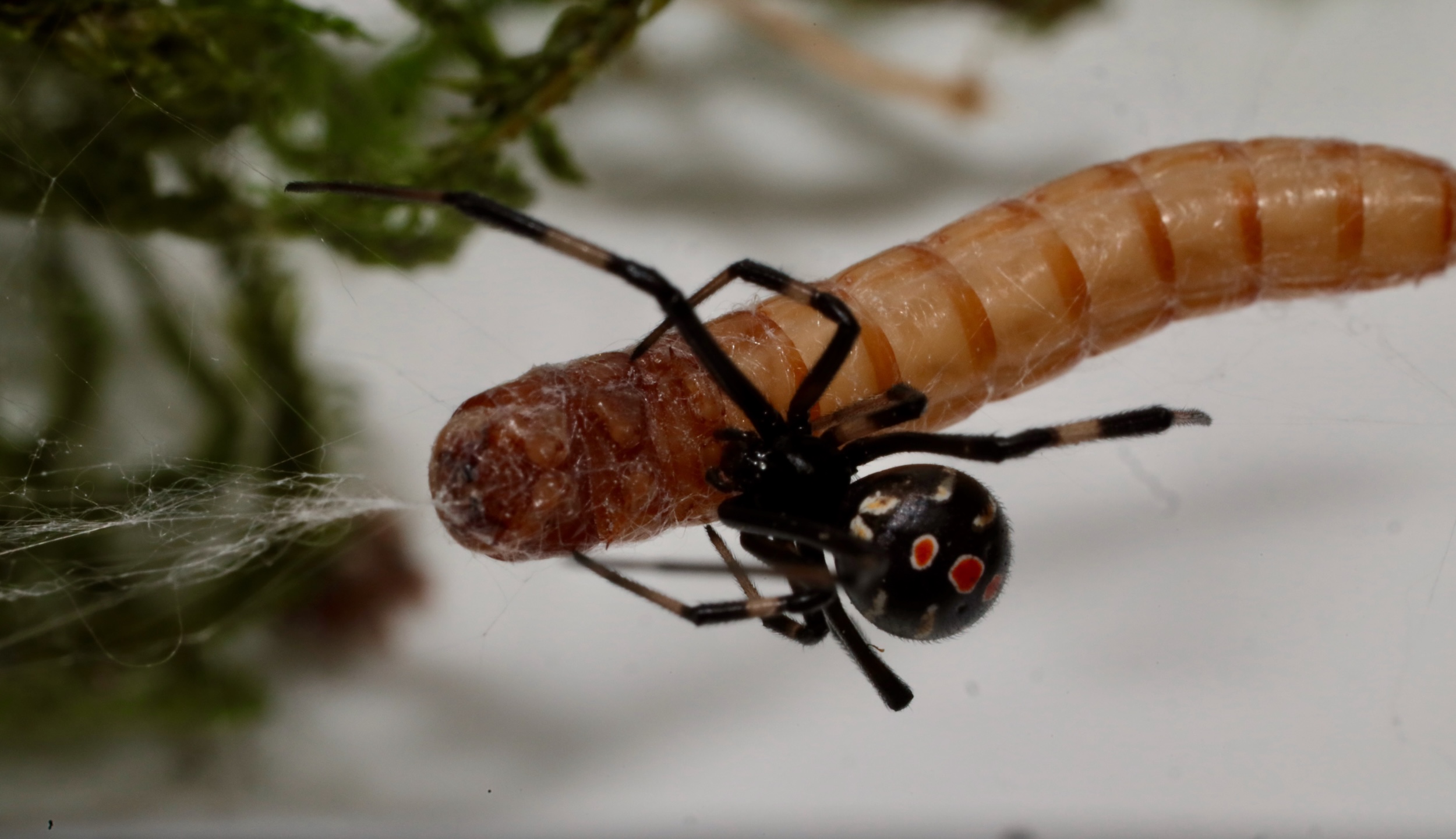
So I lined up 15 containers with juvenile black widows, ranging from little guys about 5mm long to roughly twice that, and put a mealworm in each one. Then I left them alone, going to a meeting for an hour. I came back to a horrible sight.
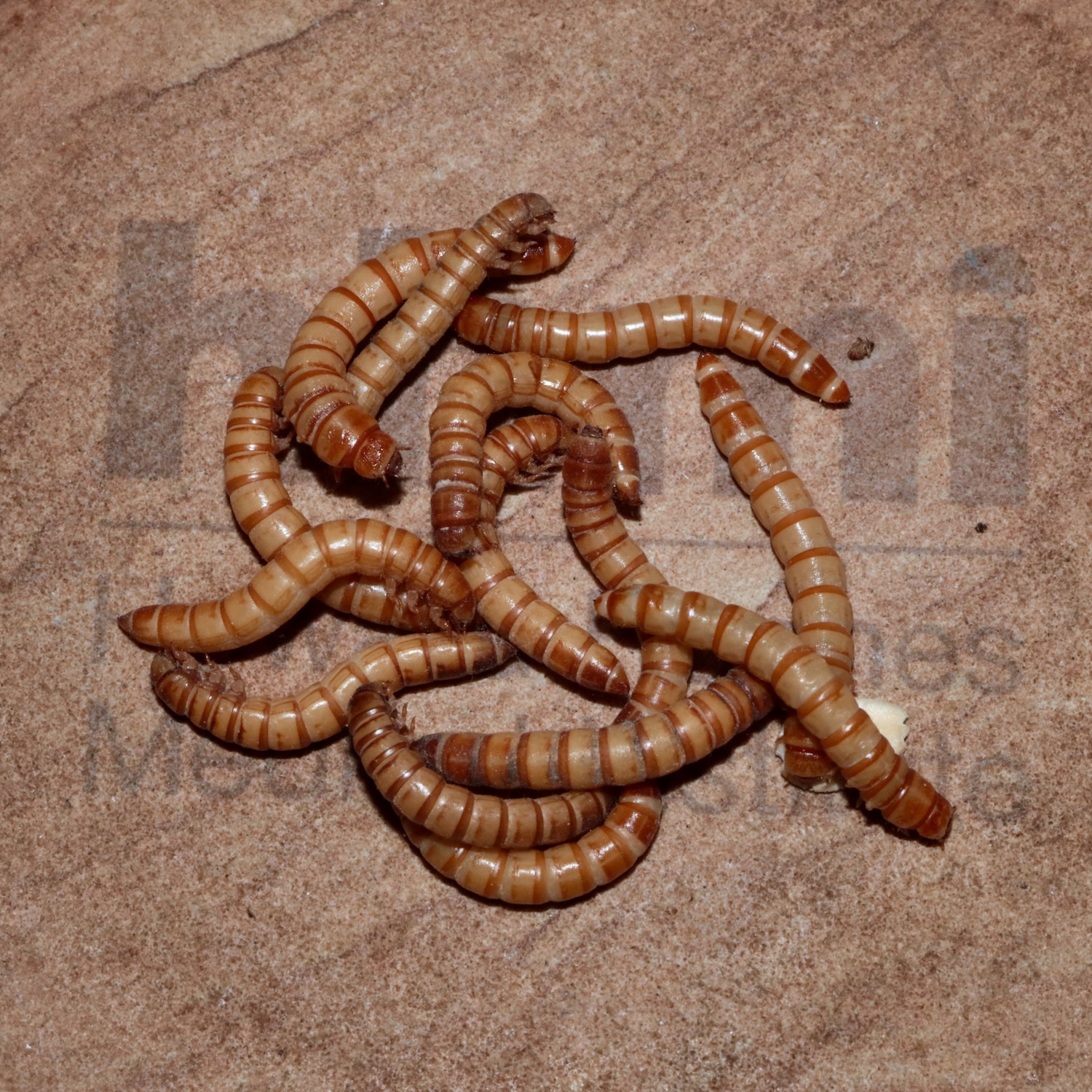
Mealworms are like the cows or sheep of the invertebrate feedstock. They are quiet grazers that eat our vegetable scraps and don’t move very fast. I came back to all these containers of frantic, squirming, wiggling worms, they were writhing, flailing as if in agony. The spiders, even the smallest, were darting in to deliver small bites. A full grown spider would inject enough venom to kill quickly, within minutes, but these little fellows required multiple attacks to get a slow kill. It was ugly, and I felt sorry for the worms.
I came back the next day. All of them were dead, but in various states of digestion, from drained to blackening. My little carnivores are fierce and ruthless.
I’m going to have to change up my feeding schedule, switching from Drosophila, which are apparently little more than quick snacks to them, to mealworms as soon as they’ve got fangs big enough to puncture the cuticle. I should be able to cut back feeding from twice a week to once a week. I’ll just have to swallow my guilt.

They are quite small. Here’s one stroking Abraham Lincoln’s cheek.
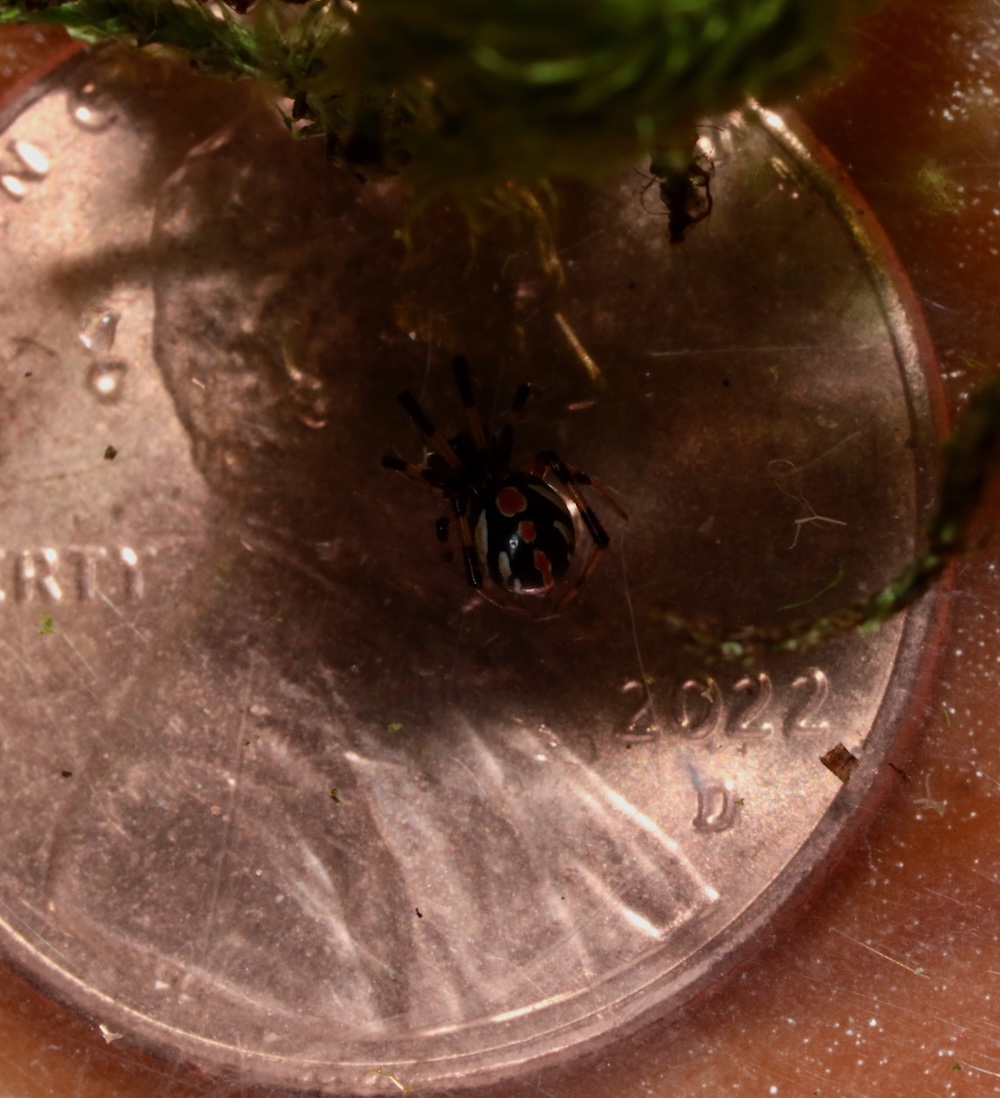
You can also see the juvenile coloration — the adults wil be solid black, with just a red mark on the ventral abdomen. One thing I noticed was that when I put them in a container with a jumble of moss, they practically disappear, even with the bright red markings. More than once I transferred a spider to a new container and lost it, and had to poke around to be sure I hadn’t accidentally set it free on the lab bench.

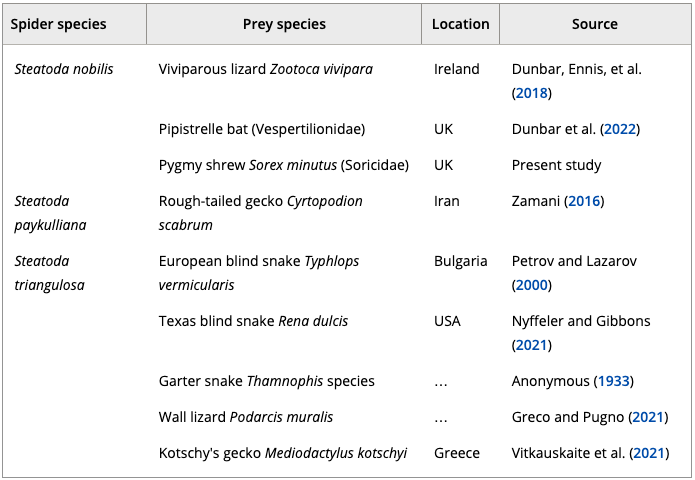
Spiders in the genus Theridiidae (and their cousins, Latrodectus) are well known for hunting and eating prey much bigger than they are, including vertebrates. Here’s a vigorous specimen of Steatoda nobilis trussing up a shrew, which she then reduced to skin and bones over the course of three days.
I’m sad to say that we don’t have S. nobilis where I live, but there’s hope — they’re spreading across the country. Our spiders in my region can get fairly big (especially S. triangulosa) but they’re still a little smaller than S. nobilis. All Theridiidae have neurotoxic toxins in their venom.
Considering the range expansion and population densities achieved by S. nobilis over recent decades, it is unsurprising that the species utilizes its full repertoire of predatory tactics as it continues to adapt to new territories and exploit available resources. As this species continues to spread, such events of vertebrate predation are likely to increase. This contribution validates that S. nobilis is a habitual rather than an occasional vertebrate eater, thus demonstrating the potential impact of S. nobilis on native organisms and the continued need to closely monitor this species.
Don’t worry — you’re not on the menu, yet.

I should save that title for a horror novel.
The other day, I switched my juvenile Latrodectus from a diet of nice snackable fruit flies to huge, relatively speaking, mealworms. I posted a photo of that right here.
I was curious to see how they would cope with such a large prey item. No problem! Here’s the result: the mealworm was sucked completely dry, leaving nothing but a transparent tube of cuticle.
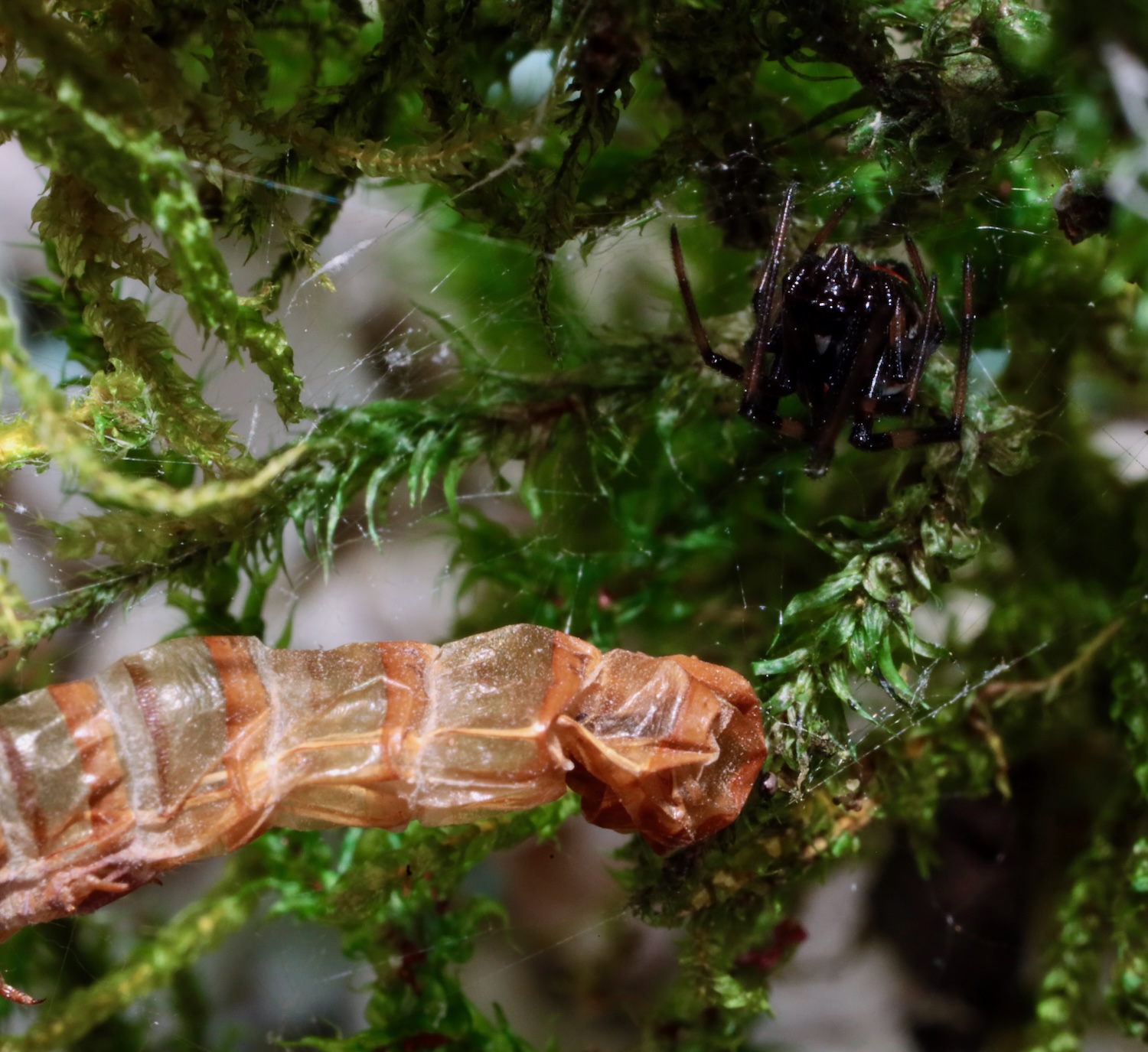
I don’t know how they do it. The prey animal was completely hollowed out. Maybe I’ll have to try to capture it in timelapse.

Yesterday, I started moving the larger juvenile Latrodectus to their very own special homes, and I give them a day to build a cobweb before giving them a homecoming meal. This young lady got handed a whole mealworm — imagine giving a teenager a whole cow and permission to kill and eat it. That’s what this was like.
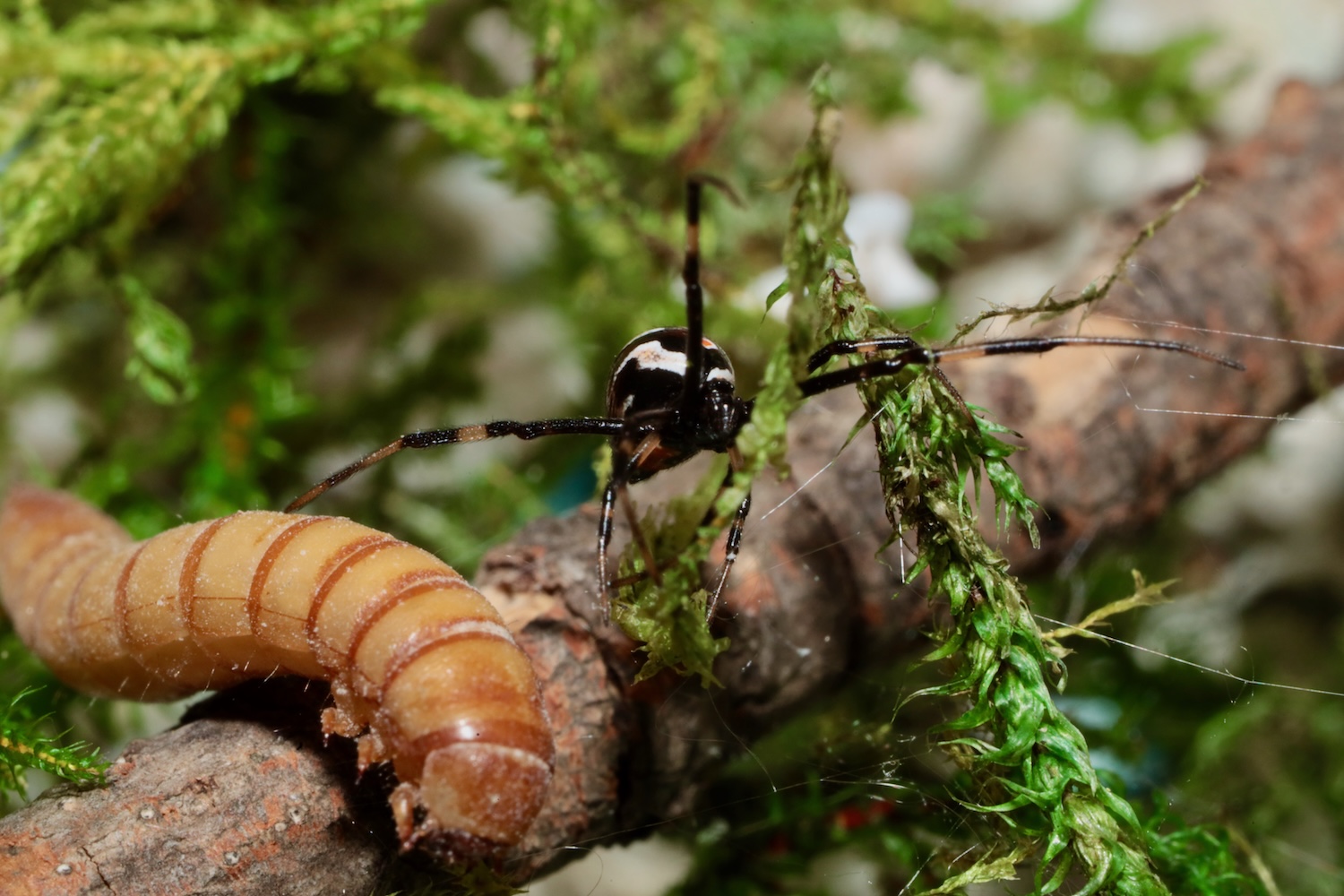
She kept tapping it like she could hardly believe it was all hers. She’s been living on fruit flies for the past month or so, so this was like a miracle meal plopped into her lap. If spiders had laps.
Notice how she has the white juvenile markings on her dorsal abdomen. Those will fade. She also has a red hourglass on her ventral abdomen, which will not.

A reader sent me a comment about how Catholics tell stories that they claim are in the Bible that aren’t, and that specifically they don’t include spiders. I had to double check. Here are all the Bible verses that mention spiders.
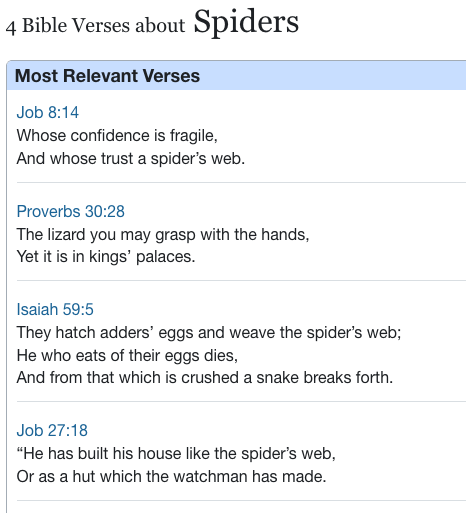
Pathetic. For one, they’re about spider webs, not spiders, and the second one is about lizards. Do they think lizards and spiders are the same thing? They’re so desperate to pad their list of spider facts from the Bible that they include reptiles.
Speaking of padding, here’s my correspondent’s tale of Catholic fable-making.
I made a comment on Bluesky that it wasn’t until I was studying the Bible in Religion class at a Catholic High School that I realized how many of the stories I was told by nuns in grade school weren’t actually in the Bible. I gave, as an example, the story of how Jesus, Mary, and Joseph, in their flight to Egypt to escape Herod Antipas’ attempt to kill all potential Kings of the Jews, they hid in a cave from pursuing soldiers. After they entered the cave, spiders spun webs across the entrance to the cave causing the soldiers to believe that the Holy Family couldn’t have possibly entered the cave.
A commenter wondered if the story I related was inspired by a similar one about David fleeing from King Saul for the exact same reason. Unlike the story about the Holy Family, the tale of David hiding in a cave, minus the spiders, is actually in the Bible.
I interpret this to mean Christians realize that there is a serious lack of spider relevance in their holy book, and they are crying out for more.
