Pharyngula
Evolution, development, and random biological ejaculations from a godless liberal


The whole dang conference is available in one giant 8 hour video, and here it is.
That’s kind of indigestibly huge, so I’ve been going at it in small pieces. I started with Gabrielle Winters at about 5 hours in, with Cephalopod Neurogenomics: Insights into the Evolution of Complex Brains, just because that’s what I’m most interested in. It’s a conference for general audiences, so it starts off with a good basic overview of cephalopods and neuroscience and molecular biology, and then, just as it starts getting interesting, the sound cuts out at 15 minutes…and doesn’t resume for another 15 minutes. Aaargh. You’ll have to get the sense of it from the slide text, and I guess I’ll have to wait for the paper.
I did get the take home message, though: cephalopods have evolved complex brains independently of ours, and the answer to this question is…

No. Cephalopods have evolved novel molecular mechanisms to solve problems in learning and memory similar to ours, which is actually kind of cool. Convergent evolution may lead to similar outcomes, but looking at the underlying mechanisms will expose the different evolutionary histories.
I’ll work through other talks as my time allows — it’s actually rather nice to have a day long conference available so I can just fit it to my schedule — but hey, if you’ve got a quiet weekend, go ahead and watch the whole thing.


Next week, on Tuesday the 27th, at the Common Cup Coffeehouse, Rachel Johnson of the biology discipline will explain Why You Should Get a Flu Shot: The Science Behind Vaccines.
You are required to attend. There will be a quiz afterwards, and this material will definitely be on the final exam. You will be excused if you get your flu shot, however.


Obvs, he did it.
Larry Moran discusses some apologetics from Jonathan McLatchie, in which McLatchie briefly argues for intelligent design. I think the fact that it’s in the context of Christian apologetics already gives away the store, but at least he gives a succinct definition of intelligent design:
The study of patterns in nature which bear the hallmarks of an intelligent cause


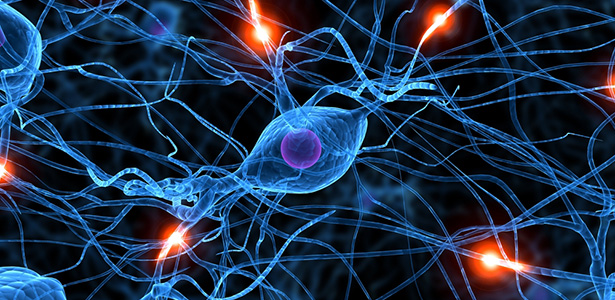
There’s an interesting conversation in the New York Times: a neuroscientist, Kenneth D. Miller, argues that brain uploading ain’t gonna happen. I agree with him, only in part because of the argument from complexity he gives.

We need more of these, and here’s another: Great Adaptations: A Fantastical Collection of Science Poems. It contains short rhyming summaries of scientists’ work on adaptations, all nicely illustrated.
Here’s one from Sarah Hrdy’s work on empathy and cooperation.

Doesn’t that make you want to run out and buy it right now? How much would you pay? $5? $10? $25?
Well, you can’t. Instead, you have to go to this website and download it for free.
Writing the book was a labor of love, so I hope you love it too! Lastly, because our objective is to get as many people reading and learning about evolution, we’re offering the E-book for free.
Those wacky scientists. They know nothing of capitalism. Isn’t it great?


Knobby Argonaut, Argonauta nodosa
Also, what’s Brian Switek doing, writing about cephalopods? He’s supposed to be writing about dinosaurs
But first impressions can be deceiving. In truth, as I later learned from Klug, the paper nautilus is not a close relative of today’s pearly nautilus, nor is it an echo of the long-lost ammonoids. The creature that had ensnared my mind is totally different.
The argonaut is an octopus, and its prehistoric look is created by the way the squishy creature reproduces. The “shell,” Klug says, “is actually an egg case secreted by two specialized arms,” and made of the mineral calcite. As she swims, a female argonaut cuddles her eggs in the shell-like cases pressed against her sides. Lacking cases, male argonauts just look like itty-bitty octopuses.

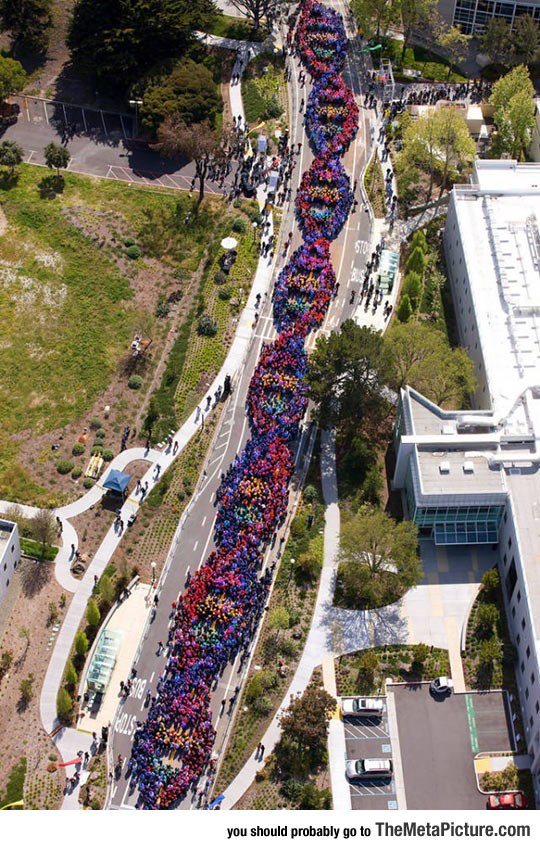
Although it makes me want to gather a group of brightly dressed people to assemble a nuclease on the next block.


Sadly, a young man in England has been diagnosed with stage IV cancer — and he really is an atheist in a metaphorical foxhole, and it hasn’t changed his opinion of religion.
Between now and last Wednesday I’ve worried about various things, but one thought that stands out is religion. Before I go into more depth, I’ll stress that I’m an atheist. Religion, the way I see it, is a reactionary and backward tendency that has stood alongside man throughout history, yet has always blinded communities and corrupted rational thought. As society has advanced, so has our depth of knowledge and understanding of the world and, as a result, religious influence has decreased in many ways, but that’s not to say it isn’t an issue. The Israeli-Palestinian conflict, the persisting cultural backwardness in the southern USA, and the political situation in Iraq, Saudi Arabia or Iran are all different manifestations of the same illness. Religion does to society what cancer is doing to my spine.
I must gently correct him on one thing, though: we have persisting cultural backwardness in the Northern USA, too. But otherwise, speak it, brother!
He doesn’t object to friends and family praying for him, and has reached out to a deity (who hasn’t answered) himself, but he has his own ideology that provides a good constructive metaphor for his condition. He’s a strong Marxist.
As it happens, I have little reason to believe there’s a lot going on in heaven for me. On Wednesday I was told my that my cancer, on a I – IV grading system, fell into the most aggressive, Grade IV category. No one could commit to giving me a death date, but I’m left with the impressesion that, after chemotherapy, radiotherapy and physiotherapy (to regain movement), all of which should begin next week, I’ll have months to live. This was obviously terrible news, though it perhaps takes some of the pressure off as it makes me more assured in my godlessness, and I also can’t help but feel slightly proud that it’s my spinal cells which have done this. In revolutionary terms, they definitely quality as extremists. They’d dwarf the various coups in Argentina, which overthrew and replaced different governments in the region, or the revolutionary movements in the little communist countries like Vietnam or Afghanistan. My cells certainly take after the Bolsheviks here; if the February Revolution was my initial diagnosis, the October Revolution was my conversation two days ago. The shooting of the Romanov family is yet to come, but we sure these cells will take no prisoners there either. It’s also interesting to see that, due to their rapid growth and malignancy, they follow in the internationalist line, bent on spreading the revolution worldwide. Ideologically speaking, I can’t really complain.
The idea that cancer is revolutionary is an interesting one, and valid — these definitely are cells that are overthrowing the existing order and are tearing apart the bonds of convention.
However, I would also point out that the healthy multicellular body represents a proletarian paradise. There are no bosses (the brain may think it is, but it’s really just a servant of the whole, and it too is made up cooperating cells working to generate the illusion of self), and the entirety of the body is a mass of cells in mutual harmony. All parts are necessary and appreciated, and all cells are fed according to their need.
Marx thought evolutionary theory was the product of a nation of bourgeois shopkeepers, and he was actually quite right: there has long been a focus on conflict and competition, a rather capitalistic perspective. But multicellularity is the end result of cooperation and mutual aid, in which individual cells joined collectives to stand strong against the forces of the environment. I am more in sympathy with Kropotkin than many of Darwin’s heirs on this point (Darwin himself had a more complex view of the subject).
In that sense, cancer is more of a reactionary counter-revolution, in which a few cells abandon the bonds of trust to selfishly exploit their neighbors and the resources of the whole. If they succeed, the whole system will crash, leading to the deaths of trillions of cells…including the greedy and short-sighted cancerous reactionaries.
The struggle for life is also a fight for the welfare of the masses. It is the restoration of harmony and cooperation to all of the cells of the body. I wish my comrade in the Leeds General Infirmary well, and if he should fall, let us all remember that he fell in glorious struggle, as a communal entity resisting an exploitive few.