
I live in Morris, Minnesota, which is on the western edge of the state. This part of the state is called the Prairie Pothole region, which isn’t particularly glamorous — “potholes” are not generally regarded as a positive feature — but it’s nicer than it sounds. We’re part of a larger geological feature.
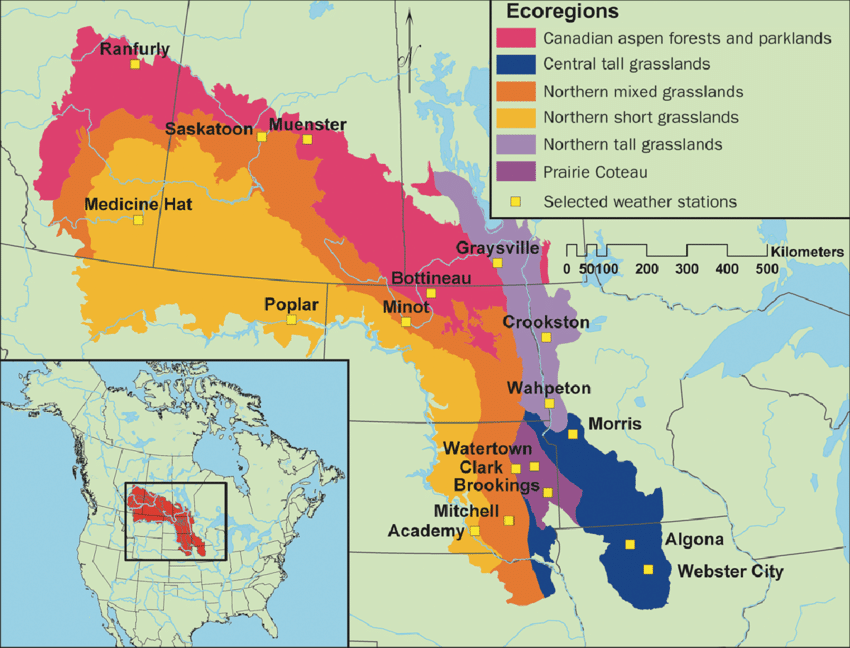
This is a part of the world that was scoured by glaciers, but not deeply. The countryside is full of these shallow dimples that still fit the description of a lake, but they are kind of crappy lakes. Not deep, more marsh than clear open water, not the kind of lake that you imagine building a cabin next to and putting in a dock and cruising around in your bass boat. Don’t get me wrong, tourists, there are also plenty of deep fishing lakes around here, but we also have this thick scattering of dimples. And these dimples are important!
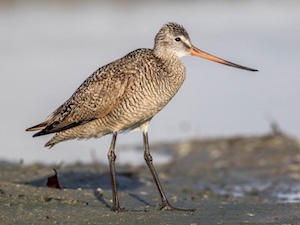
Today, more than 300 bird species depend on the Prairie Potholes, including the endangered Piping Plover, iconic White Pelican, and elegant Marbled Godwit. But the region is best known for sustaining waterfowl: half of North America’s breeding migratory waterfowl are hatched and reared in this region, earning it the nickname “America’s Duck Factory.”
So yeah, I live in a duck factory. Big chunks of the land around us are set aside as “waterfowl production areas” and “wildlife management areas,” which has the advantage that they are left undisturbed and unplowed and are also great “spider production areas” although they are never displayed as such.
But the potholes are under threat. We have regulations to prevent local farms from building what are called “drain tiles” too close to the potholes — these are perforated pipes that facilitate drainage of the land, and which have the potential to suck a shallow lake dry.
One of the biggest threats to these wetlands comes from drain tiles — perforated pipes buried underground to move water within agricultural soils. These systems help farmers manage moisture levels, but when placed too close to Prairie Potholes, they can siphon water away and shorten or eliminate the annual life of these vitally important wetlands.
Existing rules establish minimum safe distances between wetlands and drain tiles to prevent farmland drainage from harming these fragile habitats. This combination of science, site-specific considerations, and good-faith agreements has successfully kept the wetlands wet while allowing landowners to use the rest of their properties as they see fit.
Unfortunately, some people would prefer to have more land for growing corn than “wasting” that acreage on migratory birds and want to squeeze out the potholes by placing more drain tiles next to them.
Now, a new request for information from the U.S. Fish and Wildlife Service signals a departure from 60 years of successful, bipartisan policy by reducing the allowable distance between drain tiles and Prairie Potholes. This proposed change could dry up vitally important wetlands, threatening one of North America’s most important breeding grounds for ducks and other bird species.
You probably don’t live in our duck factory, but if you like ducks and geese and other native birds, you can sign a petition to protect our environment. It’s a good thing to do.

I do deeply appreciate growing up in the Pothole — between the shallow lakes and James River we (west of you) have surfeit of wet land.
Pothole is funny name. Northern Germany is also absolutely full of them, but we call them “Toteislöcher” (dead ice holes).
I never realized that pelicans got this far north and inland (for some reason, I always associated them with, like, Florida) until I saw one at Whiteshell in Manitoba a couple of years ago.
We’ve got pelicans, cranes, seagulls…all kinds of birds I didn’t realize would live this far inland, until we got here.
Well, at least you and Jerry Coyne have a love of ducks in common. On cats, I’m with him but ducks and wild fowl in general don’t do much for me. it did remind me of all things of a school visit when I was very young to a minor stately home called Ingatestone Hall in the UK. We got to try on and play with helmets and swords from the English Civil War period but what also stuck in my mind was they had a punt which, we were told, was used to hunt water fowl. Mounted over the bow was was what looked like this enormous flintlock cannon but was probably a large-bore shotgun. I remember thinking it wouldn’t be much use for hunting as anything unfortunate enough to come within range would have been blown apart. Funny what sticks in the memory.
Saskatchewan is the land of more than 100,000 lakes.
Crappie fishing, yay!
The map does indeed show many “Waterfowl Production Areas” around Morris. I also notice that while the water in Morris drains into the Gulf of Mexico, the water in two towns within about 8 miles from Morris (Alberta and Donnelly) drains into the Hudson Bay. So PZ could take an easy bicycle ride from home and claim he cycled up to the divide.
@6. Reginald Selkirk : “The countryside is full of these shallow dimples that still fit the description of a lake, but they are kind of crappy lakes.”
Hmm..Lakes? Ponds? Puddles?
What’s the diff?
Lessee
Source : https://admirallakeandpondrestoration.com/nature/difference-between-pond-and-lake/
Plus this too :
.
Source : https://www.askdifference.com/pond-vs-puddle/#google_vignette
In addition to :
.
Source : https://www.ocpond.org/lake-vs-pond-understanding-the-key-differences/
Then there’s saltpans, claypans and cooking pans too.. Taipans are very different indeed again..
Oh and things can and do shift from one to t’others over time.. As usual in nature, a spectrum. Metaphorically (?) speaking.
Ranfurly? You couldn’t use a world-famous metropolis like Vegreville as a landmark on the map?