
My university offers courses in several languages with a relatively tiny population base, like Anishinaabe, the language of the indigenous peoples of the upper Midwest. I’m sometimes, but not often, asked why we bother, because these languages are so “impractical”, and it’s because they’re good for sharing the culture and history of groups of people, or because someone wants to understand their grandfather’s perspective (or the Teachings of the Seven Grandfathers). We should value the diverse ways of the multitude of different groups that have grown and changed throughout history. Unfortunately, many of these languages are dying out, and being replaced by a small number of “behemoth languages,” and we’re losing world languages at a steady rate — which is why it’s important to preserve as much as we can. This paper, The rise and fall of language diversity through the Holocene, tries to model the appearance and loss of languages over the last few millennia.
There are ~7500 languages signed and spoken in the world today, and they have a wide range of grammatical structures, vocabularies, speech sounds, signs, and usage rules. The study of language diversity has brought distinctive insights into how human behavior and cognition are shaped by ecological, social, and communicative pressures. The observable limits of linguistic diversity—features that are either universally present or absent in the world’s languages—have been at the core of what makes humans a distinctive species. Insights into language have also been used to understand other dimensions of human variation and homogeneity, including cultural and psychological traits. Over the past 500 years, all evidence points to a large systematic decrease in linguistic diversity, in parallel with the spread of a handful of behemoth languages, such as English, Spanish, Mandarin, Arabic, and Hindi. Nearly 5 billion people use at least 1 of the 10 most common languages, whereas half of the world’s languages are now endangered, and about four become dormant every year. This results in the loss of cultural and scientific knowledge embedded in minority languages and contributes to the unequal development in science, technology, medicine, and education that predominantly benefits speakers of the world’s largest languages.
I’m sure speakers of Anishinaabe recognize the definite advantages of speaking English, or maybe Mandarin in a few years, but they still want to retain a connection with their ancestors. Something similar happened to my immigrant great-great-grandparents — they spoke Norwegian, lived in communities of fellow Norwegian immigrants, and right up to my great-grandparents generation, were learning Norwegian and speaking it in church and family gatherings, but my generation has completely adopted the dominant English language of my region. We might still occasionally say “uff-da” or have lutefisk and lefse on holidays, but otherwise, we’re totally assimilated.
So about 4 languages a year are disappearing. The authors of that paper have attempted to quantitatively estimate the number of languages spoken over our history, and it’s surprising how much we’ve lost.
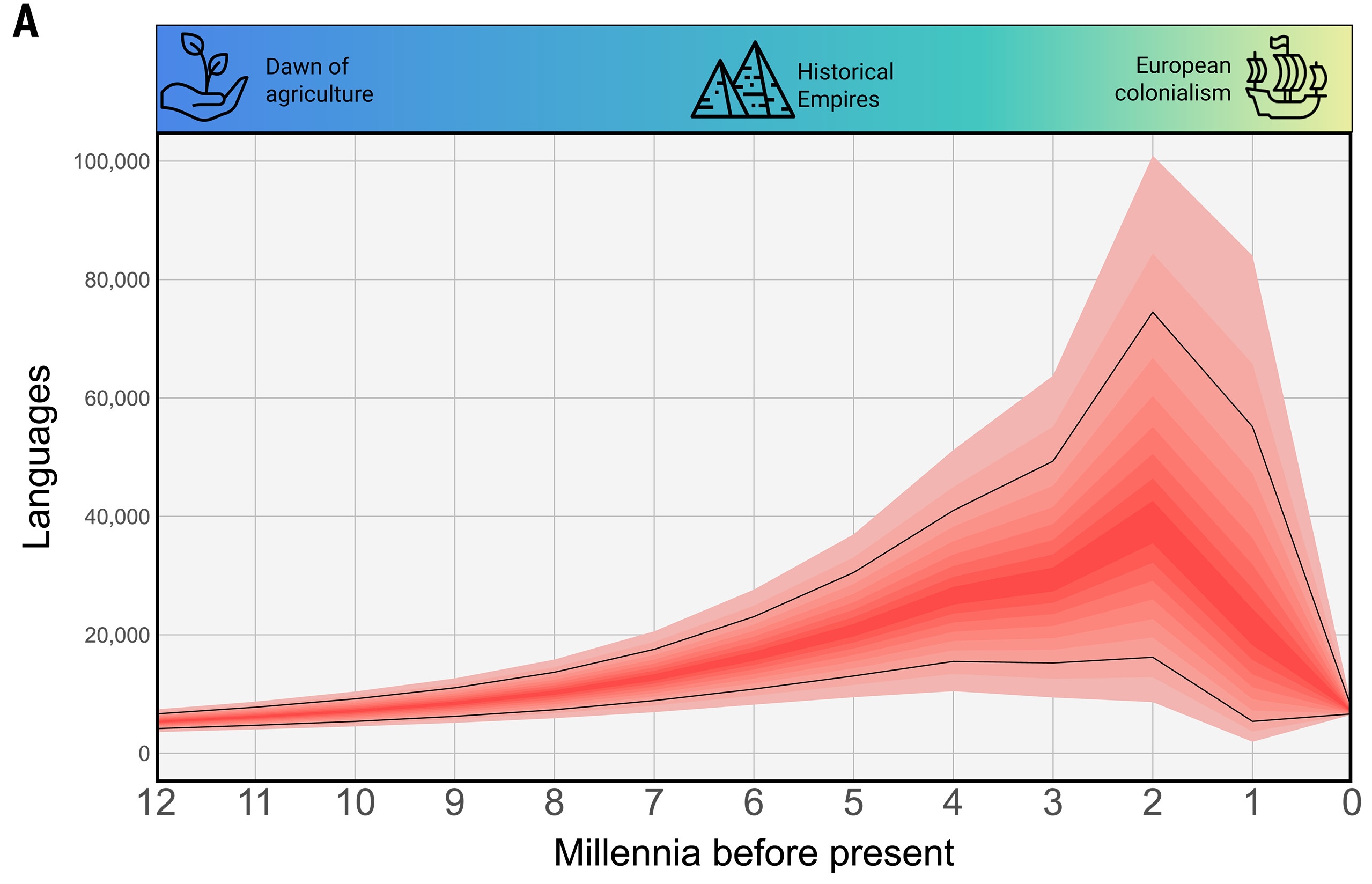
Fig. 4. Marginal results of our model aggregated across all conditions.
(A) The number of languages through the Holocene. Lighter shades of the curve correspond to progressively wider intervals comprising 10 to 90% of the predictions. Black lines indicate the interval containing 70% of the predictions.
Whoa. That’s a pretty sharp peak and a rather precipitous decline. The authors propose an explanation of what was going on.
Typically, the total number of languages has been increasing for most of the Holocene, mimicking the global expansion of human populations. This suggests that the rise of large-scale regional powers 4000 years ago did not generally and immediately deter the growth of linguistic diversity. Instead, most trajectories reached a maximum of 1000 to 3000 yr B.P. Although there is wide uncertainty in our estimates, most trajectories display an approximately 10-fold increase in the number of languages between the early Holocene and this point. This period, harboring tens of thousands of languages, has escaped previous theorizing.
In our model, this “golden age” was followed by an extremely rapid decrease in linguistic diversity, especially over the last two millennia. The process unfolded so quickly that the rate of language loss must have been even faster than the current pessimistic forecasts for the year 2100.
As populations grew, the number of languages also grew…until the rise of large empires and increased trade and communication, when a few successful dominant groups swallowed up the smaller populations. This model also makes the evolution of various languages non-adaptationist — some languages thrive, not because they are superior to other languages, but because they are piggy-backing on other properties of their population. Don’t bother trying to argue that English is better than Spanish, because what really matters is the strength and success of the population speaking the language. Languages don’t die because they’re inferior, but because they’re taken over by an expanding population.
It follows that this massive and biased reduction in linguistic diversity has shaped the relative abundance of different language traits. However, functional factors (such as learnability, efficient communication, or computational costs) are typically invoked instead to explain why some language traits are more common than others. But the intensity and recency of the linguistic diversity bottleneck make it a clear nonfunctional null hypothesis for understanding any skewed linguistic distribution.
Cool. I do have to envy linguists because at least they don’t get stupid demands like “Show me an Italian giving birth to a baby speaking Thai.” A lot of the elements of language evolution are similar to the properties of biological evolution, and seem to be equally incomprehensible to the ignorant.

I wonder if another factor is the growth of literacy. Reading/writing are hard, and a written language might be adopted to spare the effort of creating your own. Maybe accounting was the major influence?
It would be interesting to overlay figure 4 with the amount of languages we actually have evidence for. Especially given the huge margins of uncertainty.
Also languages are not constant, neither in place nor in time. So trying to pin down a number is problematic. When are two languages different?
Certainly a lot of variables and nuance to think about. I’m sure the death of languages is inevitable, but it’s sad to see those chunks of culture go, especially when colonialism is a part of the cause. Good luck to all the preservationists out there.
I have a couple friends who both speak like a dozen languages. They both say that Mandarin is one of the easiest languages to learn to speak and understand, but also one of the hardest to learn to read and write. Which seems odd, but there it is. One must wonder whether that might impede Mandarin from spreading much around the world, other than by emigration of people who already speak it.
I don’t trust my gut when it comes to science, but that trend through prehistory seems awfully suspicious to me. I imagine it’s based on documented languages and reconstructions of proto-languages from which they descend, but those languages themselves were once part of older language families or were creoles of multiple languages. How many languages were replaced by Afro-Asiatic languages? Ten thousand years ago there would have been many, many languages across Near East that are now completely undocumented. Elamite and Sumerian surely had lots of relatives. Europe undoubtedly had just as many languages six thousand years ago as it did two thousand years ago.
As contact (physical and remote communications) has increased both incidentally and in routine, that’s naturally going to evolve toward fewer dominant methods of communication, in this instance “number of languages.” By itself, it won’t squelch everything — look at linguistic changes on the Indian subcontinent from the initial dominance by the British Empire up to Partition, and realize that languages used “only at home” (or, these days, “only in the village without a cell phone”) are fighting against more-facially-dominant languages. (“Two peoples separated by a common language” isn’t just a clever aphorism; the fun of a native of Charleston, South Carolina trying to communicate what’s wrong with his car to a mechanic from Glasgow is less fun in the moment.)
To put it another way, “dominant cultures gonna dominate.” That includes their… pardon the sarcastic referent… lingua franca.
joel, Re: Mandarin, that’s why the Koreans invented an alphabetic writing system rather than one based on Chinese characters as the Japanese did. I am told this resulted in much broader spread of literacy in Korea.
What I find fascinating is the somewhat comparable development in the Middle East: There were those empires (one replacing the one before it) who used languages with cuneiform writing systems that had huge (for that time) libraries, legal and economic systems – and then they conquer the Arameans, much smaller kingdoms, but ones that used alphabetical writing systems – and instead of doing what I would expect to be obvious – adopting a new writing system for their own languages – they went and adopted the Aramean language itself as the new official language.
My late wife had a degree in Linguistics from UC Berkeley. She did a year of graduate work but quit because she REALLY DIDN’T LIKE the field location where the research was to be done. She was set to studying Northern Cheyenne, which meant spending the field season in Lame Deer, MT. She fully agreed with the description of Montana as “Big Sky Country”. She was far happier living within walking distance of the Berkeley campus and access to the main library.
So… It’s not just studying and recording languages before they’re lost. It’s also finding people that like the field conditions necessary to do so.
Re: rsmith @ #2…
There’s an old joke that a language is a dialect with an army.
Communication is sometimes aided by language. But, in the world of social media, the decrease in precise communication is (to use a trite current phrase) ‘dumbing’ down’ society.
I always got a chuckle out of the bumper sticker that said:
‘illiterate? write for free help’
whheydt @8:
That’s no joke. You’ll still find many people who will insist that various languages and dialects are merely degraded forms of the standard language (see spoken Swiss German, Catalan, and any number of English dialects).
Back in university my roommate’s girlfriend (who was from northern Alberta) used “uff-da” often and I kind of liked it and adopted it into my personal vocabulary. I’ve been using it for about 40 years and only just now learned the source of that word. Thanks PZ!
There are obviously lots of hypotheses as to why this pattern is the way it is, but looking at that chart, it strikes me that the great empires of the Classical world (Roman, Han Chinese, Parthian, Kushite, etc.) didn’t seem to have much negative effect on linguistic diversity, but the colonial empires of the Early Modern period (British, Spanish, French) very much did.
There is a huge difference between these two sets of empires in terms of linguistic usage and expectations, of course. The Romans did not insist everyone learn Latin (though they were happy to teach it to local elites), and although what little centralised bureaucracy they had used only Latin and Greek, most trade and exchange happened using local languages instead. Likewise the Han Chinese used a centralised writing system of Han characters, but you could use that to write whatever language you spoke. Compare the British in India and Spanish in America, and it’s a totally different situation, where local languages were actively suppressed.
It is a cultural loss.
I personally hold to a weak version of Sapir-Whorf, it being a form of culture, and I think that learning more than one language expanded my conceptual perspectives.
I remember reading about this some years ago: https://onlinelibrary.wiley.com/doi/10.1207/s15516709cog0000_62
↓
Abstract
Cognitive research on metaphoric concepts of time has focused on differences between moving Ego and moving time models, but even more basic is the contrast between Ego- and temporal-reference-point models. Dynamic models appear to be quasi-universal cross-culturally, as does the generalization that in Ego-reference-point models, FUTURE IS IN FRONT OF EGO and PAST IS IN BACK OF EGO. The Aymara language instead has a major static model of time wherein FUTURE IS BEHIND EGO and PAST IS IN FRONT OF EGO; linguistic and gestural data give strong confirmation of this unusual culture-specific cognitive pattern. Gestural data provide crucial information unavailable to purely linguistic analysis, suggesting that when investigating conceptual systems both forms of expression should be analyzed complementarily. Important issues in embodied cognition are raised: how fully shared are bodily grounded motivations for universal cognitive patterns, what makes a rare pattern emerge, and what are the cultural entailments of such patterns?
Some Aboriginal languages do not see directions as relative to themselves, but themselves as relative to the cardinal:
https://yumi-sabe.aiatsis.gov.au/sites/default/files/outputs/2024-03/Palmer%20et%20al…%205.1%20Prepublication%20circulation%20version.pdf
↓
1. Introduction
The Indigenous languages of Australia are widely understood to exemplify languages in which
abstract cardinal directions such as east and south dominate, and viewpoint-based egocentric
concepts such as front, back, left and right are largely or entirely absent (Dasen & Mishra
2010:301-302; Levinson 2003:75,336; McGregor 2006:148; Meakins & Algy 2016:480), and
for which, projective geocentric concepts invoking aspects of the environment have been
largely ignored. In Majid et al.’s (2004) survey of 20 languages from across the globe, three
of the four Australian languages are classified as completely lacking the relative (egocentric)
frame of reference (FoR), one of which, Guugu Yimithirr, is also classified as completely
lacking the intrinsic (object-centered) FoR, the only language in Majid et al.’s sample to do so.
Based on this claimed dominance of abstract cardinals over terms invoking topographic
features and relative projections, Australian languages are cited as evidence of a potential for
humans to conceptualize the world in terms of entirely abstract spatial coordinates.
Corresponding abstract concepts in non-linguistic behaviour are taken as evidence of language
shaping cognition, a neo-Whorfian effect of linguistic relativity in which spatial representations
encoded in language direct speakers to conceptualize space in corresponding ways (Le Guen
2011; Levinson 2003; Majid et al 2004).
I only recently discovered Cypriot Arabic is a language, and that it’s dying. :~(
In my view there is one serious reason to be concerned about the extinction of languages. Language is something reasonably unique about humans. Unfortunately we do not know how language happens. We are, in our young brains, each capable of learning whatever language(s) our local group(s) speak and this from utterly garbled, noisy input. How is this possible? Linguists theorize and model. Such theorizing and modeling is based on data. A theory of language development that is based on only the English experience is unlikely to be adequate for a language that has radically different syntax, grammar, or conceptual categories. The more languages that linguists have access to, the more likely they will come to understand how language in general works.
Australia had somewhere between 250 to 300 tribal groups with their own cultures and languages before European colonisation. About half of them are lost with only about 30 spoken regularly and the rest endangered some with only one surviving speaker and efforts are under way to preserve them. There is now a growing body of literature, mainly children’s stories in these languages. I can remember as a child reading aboriginal dreamtime stories in English. A few years ago I listened to an aboriginal man talk about his culture and spiritual connection to the land. It was logical and you might say down to earth. It gave me a new appreciation not only for his culture but for the land and environment itself.
In Australia at the moment we have a henna-haired version of Trump called Pauline Hanson at the head of the One Nation Party which is rising to dominate politics. She has a rabid anti-immigration policy and keeps claiming migrants should “assimilate”. Considering she is descended from the colonising migrants people are only naturally asking which aboriginal culture she will assimilate to. She is of course committed to the elimination of aboriginal culture by defunding all of its programs and removing all acknowledgement of their existence and ownership of land. Her main funder is Australia’s wealthiest nepo-baby who inherited her fathers vast ill-gotten mining empire. His solution to the Aboriginal “problem” because they stood in the way of his mining developments was to demand their compulsory sterilisation.
We kinda do. Isolated populations’ language will drift over time. Changes embed. Timeframes are generational.
We’re in the Information Age, and the internet seriously inhibits that sort of isolation.
True, internet bubbles develop specialised vocabularies (jargon/cant), but not new grammatical systems or distinct dialects.
By their nature, digital spaces host temporary subcultures. I remember Usenet and leetspeak.
A biological analogy: populations require genetic isolation to speciate.
(And who apart from true geeky types bother with artificial languages?)
Many American Tribal groups are working to revive their languages. Check out the Myaamia. A search should find them. (These are the Miami of Indiana/Ohio, not the Miami of Florida)
Wikipedia – Nicaraguan Sign Language
Chelsea Vowel (of the Métis in Space podcast) is developing a Cree language course (Plains Y dialect, standard alphabet), free online for absolute beginners. Dialects span Canada. The broader Algonquian language family includes the US midwest & east coast.
So far, 2.5 of 12 modules are up: each a set of short YouTube videos. She previously taught at University of Alberta but wished Cree were easier to access. Captions planned.
Well, there’s https://en.wikipedia.org/wiki/Whistled_language which is a different modality to sign language.
But they are basically transductions of regular language, right?
Mostly a phonological modality‑shift, not orthography.
Similar to using shorthand for writing.
My main concern about the loss of languages is that languages themselves contain a ton of linguistical information; for example, through the comparative method , one is able to reconstruct earlier forms of the language even if they left no witten redords (and even for those that do, the written register often differes remarkably from the spoken). Furthermore, our understanding of language structures (which features of languages are connected) and patterns of diachronic development of languages is hampered when we have only a very biased sample of surving languages, Of course one could still try to preserve records of the existing languages, but there is still a risk of not recording important features whose importance we couldn’t grasp at the time of recording (this, by the way, is also why well maintained biological collections in museums are so important – very often, the relevance of preserving certain properties becomes apparent only decades or centuries later – who would have thought abot DNA-sequencing in the 19th century?) or loosing these recordings over times. With each lost language, our and our descendants understandng of languages and their development will be poorer in the long run.
Lower Sorbian, the language of my late grandfather, appears to have less than 100 truly fluent speakers left. Although it is taught in schools and street signs in the area are bilingual, I fear the language will be effectively extinct in my lifetime.
When people say “Why learn a language?”, it reminds me of Bill Hicks’ “Waffle House” routine where a server asks him “What are you reading for?”
Benjamin Zephaniah had a good idea, that schoolchildren in England should learn some Welsh and Cornish, two of the surviving Celtic languages. Of course it would be rejected vehemently by English “patriots” whose xenophobia extends to cultures that have been in Britain since before the Saxons.
@ Lasius: The Domoniwa, the umbrella association of the different sorbian associations, provides course material and courses for learning Upper and Lower Sorbian via it’s WItaj- program. much of which is for free:
https://sprachkurs.sorbischlernen.de/#/welcome
So you could try to learn it yourself!
Of course I misspelled “Sorbian” by using lower case, and the program is spelled WITAJ :(
Is there an editing function?
The saddest loss is probably the Phoenician language, which was praised for its rich literature by the Romans (sadly, the latter also destroyed the civilisation). But the most important language, classical Greek, is retained, with a large body of extant text (though miserably, I do not speak that language).
Once again becoming a contrarian, I could imagine AI being useful for language preservation (at least once the problem of the enormous energy use is resolved). (Don’t invest in their stocks though, the bubble is bursting now. Samsung is down -13% today and continues to be in freefall.) I myself used AI to learn Italian: The texts weren’t particularly coherent, but the grammar at least was mostly correct (except in cases where the mistakes were obvious), and it has also improved over the last year, so that one can now confidently say that the AI can produce grammatically correct sentences with high probability.
So it CAN mostly create learning material, exercises, samples, grammar guides and it can also answer questions about the grammar.
A recent issue of The New Yorker had an interesting article on language loss, starting with the question of ethics.
@27 danielwalter
You also misspelled “Domowina”. Yes, I know about all of this, and if I were living in Lusatia like most of my maternal family still does (though Lower Sorbian use in the family died with my great-grandmother), I might even try to learn it. But there are no jobs there for a biologist, and outside of that area there is noone to speak the language with.
Conversely, there are many cases of an existing script being adopted/adapted for additional languages (cuneiform, originally used to wrote Sumerian, was adapted for Akkadian, Hittite, Elamite, Old Persian) and some of a language surviving only or mainly in written form as a “classical” andor religious one (Sumerian, Sanskrit, Latin).
I’ve read a science fiction novel (can’t remember title or author, though the latter is just out of reach in memory) in which instant speech-translation allows everyone to use their mother tongue and be understood by everyone else.
Welsh and Cornish are in very different states as regards survival: Welsh is spoken as a first language by, I would think, some hundreds of thousands of people; Cornish by none, although there’s an attempt to revive it.
@KG 31
“I’ve read a science fiction novel (can’t remember title or author, though the latter is just out of reach in memory) in which instant speech-translation allows everyone to use their mother tongue and be understood by everyone else.”
Are you thinking of Douglas Adams in The Hitchhiker’s Guide to the Galaxy? In that novel, the Babel Fish is inserted into the ear and allows for instant translation….
@Lasius
I’m genuinely sorry for mispelling it – seems today I commit one faux pas after another… :(
*misspelling :(
davetaylor@33,
No, it wasn’t that. I’ve tracked it down: Alistair Reynolds’ Blue Remembered Earth.
KG @31:
The Star Trek novel “Typhon Pact 1: Zero Sum Game” put a different spin on universal translators when Bashir went undercover into a Breen colony. Breen society—at least in that book—comprised numerous species whose individualities were obscured behind suits, with a taboo against revealing oneself in public, and vocoders scrambled their speech to a common tongue no one spoke themselves. All ostensibly to prevent bias. Big on body language. A surveillance state tracked ID chips. And raided hideouts of suit-averse dissidents.
KG@32,
Cornish appears to be more a case of brought back from the dead. The singer Gwenno uses it in her songs, although as a child of linguists she might not be representative of the average level of enthusiasm.