Here’s a good opening to a story that makes me want to read more.
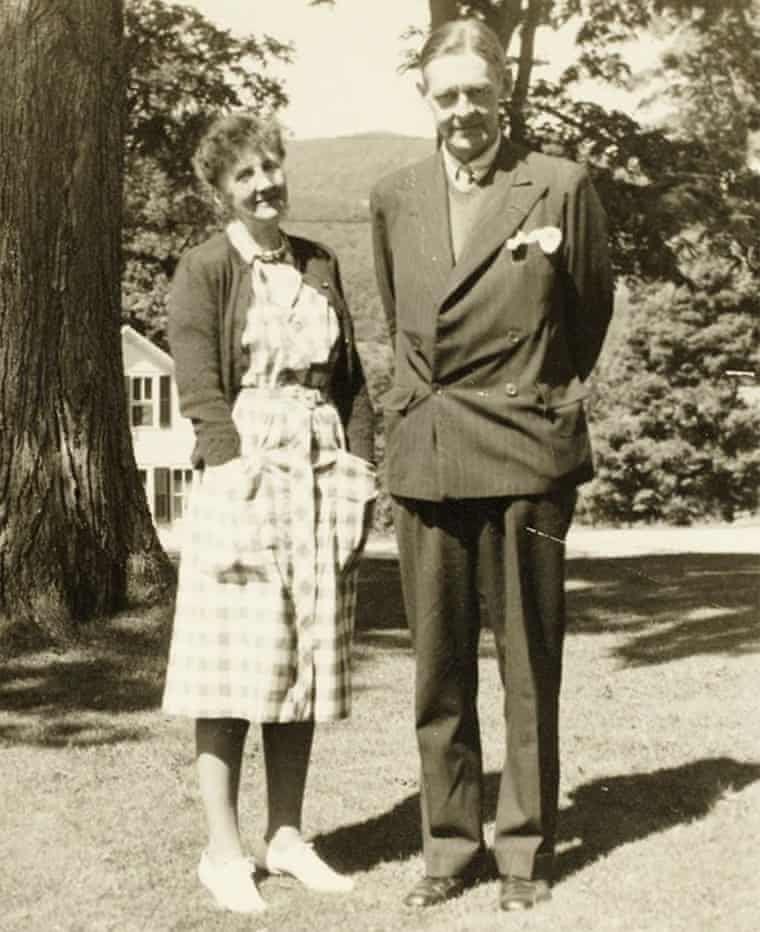
So my dear friend and podcast soulmate, Whiskey Jenny, recently made casual reference to “the TS Eliot batshittery,” and when we asked for more details, she sent a link that I will share with you shortly. First, some context: TS Eliot once had an… affair? with a woman named Emily Hale, over the course of which he exchanged many, many letters with her. He destroyed all her letters to him. She saved all his letters to her, and she donated them to Princeton with the stipulation that they should not be opened until 2020. I learned about this many years ago, and my imagination was captured by what it must be like to be a scholar of TS Eliot. Imagine knowing that over a thousand personal letters existed, written by the object of your study-slash-ardor, and that you could not have access to them until 2020. Wow.
Imagine being TS Eliot, learning in 1956 that a thousand of his old love letters were archived and scheduled to be released to scholars in 2020. Imagine…wait a minute. Isn’t it odd that he wrote a thousand letters to Emily Hale, and then abruptly turned around and married a different woman, Vivienne Haigh-Wood, about whom he later writes of their time together as “nightmare agony of my seventeen years”, and that the only thing worse would have been marrying Emily Hale? And then when Vivienne died, he turned around and married a third woman, Esmé Valerie Fletcher? Eliot was concerned that the passion expressed in those letters was, I suspect, stuff so embarrassing that Eliot wrote a preemptive letter explaining himself that had to be released at the same time as Hale’s letters. He sounds desperate to protect a legacy that he thought would be compromised by the contents, so he has to disparage the woman.
The letters seem to be about what you’d expect: passionate declarations of eternal love from a poet.
“You have made me perfectly happy: that is, happier than I have ever been in my life; the only kind of happiness now possible for the rest of my life is now with me; and though it is the kind of happiness which is identical with my deepest loss and sorrow, it is a kind of supernatural ecstasy.”
He continued: “I tried to pretend that my love for you was dead, though I could only do so by pretending myself that my heart was dead; at any rate, I resigned myself to celibate old age.”
Describing himself to be in a “kind of emotional fever”, by December he confessed that “the pain is more acute, but it is a pain which in the circumstances I would not be without”.
The only thing terrible in it all seems to be Eliot’s later letter, which is embarrassing in how pompous he is about shooting down the contents of the adoring letters he wrote to that ghastly-after-the-fact woman. He would have been better off adding nothing.
By the way, the volume of letters isn’t so surprising. There was a year before our marriage when my wife-to-be and I lived apart, in Seattle and Eugene respectively, and I wrote lots of letters, maybe once or twice a week. This was before email, you know, and when long distance phone calls cost a fortune, so yes, we actually wrote physical letters on paper and put a stamp on them and sent them off. Also, no word processing, no printers, they were all hand-written. That was only about 40 or so years ago, kids.
Alas, I hope you aren’t waiting to see them appear in the Princeton library in 2040, because she burned them all.