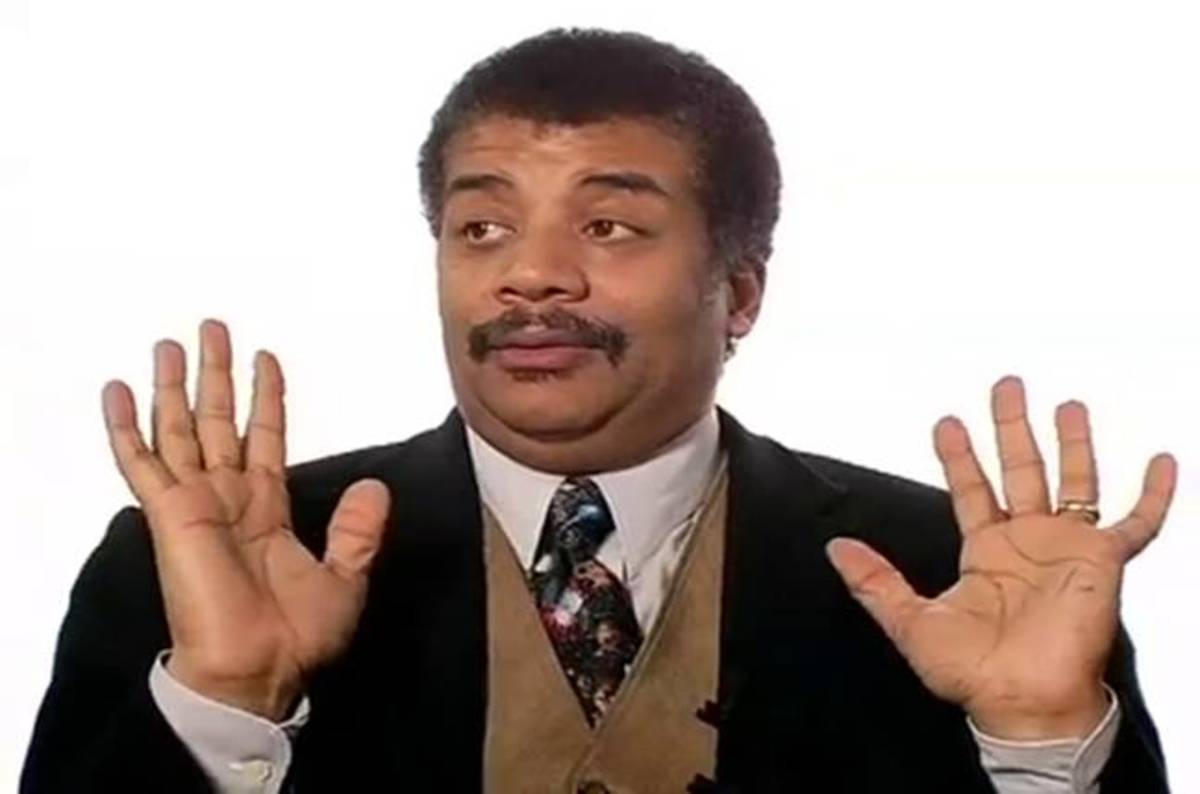
It happens. We all say stupid things now and then. But this gaffe was spectacularly ill-timed — he’s trying to diminish the emotional response to our Weekend O’ Mass Murder.
In the past 48hrs, the USA horrifically lost 34 people to mass shootings.
On average, across any 48hrs, we also lose…
500 to Medical errors
300 to the Flu
250 to Suicide
200 to Car Accidents
40 to Homicide via HandgunOften our emotions respond more to spectacle than to data.
— Neil deGrasse Tyson (@neiltyson) August 4, 2019
Yes? And? If I’m told someone died of a medical error, I will be distressed and say we should reduce the frequency of those errors, and doctors and hospitals will agree and point to efforts to prevent them. Those same doctors will tell you about vaccination and treatment programs to reduce deaths due to flu. There are suicide hotlines and therapists who strive to help people who want to kill themselves. We require licensing and training before you are allowed to drive a car, and we pay fleets of police to enforce traffic laws. The police are also paid to prevent criminals from killing people and to arrest those who do. Those terrible deaths? Society is trying to do something about them.
Mass shootings, not so much. People are grieving and terrified and even, dare I say it, emotional about these incidents because they are so arbitrary, because we would be helpless in those situations, and because nothing is being done to prevent them. Limited regulation, gun manufacturers gleefully peddling instruments of destruction to the public, and a criminal organization, the NRA, dedicated to opposing all restrictions on gun availability…so people are rightfully angry at this continuing madness. Don’t try to minimize it. Placidity in the face of preventable horror allows it to continue, while anger gets shit done.
That was a bad tweet. But there’s something even worse: Tyson’s apology. Oh my god. It’s horrible. For one thing, it’s not an apology. He regrets nothing he did, but gosh, all you other people — you should appreciate the information he has bestowed upon you.
“My intent was to offer objectively true information that might help shape conversations and reactions to preventable ways we die,” his note read. “Where I miscalculated was that I genuinely believed the Tweet would be helpful to anyone trying to save lives in America. What I learned from the range of reactions is that for many people, some information –-my Tweet in particular — can be true but unhelpful, especially at a time when many people are either still in shock, or trying to heal – or both.
“So if you are one of those people, I apologize for not knowing in advance what effect my Tweet could have on you,” he continued. “I am therefore thankful for the candor and depth of critical reactions shared in my Twitter feed. As an educator, I personally value knowing with precision and accuracy what reaction anything that I say (or write) will instill in my audience, and I got this one wrong.”
Don’t you realize that he was trying to be helpful? He admits he got something wrong…how his audience would react. He still doesn’t appreciate the difference between a flu death statistic and a specific event in which a racist murders a group of people for the color of their skin.
Neil, you need to learn how to apologize. Here’s a helpful video. I apologize in advance if it triggers resentment on your part, and for not knowing how you will react to helpful advice.
Or perhaps you’ve already researched the topic of how to make an apology and encountered this video.
If so, I have to tell you that that one is satire. It’s what not to do. Your apology seems to follow the template with surprising accuracy, unfortunately.