What about the fall?

I’m not quite done with grading — genetics is complete! — but yeah, I already have to think about Fall semester? Yikes. I’m expecting a resurgence of the coronavirus this summer that will be worse than what we had in the spring, because we a) don’t have adequate testing, b) don’t have a vaccine, and c) have a country infested with idjits who want to get a haircut no matter how many other people’s lives it puts at risk. Meanwhile, the universities are dithering about what to do. I have no idea what I’m expected to do come September, although we’re kind of mumbling about contingency plans.

This is a fairly clear-eyed view of the immediate future.

Higher education as we know it is approaching economic collapse. I appreciate the frantic gestures college presidents are making to prevent their own campuses from failing. Many intend to open their campuses for the fall term and avoid economic ruin. It is the wrong call.

Even the most optimistic of epidemiologists have two opinions about the remaining months of 2020: mass gatherings should be prohibited, and people over 55 and/or with pre-existing conditions should continue to stay indoors. We also know that individuals under 25 are least likely to become sick with the coronavirus and are most likely to flout requests to stay indoors, wear masks and avoid public places such as beaches and parks.

College presidents are unsure about what to do with their campuses in the fall, and uncertainty breeds anxiety. No one has a crystal ball, but with what we know, what should happen on the nation’s campuses in the fall is increasingly clear. The option of students returning to campus in the fall is not viable, regardless of the economic implications.

The author has some suggestions about what to do if we are open: cancel all those big stadium football games, make special provisions for faculty and students over 55 (we have to teach online, while the younger faculty teach in classes? I think he has an elevated opinion of the safety of young adults), constant testing (we don’t have a reliable, affordable test), and maintain social distancing in the classroom. OK, so I looked at my list of registered students for the Fall to see if that is feasible. Enrollments are down everywhere, right?

I’ll be teaching cell biology, which typically has about 50 students. It’s down a lot right now, with 35 students registered, although it will probably go up a little bit more over the summer. I’ve been assigned a huge lecture hall, so social distancing in class will be easy — I can put them in every 3rd or 4th seat, every other row, and have room left over. Lecture will be easy.

The problem will be labs. I have 3 lab sections for those 35 students, and we generally have students work in groups. That’s not going to work. Making it work would require major restructuring — break up the labs into more independent study sections, so we can separate them more? Even there, any infected students are going to spray fomites all over the microscopes and spectrophotometers. Need I point out, though, this is where the students who will one day be the front line in dealing with future pandemics will get their start?

I imagine our administration is freaking out.

Greater than 5 percent of the more than 4,000 U.S. colleges and universities are likely to close because of falling enrollment, according to Robert Zemsky. Many observers now predict that enrollments will shrink by 15 percent. The pandemic and the Trump administration’s xenophobia alone will shrink foreign student enrollment, especially from China and India, by 25 percent, the American Council on Education has estimated. Meanwhile, some states like New Jersey are already clawing back money from campuses that has been allocated for this fiscal year; next year’s budgets will be worse than the recession in every state. Philanthropic giving will take a nose dive. Summer and auxiliary enterprises will yield next to no additional revenue.

College presidents have a right to be terrified. But opening campuses in the fall is the wrong move if the primary motivation is to avoid bankruptcy. Public health comes first.

Right. Public health must come first. The answer ought to be a massive public investment in educational and medical infrastructure to keep us all limping along until this disease is overcome. Will we get it? No. It’s hard not to feel a sense of impending doom when we witness the government overseeing this disaster.

So, right now I focus on finishing this last semester, which already ended in a colossal pratfall. Once that’s done, maybe I can think about how to manage the next one.

Hey, rigorous training in how to clean and sterilize a workspace would be an appropriate first lab in cell biology, right?

I’m afraid to even mention “Plandemic”

Yikes. My social media are squirming with the maggoty indignation of cranks lit up by this pseudo-documentary, Plandemic, which is actually nothing but an overlong trailer that was live on YouTube and Facebook briefly, before it got shot down and banned for spreading misinformation. I’m not going to encourage anyone to watch it — I haven’t bothered myself — but will instead tell you all to read Orac’s thorough takedown, “Judy Mikovits in Plandemic: An antivax conspiracy theorist becomes a COVID-19 grifter”. I’d heard enough about the lies in Plandemic before this, but Orac puts them all in one place.

Unfortunately, I also read the comments.

Double-yikes. The anti-vax, science-denialist crowd is out in full force in that comment thread. The conspiracy theorists and anti-Semites (???) are howling. It’s kind of informative to see the bad arguments they’re making, but I’m sure glad we don’t have any of those people here.

Alas, poor Amtor

Trivia fact: Edgar Rice Burroughs, in addition to his Tarzan and Mars books, also wrote a handful of pulp stories about Venus, which was called Amtor by the natives, and his intrepid hero, Carson Napier. They were a little different from the Mars series, where John Carter was teleported to Mars by some form of astral projection, in that Napier was a rocket pilot flying to Mars who made a tiny error in his calculation and crash-landed on Venus instead. Then it lapses into the usual formulaic adventure story where Napier finds a Princess (there’s always a princess), falls in love, and the two of them bumble about needing to rescue each other from pirates and communists. Amtor, by the way, is covered by oceans and continents of giant trees, and the cloud cover keeps the planet cool and liveable, except when the clouds briefly break and a brutal sun sets everything on fire beneath the gap.

Unfortunately, the real Venus has surface temperatures of 450°C and a dense and acidic atmosphere. Nothing lives there.

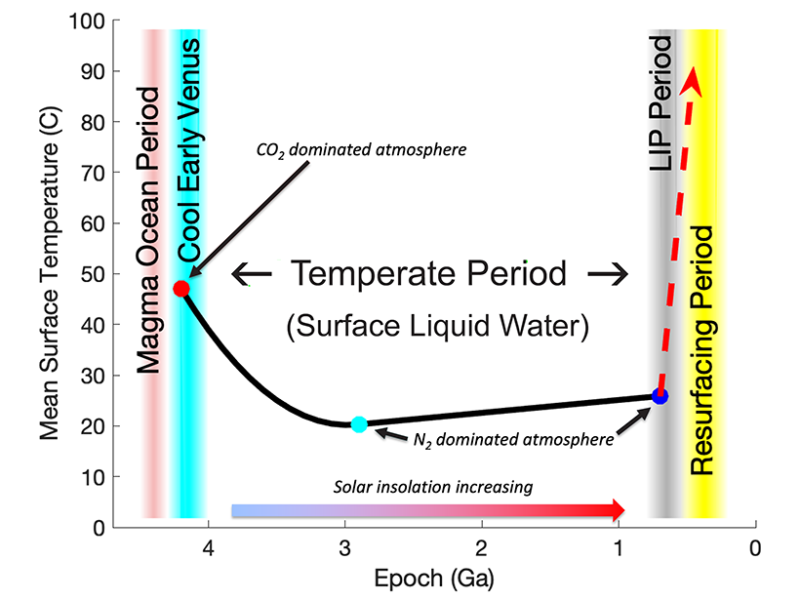
This recent modeling of the Venerian atmosphere suggests that there may have been a long period of relative coolth in the planet’s history. The runaway greenhouse effect wouldn’t have occurred until a period of intense volcanic activity that produced LIPs, Large Igneous Provinces, released even more CO2, and then the temperatures soared.

That surge occurred less than a billion years ago, so it’s easy to imagine warm (mean temperature of around ~20°C, compared to Earth’s current ~15°C) oceans in which life could have evolved before global warming slammed the hammer down and burnt the soup.

I think Carson Napier’s navigation error had to have been off by more than I thought: 150 million kilometers and a billion years. Even then he wouldn’t have found princesses, but at best the equivalent of single-celled prokaryotes, which would have been far more interesting than mere Amtorian princesses.

My summer fantasy

Here’s what I do for a little relaxation: I stare at maps. My summer research is a bit constrained right now, so I’ve been planning alternatives, like making day-trips to neglected local spots to do spider-hunting. I will be the first to admit that my knowledge of spiders is limited — I know a fair bit about a few species that live in the niches I’ve concentrated on, but relatively little about a lot of species that are in other environments. I need to correct that.

So I’ve been looking at maps and planning lovely little trips. My wife and I will pack the car with a picnic lunch, collecting tubes, my camera, and a drone (for scouting out locations), we’ll dress in long pants and long sleeves and boots, douse ourselves with DEET, and take off in the morning for a leisurely drive with frequent stops. We’ll look for parks and lakes and streams and abandoned farms and tromp around looking for spiders, photographing many, capturing a few, and heading back home in the late afternoon.

It sounds delightful to me. Right now all I can do is look at maps and plan these jaunts until I get all my grades submitted and recover my faithful companion, but it’s nice, and perfect for the pandemic season, because I plan to avoid people and visit places that spiders would like, and spiders don’t carry the virus. I look at the roads and the satellite views that reveal brushy areas where no one in their right mind would want to go — well, some of them might look great to hunters and fisherpeople, and that’s OK, I can share — and look forward to getting dirty and scratched and bug-bitten.

I also keep an eye on the local news. Oh, the Grass Lake restoration project is winding up? I bet there are spiders there. The university is constructing an ecostation? Spider country!

My original plans for the summer were a bit more lab-centered, and I still have some lab projects to maintain, but I’ve been thinking about how to adapt to our new circumstances, and I think I can find happiness in a summer in the weeds.

If the virus were the size of dinosaurs, maybe people would appreciate the danger

This story is a bit on the nose.

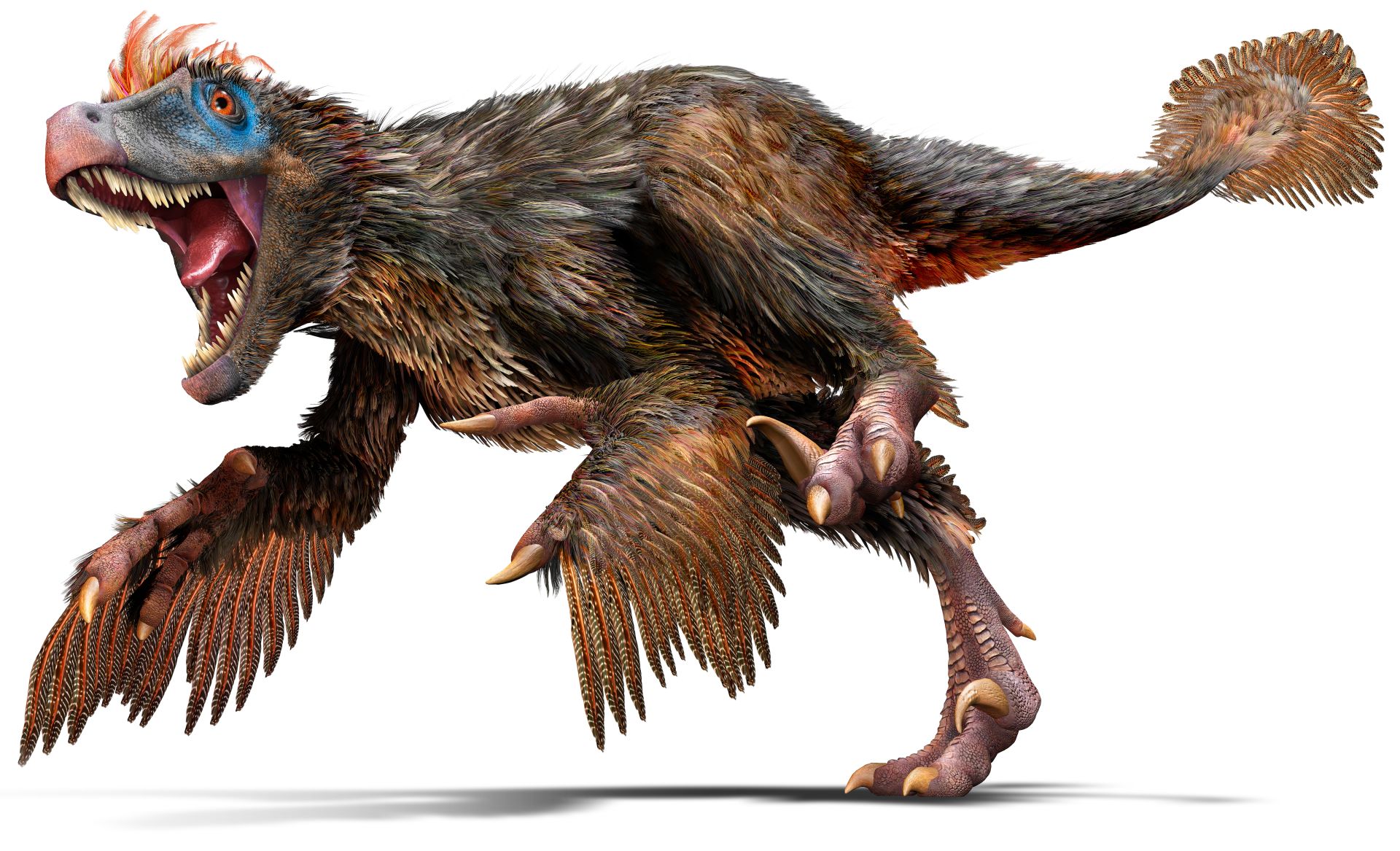
Hello, Peter Ludlow here, CEO of InGen, the company behind the wildly successful dinosaur-themed amusement park, Jurassic Park. As you’re all aware, after an unprecedented storm hit the park, we lost power and the velociraptors escaped their enclosure and killed hundreds of park visitors, prompting a two-month shutdown of the park. Well, I’m pleased to announce that, even though the velociraptors are still on the loose, we will be opening Jurassic Park back up to the public!

I mean, it really hammers on the comparison. You can’t miss it. No one will accuse it of subtlety.

As some of you know, Dr. Ian Malcolm, our lead safety consultant, had recommended that we wait until the velociraptors have been located and contained before reopening the park, so he wasn’t thrilled when we told him the news. I believe his exact words were “you were so preoccupied with whether you could reopen the park, you didn’t stop to think whether you should.” Talk about a guy on a high horse.

That said, you’ll be pleased to know that, rather than double down on our containment efforts, we’ve decided to dissolve the velociraptor containment task force altogether, and focus instead on how we can get people back into the park as quickly as possible. So rather than concentrating on so-called life-saving measures like “staying in designated safe areas” or “masking your scent,” we’ll be focusing on the details that will get our customers really excited, like a wider selection of fun hats, a pterodactyl-shaped gondola ride to the top of the island, and a brand new Gordon Ramsay designed menu at the Cretaceous Cafe.

Unfortunately, I find the thought of teeny-tiny invisible viruses flourishing in almost invisible droplets of water in your breath to be far more terrifying than dog-sized reptiles with pointy sharp teeth. I’d rather the streets were overrun with Cretaceous carnivores — they’d be much more manageable, and the first people they’d eat are those assholes out protesting about stay-at-home orders.

Need to visit my doctor more often

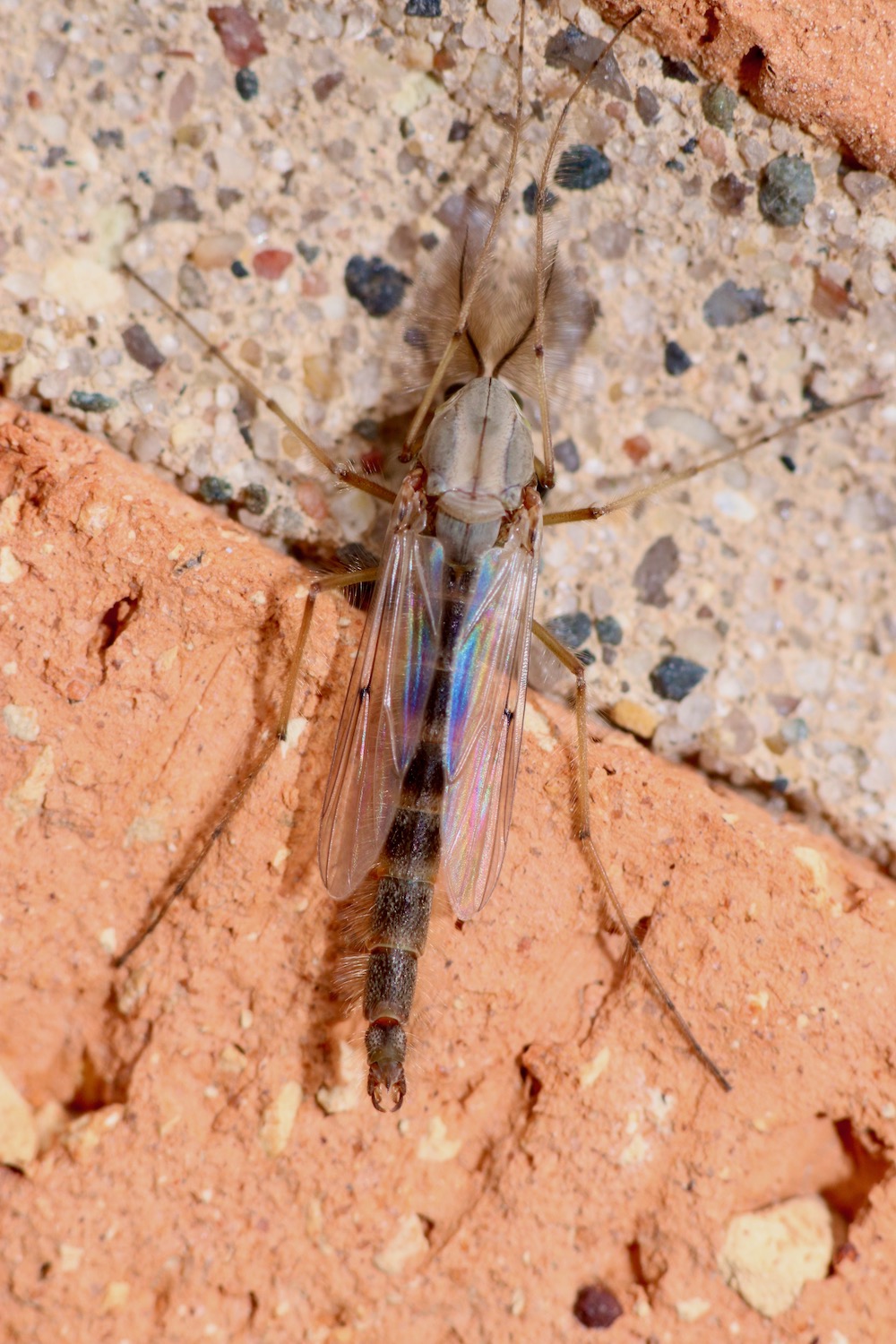
I’m back from my doctor’s visit! It was nothing but good news. The outside walls of the clinic are covered with swarms of chironomid midges!

Everywhere I looked, there they were, clinging to the brickwork. This is one big buffet for spiders that I’ll have to check again later, but I didn’t see many today — just one lone jumping spider hanging about. There has to be more.

Oh, yeah, I’m also fine.

Classic orb

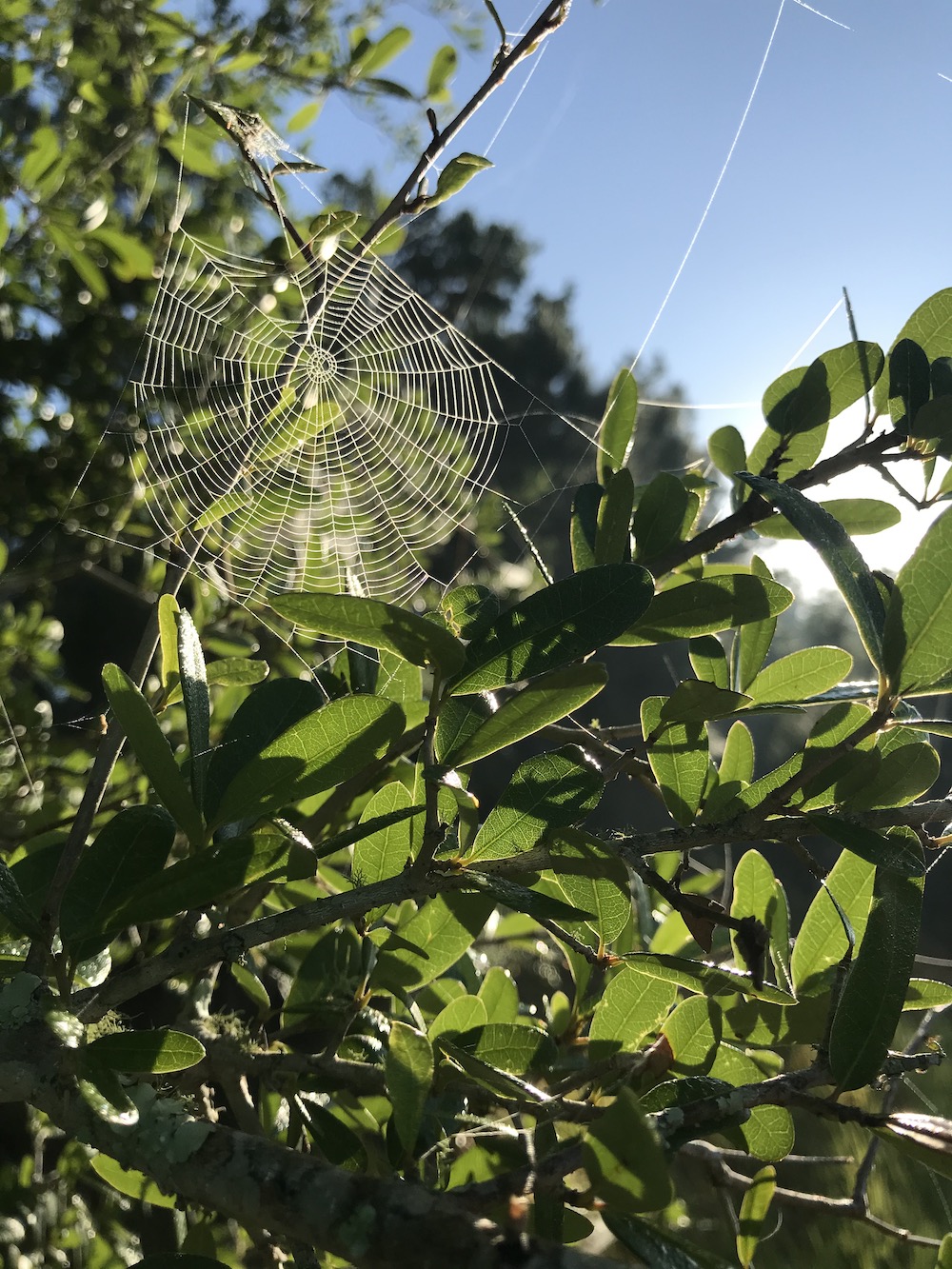
A reader sent this in — I’m envious. I’ve been eyeing various likely sites for webs, haven’t seen any of the orb webs yet. I’m in the land of cobwebs and jumping spiders right now, and haven’t had much of an opportunity to get out and explore yet.

Soon, though. I’ll be fetching my wife in about two weeks, and then it’s a summer of visiting lonely empty places with lots of spiders. Romantic!

I only find out now about this?

I grew up in the Pacific Northwest, and no one ever told me about the Pacific folding trap-door spider. I sure never saw one. But this lucky woman out walking her dog saw one on the sidewalk and — oh what a waste — ran away.

Experts say the spider she spotted is a Pacific folding trap-door spider. It’s not a tarantula, but it is a “tarantuloid” – a related type of arachnid – according to Jaymie Chudiak, general manager of the Victoria Bug Zoo.

“It is the closest thing we have to a tarantula,” Chudiak said. “They are incredibly beautiful, but also very large, so people who do see them go, ‘Oh my gosh, what is that? It’s enormous.’ But they’re actually extremely docile and timid.”

If you want, there’s a picture at the link. It’s beautiful.

I also learned this.

Like tarantulas, there is a commercial market that sells Folding Trapdoor Spiders. Many species in this genus are brown or dark brown. The black, native Pacific Folding Door Trapdoor Spider is commonly sold in the Pacific Northwest as a pet.

“Commonly”? “Commonly”? It is true. I wasted my youth, because I never saw one. Now I want to.

Hoo boy, the Discovery Institute is pathetic

Everyone seems to be “pivoting to video”, including the creationists, so I might as well join in the fun. The Discovery Institute put out a quasi-animated video with a young hipster narrator to promote science denialism — they want to claim that the whale transitional series is bogus, and that all those fossils are just a random jumble of unconnected species that somehow just appeared, and none of them are really intermediates. So I had to expose the flaws in their thinking. Unstylishly, of course.

If I look a little bit squinky-eyed, it’s because I only noticed after recording it that the sun was glaring in through the window to one side. Next time I do one of these, I’d better draw the blinds.