
Not this tired old story again


There exists a very popular story about a man who is extremely rich despite lacking all creativity, curiosity, empathy, and joy, who thrives in a deeply divided society, buffered by the presence of prisons and workhouses for the poor, who is visited one night by a group of ghosts who terrify him into a greater appreciation of his status. The outcome of his spiritual instruction is that he learns to smile more and gets invited to more Christmas parties, although nothing is done about the prisons and workhouses, and the poor see no significant improvement in their material life. It makes for a strange movie. It gets remade shockingly often, and the script never changes — you could probably recite the lines yourself, we’ve all heard them so many times.

Why it’s popular is easily explained: audiences love the affirmation of the palliative of religious beliefs, and go in for a booster shot of Christian indoctrination and Tiny Tim being cute and helpless, as poor children should be. The wealthy keep funding remakes because it is a story that centers them and tells them they can be happy while propping up a criminally divided social order. It’s a redemption story that is astonishingly superficial and rewards the repulsively rich man at it’s core while demanding that he give up nothing more than the cost of a Christmas goose.
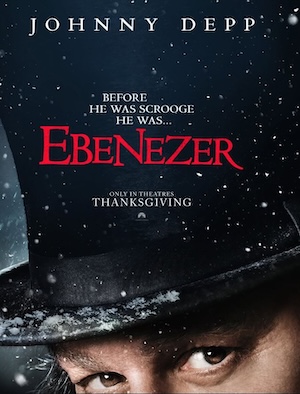
The latest version of this classist fairy tale is titled Ebenezer, and it stars Johnny Depp. Depp is good in the first part of the movie, where he plays a bitter, entitled asshole (it requires no acting), but the end of the movie requires him to be joyful, and he looks like smiling hurts his face. He’s no Alastair Sim or George C. Scott…he’s not even a Bill Murray.

There are no Muppets in this version. You can skip it.

Comments

  1. cendare says

    I just had the random thought — what would Alan Rickman have done with this role? I guess because of that Robin Hood line about “And cancel Christmas!” He could do both bitter and joyful really well.

  2. says

    I remember some right wing pundit citing the book as evidence that “wokery” isn’t new, so merely spending money on a goose and raising a single employee’s wages is apparently too much for a rich person to do. Nowadays, I wouldn’t be surprised if modern rich people would prefer Scrooge to do unspeakable things to Tiny Tim and end up in the Epstein files.

  3. robro says

    Per the inter-tubes, there are over 100 movies and television adaptations of this hack going back to 1901’s “Scrooge, or Marelys Ghost.”

    cendare @ 3 — I suppose that would be Alan Rickman as Snape or the sommelier Steven Spurrier until his conversion, then Colonel Brandon. As Spurrier, I thought Richman did an amusing job as a grumpy older male.

  4. stevewatson says

    @6: Which is fucked up: the usual conservative narrative is that private charity is good (provided the recipients are properly deserving, and makes the donor look good), but government “charity” (i.e. a social welfare system) is bad, and changing the system so it’s not necessary in the first place is evil communism. I read a bunch of Dickens a few years ago; there’s a common pattern where the protagonist endures harsh conditions and comes out all right in the end, but while the author implicitly criticizes the socio-economic circumstances of Victorian England, he stops short of calling for the radical reforms that would end them (at least, AFAIR).

  5. says

    @9: Yeah, I imagine a lot of authors have drawn that line to avoid scrutiny. These days, with media literacy in the gutter, I’d love to see some who do propose big changes in their stories, or even better, have them implemented and working by the end.

  6. stevewatson says

    ….though, according to WP, Dickens’s writings did influence public opinion in the right direction, so perhaps he deserves more credit than I just gave him.

  7. robro says

    stevewaton @ #11 — Per my wife, who is kind of Dickens fan, he was a bit of jerk toward his estranged wife and grew demanding of his sons as they got older.

  8. CompulsoryAccount7746, Sky Captain says

    Wikipedia – Scrooge effect

    a noticeable behavioural change in individuals towards increased generosity and altruism following encounters with mortality or existential dread. […] Corresponding to the terror management theory […] Generous behaviour leads to the belief that one is a meaningful and valuable member in one’s own construct of the world
    […]
    Pyszczynski et al. found that there is some form of in-group favouritism concerning the choice of charity. […] People gave more money to an American house-building charity than to an international education charity. This is why one has to keep in mind that there are limitations to the Scrooge effect. Ingroup favouritism in relation to mortality salience was also demonstrated in further studies.
    […]
    Other studies suggest that mortality salience may not influence positive reciprocity, but has an impact on negative reciprocity (and on retaliation rather than altruism), which raises questions of the effect’s universality, and whether or not this effect is context dependent.

  9. drdrdrdrdralhazeneuler says

    This question is actually at the core of ethics. Take your president, for instance. It is to be believed that he won’t “turn good” ever. He’s sent millions to their certain deaths by gutting aid programmes, he’s a rape convict and the lies that he tells are innumerable.

    I think that the solution that most humanists prefer is to at least remove such people from doing extreme amounts of harm. I vaguely remember the term “dangerous leader syndrome” for people of that ilk. Therefore, your president should at last be put to justice as soon as possible.

    A more difficult question to answer would be whether or not such characteristics are in fact heritable in a reasonable sense (though I share the objections regarding the inadequacy of many methods used in evolutionary psychology, which calls itself a branch of science). At present, we unfortunately do not understand the mechanisms of character formation. Yet contrary to the blogger’s stated opinion, I do not believe that we can completely rule out heritability (be it via the genome or education), though I admittedly have not seen compelling evidence in favour.

    Sometimes we just have to admit that some processes are as yet too complicated for science to understand.

    More generally, I might be given to the conjecture that cures for the anti-social character disorders (which hitherto appear to be elusive, in particular for sadism) would in principle be of some interest, though care must be taken that the human rights of the subjects are not violated. The reason that people don’t open that box is presumably that they (very likely quite rightly) conjecture that people of anti-social character would immediately declare anyone that they do not have appreciation for eligible for such a cure, and have much greater chances of seeing it applied due to their manipulative skills.

  10. Pierce R. Butler says

    … audiences love the affirmation of the palliative of religious beliefs…

    A credible encounter with time-traveling incorporeal spirits might have that effect on quite a few of us.

  11. CompulsoryAccount7746, Sky Captain says

    drdrdrdrdralhazeneuler @14: “Take your president, for instance.”
    Please!

    Thomas Paine – Common Sense (1776)

    I threw out a few thoughts on the propriety of a Continental Charter (for I only presume to offer hints, not plans) […] When we are planning for posterity, we ought to remember that virtue is not hereditary.

    PBS Nova article – How a worm gave the South a bad name

    For more than three centuries, a plague of unshakable lethargy blanketed the American South. […] exhaustion and an impenetrable haziness of the mind that some called stupidity. Adults neglected their fields and children grew pale and listless. Victims developed grossly distended bellies and “angel wings”—emaciated shoulder blades accentuated by hunching. All gazed out dully from sunken sockets with a telltale “fish-eye” stare.
    […]
    The culprit behind “the germ of laziness,” as the South’s affliction was sometimes called, was […] hookworm […] Hookworms stymied development throughout the region and bred stereotypes about lazy, moronic Southerners. […] as recently as the 1950s, hookworms were an intimate and ever-present threat for those living in the South. It was nearly impossible for the rural poor—the majority back then—to avoid hookworms. […] Hookworms aren’t endemic to the Americas, likely having arrived in the U.S. in the 17 th century, unwittingly imported with the Atlantic slave trade. […] In 1902, Charles W. Stiles, a medical zoologist from New York, finally dragged the hookworm out of hiding.
    […]
    Stiles was convinced that ridding the South of hookworms would make the region more productive, but local doctors would not listen […] Word of Stiles and his discovery, however, soon reached John D. Rockefeller, who was actively looking for a certain type of philanthropy project. Hookworms fit the bill. “Rockefeller didn’t want to put money into things that would bring the American capital system into question, like income inequality,” Ettling says. “Health, on the other hand, is not controversial: no one wants their kids growing up sick.”
    […]
    “The reason hookworm is not a scourge today is because people live in cities, wear shoes, eat better than they did 110 years ago, and have indoor plumbing,”

  12. silvrhalide says

    Depp is good in the first part of the movie, where he plays a bitter, entitled asshole (it requires no acting)

    Yeah let’s not be so quick to forget this:

    Why does anyone continue to employ this asshole?

    @16

    “The reason hookworm is not a scourge today is because people live in cities, wear shoes, eat better than they did 110 years ago, and have indoor plumbing,”

    Well that and thymol. Which is my disinfectant of choice when cleaning the litterbox.
    https://resource.rockarch.org/story/public-health-how-the-fight-against-hookworm-helped-build-a-system/

    “Health, on the other hand, is not controversial: no one wants their kids growing up sick.”

    Have you looked at the US vaccination rates lately? The US lost its measles eliminated status today, and there is a raging measles outbreak in Pennsylvania at the moment.

    https://www.cbsnews.com/news/measles-elimination-status-united-states/

    From the Rockefeller link above:

    The RSC’s first discovery was that getting people to cooperate was hard. Many Southerners, for example, did not believe in the ailment despite the facts. Others would rather live with its effects than take medication. This made a goal of total compliance almost futile. Furthermore, some communities, sensitive to the “cracker” stereotype, resisted privies because they looked too primitive, and preferred to use the bushes. Some people enjoyed going without shoes in the summertime. Others could not afford shoes.

    And, finally, then as now, people found it hard to stick with long public health campaigns and small changes in habit.

    Sound familiar?

    Mind you, nothing is really going to improve as long as Bobby Brainworm is secretary for HHS.
    I don’t think the worm in his brain is riding shotgun.

  13. cartomancer says

    One point – Ebeneezer Scrooge wasn’t “extremely rich” by Victorian standards. He was your classic petty bourgeois small business owner – with a single employee – who had made a fair amount of money from trade (he seems to have owned one warehouse in Cornhill). Middle class, certainly, but not your rich industrialist or banker who lived in a mansion with dozens of servants. He was much closer to Dickens’s own social class.

  14. CompulsoryAccount7746, Sky Captain says

    cartomancer @18: “not your rich industrialist or banker who lived in a mansion with dozens of servants.”

    Now entertaining a headcanon that he turned undead…

    Monica Van Fleet – Class and capital in Dracula

    In Dracula there are many plot points where social class and money were doing way more work than they seem to on the surface.
    […]
    When Jonathan Harker shows up at Castle Dracula, he’s weirdly rattled to realize the Count has zero servants. Dracula’s driving the carriage himself, doing all the cooking and cleaning, and even hauling Jonathan’s bags up to his room all on his own. Most readers today think Dracula is just being a good host; sure the castle vibes are isolated and creepy, but there’s little we find overtly scary here. This landed in a completely different and deeply disturbing way in Victorian England. An aristocrat doing manual labor wasn’t just off putting, it was a massive red flag. It meant this guy was either secretly broke, dangerously weird, or flat out lying about who he was. The Count carrying luggage wasn’t a quirky or charming detail, it was a signal that something was fundamentally broken about the natural order in that castle.
    […]
    The horror in this book isn’t just fangs and castles. A lot of it is very 1890s anxiety about status, labor, foreign wealth, and the sneaking feeling that the world order might be slipping out of England’s hands.

  15. seversky says

    I think Alastaiir Sim was the best of all but I’m also rather partial to Patrick Stewart’s made-for-TV version.

  16. StevoR says

    @19. CompulsoryAccount7746, Sky Captain : “One point – Ebeneezer Scrooge wasn’t “extremely rich” by Victorian standards. He was your classic petty bourgeois small business owner..”

    Huh. Didn’t know hat and always thought he was extremely rich and miserly. Sorta become a byword for someone who is that -both those things. Thanks.

    FWIW Scooge’s wikipage here : https://en.wikipedia.org/wiki/Ebenezer_Scrooge

    @17. silvrhalide : Yup – plus more. See :

    Depp was arrested in Vancouver in 1989 for assaulting a security guard after the police were called to end a loud party at his hotel room.[347] He was arrested in New York City in 1994 after causing damage to his room at The Mark Hotel, where he was staying with his girlfriend Kate Moss. The charges were dropped against him after he agreed to pay $9,767 in damages.[348]

    Depp was arrested in 1999 for brawling with photographers after they tried to take his picture. He allegedly threatened them with a wooden plank when they approached him outside Mirabelle restaurant in central London.[349]

    In 2012, UC Irvine medical professor Robin Eckert sued Depp and three security firms, Premier Group International, Damian Executive Production Inc. and Staff Pro Inc.,[350] claiming to have been roughed up by Depp’s bodyguards at a concert in Los Angeles in 2011. During the incident, she was allegedly hand-cuffed and dragged 40 feet across the floor, resulting in injuries including a dislocated elbow. Depp’s attorneys contended that Eckert provoked the alleged assault and therefore “consented to any assault and battery”.[351] Eckert’s court papers stated that Depp, despite being his security guards’ direct manager, did nothing to stop the attack.[352] Before the case went to trial, Depp settled with Eckert for an undisclosed sum, according to TMZ

    Source : https://en.wikipedia.org/wiki/Johnny_Depp#Legal_issues_and_allegations

    @1. imback : Cheers! Love that alternative ending altho’ certainly not too cheery a one.

  17. John Morales says

    [StevoR, wrong. It was cartomancer who pointed that out, though he used the English loan term. Originally ‘petite bourgeoisie’]

  18. StevoR says

    @ ^ John Morales : Ah yes, you’re right. I stand corrected and my apologies to cartomancer #18 for that.

  19. indianajones says

    Talking of awful Christmas stores, I always thought Rudolph the Red Nose Reindeer was kinda fucked. Pick on the different kid until they prove useful. Yikes. College Humor skewered this beautifully a long time back now

    https://youtu.be/oiL9I5A1qBQ?t=2

  20. says

    The hookworm story reminds me of an anecdote (which may be apocryphal) about a group of Christian missionaries who discovered a village full of people in Africa, all infected with hookworm through walking barefoot through human faeces, and decided to help out ….. by organising a delivery of (mostly used) shoes, that turned out to be next to impossible to repair with locally-available materials and tools.

  21. CompulsoryAccount7746, Sky Captain says

    bluerizlagirl @28: Plausible I guess. Shoes are a typical intervention, including among missionaries. The ones you mention might’ve seen the dependency on them for more shoes as a bonus.

    I fell down another rabbit hole. Longer than I’d prefer, but interesting.
    Roads and nematodes: Kenya’s colonial economy as metabolic struggle (2026)

    Roads connect: they are the channel by which people and goods move, linking consumption and production. This is an idea so universally accepted it hardly needs articulating. […] For many African communities during the colonial period, the cut of a road across their landscape was the result of the pernicious capture of their bodies and time […] Anglican missionary, DE Owen, in 1918 […] arrived in Western Kenya just two years before Kenya became its own colony. […] he was startled by the nascent colony’s utter dependency on compulsory labour. […] Owen began writing editorials […] to inflame the sympathies of the public. […] Owen narrated his routine encounters with gangs of workers building and repairing roads. […] what he often found were children, women, and old men working with no tools except a jembe meant for work in a field.
    […]
    By mid-century, parasites and malnutrition were totemic enemies of progress and development. The morality of imperialism could be redeemed by framing ill health as not the consequence of colonial rule, but a problem it would eradicate.
    […]
    Within East Africa, many of the medical interventions into both hookworm and anemia focused on Kenya’s coastal region […] Researchers [in 1952] wrote […] that the ‘Africans of this area are usually regarded as listless, apathetic and lazy, which is not surprising when one considers that the average hemoglobin […] was 9.0gm/dL’. The threshold for severe anemia is considered under 12 […] old world nematodes are significantly more rapacious extractors of blood […]

    There were intermittent campaigns [as early as the 1920s] lasting from months to a year to eradicate hookworm, particularly among the Wadigo and Waduruma […] These campaigns attempted both to purge bodies of worms and to remake village environments through improving toilets and teaching about sanitation […] and villagers were urged to wear cheap shoes called ‘Mann’s moccasins’. […] Hookworm prevailed time and again.
    […]
    By mid-century, the treatment landscape had changed dramatically and made the idea of total elimination through biomedicine seem possible. Drugs […] eradicated an infection with just a single dose. […] Whereas earlier treatment had focused on people so sick they had come to the hospital, it was now much easier to bring treatment to villages.
    […]
    In the 1950s, Colonel William Laurie was working on the East African Medical Survey; he remarked on how dramatically his work was shaped by African fears of ‘witchcraft’. […] Asking for blood samples, Laurie noted, was sometimes so ‘resented’ that surveys had to be abandoned. […] anxieties of extraction outlasted the colonial era […] Despite such circulating fears, East Africans sought out biomedicine routinely […] medical researchers took on policies of ‘no survey without service’. This policy ensured that medical care was given in return for samples as an ethical imperative, but it might have also confirmed such moments as an exchange of mutually valuable things.
    […]
    Mumiani accusations [body-harvesting witchcraft]—an attempt to identify the parasite who takes too much—were countervailing efforts to regulate the colonial state’s consumption and depletion of communal life

     
    Your anecdote could have taken place in near-present-day Alabama. *sigh*
    The return of hookworm and the limits of public health philanthropy (2017)

    “Hookworm, a disease of extreme poverty, is thriving in the US South,” the headline read. It featured a study […] of residents of Lowndes County, Alabama, that found that more than a third of those sampled tested positive […] It turns out the rates found in Lowndes […] have not improved much from levels a century ago. As the Guardian article makes clear, hookworm […] is a disease of dire poverty that […] perpetuates poverty. It also makes clear the role that failed public infrastructure investment plays in the story: much of Lowndes County lacks an adequate public sewage system, and so residents are required to provide their own (installing a private septic tank can cost as much as $15,000, nearly as much as many residents make in a year, and so many simply pipe raw sewage out of their homes to surrounding areas, helping hookworm to spread).
    […]
    The images that the Guardian article conjured up are not those we prefer to associate with the citizens of our own country: […] “Children playing feet away from open pools of raw sewage; drinking water pumped beside cracked pipes of untreated waste; human faeces flushed back into kitchen sinks and bathtubs whenever the rains come.”

    The fact that Lowndes County was also the site of some of the fiercest battles of the civil rights movement a half a century ago—Martin Luther King led protesters through Lowndes during the march from Selma to Montgomery—only underscores the sense of declension, of hard-won gains eroded by poverty, racism, and political disempowerment. For students of the history of philanthropy, that sense of declension is even stronger because the defeat of hookworm in the US has long been considered one of the sector’s great, early success stories.
    […]
    the Gates Foundation’s first CEO, Patty Stonesifer, noted, “A lot of people would say, ‘you’ve got to reduce poverty to get rid of hookworm.’ But the Rockefellers said, ‘You don’t need a 20-year intervention. You can use shoes.” […] Nor did Rockefeller seek to take on racism in the South. The Sanitary Commission purposefully avoided the issues, deferring to the public authorities. Its leaders did not urge improvement in blacks’ sanitary conditions, which were particularly dire, or push the hiring of black field workers, or include racial categories in sanitary surveys. […] It provided an early model of philanthropic innovation giving way to public investment. […] it also placed enormous trust in the decency and resilience of a unitary “public enlightenment.”
    […]
    A philanthropy that looks to turn over programs to the state is ultimately at the mercy of that state and of the public that shapes it and of the deep power structures that undergird it. If those structures contain inequities of race, class, or gender, and if they are left to fester, they will sap the strength of those very programs, like a hookworm in the gut. The public health system in the South was being developed, with the aid of northern philanthropy, at the same time as Jim Crow

    * Among the historical resentments: “another conspiracy theory held that the Sanitary Commission was just a ruse to convince southerners of the dangers of walking barefoot by Rockefeller, who was poised to capture the leather market and make a killing on shoe sales” hence the Commission propping up local public works rather than imposing as an outside private entity.

Leave a Reply