Pharyngula
Evolution, development, and random biological ejaculations from a godless liberal


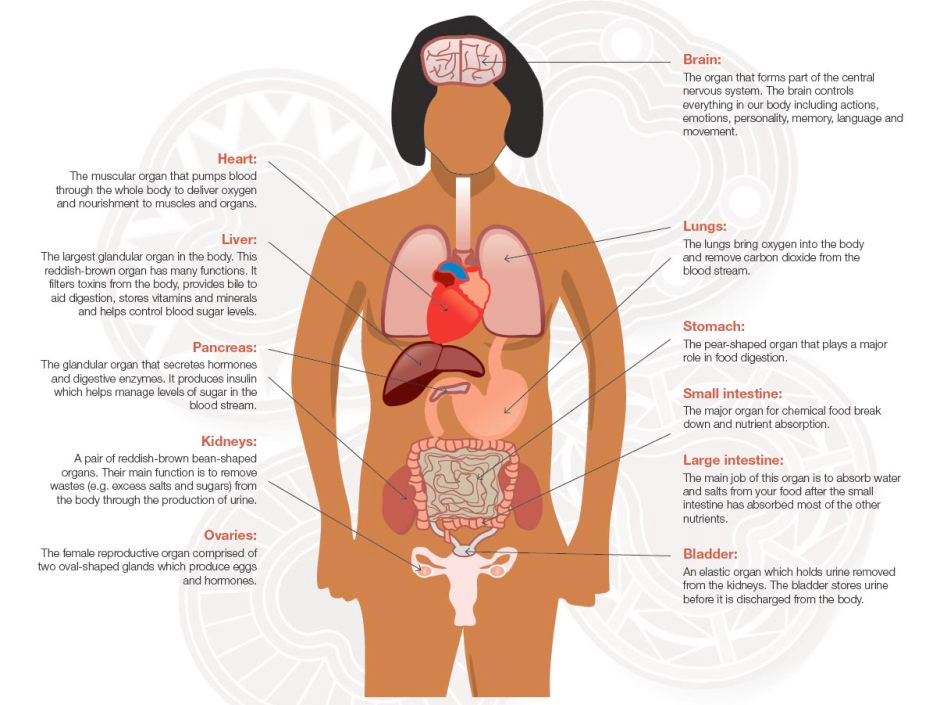
The Australian department of health distributed these posters to aboriginals and Torres Strait islanders to improve understanding of their bodies. I’m forced to conclude that either aboriginal peoples in the southern hemisphere are aliens with a remarkably deviant body plan, or the Australian government doesn’t give a damn.
Can you spot all the errors?
Answers:
Heart is reversed
Right kidney is not a pancreas
Ovaries are not kidneys
Stomach is not a respiratory organ
Small intestines are not a pear-shaped organ called the stomach
The poster has been withdrawn. The real mystery is whose understanding of anatomy at the health department is this bad.

Man, some days I’m so embarrassed for my phylum. In this video, a bait container is lowered into murky South African waters, and you can see all the fish swirling about, quite excited by the tasty flavors, and ineffectually pecking at it (or the camera. Stupid fish.) Then the King Mollusc slithers purposefully into view, wraps around the container, fends off all the fish, and unties and escapes with the bait.
Foiled by an octopus … from Lauren De Vos on Vimeo.
It’s settled. When I die, I want to be reincarnated as a more advanced organism — a cephalopod.
(I know, what I want and what I will get are very different things. I guess I’ll settle for being mollusc food.)

… that is, if you try to use it to navigate your way through the desert.
I won’t make a habit of just linking to the stuff I write elsewhere without expanding on it substantially for the Horde’s benefit*, but I’ve been following stories of people who die because they rely on online maps for way too long, and I don’t want to read about any of you in the paper. Like I did the Danish tourists who were looking for the U2 Joshua Tree 260 miles from where the tree actually used to be, based on an internet fan club map.
If any of you are going to have an uncomfortable time in the desert based on questionable online advice, I’d much rather it be because we set up some Pharyngula Desert 2013 kinda deal and we ran out of single-malt on day 2. Rather than that permanent thing.
So go read. And heed.
* note: no actual benefit may result

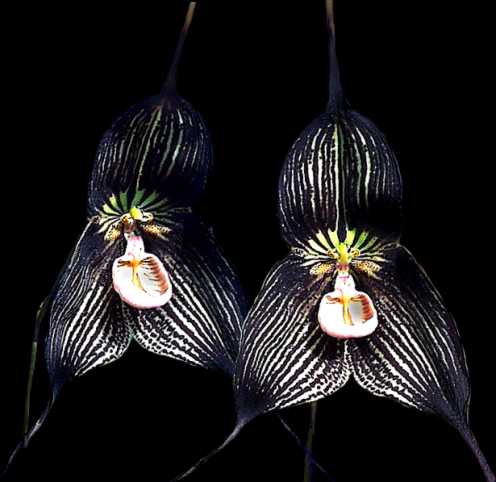
… but then I realized I regard this image with something like reverence. Because what’s more worthy of reverence than hints of the common ancestry of all life forms?

Thought the ape on the right is clearly in need of more brachiating practice, as He’s obviously doing it wrong.

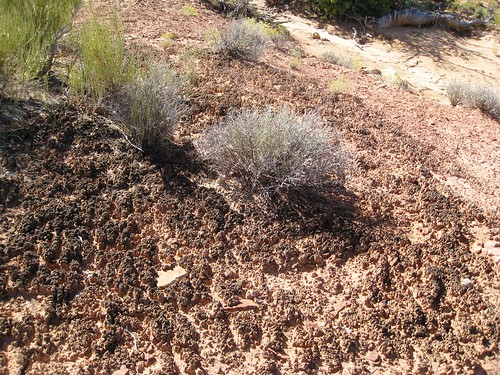
Cryptobiotic soil crust in Utah | J. Brew photo
The Palm Springs library talk last week went well: reasonable crowd given the venue, lots of good questions, and though they weren’t set up for video there’s some talk of my doing a repeat even more local and I’ll make sure we get video of that, if it happens.
One of the questions that came up was about something that was related to the topic of my talk but worthy of its whole own presentation: cryptobiotic soil crusts. I was instructed to come up with an hour-long presentation on the topic and come back. I think they may have been kidding.
Cryptobiotic soil crusts, also referred to as cryptogamic soils, or just plain “crypto,” are pretty common in arid lands that haven’t been disturbed for a while. They’re alive, as indicated by the suffix “biotic”: living communities of half a dozen different kinds of organisms: cyanobacteria, green and brown algae, fungi, lichens, mosses and liverworts. The “crypto” part means that when conditions are less than optimal, the organisms that make up the crust can go dormant, seeming to die off — “hiding” their life. Cryptobiotic.

ALL GLORY TO THE HYPNOCEPHALOPOD!
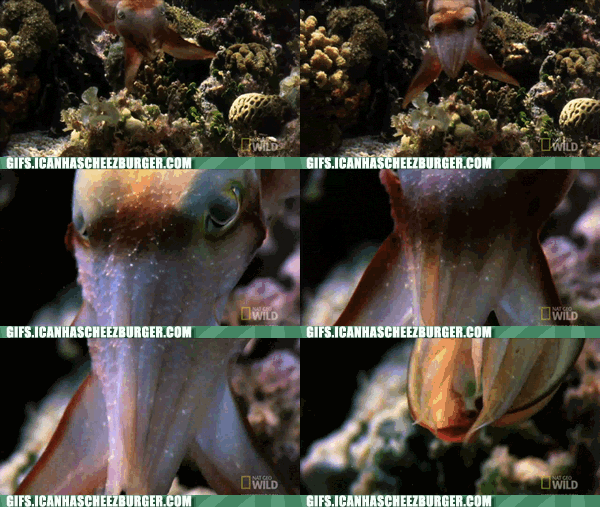

Poor cuttlefish: they’re getting tracked, their camouflage to no avail. But man, that’s a big tag.
Oops. That was annoying — I can’t get that BBC player to work on my machine at all. It’s annoying, too, because their archaic embed code is frickin’ ginormous. Here, if you can’t see it either, is a completely different cuttlefish video.

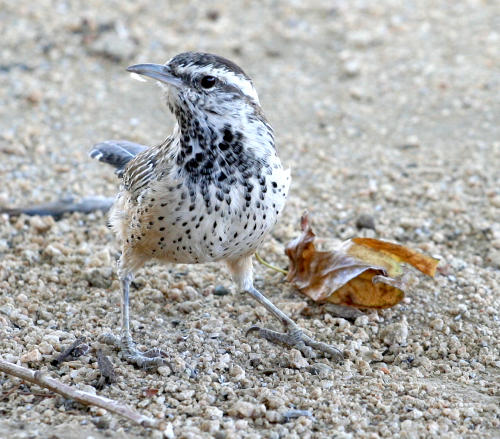
I just had about a fifteen minute conversation with this bird. I was sitting on the couch on our back porch, drinking coffee: my daily routine. The bird came up to investigate me, puzzled over me for a minute or so, and then went off to terrorize the finches who’d gathered around the pile of sunflower seeds I put out every morning. This is a cactus wren, Campylorhynchus brunneicapillus, the largest wren in North America and a common bird in the desert. Even if you don’t see them, you hear them:
I’ve stuck to gender-indeterminate pronouns throughout because I’m not expert enough to determine its sex, given that cactus wrens have little sexual dimorphism. Males sing to announce their territory. They make excellent alarm clocks when you’re camping, and they start about 5:45 a.m. in the summer. This one didn’t sing at me, so I have absence of evidence.
As I typed that last sentence, a cactus wren out in the yard sang for about 10 seconds. Not sure it’s the same one.
Cactus wrens are pretty engaging. They’re nervy and unafraid, inquisitive, even aggressive at times. This wren is the only one in the yard who’ll challenge the resident scrub jays over territory. That’s just attitude: the jays are there for the sunflower seed, and the wren doesn’t care for them much. Smaller seeds, insects, and occasional beaksful of fruit make up its diet. Our landlord planted a peach tree some years ago, and there were cactus wrens among the birds that attacked the ripening fruit.
The cactus wren’s song says “home” to me, the way Stellers’ jays’ squawk did when I lived in the Bay Area, and I smile when I notice it. It’s not my favorite wren song, though. The one I like best is that of the cactus wren’s smaller, shyer cousin the canyon wren Catherpes mexicanus:
I hear that song and no matter where I am, it’s the most beautiful place in the world.