Sexy T-rex meets lecherous creationist

Charlie Stross has written a story, A Bird in Hand, which rather pushes a few boundaries. It’s about dinosaurs and sodomy, as the author’s backstory explains. And as everyone knows, every story is improved by adding one or the other of dinosaurs and sodomy, so it can’t help but be even better if you add both.

A note of caution, though: Charlie is really, really good at spinning out all the latest scientific buzzwords and deep molecular biological concepts into an extraordinarily plausible-sounding mechanism for rapidly recreating a dinosaur — it’s much, much better than Crichton’s painfully silly and superficial dino-blood-from-mosquitoes-spliced-with-frog-DNA BS — but I was a bit hung up on poking holes in it. It won’t be quite that easy, and it rather glibly elides all the trans-acting variations that have arisen in 70 million years and the magnitude of the developmental changes. But still, if we ever do manage to rebuild a quasi-dinosaur from avian stock, that’ll be sort of the approach that will be taken, I suspect. Just amplify the difficulty a few thousand fold.

Also, it’s way too technical to survive in the movie treatment.

Chilling

That’s all I need, another reason to cower at home in terror of the perils of the real world. Maryn McKenna imagines our Post-Antibiotic Future, that time when bacteria have more thoroughly evolved to resist our medicines — and you’ll be frightened after you read it, too.

Before antibiotics, five women died out of every 1,000 who gave birth. One out of nine people who got a skin infection died, even from something as simple as a scrape or an insect bite. Three out of ten people who contracted pneumonia died from it. Ear infections caused deafness; sore throats were followed by heart failure. In a post-antibiotic era, would you mess around with power tools? Let your kid climb a tree? Have another child?

“Right now, if you want to be a sharp-looking hipster and get a tattoo, you’re not putting your life on the line,” says the CDC’s Bell. “Botox injections, liposuction, those become possibly life-threatening. Even driving to work: We rely on antibiotics to make a major accident something we can get through, as opposed to a death sentence.”

Bell’s prediction is a hypothesis for now—but infections that resist even powerful antibiotics have already entered everyday life. Dozens of college and pro athletes, most recently Lawrence Tynes of the Tampa Bay Buccaneers, have lost playing time or entire seasons to infections with drug-resistant staph, MRSA. Girls who sought permanent-makeup tattoos have lost their eyebrows after getting infections. Last year, three members of a Maryland family — an elderly woman and two adult children — died of resistant pneumonia that took hold after simple cases of flu.

She does offer some slight hope for the future.

What might hold off the apocalypse, for a while, is more antibiotics—but first pharmaceutical companies will have to be lured back into a marketplace they already deemed unrewarding. The need for new compounds could force the federal government to create drug-development incentives: patent extensions, for instance, or changes in the requirements for clinical trials. But whenever drug research revives, achieving a new compound takes at least 10 years from concept to drugstore shelf. There will be no new drug to solve the problem soon—and given the relentlessness of bacterial evolution, none that can solve the problem forever. In the meantime, the medical industry is reviving the old-fashioned solution of rigorous hospital cleaning, and also trying new ideas: building automatic scrutiny of prescriptions into computerized medical records, and developing rapid tests to ensure the drugs aren’t prescribed when they are not needed. The threat of the end of antibiotics might even impel a reconsideration of phages, the individually brewed cocktails of viruses that were a mainstay of Soviet Union medical care during the Cold War. So far, the FDA has allowed them into the U.S. market only as food-safety preparations, not as treatments for infections.

MORE SCIENCE. MUCH MORE.

Remedial reading for big-time scienticians

I don’t understand how this happens. You’ve got a good academic position. You’re bringing in reasonable amounts of grant money. You’re publishing in Nature Genetics and Nature Structural and Molecular Biology. And you don’t even understand the basic concepts in your field of study.

For instance, here’s a press release titled “Cause of genetic disorder found in 'dark matter' of DNA”.

For the first time, scientists have used new technology which analyses the whole genome to find the cause of a genetic disease in what was previously referred to as "junk DNA". Pancreatic agenesis results in babies being born without a pancreas, leaving them with a lifetime of diabetes and problems digesting food. In a breakthrough for genetic research, teams led by the University of Exeter Medical School and Imperial College London found that the condition is most commonly caused by mutations in a newly identified gene regulatory element in a remote part of the genome, which can now be explored thanks to advances in genetic sequencing.

Regulatory elements are not and have never been considered junk DNA. The researchers have identified a regulatory region called PTF1A that has allelic variations that cause a failure of the pancreas to form. That’s really interesting! But then you read what they have to say about it, and they are completely oblivious to the literature on genetic structure and gene regulation. Isn’t that something you’d expect them to have studied thoroughly before even proposing this project?

Or how about this press release, “Un-junking junk DNA”. It’s gotten to the point where I just cringe when I see the phrase “junk DNA” in a press release, because it is a sure sign of flamboyant ignorance to come.

"This study provides answers for a decade-old question in biology," explained principal investigator Gene Yeo, PhD, assistant professor of Cellular and Molecular Medicine, member of the Stem Cell Research Program and Institute for Genomic Medicine at UC San Diego, as well as with National University of Singapore. "When the sequence of the human genome was fully assembled, under a decade ago, we learned that less than 3 percent of the entire genome contains information that encodes for proteins. This posed a difficult problem for genome scientists – what is the other 97 percent doing?"

The role of the rest of the genome was largely a mystery and was thus referred to as "junk DNA." Since then sequencing of other, non-human, genomes has allowed scientists to delineate the sequences in the genome that are remarkably preserved across hundreds of millions of years of evolution. It is widely accepted that this evidence of evolutionary constraint implies that, even without coding for protein, certain segments of the genome are vital for life and development.

So many misconceptions. No, noncoding DNA is not synonymous with junk DNA; junk DNA was not so called because its function was mysterious; it is absolutely no surprise that some regions of the genome are vital, even without coding for proteins — haven’t they heard of tRNA or miRNA? Developmental biologists have been yapping for decades about the importance of the switches that control gene regulation…are we just ignored?

I worry that this is a symptom of a serious rot in science education — that we’re turning out great technicians and masters of the arcane art of grant writing who don’t actually understand biology, and in particular have no perspective on what the questions actually are. They may be excellent middle managers, but the comprehension and vision are lacking.

I have a suggestion. If you’re going to do research that leads you to say anything about junk DNA, I urge you to read carefully one or all of the following books: The Origins of Genome Architecture by Michael Lynch; Fundamentals of Molecular Evolution by Dan Graur and Wen-Hsiung Li; or The Logic of Chance: The Nature and Origin of Biological Evolution by Eugene Koonin. Those aren’t lightweight texts — I wouldn’t assign them to your average undergraduate — but hey, you’re a big-time professional scientist. There’s no excuse for not knowing this stuff.

It’s the silences, the neglect, the moving on to more important matters

What if the National Association of Science Writers convened a panel on sexual harassment and discrimination, and no one cared? This report on sexual harassment and science writing at NASW is strangely, delicately neglectful, from the beginning where it irrelevantly claims that the Bora Zivkovic story no longer dominates science blogs (So has sexual harassment vanished? Or should we be asking where it will rise up again?), to the bizarrely abrupt segue in which they “Return You to Our Regularly Scheduled Program”, which is all about calculating the number of habitable worlds in the galaxy and more self-promoting fluff from SETI. Apparently, the concerns of women in science is of dwindling concern and a distraction from the Important Subjects of Speculative Astronomy.

The middle is equally weird. It has two sections: Hearing from Women, a two paragraph summary of what the women on the panel said, followed by Hearing from Men, with four paragraphs dedicated to the reactions (admittedly sympathetic) of the men in the audience, which are described as “some of the most powerful and significant statements”. At least the women’s section closed with an ironic comment: “The medical profession is now also heavily female, she [Ginger Campbell] said, but there, too, invisibility is everywhere.” How true that is.

I would like to have read more about “Hearing from Women”, but not only could the writer not be troubled to include more of the women’s statements, but she didn’t even bother to link to any of the panelists. I can correct that, at least: Christie Aschwanden, Deborah Blum, Florence Williams, Kate Prengaman, Kathleen Raven, Maryn McKenna, and Emily Willingham. Isn’t that odd that an article purportedly about this panel didn’t even link to the panelists’ professional pages, neglected to even name one of them, yet still made that special effort to capture men’s opinions on it?

You should read Emily Willingham’s assessment of the article. It’s not at all flattering.

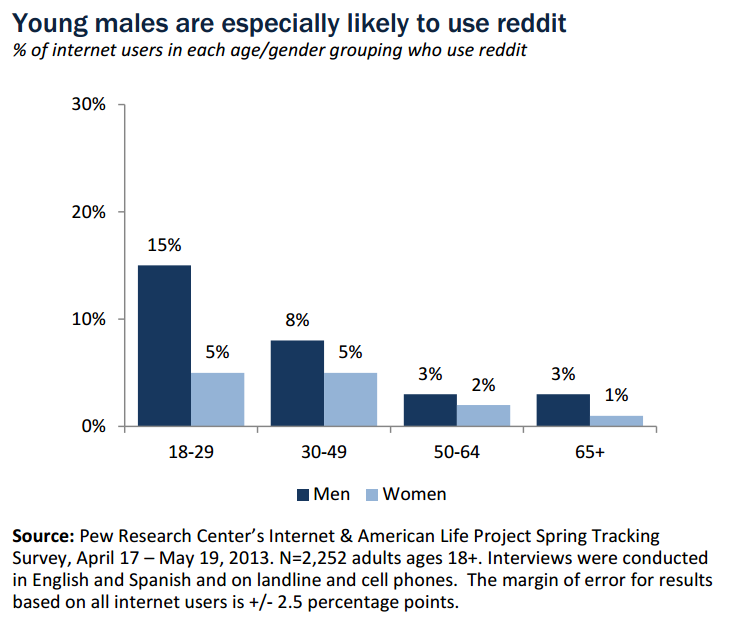
Start looking for the invisible women, and it’s amazing how often you can find these curious omissions. Here, for instance, is a student at Michigan State plugging the virtues of social media for advancing your career in science (and I agree with him!), but he’s especially promoting reddit as a tool…which is problematic if you’re a woman, or have a reputation as a feminist. He touts reddit as the “best bang for the buck” for “thousands of young men and women” and obliviously shows this graph of internet readers who use reddit, titled “Young males are especially likely to use reddit.”

Chart showing that many more men than women use reddit

Apparently we can just ignore the pale blue bars that show that women represent somewhere less than a third of the audience you’ll reach on reddit. We’re not even going to notice the discrepancy, even if it leaps out at you as the most significant factor illustrated by the chart, and even if the title itself calls attention to it. The sexism problem on reddit isn’t even worth mentioning in an article about promoting science.

But that’s the big question that ought to be asked. Why isn’t it? Because invisible people aren’t as important.

Finally, here’s something that’s at least stirring and loud. It’s from a television show (as we all know, fictitious politicians are far more honest and bold than the real ones) in which a woman points out all the subtle signifiers the media and other politicians use to put her in her place.

Are you saying that Governor Reston is sexist?

Yes. I am. And it’s not just Governor Reston speaking in code about gender. It’s everyone, yourself included. The only reason we’re doing this interview in my house is because you requested it. This was your idea. And yet here you are, thanking me for inviting me into my “lovely home.” That’s what you say to the neighbor lady who baked you chocolate chip cookies. This pitcher of iced tea isn’t even mine. It’s what your producers set here. Why? Same reason you called me a “real live Cinderella story.” It reminds people that I’m a woman without using the word.

For you it’s an angle, and I get that, and I’m sure you think it’s innocuous, but guess what? It’s not. Don’t interrupt me when I’m speaking. You’re promoting stereotypes, James. You’re advancing this idea that women are weaker than men. You’re playing right into the hands of Reston and into the hands of every other imbecile who thinks a woman isn’t fit to be commander-in-chief.

Don’t you ever forget, ladies, that the most important parameter of your existence is how well you fit your stereotyped role. But don’t worry, no one will ever let you forget it.

The curiously limited argument from convergent evolution raises an ugly tentacle/fin again

I am not a fan of the convergent evolution argument for humanoid aliens. I can well believe that it’s likely that intelligent aliens exist out there in the universe, but I’m not even going to try to predict what they look like: there are too many alternative paths that are possible. But for some reason, many people like to insist that it’s reasonably likely that they’d resemble us in general, if not in detail, and they’ll then go on to extrapolate that behaviorally and culturally they’ll share many properties with us. Usually, as with Simon Conway Morris and now George Dvorsky, this argument relies entirely on the premise of convergent evolution.

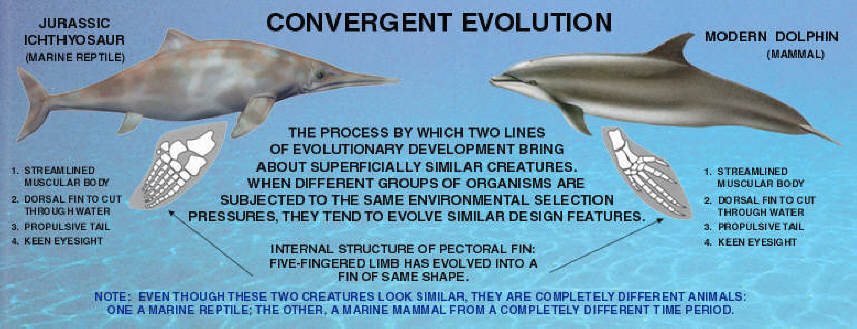
It annoys the hell out of me, because it requires waving away or consciously ignoring basic principles of evolution. Here’s how Dvorsky illustrates the concept:

Convergent evolution between ichthyosaurs and dolphins

I’ve seen versions of this illustration a thousand times. Gosh, look, dolphins and ichthyosaurs all have paddle-shaped fins and streamlined bodies! Therefore, this is evidence that aquatic forms all converge on similar morphologies. And therefore, intelligent, terrestrial organisms will also converge on an ideal form for their niche, which is ours also, therefore we represent a morphological ideal.

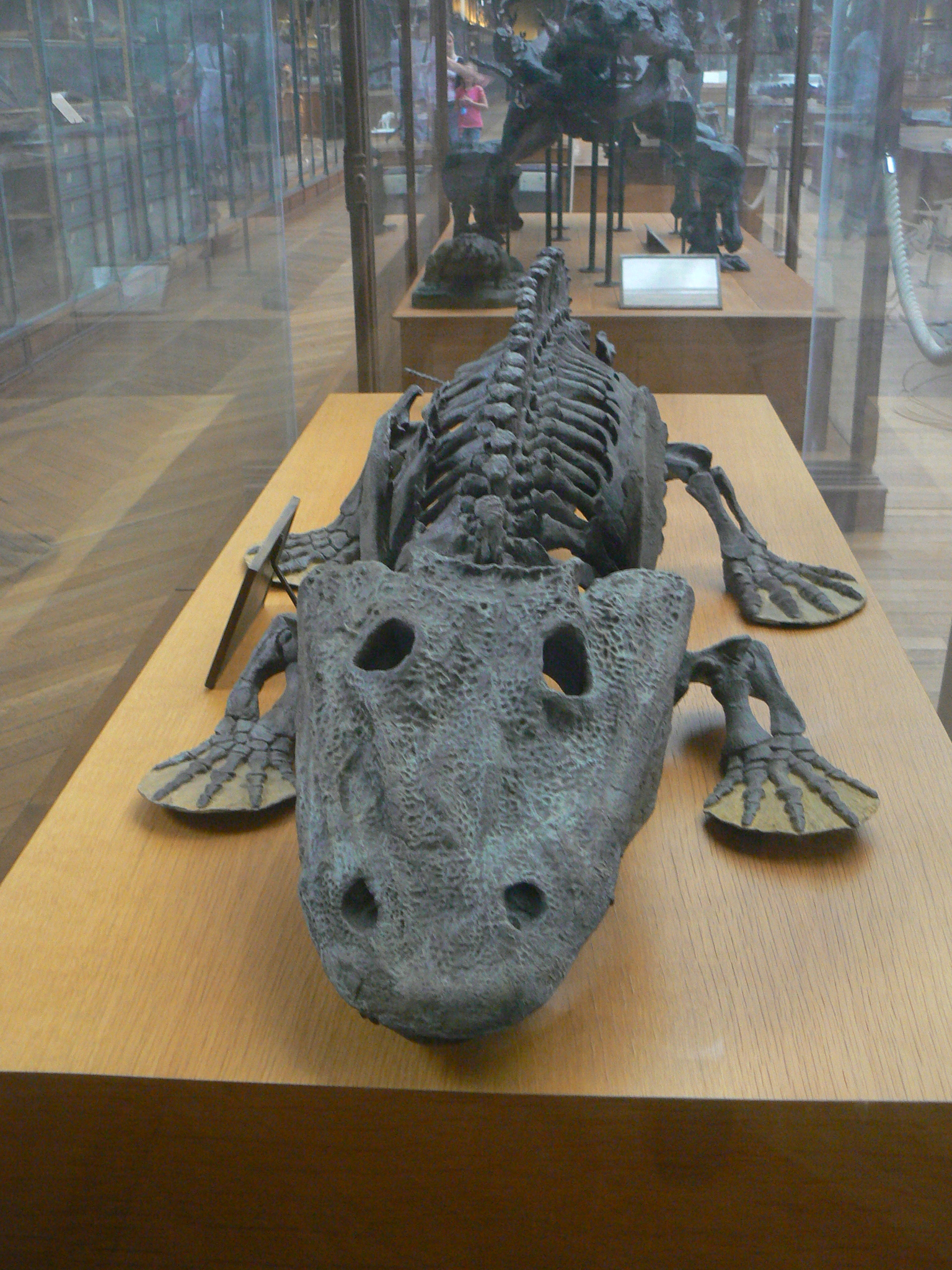
I hate the argument because it isn’t applicable to alien species. In both cases shown above, the organisms involved belong to the same subphylum, the Vertebrata, and the same superclass, the Tetrapoda. They share a common ancestor, and the same starting point. When you start with a terrestrial creature that looks like this, with four limbs and a suite of similar traits…

Eryops, a kind of amphibian from which other tetrapods evolved

…and then let it re-adapt to a marine life as a free-swimming, active predator after long detours into mammalian and reptilian forms, is it any surprise that they converge on similar structures? They are both constrained by their ancestry! The four-finned torpedo does not necessarily represent an ideal form that will be recreated on every planet we ever someday visit, but is instead a compromise, a form that can be generated from a four-limbed vertebrate with a minimum of fuss.

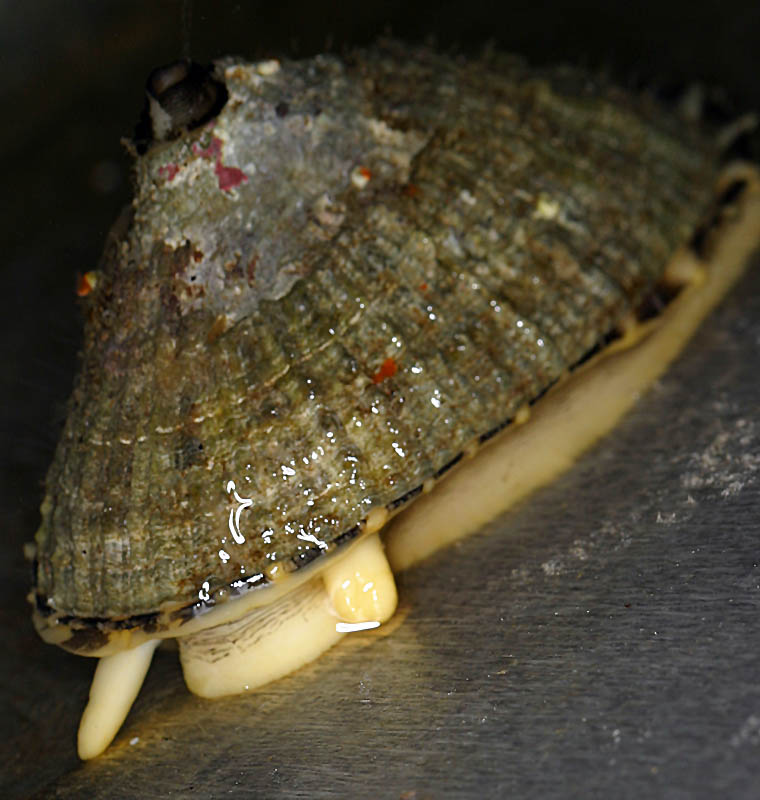
But what if we look at organisms with more remote ancestry? A whole different phylum, perhaps? If we start down the evolutionary road with a conchiferan sort of creature, a mollusc…

Limpet

…which later evolves into a free-swimming, active predator, you get this:

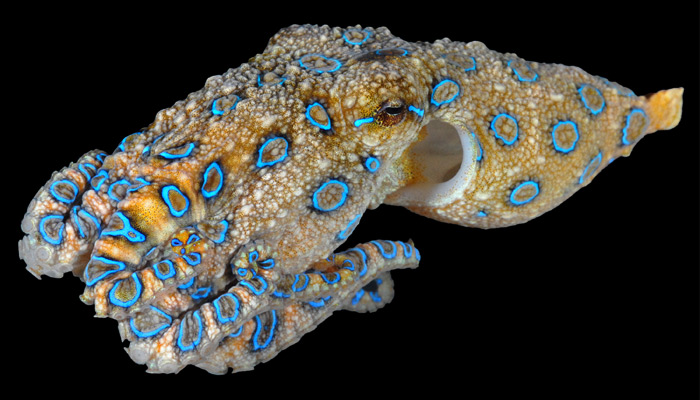
Lovely torpedo-shaped squid

That’s something that looks completely different from a fish-like ichthysaur or dolphin; it’s got a completely different shape, a completely different set of feeding behaviors, a completely different internal organization.

We could ask the same question of other phyla. Where are the sleek torpedo shaped crustaceans sporting a nice dorsal fin and quartet of paddles? Show me a marine annelid that has followed this same path.

Now keep in mind that life on another planet will share no ancestry with anything on Earth. If our history is any example, they will be the product of a few billion years of single-celled tinkering, with a riotous adaptive radiation of multicellular forms that will explore a small fraction of morphospace…and every step will be contingent on prior states.

You can only make this ludicrous convergence argument if you think 1) contingency is relatively unimportant, that 2) adaptation is extremely powerful and will always drive a species towards an optimum, and that 3) the shape of a relatively tiny subset of species on this planet represent that optimum. There is a fourth requirement as well: you must be oblivious to the fact that (2) and (3) contradict each other.