You probably don’t want to collect your winnings.
The Gulf of Mexico is literally on fire because a pipeline ruptured pic.twitter.com/J4ur5MNyt1
— Brian Kahn (@blkahn) July 2, 2021
P.S. Pipelines leak, if you didn’t already know that.

You probably don’t want to collect your winnings.
The Gulf of Mexico is literally on fire because a pipeline ruptured pic.twitter.com/J4ur5MNyt1
— Brian Kahn (@blkahn) July 2, 2021
P.S. Pipelines leak, if you didn’t already know that.

I’ve got a little habit of checking in on the video footage from Fagradalsfjall now and then, and to my surprise I noticed that this one is from a friend, who went to Iceland without me. I’ll forgive him this time for his skill in getting his drone within 25m of the crater.
It looks like boiling, flowing water. Glowing red intensely hot flowing water.

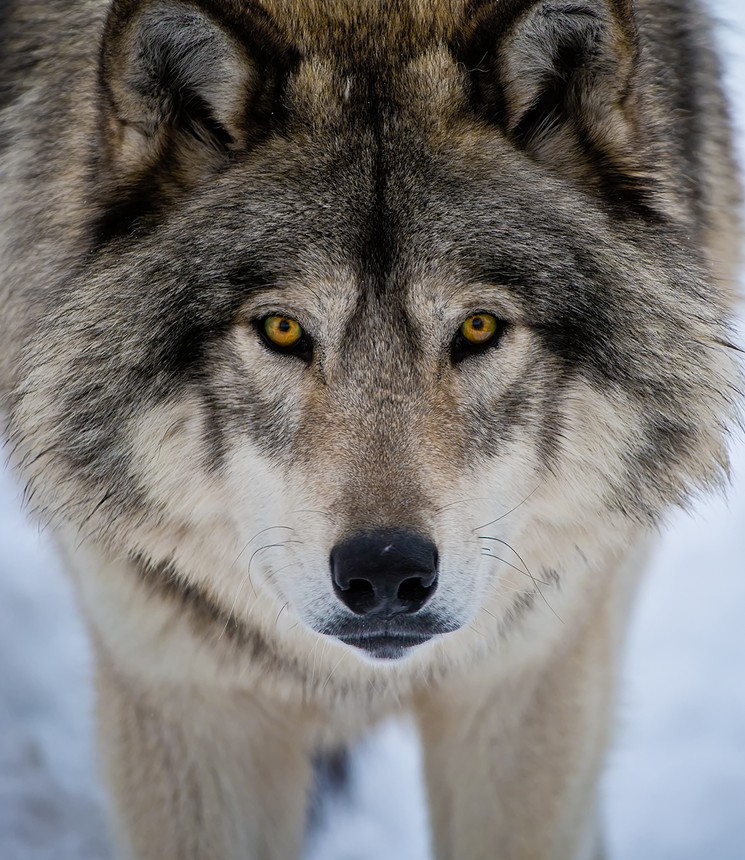
I have mixed feelings about this article about wolf behavior. It goes out of its way to cast its subject, a specific wolf called Twenty-one, as a heroic leader and kind of a male ideal: fierce but gentle, always victorious in battle but merciful to the vanquished, playful and affectionate with his cubs. It’s a lovely story, but I wondered how much the author was reading into the wolf’s behavior, and whether it was actually doing a disservice to the nature of the wolf. Then I read this, about the consequences of sparing a rival:
Wolves can’t foresee such plot twists any more than people can. But evolution does. Its calculus integrates long averages. By sparing the Casanova wolf, Twenty-one actually helped assure himself more surviving descendants. And in evolution, surviving descendants are the only currency that matters.
Yeah, I don’t think Twenty-one had been reading Hamilton about inclusive fitness in his spare time, and awareness of evolution is a recent (and often resisted) human phenomenon, so I’d suspect that there was more proximate thinking involved than long-term strategic consideration of Casanova’s potential contribution to the survival of Twenty-one’s offspring. I know, the author is saying that Twenty-one couldn’t foresee that, but then why throw in all this stuff about evolution? That would matter if we were discussing the successes of Twenty-one’s progeny, but this article doesn’t.
There’s a lot of stuff in the story that is all about imbuing this one wolf with the attributes of a human mythological ideal. They come right out and admit it.
“And if ever there was a perfect wolf,” Rick says, “it was Twenty-one. He was like a fictional character. But he was real.”
This is why scientists strive for a measure of objectivity in observing animal behavior. There’s always the potential for reading into it something that is not there, or missing something that drives the animal’s behavior that is not present in the observer’s species. Or being selective and untrustworthy in your observations because you want to preserve the Myth of Twenty-one. It’s the Great Man version of history written into the story of a wolf pack, and just as I don’t trust that model in people, I don’t trust it in wolves, either.
But then again…
The second most common cause of wolf death in the Rockies is getting killed by other wolves. (Getting killed by humans is first.) Twenty-one distinguished himself in two ways: He never lost a fight, and he never killed a vanquished wolf.
The story is about the Yellowstone wolves who live in a protected reserve, yet it’s full of incidents of wolves being illegally shot and humans are the primary cause of death in wolves, who almost always die violently. Maybe a little anthropomorphizing is necessary to get humans to be a bit less stupidly destructive.


That’s kind of how I picture my great-grandparents’ farm. I should look it up someday.
It certainly is strange to read an article in the Guardian which mentions all these little towns in my region of Minnesota. Who has ever heard of Greenwald, or Dumont, or Chokio, or Kerkhoven? These are tiny little towns that I know of because they’re within 50 miles of me, but why is an English paper writing about them? Also, the article talks about a lot of things I was thoroughly ignorant of, despite living here.
The issue is the ongoing consolidation of dairy farms in Minnesota. My great-grandparents were dairy farmers in another teeny-tiny town north of here, Fertile, Minnesota, but they gave up on their small farm around about the time of WWII, when one of their sons invited them to live by a real fjord out in Washington state, but that loss was part of an ongoing process. Small dairy farms can’t make it anymore. Now you have to run a mega-factory farm. These are huge operations.
Dairy conglomerate Riverview LLP is by far the largest mega-dairy operation in the state. At the company’s flagship dairy in Morris, Minnesota, 10,000 cows wait expectantly for the feed truck. In the “nursery”, a still-wet calf, its umbilical cord dangling, struggles against a worker who tilts back the small head and inserts a tube of colostrum all the way to its stomach.
At one day old, calves are strapped into vests, machine-lifted into a truck and transported 10 miles away to the company’s calf facility. A few days later, they are trucked more than 1,000 miles, either to New Mexico (if bound for the beef market) or Arizona (if destined for dairy) – a move that Riverview says is for the warmer weather.
I had no idea. I guess I need to get out more, because as a non-farmer I didn’t have a clue about what’s going on right under my nose.
Despite a 55% nationwide decrease in dairy farms between 2002 and 2019, cow numbers have held steady and fluid milk volume has increased – a fact that illustrates a trend toward fewer farms operating on much larger scales.
Between 2012 and 2017, Minnesota lost 1,100 dairy farms. In contrast, those years marked enormous growth for Riverview as it built three new Minnesota mega-dairies, a feedlot in South Dakota and expanded its calf and dairy operations to New Mexico and Arizona.
Are these mega-farms better for the environment or for the people who work the land than numerous smaller farms distributed over a wider area? Probably not.
One of those potential neighbours, a crop farmer in Dumont, Minnesota, says a Riverview official visited him in April 2019 and shared a plan to build a 24,000-cow dairy a mile away. The official offered to buy the farmer’s corn for feed, and to sell manure to him as fertiliser. The offer was declined. “I said, I’m not very interested in that because you’re not paying enough for the product, and you’re charging too much for the manure.”
The farmer – who asked to remain anonymous – was also horrified by the idea of so many cows so close to his home. He worried about odour and air quality, wear and tear on the roads, manure leaching into streams and rivers, and the demand on the groundwater supply. “I’m telling you, it’s scary they’re going to come in here and suck that much water from the ground,” he says.
The 24,000-cow dairy has not been built but, according to state records, the company has applied for a permit to build a 10,500-cow dairy approximately 130 miles north in Waukon Township. Additionally, an application for another 10,500-cow dairy, in Grace Township, is under review.
I’ve been to Grace, but had to look up Waukon — it’s up north, near Fertile. These towns are tiny, between 100 and 200 people, and they’re planning on farms that hold a hundred times that many cows.
But that’s capitalism!

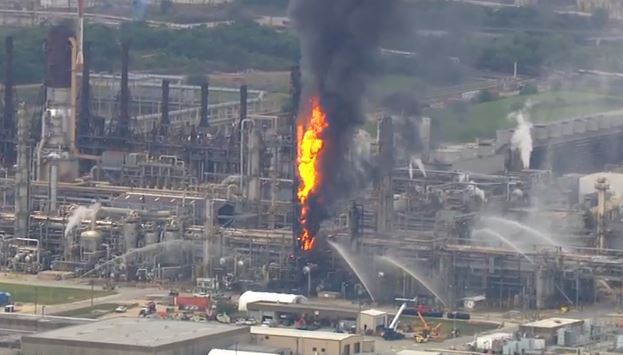
I have to say I’m happy with this outcome, I think, but I don’t have the foggiest idea what was done or the mechanics of the process. I guess there was some kind of rebellion within ExxonMobil, and the good guys won.
ExxonMobil shareholders voted Wednesday to install at least two new independent directors to the company’s board, a resounding defeat for chief executive Darren Woods and a ratification of shareholders’ unhappiness with the way the company had been addressing climate change and its lagging financial performance.
The votes were part of a day of reckoning for an oil and gas industry already struggling over how to deal with climate change. In Europe, a Dutch court ordered Royal Dutch Shell, considered one of the more forward-thinking companies in the industry, to make deeper-than-planned cuts in greenhouse gas emissions. And in the United States, Chevron lost a shareholder vote directing the company to take into account its customers’ emissions when planning reductions.
The balloting at the storied oil giant ExxonMobil “sends an unmistakable signal that climate action is a financial imperative, and leading investors know it and are demanding change,” said Fred Krupp, president of the Environmental Defense Fund. “This is a watershed moment for the oil and gas industry. It’s no longer tenable for companies like ExxonMobil to defy calls to align their businesses with decarbonizing the economy.”
Near as I can tell, the disparate groups who are major shareholders in ExxonMobil had a big vote to decide who was to lead the company. These voters are people outside the company who own many shares of stock, in the form of things like hedge funds and pension funds, and they flexed their muscles and forced ExxonMobil to take a more aggressive position on protecting the environment. They were led by a hedge fund called Engine No. 1, which owned 0.2% of the stock, and I’m already exhausted from trying to figure out how this works, so don’t ask me how such a tiny shareholder could have that much influence. I can cope with the twisty business of molecular genetics, but high finance baffles me.
The court decision is entirely separate for the ExxonMobil internal coup.
Separately, a Dutch court on Wednesday ordered Royal Dutch Shell to cut its carbon emissions by 45 percent by 2030 compared with 2019 levels in a landmark case brought by climate activist groups. Shell said it would appeal. The Hague District Court ruled that the Anglo-Dutch energy company has a duty to care about reducing greenhouse gas emissions and that its current reduction plans were not concrete enough.
I would like to understand how this all happened, but it sounds like growing public awareness of the danger of climate change is percolating upwards and finally having a material effect on these companies that directly control the flow of carbon.
One of the ardent supporters of the Engine No. 1 slate said the hedge fund found eager supporters because of the widening realization that climate change is a financial issue.
“Investors are no longer standing on the sidelines hoping for the best,” said Simpson. “Climate change is a financial risk, and as fiduciaries we need to ensure that boards are not just independent and diverse, but climate-competent.”
Ah, that’s what we need more of.


I never even heard of bird-friendly coffee before, and my first thought was that must be what those early-morning noise makers in the trees around my house must be drinking. But no! GrrlScientist explains it all.
“Over recent decades, most of the shade coffee in Latin America has been converted to intensively managed row monocultures devoid of trees or other vegetation,” Amanda Rodewald, a co-author of the study who is the Garvin Professor and senior director of the Center for Avian Population Studies at the Cornell Lab of Ornithology, said in a statement. “As a result, many birds cannot find suitable habitats and are left with poor prospects of surviving migration and successfully breeding.”
Today, most coffee sold is sun-grown under little or no shade because sun makes coffee bushes grow faster and produce more coffee. This loss of tropical forest biodiversity to a row monoculture harms resident rainforest birds along with their migratory cousins so they all are disappearing along with their rainforest homes. This simple connection between habitat loss, pesticides and fertilizer pollution to intensive coffee farming methods was the impetus for Smithsonian conservation scientists to create the strictest agricultural certification criteria for coffee: their Bird-Friendly certification requires that coffee is organic and that it meets strict requirements for both mature canopy cover and the type of forest in which the coffee is grown. Bird-Friendly coffees are guaranteed to support bird habitat, in addition to fair and stable prices for coffee producers, healthy environments for local communities, and equal access to markets for Bird-Friendly coffee producers.
Uh-oh. When the birder in our house finds out, this is going to be the only kind of coffee we will be allowed to purchase.
(By the way, GrrlScientist visited us here in Morris several years ago, before Mary was bitten by the birding bug. The two of them would have even more to talk about today.)

Oh, hey, I remember the Enchanted Forest in Salem, Oregon! We used to drive by it on I-5 all the time, and we’d gawk and think about taking our oldest child there sometime, back when he was a toddler. That was the early ’80s, before we left lovely Eugene.
It doesn’t look so enticing now. Now it’s the Enchanted Forest from Hell…
#OregonFires Enchanted Forest in Salem Oregon looks downright Apocalyptic today. pic.twitter.com/DzgaJzuoFo
— Jesse (@UglyBoyJ2) September 8, 2020
On second thought, that might appeal to Alaric even more today.
I’m so sorry, California, Oregon, and Washington. I hear everything is on fire nowadays. Let the rains come soon.

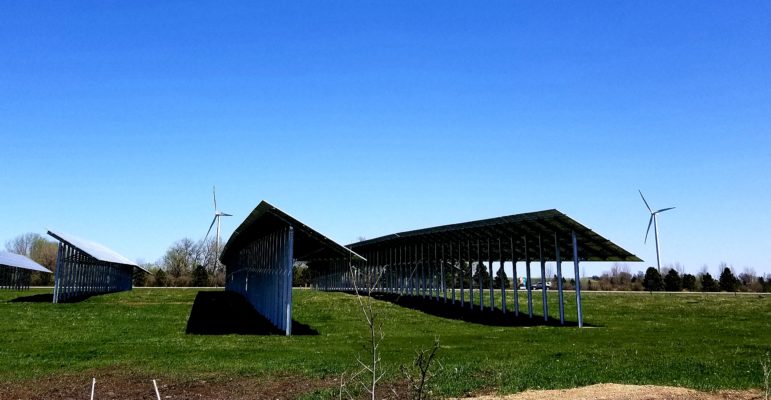
The University of Minnesota Morris already has 100% of its electricity generated from renewable sources, but as this article explains, we’re also trying to kick the natural gas heating dependency. UMM gets a lot of attention here.
In Morris, the university, the city, and a local health campus have created a “Morris Model” that could result in a shared district energy system and other shared projects. The model sets goals of having 80% of energy in the county to come from local sources combined with a 30% reduction in energy consumption by 2030, said Bryan Herrmann, vice chancellor for finance and facilities.
Morris uses half the power from its wind projects to power the school and then offsets the rest of fossil fuel energy consumption through purchasing renewable energy credits generated by the turbines. It is a complex arrangement configured with assistance from donors and Otter Tail Power, Herrmann said.
The campus now must contend with finding money to retrofit buildings and to move them to low-temperature hot water heating. Goodnough, the sustainability director, wants whatever solution the campus chooses to benefit the local community, including farmers and perhaps other towns in the region. “There are some changes that we’re going to have to make to get us to the future where we’ll want to be,” he said.
Yay, UMM! We’re doing what everyone ought to be doing.

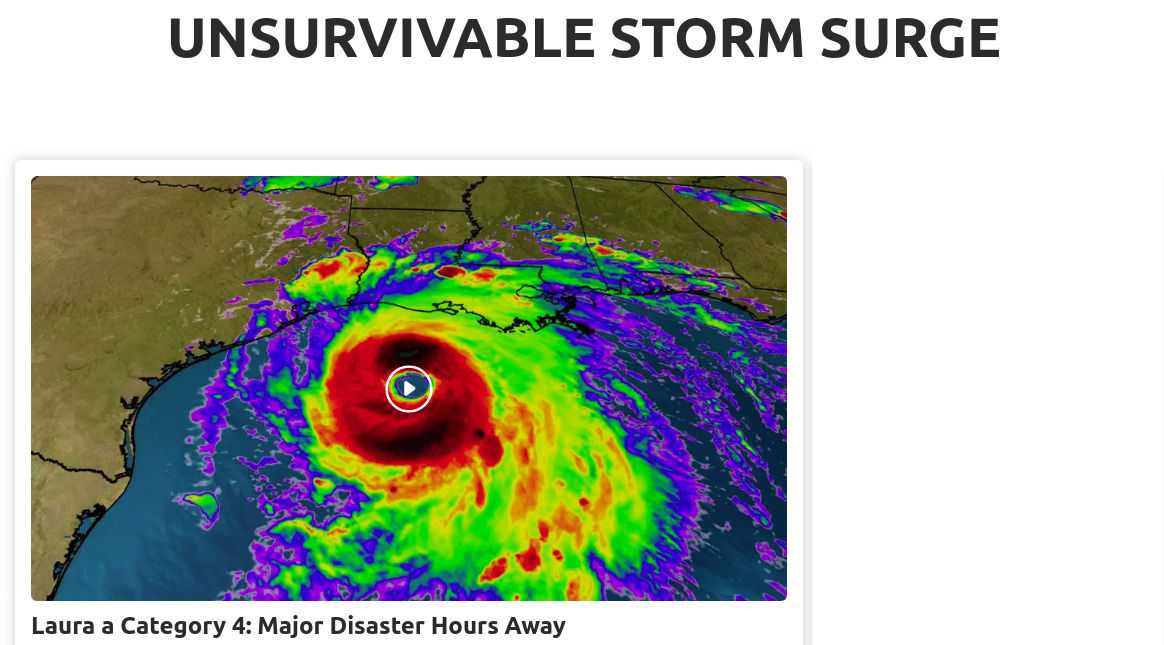
My lab zoom session got interrupted by a crack of doom from the sky that briefly cut off my power, so when it returned I checked the weather online, and saw this amazing headline.
That is so 2020.
Stay safe, Louisianians.

Which is prettier, the top or bottom photo?
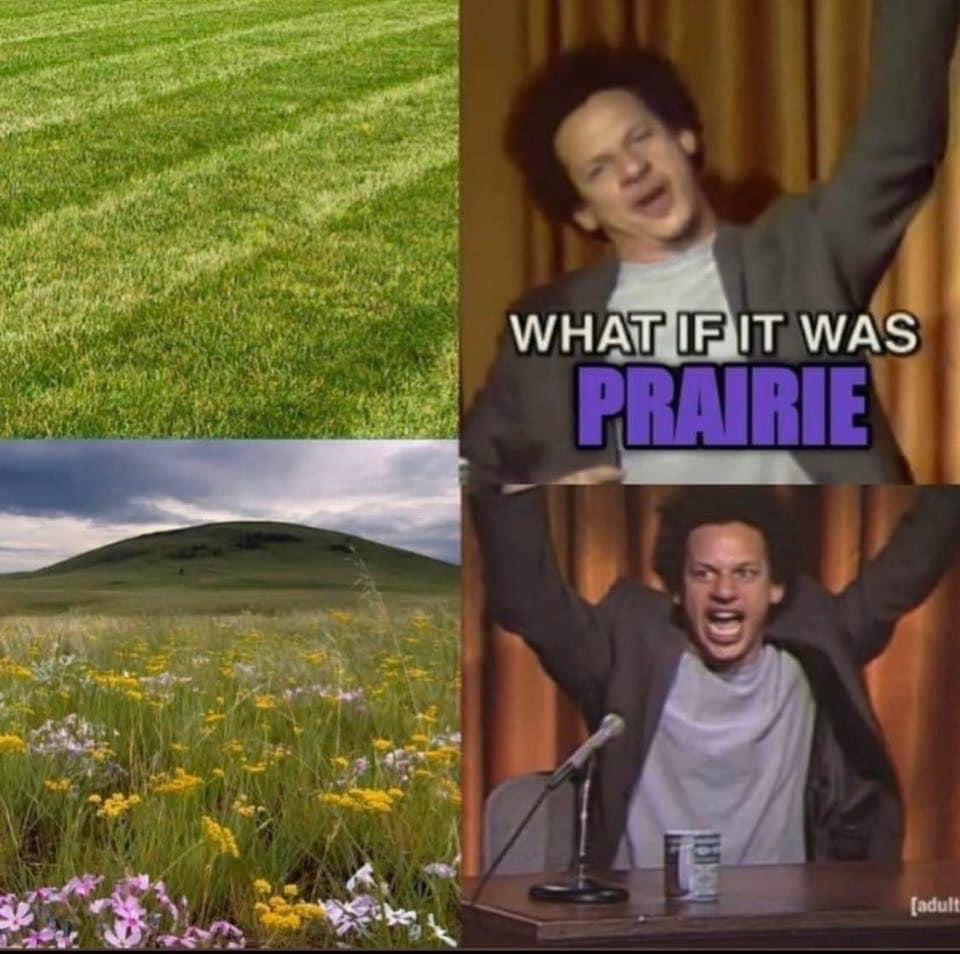
Second question: which do you think supports greater spider diversity?
See also this story. Quebec has a law saying your lawn has to be shorter than 15cm? What if you don’t have a lawn?