
I’ll have to show my spiders this reconstruction of their great-great-many-times-great grandmama. She’s adorable.
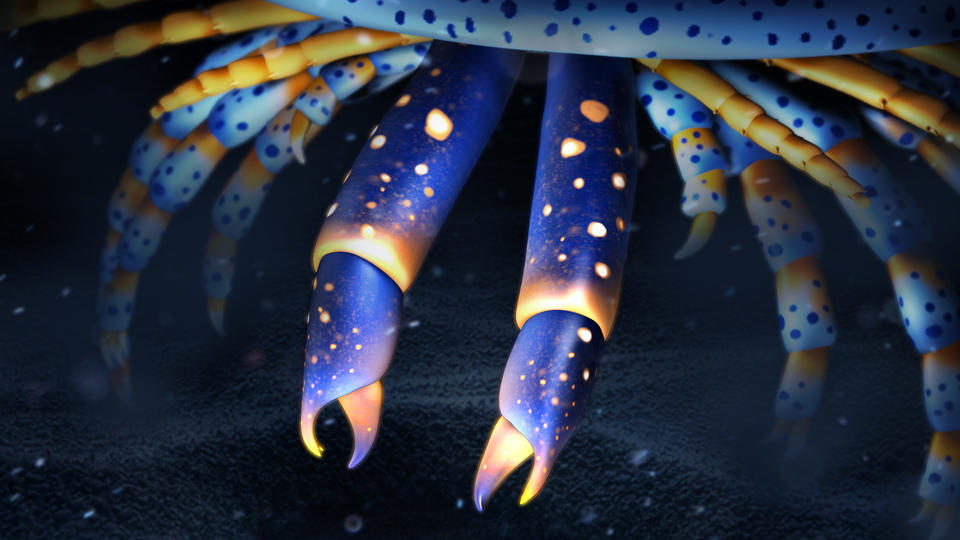
Megachelicerax cousteaui
It’s all in the chelicerae.
In a study published in Nature, Research Scientist Rudy Lerosey-Aubril and Associate Professor Javier Ortega-Hernández, Curator of Invertebrate Paleontology in the Museum of Comparative Zoology, describe Megachelicerax cousteaui, a 500-million-year-old sea predator discovered in Utah’s West Desert. It is the oldest known chelicerate, the arthropod group that includes spiders, scorpions, horseshoe crabs, and sea spiders. The discovery pushes the evolutionary history of chelicerates back by 20 million years.
Hey, I’ve visited the West Desert of Utah — but all I found were fossilized trilobites. Lots of trilobites. Megachelicerax food. But I never found a predator like this one.
The key feature identifying it as a chelicerate are those big clawed appendages on the front of its face, which is also a prominent feature of modern spiders, much modified. The appendage is now a crushing/chewing anvil, and the thumb of the claw has evolved into a wicked needle.
Its most extraordinary feature, however, is its unmistakable chelicera — the pincer-like feeding appendages that define the subphylum Chelicerata and distinguish spiders from insects. While insects possess sensory antenna as their foremost appendages, chelicerates have grasping, often venomous tools. Despite a rich Cambrian fossil record, no unambiguous chelicera-bearing arthropod from that time had ever been found – until now.
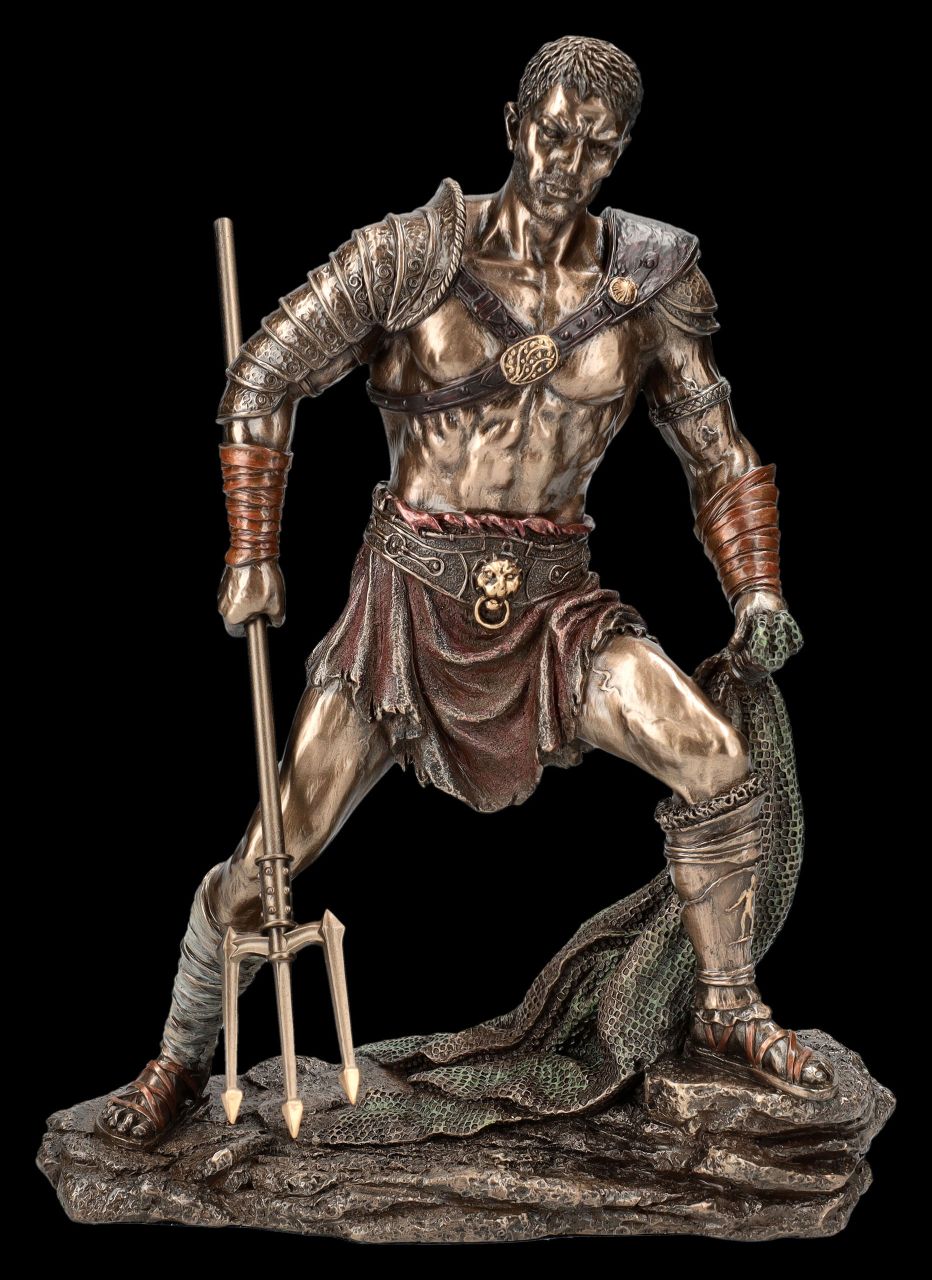
The thing about modern spiders is that they’re mostly defenseless — no sting, no pointy legs, no claws — except for that one extraordinarily useful weapon, the chelicerae. Well, they also have silk, making them a kind of retiarius of the arthropod world. You’re probably not afraid of their webs, but you worry about their big chompers and the venom they carry.
I don’t think the retiarii would have poisoned their tridents, though.

Thanks PZ, you are truly the Garrison Keilor of our times. I was just on my way to bed and now I’ll drift off comforted with thoughts of the gentle munching of paralysed mealworms.
Night all.
I WANT ONE.
Just one?
I don’t wanna be greedy.
Ancestor of the largest now living (& ever?) Arachnid? Very close relative maybe? See – The World’s Largest Arachnid Isn’t On Land! Goes for twenty minutes approx. Almost literally.
“Step on it, Henry! Step on it!” – Gary Larson
That’s how they get ya. I got a faceful of web the other day.
TIL the term Utah’s West Desert. It’s the Great Salt Lake Desert, which is a geological place I did know. I mean there’s lots of desert in Utah and some of that is in the western half of Utah, so calling it ‘west desert’ in a scientific paper seems odd. There’s military still out there as far as I know. I hope they are not smithereening any more of these guys.
I once walked through a forest where the entire canopy was covered in spider webs. Yes I was scared of walking into some of them.
francesconic @9: In Attenborough’s Life in the Undergrowth – 5 The Silk Spinners, there was a social spider scene. Anelosimus eximius, by the tens of thousands, covered the South American canopy and formed a liliputian swarm to take down a grasshopper several hundred times the weight of an individual.
Poison would be a rubbish weapon for gladiatorial contests. Far too slow-acting.and unspectacular. Also considered effeminate and utterly unbecoming by the Roman elite – poison was a woman’s weapon to the Romans. Besides, most gladiator shows were not to the death: it would be far too expensive if you ended up losing half your roster after every match.
Think it’d be interesting to see a sort of family tree of how various arthropods adapted their limbs over the eons: Mouth parts, antennae, claws, pincers, wings(?). Remember seeing something about scientists fiddling with fruit fly HOX genes and un-suppressing some ancient leg sequences that killed the fly when they tried to grow inside its both.