It’s a catch-up day

It’s not on my calendar, but I do have a set of priorities today:

  • Dirty work. I have to clean up the cell biology lab from last semester, because another class will be using it this semester. I have to store away microscopes and computers, and scrub benches.
  • Setting up fly stocks for my genetics lab.
  • Feeding spiders some of those same flies.
  • Shoveling sidewalks. We got more snow last night.
  • Picking up all the things on the floor that our cat spent the last week knocking over.

More will probably come up. It always does.

Look who else is leaving Facebook!

Mark Hamill is out.

Are you going to disagree with Luke Skywalker? (Don’t remind me that he’s also the Joker.)

Don’t go there, little blue dot!

Every morning, I get up, fix the coffee, and sit down to the computer, and the first thing I do is check my calendar. I identify with that blue dot; that’s me. I’m marching forward through time.

Look how clean and pure this week is. My time is my own. I have things to do, but it is my choice when to do them.

But the dot marches on, and I can see that next week it slams into a wall of duties and obligations. I want to tell it to stop. It’s like those horror movies where one of the protagonists announces, “Let’s split up. I’ll check out the basement of this creepy house.” And they do, and you’re watching and thinking they shouldn’t do that, and then the guy get his face ripped off because it was inevitable and there’s nothing you can do.

That’s my calendar. I should probably stop looking at it. Doom, doom, doom.

When librarians turn to the dark side…

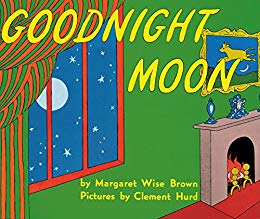
I thought all librarians were perfect saints, champions of goodness and openness, and then I read that the New York Public Library had banned Goodnight Moon for decades, because of the fact that an influential librarian, Anne Carroll Moore, didn’t like it. She apparently thought children’s books ought to have a “once upon a time” feel to them, and she was the Authority in charge of deciding what children should like.

Anne Carroll Moore was not a fan of Margaret Wise Brown’s work. Brown, with her Bank Street training, was “looking at the mind of a child, operating at the level that a child understands,” says Bird. “She was trying to get down on their level, whereas Anne Carroll Moore placed herself above the children’s level, handing what she viewed as the best of the best down to them.”

Yet Goodnight Moon is a book I read repeatedly to my kids, to the point where we wore it out and had to buy multiple copies. Just this week, I saw my granddaughter carry a copy to my wife and demand that she read it. She’s 15 months old. I can’t even imagine why a librarian would block stocking such a sweet, innocent story. Moore was apparently progressive in other ways, but I just don’t get it.

Then I read this little aside about Margaret Wise Brown.

So no one was pressuring the NYPL to stock the book, least of all Brown, who died in 1952. (Recovering from surgery for an ovarian cyst in a hospital in France, she playfully kicked her leg up, cancan-style, to show a nurse how well she was feeling; the action dislodged an embolism from a vein in her leg, which traveled to her brain, killing her nearly instantly.)

Huh. Should I go out of my way to tell my granddaughter that story? Should I wait until she’s old enough to no longer be quite so attached to Goodnight Moon before she learns about reality? Am I now policing the content she is allowed to see? I could probably turn her into a little Goth girl if I made it a point to tell her how the authors of all her favorite children’s books died.

I am home again, unfortunately

I left my darling granddaughter this morning to come home. Why? Because someone has to take care of the cat.

I walked in the door to discover that, while I was away, she had puked in the entryway. She puked in the kitchen. She puked in the hallway. She puked all over the comfy chair in the living room. She puked in the bathroom. She puked in my office. She puked in my slippers. As soon as I opened the door, she was so grateful that she darted outside, into the snowy, -15°C weather, and didn’t want to come in.

So I left her there.

She was scratching at the door 5 minutes later, and I relented. But I considered letting her have a night out in nasty weather!

Here she is, not looking at all guilty.

It’s OK. I’m renaming her Princess Pukes-A-Lot.

Now I have to spend my evening scrubbing everything.

You know, spiders are much less disgusting than cats. If only I could convince my wife…

These are scientists?

Tell me if this sounds familiar. MIT students confronted Seth Lloyd about his affiliation with Jeffrey Epstein, and he made this gobsmackingly stupid remark: I never saw him with underage women. He traveled around with two assistants, who were women in their 20s, who were typically very beautiful, and they were presumably previous Victoria’s Secret models.

Did he card them? Check their CVs for their employment history? Does he think that association with women above the age of consent means you could never have ever associated with underage women? Remember, this was after Epstein had been convicted.

It reminds me of something else: Lawrence Krauss’s feeble rationalizations.

“If anything, the unfortunate period he suffered has caused him to really think about what he wants to do with his money and his time, and support knowledge,” says Krauss. “Jeffrey has surrounded himself with beautiful women and young women but they’re not as young as the ones that were claimed. As a scientist I always judge things on empirical evidence and he always has women ages 19 to 23 around him, but I’ve never seen anything else, so as a scientist, my presumption is that whatever the problems were I would believe him over other people.” Though colleagues have criticized him over his relationship with Epstein, Krauss insists, “I don’t feel tarnished in any way by my relationship with Jeffrey; I feel raised by it.”

I’m embarrassed for them. Scientists should have a better appreciation of how evidence works, and that personal eyewitness evidence isn’t the only kind there is…that’s more of a Ken Ham attitude than I’d expect from these two.

Holy crap, MIT!

The Epstein fallout continues. MIT is thoroughly scolded by the Boston Globe editorial staff.

Heads have rolled; new rules have been promised. But what led MIT to accept the donations of sex criminal Jeffrey Epstein is about much more than bad apples or bad fundraising criteria: It’s a reflection of a culture that has strayed from basic values and that’s long overdue for a reckoning.

The report that MIT released Friday showed the Institute took $750,000 in donations from Epstein after he was convicted as a sex offender in Florida in 2008 (and $100,000 before that) as well as hosted the late financier on campus nine times between 2013 and 2017. The investigation of the donations, led by the law firm Goodwin Proctor at the behest of the MIT corporation, showed that in addition to two faculty members who solicited the post-conviction gifts — former MIT Media Lab director Joi Ito and mechanical engineering professor Seth Lloyd — three university vice-presidents, R. Gregory Morgan, Jeffrey Newton, and Israel Ruiz, were aware of Epstein’s donations, his reputation, and his 2008 conviction for soliciting a child for prostitution, and yet approved taking his money and keeping it a secret anyway.

We’ve already seen Joi Ito go down in flames — he knew exactly what he was doing, and he lied to cover up the money coming into his lab. I’d heard of Seth Lloyd, but had no idea until know what a corrupt SOB he was. Lloyd was an associate of Brockman’s Edge group, which is beginning to look like a red flag.

Mano has covered the Lloyd story well, and it’s written up in Nature.

It’s hard to comprehend how consciously devious he was.

He received $225,000 in research grants, and shockingly, a $60,000 personal gift from Epstein. This is unheard of, as far as I know. Grant awards do not come with big ol’ piles of money to the awardee; not once in my career have I profited from a grant in any way. That money is supposed to go through the institution, and be managed and regulated by that institution.

Then he kept the money secret.

“Professor Lloyd knew that donations from Epstein would be controversial and that MIT might reject them,” the report concluded. “We conclude that, in concert with Epstein, he purposefully decided not to alert the Institute to Epstein’s criminal record, choosing instead to allow mid-level administrators to process the donations without any formal discussion or diligence concerning Epstein.”

Wow. Unimaginable. The last big grant I received was administered by our grants office, I didn’t see a penny of it, and every purchase request was overseen by an administrator who would double-check whether it was allowed under the terms of the grant. Heck, even the little in-house grants I’ve received are policed strictly by administrators, which is right and proper. It is not the PI’s money!

Lloyd even tried to justify his actions to his classes!

In her op-ed, Graham said that Lloyd opened his initial class, by asking, “How many of you have heard of Jeffrey Epstein?” and then diving into an explanation of why he decided to visit Epstein in prison and accept funds from him after he had been convicted of having sex with minors. He told students he had consulted important women in his life, his mother and wife, before taking the funds. “There was no information that couldn’t have been sent in an optional email to the class. This was a power play, pure and simple,” Graham wrote of Lloyd’s lecture.

In other words, Lloyd knew that accepting the money was wrong, that the association with Epstein was unconscionable, so he had to make a guilty rationalization to his students. This is another alien experience to me — I’ve never felt the need to explain to a class that “I did X, and I know it looks really, really bad, and it got me entangled with criminals, but…”.

That Boston Globe editorial may not have gone far enough. It’s true that MIT has “a culture that has strayed from basic values”, but let’s not let the faculty off the hook. They hired a bunch of cowboys, turned ’em loose with little oversight, and are now shocked to learn that they were a bunch of sleazy rustlers.

I wonder if MIT will now start enforcing the rules, and how many of their big names with big egos will complain?

The least the president of MIT can do right now is resign. Lloyd should be fired.

Democracy dies in a pile of money

In a Washington Post op-ed, John Ellis opines on who he thinks ought to be the Democratic presidential nominee. This is John Ellis.

Worked at Fox Business Network and Fox News on business and financial news “content,” programming and strategy. Worked at Dow Jones on WSJ CEO Council News Items, a newsletter that went out to the WSJ’s CEO Council and to a wide network of “influencers” in government, media, finance, entertainment, etc. Worked on business projects for Rupert Murdoch from 2016 through 2018.

Do you think he might be giving good advice? Perhaps he might have the best interests of Democrats at heart?

A short summary of his opinion piece: Bernie Sanders is a “nightmare”, and he’s going to lose to Trump, as is everyone except for one shining knight: Michael Bloomberg. And why is Bloomberg so good?

He’s rich.

If Democrats nominate anyone besides Bloomberg, they will be outspent in the general election by 2 to 1 or even 3 to 1. If they nominate Bloomberg, he will outspend Trump at least 5 to 1 and dramatically improve the party’s chances of winning seats at every level of governance.

Holy hell. The presidency is for sale, and rather than electing a candidate who might fight for campaign finance reform, we’re supposed to bow to the wind and find the richest man we can to run the country, because he is so wealthy.

Fuck off, John Ellis. You’re going on my list of smug lackeys to oligarchs who need to be lined up against a wall.