I wouldn’t want to contribute to “outrage culture”

Some people think that criticizing atheists is offensive and wrong. Therefore, I have to institute some new policies here.

You are no longer allowed to disagree with me. If you do so, you are being divisive.

This rule applies everywhere. Not only are you not allowed to disagree in my comments, but if you write a single contrary word elsewhere, you are guilty of fomenting a witch hunt. If you disagree in any way, then I will indignantly declare you guilty of making me witch of the week.

If two or more of you disagree with me at the same time, that is indisputable evidence of a conspiracy. Atheists cannot find independent cause to disagree with your Leader — we agree on everything — and besides, you are only allowed to exalt me.

I’m sure you will find all these new rules agreeable, because not doing so is a sign that you are making Drama, which is bad, and failing to support unquestioning loyalty, which is unforgivable.

Hail Me, and the Glorious Leadership.

There will be no questions. Obey.

Spanking Nicholas Wade

Wade’s li’l book of scientific racism has been repudiated by over 100 scientists working in the fields of evolutionary biology and population genetics.

As scientists dedicated to studying genetic variation, we thank David Dobbs for his review of Nicholas Wade’s “A Troublesome Inheritance: Genes, Race and Human History” (July 13), and for his description of Wade’s misappropriation of research from our field to support arguments about differences among human societies.

As discussed by Dobbs and many others, Wade juxtaposes an incomplete and inaccurate account of our research on human genetic differences with speculation that recent natural selection has led to worldwide differences in I.Q. test results, political institutions and economic development. We reject Wade’s implication that our findings substantiate his guesswork. They do not.

We are in full agreement that there is no support from the field of population genetics for Wade’s conjectures.

Ow, that has to sting. But I know exactly how the Human Biodiversity wackos will respond: all those scientists must actually be acolytes of the New Creationism.

The gay marriage probably forced him to do it

File this one under Baptist Ministers Reinforcing Stereotypes. Or maybe Bad Religious Jokes.

The president and CEO of a Missouri Baptist conference center is out of a job after a sheriff’s Cyber Crimes Task Force arrested him for allegedly arranging to have sex with a dog after posting an ad on Craigslist .

Jerald “Jerry” Hill, 56, of Camden County was arrested on Aug. 5th after setting up a meeting with an undercover officer for the purpose of having sex with a dog, according to the Columbia Daily Tribune.

They predicted gay marriage would lead to man-dog sex, but did he really have to personally work to fulfill prophecy?

Life goes on

When I stepped off the plane at Heathrow the other day, my phone pinged, and I got a message from my daughter: “We’re getting hitched.” Very efficient. Brevity is a virtue. It reminds me of me: after Mary agreed to shackle herself to me for life, I mentioned it to my parents as we were going out the door — “By the way, we’re getting married.” We didn’t have email in those days, or I would have used it.

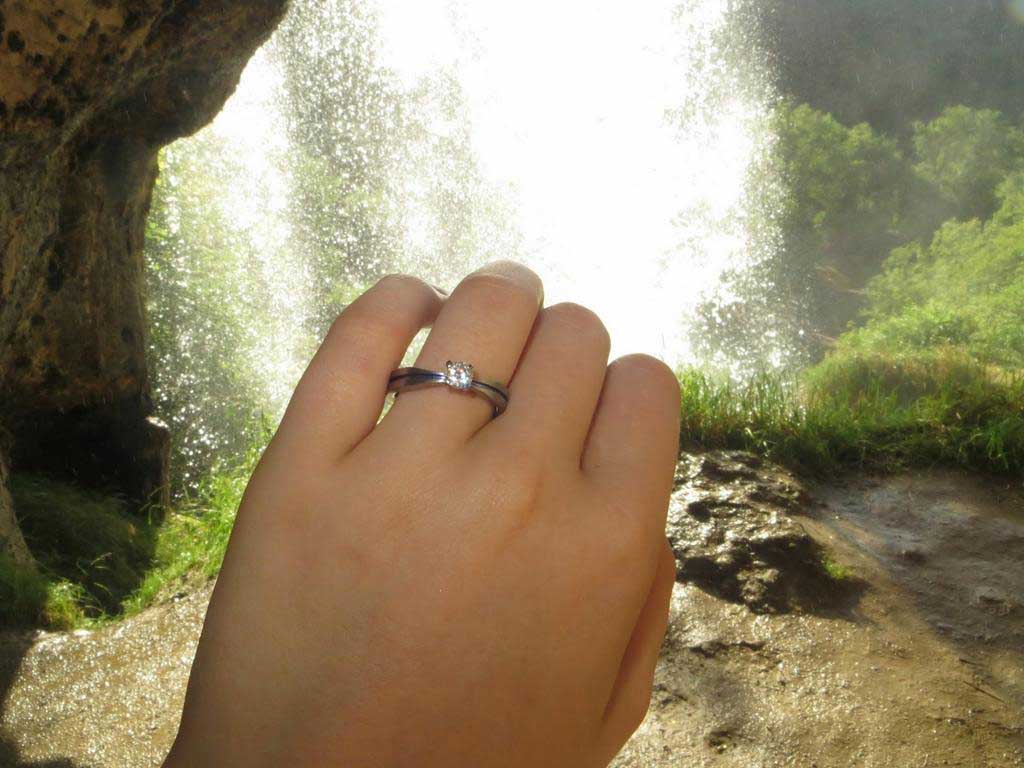
I’ve since gotten a few more details — I had a good idea who “we” were, but it was nice to get confirmation — and she’s now publicized that thing newly engaged women all do.

hitched

That’s one down. Now I must mention that I have two sons who are eligible bachelors…if anyone is interested, contact me.

Are you a good witch, or a bad witch?

meter

A little while ago, I got this email from a reporter.

My editors and I feel that in the wake of Dawkins’ series of tweets last week about what rapes are worse than others it is time to ask the question:

Is Richard Dawkins an asset or a liability to movement atheism?

Would you care to weigh in on this? Would anyone else you know care to? I know this is more than touchy and am open to allowing anonymity – with a discussion first.

You may have seen the final article. You might have noticed that there was nothing from me in it. There’s a reason for that: I thought the whole concept was odious, and did not dignify it with a reply. I also knew what would happen — that the result would be a set of statements in which some decide that he’s a bad witch, some that say he’s a good witch, and some that struggle to straddle the middle ground and express some of the complexity of the question, and on the whole it was going to be a meaningless mess. It’s an attempt to place a person on a simple linear scale, and to make it worse, get diverse people with diverse views to produce a hodge-podge of assessments that would be impossible to reduce. It was an invitation to play Numberwang, and the only way to win is not to play.

It also struck me as a very Abrahamic exercise. Are you on the side of the angels or the devils? When the Lord weighs you on the scale, will you be found wanting? Let’s stand in judgment of your whole life, and decided whether you deserve heaven or hell.

This is not to say you can’t criticize forcefully. Richard Dawkins has demonstrated a lack of empathy for women’s issues; give him hell. But he’s also a brilliant storyteller who has been a driving force for atheism; send him roses. Brian Dunning is a convicted con artist, but he’s also…well, I’m sure his family loves him. PZ Myers was a petty little shit last Tuesday, but on Wednesday he was a sweetheart.

This is the way humans are. It tempts our minds to find cognitive shortcuts and place a simple label on everything — good guy, bad guy, idiot, genius, villain, hero — and try to reduce everyone to a number in a ledger, but people aren’t reducible.

Try it yourself. What number are you? On a linear scale from -10 to +10 (oh, look, I’m providing an opportunity for more nuance than that article, which only asked plus or minus), where are you? Do you think the number changes from day to day, or minute to minute? Would everyone you know agree with your number? Do you think a public poll on what number you deserve would be more useful than assigning it with a random number generator? (I just tried one; it turns out I’m a 5.)

You’d think that people would recognize that trying to rank human beings is rather like trying to rank rape. No good can come of it.

One would have thought instruments of torture were illegal in modern Britain

I spent quite a few hours today in the Sheldonian — an utterly beautiful building, a masterpiece of 17th century architecture designed by Christopher Wren, and clearly built in an age before anyone had ever heard of ergonomics.

sheldonian

This morning I got to hear Gululai Ismail, Asif Mohiuddin, and Agnes Ojera talk about how atheists are oppressed in Pakistan, Bangladesh, and Uganda. Then this afternoon I came back to listen to Philip Pullman talk about writing. And let me tell you, it was worth it, but all that time on hard flat benches with straight backs or no backs at all, less legroom than on the cheapest airline ever, and narrow little spaces that weren’t quite wide enough to accommodate modern feet (17th century students must have tottered about on tiny little pegs rather than real feet), mean I’m now feeling a bit wrenched and sore.

Most of the panel discussions were held in the Examination Schools with rather significantly more modern seating, and there I listened to Babu Gogineni, Leo Igwe, Valentin Abgottspon, and Bob Churchill talk some more about oppression and efforts to fight it, and then a spectacularly fiery conversation between Alom Shaha, Maryam Namazie, Maajid Nawaz, Kenan Malik and Jim Al-Khalili on the topic of Islam. Islam is very complicated, did you know that?

The rest of the evening was spent socializing, hanging out with Norwegians, I broke down and had a beer, and had a delicious dinner in which I was deeply offended as an American by being seated directly under a gigantic portrait of George III. Then more socializing. And a bit more.

By the way, Gululai Ismail was awarded Humanist of the Year. Well deserved!

Now sleep. I see on the schedule I’m expected to show up at the Sheldonian again first thing in the morning…I may just have to pass on that.

The god of vapor is hardly any kind of god at all

So Greta Christina wrote a piece pointing out that even the vaguest, waffleist, broadest version of God is incompatible with the science, and then my favorite tech and media pundit, Andy Ihnatko, wrote a critique of her article. It’s a decent attempt, but really, it falls into the same trap Greta is talking about.

I was going to tweet out a comment about this Salon article (partner-posted from her AlterNet blog), but yeah, I needed more than 140 characters. I say, with the utmost respect for the author, that Greta Christina’s “The truth about science vs. religion: 4 reasons why intelligent design falls flat” falls into a common trap. She seems to assume that there’s only one acceptable concept of “God.” And, as luck would have it, it happens to be a definition that suits the point that the article wants to make.

I might have misread what is an obviously well-written and well-presented opinion. My difficulty comes right at the top:

You hear this a lot from progressive and moderate religious believers. They believe in some sort of creator god, but they heartily reject the extreme, fundamentalist, science-rejecting versions of their religions (as well they should). They want their beliefs to reflect reality – including the reality of the confirmed fact of evolution. So they try to reconcile the two by saying that that evolution is real, exactly as the scientists describe it — and that God made it happen. They insist that you don’t have to deny evolution to believe in God.

In the narrowest, most literal sense, of course this is true. It’s true that there are people who believe in God, and who also accept science in general and evolution in particular. This is an observably true fact: it would be absurd to deny it, and I don’t. I’m not saying these people don’t exist.

I’m saying that this position is untenable…

I urge you to read the entire piece. It’s good stuff. I just don’t think it adequately defends the argument that belief in God and belief in evolution aren’t compatible. It’s a good argument against the specific kinds of belief that she singles out, but it falls far short of making the larger point.

Ihnatko goes on to say much more, and in particular I’ll say his discussion of Intelligent Design creationism is spot on; ID is particularly vile for its calculated and disingenuous attempt to hide its religious foundations for marketing reasons. But I have to agree with Greta that science and religion are incompatible, and that sending your god off into the distant past and a tenuous and murky relationship with reality is not a good strategy for convincing anyone of its relevance…which is exactly what Greta is saying. This by Ihnatko, in particular, is not a defense of god:

Can I respect a belief that the universe was created by God? Sure, given the broad definitions of “God” and “created.” The folks who subscribe to that kind of idea readily concede that it’s a matter of personal faith, not a matter of provable science, and they know that the correct answer to the demand “Prove it!” is “Why?” You only need to prove something when you’re trying to convince the rest of the world they’re wrong, or impose your personal beliefs on them. And I think most religious people are secure enough in themselves and their faith to see the vulgarity of such motives.

Let’s dissect that.

First of all, science isn’t in the business of proving anything, ever. It’s a process for developing knowledge about the world, and we don’t talk about proofs, because knowledge is provisional and changes as we learn more. We tend not to say “Prove it!”. Rather, we’re more likely to say, “What’s your evidence for that?” or “How does it fit into this other body of hard-earned knowledge?” We’re also much, much more likely to ask how you know something, what process you followed to arrive at your conclusion, and to ever-so-awkwardly point out errors in your logic or observations.

We don’t consider such questions vulgar. They’re necessities for assessing a claim. I wouldn’t flatter believers by suggesting that they’re “secure enough in themselves” — I’d be more likely to say that they’re arrogant to think that they don’t need to answer simple questions about their process, and that what they’re doing in their obstinate refusal to think about the mechanisms of their beliefs makes them more similar to a dishonest used car salesman trying to pass off a lemon by hiding its repair history.

And it doesn’t have to be that way. It was a Catholic philosopher, Pierre Abélard, who said that “By doubting we are led to enquire, and by enquiry we perceive the truth”. Honest inquiry is what scientists expect. Stonewalling the conversation by pretending inquiry is vulgar makes us very, very suspicious.

The heart of Ihnatko’s argument rests on assuming that there is an exception to Greta’s argument, that she has failed to sufficiently address deism or the Watchmaker God idea — that maybe there is a sufficiently non-dogmatic, non-specific version of the god concept in which it is a being that just started the natural world and stood back and let it play out. You can’t disprove that, he says.

I can respect creationism in its broadest definition, at least. Mostly by citing the data point “an ant is barely aware that it’s walking on a leaf, let alone spinning on a planet that’s spinning around a star that’s spinning in a galaxy that’s shooting through a universe at about a thousand kilometers a second.” There’s nothing wrong with believing that God created everything and there’s no evidence disproving it, either (again, in a broad sense).

I’ll repeat, science isn’t about proofs. You can’t disprove the idea that Superman built a time machine, traveled back 13.7 billion years ago, and used his super-strength to create an exploding singularity, either. But science doesn’t care. We just ask what your evidence is that such a being exists, how do you know that he did that, and when you cite some back issue of Action Comics, we know to dismiss your claim on epistemological grounds.

It’s possible to believe in God (as you choose to define God) and science at the same time. It’ll all work out fine, so long as you believe in science as science defines science. If so, you shouldn’t worry about what other people think about you.

But how you choose to define god is the important question! “God exists, as long as you don’t ask me to say what God is” is not a good answer, but is an evasion. It makes it impossible to evaluate your explanation.

You could argue that religion and science are compatible as long as religion simply accepts whatever science says about the nature of the universe (which was basically Gould’s argument in Rocks of Ages — I thought it was a cop out when an atheist said it, and I still think it’s a cop out when a deist says it). But that should not be a reasonable approach to someone trying to defend religious belief, because it cuts religion off at the knees. It really says that those holy religious texts are nothing more than the imaginative speculations of human beings, which are to be superseded by science. That’s fine by me, but then be consistent, and follow through and discard the religion part.

There’s also an implicit bias in the language: “God” implies a conscious being, an entity that is actively doing something — it may be as generic as triggering the Big Bang, or as persistent as something that constantly tweaks the human genome to shape us. But there’s no reason to think that what created the universe was aware, or human-like in its purposes, or even deserving of personal pronouns. You could argue that nucleosynthesis is god, for instance; that the process that assembled larger atoms from smaller ones is the divine creative purpose. But you’d be silly to call nucleosynthesis a “he” or “she”, or to address it in your prayers, or to think your conglomeration of carbon is a holy act. Yeah, you can go ahead and call it “god” and make a “First Church of Nucleosynthesis”, but it would represent an absurd anthropomorphosis of a natural physical process.

I think there’s a fundamental property of the human mind that tends to do these sorts of silly theological exercises, and here’s how science gets appropriated. This is Jacob Bronowski’s definition of science:

Science is nothing else than the search to discover unity in the wild variety of nature — or more exactly, in the variety of our experience.

We are typically successful in finding that unity, and then the human mind tries to call it God, bringing in all the cultural baggage that that word carries. It’s not helpful. It obscures more than it enlightens. We should reject the whole notion of “god” because it fails to clarify.

As Ihnatko says, though, you can make it work by not pretending that it has anything to do with science, or that your church can provide any insight into the nature of reality. Sure, go if it makes you feel better, but put away the pretense that you actually learn anything about reality there. You’re engaging in a social behavior that makes you feel good, which is fine, but not something more.

Drowning in noise: How accommodating nonsense poisons our discourse

I’m at the World Humanist Congress, and just finished up an hour and a half tag-teaming David Silverman on the topic in the title. He played the bad cop, while I was the good cop, which is an interesting switch. Here’s the text of what I planned to say, but of course I tended to drift from the script in the actuality.

Whoever said that the answer to bad speech is more speech never had to run a modern website. I used to run my own web server for my blog, before I realized that I had better things to do than nursemaid a swarm of technical details and decided instead to pay a professional to do it well, and one of the things I had to do was maintain all this code that was there specifically to limit access. It was vitally important. I could be down deep in the bowels of the beast, monitoring all the incoming data, and the instant I would plug that ethernet cable into my server to connect it to the internet, literally within milliseconds it would be getting hit with pings — almost all spammers, and also lots of automated hacking code, looking for loopholes in my implementations of communications protocols so that bad messages could be uploaded into my machine to do them harm.

Every website, even the ones that assert the most devout dedication to the principles of free speech, are extensively filtered. From my personal experience, I’d have to say that less than 1% of the attempts to communicate via the internet are legitimate, or are sincere, honest attempts by a human being to talk to other human beings, and the bulk of the attempted discussions are spam and dedicated efforts to corrupt communication.

You don’t have to run a server to know this. Just about all of you use email; every modern email server has built-in traps to block spam. Gmail, for instance, uses some smart algorithms to detect and dispose of spam and you don’t even see most of the garbage that is trying to come through. You really would be drowning in noise without those filters.

It’s also the case in every instance of non-technological discourse in which you engage. Look at this room; I’m talking, and you’re all being so polite and not interrupting; no one is yelling at me, and none of you are suddenly standing up and announcing that you’d like to sell me penis enlarging pills. And then when the Q&A rolls around, you’ll all take turns. Of course we limit speech all the time by common courtesy and by formal rules of order. We could not have a civilized conversation without these rules.

The tricky part is establishing those rules. The naive free speech absolutist is neglecting the fact that the privilege of free speech has to come with the responsibilities of free speech. Every right has to come with a recognition of limits on those rights.

Some of those limitations are easy. For instance, you may have a right to free speech, but you don’t have a right to an audience. Here’s David Silverman, who just gave a ferocious talk advocating the importance of atheism, and I might think everyone ought to hear that…but that doesn’t mean Dave gets to show up at someone’s house at dinner time and harangue everyone with it. It doesn’t mean he has the right to show up at an Anglican church on Sunday and override the religious sermon with his far superior atheist sermon. He should have the right to set up an Atheist TV channel, so people can voluntarily tune in and listen to what he has to say, if they want to.

I think we can all agree that we don’t have a right to impose our views on others, but that it is a violation of the principles of free speech when others, governments or religious organizations or corporations, try to dictate what we may read or hear — that on the one hand, forcing people to read a message is wrong, but on the other hand, limiting voluntary access to media is also wrong. So when governments arrest individuals who express their rejection of religion, or when they shut down access to Twitter by all of their citizens because the state is being criticized, or when the press is corrupted and no longer questions the actions of the state, we can all agree that that is a violation of a principle that we consider important for the welfare and happiness of free people.

Except…

Not even that idea is without exceptions.

Here’s one big problem I have. Words have power. I shouldn’t even have to say this to people in an organization which believes strongly in the power of communication and persuasion and reason: we’re not promoting the cause of humanism with soldiers and tanks, but solely by telling people about the virtues of humanist thought, and encouraging open-mindedness and critical thinking and the questioning of dogma. And we all think that working within the framework of law and media is an effective and appropriate way to do that. At least I haven’t heard anyone suggesting that the world humanists need to start up a military arm.

But there’s often a curious asymmetry in how we think about this. Words have power, but we think everyone ought to be able to use this power freely? Really? There ought to be no restrictions on how words can be expressed? I don’t think we really believe that. We ought to recognize that, because it’s the only way we can properly develop rules and protocols for restricting speech.

Let me give you some specific examples where free speech absolutism fails.

Should creationism be taught in science classes? Many creationists literally argue that their freedom of speech is abridged when they are not allowed to teach their views in public school classrooms, to children. One of the most popular slogans of the intelligent design creationism movement is “Teach the Controversy” — they are arguing that the issues ought to be resolved by giving equal time to all sides, and letting the kids decide which is right. That really is a free speech argument.

I’m a teacher, and I have no illusions. If you give kids a choice between an easy answer that says all you have to do is believe, and that god did it is an acceptable alternative, vs. the complex answer that requires math and data and a rejection of the dogma their parents promote, most will happily accept the one that makes studying for the exam easiest. I also know that if we open the door to anything goes, then education becomes a matter of opening a firehose of noise on the classroom, and drowning the kids in chaos.

The answer is that we have to have criteria for determining what core ideas must be taught, and that we humanists and atheists have a pretty clear idea on that: we advocate for a secular and universal education, where the content is dictated by reality : if an idea is supported by the evidence and there is a clear reasonable path by which any reasonable person can arrive at a consensus, then we should teach that, and not the idea that is contradicted by the evidence. But even that answer is fraught: how do you teach poetry? And the creationists will reply that what must be taught is socialization and the proper place of the student in society, and only religion can give that. We could argue for hours over this issue, and we do.

Here’s another example:

Should rape and death threats be protected as free speech? This is a hot issue on the internets nowadays, and yes, people are actually arguing that using online media to harass, stalk, and threaten people is a free speech issue. And it is! If you’re a purist who believes that everyone ought to be free to create multiple pseudonymous accounts and deluge their enemies with racist, sexist, or abusive slime, then of course you’re going to demand that your right to do so may not be infringed. You’ll also make the same playground excuses we all heard as kids.

“Toughen up.” “Only crybabies can’t take it if they’re called a mean name”. “Sticks and stones may break my bones, but words will never hurt me.”

These excuses are all wrong. Remember, words have power, and only abusers of that power will deny it. The victims of these abusers are already tough — it takes a thick skin to persist on the internet anymore — and they’re not complaining about one insult. They are drowning in the noise: technology has given bullies the power to deliver a torrent of abuse online with great ease, and unfortunately, most of the media are enablers of that bullying. Getting told once that you ought to be raped is annoying and infuriating; being told dozens of times every day is discouraging and repressive. I know way too many people who have been driven completely off the internet by free speech fanatics who flood all of their communications with hatred and abuse.

Just because I’m trying to be difficult today, keep in mind as well that some people find messages that their cherished religious beliefs are false to be discouraging and repressive. These are concerns that must be recognized; it is important that we don’t fall into the trap of glibly announcing that free speech is simply wonderful, all we have to do is talk to each other in the sunlight and reason with one another, and everyone will be won over by the side of goodness and logic and mutual respect. Because that won’t happen.

Should lies be protected as free speech? How do we deal with, for instance, faith healers? Their promises don’t work. They are so tempting to the weak and sick, though: when the choices are to undertake an agonizing regime of chemotherapy, against simply praying harder, there are many people who will understandably choose the latter course, because someone is lying to them about the effectiveness. How do we deal with advertising? It’s easy when the lies are obvious, such as the old campaigns in which doctors were recruited to endorse cigarettes, but what about ads that say beautiful women will find you irresistible if you swamp your body odor with Axe body spray and drink the right kind of watery beer? Don’t pretend that it’s all just caveat emptor and the weak have only themselves to blame — we’re all susceptible to psychological games, says the guy using an Apple iPad, because they’re really cool.

I think, and I suspect that most of you agree, that truth ought to be an ultimate arbiter — that what we ought to prize most is honesty and accuracy in our communication, and that it ought to be a human value to demand evidential support for any claim. It is important that we state our expectations up front and clearly, and that that value is a significant component in how we evaluate speech. But we also have to appreciate that that is not a significant component to others: that they may define truth by how well a statement can be reconciled to their holy book, rather than to reality.

To sum up my concerns about free speech:

You don’t have a right to an audience. This is a critical limitation of free speech right now, in a day when technology has made it trivially easy for abusers to circumvent the limitations of courtesy and protocol.

Words have power. Guns also have power; is unregulated access to guns the best path to a free society? We’re engaged in that experiment in the US right now, and I can tell you…no. Similarly, we have to recognize that words must be used responsibly.

Speech can do great harm. Words can enlighten and educate, but they can also oppress and mislead. As humanists, we must appreciate the importance of truth, and do what we can to stop the promulgation of lies.

There are no easy answers. A commitment to free speech is hard — and the easy answers are so attractive. On the one side we have the contingent arguing “You can’t say that!”, and on the other we have people saying, “I can say anything I damn well please, anywhere, anytime!”, and neither is right. We must be aware that the task is one of navigating between the two extremes.