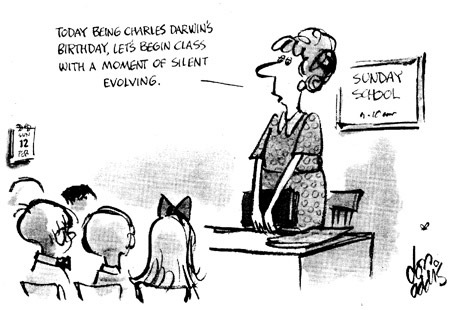
So that’s where the money on the collection plate goes!

Finally, the Catholic diocese of Minneapolis/St Paul has opened their books. If you’re interested in the grisly accounting details, read the whole thing. The part that caught my attention…

The report said the archdiocese spent $8.8 million over the past decade on costs related to clergy misconduct. That does not include settlements and other payments made by the archdiocese’s insurance company, the report said.

The archdiocese spent more than $6.2 million on cases involving misconduct with minors, assisting the victim and abuser, the report said. That includes $2.3 million for legal settlements, $1.8 million for victim support such as counseling and therapy, and $566,000 in legal fees.

Note that it doesn’t cover what their insurance company paid out. I wonder if their company thinks Catholicism was a good risk?

We also learn that the church has operating expenses of over $39 million and income of over $35 million. Using the potent math skills I acquired in first grade, I think that means they’re going in the hole by about $4 million every year…but somehow the church financial officer says, the financial condition of the archdiocese is solid, which unfortunately exceeds my mathematical ability to compute.

It looks a little less solid when you also consider the 20 child sex abuse lawsuits against the church filed just this year.

I shall eagerly await their well-deserved bankruptcy. I might be waiting a long time, though — somehow these organizations always seem to persist on the unfailing gullibility of their clientele, which is beginning to look like an infinite resource.

The state of modern evolutionary theory may not be what you think it is

I was rather surprised yesterday to see so much negative reaction to my statement that there’s more to evolution than selection, and that random, not selective, changes dominate our history. It was in the context of what should be taught in our public schools, and I almost bought the line that we can only teach a simplified version of evolution in grade school, but then it sunk in that I was talking to a group of adults about the standard biological perspective, and their reactions were a mix of total bafflement, indignant rejection, and strange evasive waffling. Well, when should we talk about this stuff, then? Do I have to start making day trips to the local nursing home? Or maybe we should be honest from the very beginning about the complexity of modern evolutionary theory and how it has grown to be very different from what Darwin knew.

First thing you have to know: the revolution is over. Neutral and nearly neutral theory won. The neutral theory states that most of the variation found in evolutionary lineages is a product of random genetic drift. Nearly neutral theory is an expansion of that idea that basically says that even slightly advantageous or deleterious mutations will escape selection — they’ll be overwhelmed by effects dependent on population size. This does not in any way imply that selection is unimportant, but only that most molecular differences will not be a product of adaptive, selective changes.

These theories describe different patterns of the distribution of mutations in populations. This diagram from Bromham & Penny (2003) will help you see the difference.

Selectionist, neutral and nearly neutral theories. a | Selectionist theory: early neo-Darwinian theories assumed that all mutations would affect fitness and, therefore, would be advantageous or deleterious, but not neutral. b | Neutral theory: the neutral theory considered that, for most proteins, neutral mutations exceeded those that were advantageous, but that differences in the relative proportions of neutral sites would influence the rate of molecular evolution (that is, more neutral sites would produce a faster overall rate of change). c | Nearly neutral theory: the fate of mutations with only slight positive or negative effect on fitness will depend on how population size affects the outcome.

Selectionist, neutral and nearly neutral theories. a | Selectionist theory: early neo-Darwinian theories assumed that all mutations would affect fitness and, therefore, would be advantageous or deleterious, but not neutral. b | Neutral theory: the neutral theory considered that, for most proteins, neutral mutations exceeded those that were advantageous, but that differences in the relative proportions of neutral sites would influence the rate of molecular evolution (that is, more neutral sites would produce a faster overall rate of change). c | Nearly neutral theory: the fate of mutations with only slight positive or negative effect on fitness will depend on how population size affects the outcome.

The purple bars are mutations subject to purifying selection — that is, deleterious mutations that are culled from the population. The green bars are mutations subject to positive selection, that confer some advantage to the individual carrying them. That’s all people thought you would have under old school versions of evolution: every change would have some effect on the individual, and would be subject to selection (and then, of course, smart people started to wonder about genetic load and realizing that there were limitations to how much selection a population could tolerate).

Kimura and Ohta proposed, though, that many mutations would be neutral — that is, changes to the sequence of a gene or the protein would have no effect on fitness, and would be effectively neutral. Since the genetic code is degenerate, with most amino acids coded for by more than one triplet, you could have synonymous changes to the DNA that would produce proteins with identical amino acid sequences. Further, protein structure and function may not be as precisely dependent on specific amino acid sequences as many people assume: there are key regulatory and active sites within proteins that are extremely sensitive to small amino acid changes, but other parts of the protein may be much more fault tolerant. That means that under neutral theory, we have to recognize that beige bar, which are mutations that have no effect on fitness.

Under nearly neutral theory, the domain of selection effects shrunk further, because it was realized that quantitatively, small deleterious and advantageous mutations, that is mutations that only conferred a slight difference in reproductive success, would be invisible against a noisy background of chance variation, and therefore could not be seen by selection. That’s the blue bar; mutations that we can see might cause a slight change to the efficiency of an enzyme, for instance, but are not significant enough to cause any difference in reproductive success, or are either lost or fixed by chance.

Now you might try to salvage your faith in the ultimate power of selection by suggesting that the neutral and nearly neutral mutations are really rare and can thus be ignored as negligible, therefore returning us to the world of selection theory…with just a little fuzzy slop around the boundary between the green and blue bars. That’s untenable, though. We have molecular clocks.

When comparing the rates of change between homologous genes in different species, we had a bit of a surprise: they are very roughly, sloppily constant. That shouldn’t be true under pure selection theory, but it turns out to make a lot of sense under nearly neutral theory. There is a tradeoff in the rate of mutations occurring, and in becoming fixed in a population. A very large population size will accumulate more mutations purely by chance, but the probability of a single mutation becoming fixed in the population is reduced under large population sizes. When you do the math, you discover that population size cancels out, and the frequency of novel forms becoming fixed over time is dependent solely on the mutation rate.

Think about that. If you compare two species, the number of nucleotide differences between them is basically going to be simply the mutation rate times the number of generations separating them from their last common ancestor. That’s how we can use a molecular clock to date the time of divergence of two lineages.

Please note: this does not deny that the selection shapes specific traits in a species occurs — we do undergo evolutionary adaptation! It merely says that most of the genetic changes are random. We have to use specific analysis techniques, like the McDonald/Kreitman test, to detect the signature of selection out of the background noise of mutation.

This is just one example of an important concept that is overlooked when your education in evolution focuses solely on one simplistic version of the mechanisms of change. If you didn’t know it, it’s not your fault; I graduated from high school never having the ‘evolution’ word uttered even once by a teacher, so if you’ve heard about natural selection, you’re one up on me. But we can do better. That the high school level of instruction in evolutionary biology is stuck at around 1930 is a bug, not a feature, and we should aim to improve it.

I know, it’s hard when a significant part of the population is stuck in the first millennium BCE, but we shouldn’t use that as an excuse to dumb down education.

Now, because I so enjoyed the chaos that ensued after rejecting one small part of the Modern Synthesis, let me share with you something rather cool. It’s a table from Eugene Koonin’s The Logic of Chance, in which he summarizes some of the big changes between the Modern Synthesis that emerged in the era before molecular biology, and how most molecular biologists view evolution today. I expect an even more glorious freakout because he refers to this positively as a postmodern reassessment, and I know how much everyone loves post-modernism.

Postmodern reassessment of some central propositions of Darwin and Modern Synthesis

Proposition

Postmodern status

The material for evolution is provided primarily by random, heritable variation.

Only partly true. The repertoire of relevant random changes greatly expanded to include duplication of genes, genome regions, and entire genomes; loss of genes and generally, genetic material; HGT [horizontal gene transfer], including massive gene flux in cases of endosymbiosis; invasion of mobile selfish elements and recruitment of sequences from them; and more. More importantly, (quasi) directed (Lamarckian*) variation is recognized as a major factor of evolution.

Fixation of (rare) beneficial changes by natural selection is the main driving force of evolution.

Only partly true. Natural (positive) selection is important but is only one of several fundamental factors of evolution and is not quantitatively dominant. Neutral processes combined with purifying selection dominate evolution, and direct effects of environmental cues on the genome ([quasi] Lamarckian phenomena) are important as well.

The variations fixed by natural selection are “infinitesimally small.” Evolution adheres to gradualism.

False. Even single gene duplications and HGT of single genes are by no means “infinitesimally small,” nor are deletion or acquisition of larger regions, genome rearrangements, whole-genome duplications, and, most dramatically, endosymbiosis. Gradualism is not the principal regime of evolution. [And I would add that even point mutations can have large phenotypic effects. –pzm]

Uniformitarianism: Evolutionary processes have remained largely the same throughout the evolution of life.

Only partly true. Present-day evolutionary processes were important since the origin of replication. However, major transitions in evolution, such as the origin of eukaryotes, could be brought about by (effectively) unique events such as endosymbiosis, and the earliest stages of evolution (pre-LUCA [last universal common ancestor]) partially relied on distinct processes not involved in subsequent “normal” evolution.

Evolution by natural selection tends to produce increasingly complex adaptive features of organisms, hence progress is a general trend in evolution.

False. Genome complexity probably evolved as a “genomic syndrome” cause by weak purifying selection in small populations, not as an adaptation. There is no consistent trend toward increasing complexity in evolution, and the notion of evolutionary progress is unwarranted.

The entire evolution of life can be depicted as a single “big tree.”

False. The discovery of the fundamental contribution of HGT and mobile genetic elements to genome evolution invalidates the TOL concept in its original sense. However, trees remain essential templates to represent evolution of individual genes and many phases of evolution in groups of relatively close organisms. The possibility of salvaging the TOL as a central trend of evolution remains.

All extant cellular life forms descend from very few ancestral forms (and probably one, LUCA).

True. Comparative genomics leaves no doubt of the common ancestry of cellular life. However, it also yields indications that LUCA(s) might have been very different from modern cells.

I would add another significant distinction. Under the modern synthesis, populations are primarily seen as plastic and responsive to changes in the environment, producing species that are most strongly marked by adaptive changes. In the postmodern evolutionary view, history dominates — most of the properties of a species are a contingent product of its ancestors’ attributes. “Everything is the way it is because it got that way.” Everything you see in an organism is a consequence of its history, with the addition of a few unique adaptive fillips, and that has two significant implications: you can’t understand an organism without recognizing the impact of its phylogeny, and the modern form preserves ancestral relationships that can be analyzed to discern that history.

And that, of course, demolishes the bogus distinction between historical and observational science that Ken Ham laughably makes. When I observe a fruit fly or a zebrafish or a human being, I am seeing its history made manifest in its structure. See also John Timmer’s recent post on history and science for more.


Bromham L, Penny D (2003) The modern molecular clock. Nat Rev Genet 4(3):216-24.

Koonin EV (2011) The Logic of Chance: The Nature and Origin of Biological Evolution. FT Press.


*I’m not going to get into the evidence for quasi-Lamarckian evolution here, but I will say that there is good evidence for some of it: Koonin discusses the CRISPR-Cas system of adaptive immunity in bacteria. Maybe some other time I can write that up.

Both wrong

South Carolina State Sen. Mike Fair is doing his usual creationist thing and trying to block the teaching of evolution in public schools. He’s wrong. He’s an idiot. But then I read the clause in the state science standards that he’s opposing.

Conceptual Understanding: Biological evolution occurs primarily when natural selection acts on the genetic variation in a population and changes the distribution of traits in that population over multiple generations.

Performance Indicators: Students who can demonstrate this understanding can:

Analyze and interpret data, using the principles of natural selection, to make predictions about the long term biological changes that occur within two populations of the same species that become geographically isolated from one another.

Wrong, wrong, wrong. Fair’s argument is that this is Darwinism, and Darwinism must be opposed. My argument is that this is wrong because it equates evolution and natural selection, and even makes a factually incorrect assertion, that evolution is primarily a consequence of natural selection.

What’s a guy supposed to do when both sides of the debate have screwed up so thoroughly? Fair is more wrong, but I’m not in favor of teaching kids false versions of biology, either.

Nye/Ham postmortem: William Saletan and the corporatist fallacy

I’ve been collecting responses to the notorious debate between Ken Ham and Bill Nye, and intend to write a couple of summaries of various aspects of the debate: Bill Nye won it hands down, but that does not remove him from criticism, and there have been some weird arguments presented both to defend and criticize him.

Right now, I want to focus on William Saletan, corporate tool and professional contrarian, who also seems to have some kind of weird Malcolm Gladwell envy. Don’t feel jealous, Will, to me you’re both glib and superficial apologists for capitalism. here’s the gist of Saletan’s bizarre interpretation of the creationism offered by the profitable folks at Answers in Genesis.

Creationism, as presented by Ham and his colleagues, is a compartmentalized myth. It doesn’t prevent its adherents from functioning as ordinary people or as scientists.

I would like to see evidence of this “compartmentalized” aspect of the myth. It looks to me like it’s spilling out all over. Saletan might want to look at the people Republicans appoint to oversee environmental concerns. John Shimkus, who believes global climate change is no threat, because the story of Noah’s Flood is literally true, and God promised he wouldn’t do it again; Paul Broun, who called evolution “lies from the pit of hell”. Is James Inhofe safely “compartmentalized”?

And then I look at what’s being done to public education. Louisiana is using state funds to promote creationism; are we building a wall around the whole state to compartmentalize it? About a third of Minnesota teachers are talking up young earth creationism in their classes — it seems to be an awfully porous compartment. The Texas Board of Education is packed with young earth creationists who do their damnedest to keep science out of the textbooks. Are these not doing harm?

Further, I’d argue that it does interfere with your ability as a scientist. Ken Ham trotted out a series of people who basically executed significant engineering projects, and called them scientists; Saletan, totally clueless as ever about what science actually entails, accepts that without question and thinks Ham was effective in portraying creationism as compatible with science.

Science is a process for generating new knowledge, and for creating a deeper understanding of how the universe works. Important as it is, it is not engineering. It is not about building gadgets for satellites. You can do science with satellite gadgets. It is an important distinction. And we’re dealing with people who reject science, who claim the universe is less than ten thousand years old, in defiance of all the science that says otherwise — you don’t get to claim that they are functioning as scientists.

But I also have to criticize Nye, who has been repeating this same kind of line over and over, and it really misses the point. Here’s Saletan again:

Nye portrayed creationism as a cancer. Each time he spoke, he closed with the same warning: Creationism threatens technology, innovation, and prosperity. He insisted that you can’t do good science or run a successful society while maintaining a distinction between real, experimental science and mythical “historical science.” At one point, he showed a satellite image of the National Zoo in Washington, D.C. “That capability,” he said of the satellite, “comes from our fundamental understanding of gravity, of material science, of physics and life science.”

Actually, no. It doesn’t. You can be a perfectly good satellite engineer while believing total nonsense about the origins of life. That doesn’t mean we should teach creationism in schools or pretend it’s a scientific theory. But it does mean we can live with it as a compartmentalized fetish. Believe whatever you want to about monkeys, Noah, and the Garden of Eden. Just don’t let it mess with your day job.

Impractical as this sounds, science isn’t about jobs. Nye is making a huge mistake tying understanding science to strictly utilitarian and immediate ends, and that may be a consequence of his background as an engineer.

Let me rephrase it to make the flaw in this argument obvious. What if we were talking about art?

Art is clearly important for a healthy society — it’s how we see and think about ourselves, it’s how we express human values, it’s fundamentally part of being human. It’s also an effective and powerful way to challenge preconceptions and make our culture better. But it doesn’t pay. And corporate art tends to be bland pablum that does nothing to fulfill the essential functions of art.

(If anyone here dares to make that stupid joke of smug philistines everywhere, you know the one that ends Want fries with that?, you deserve to be lobotomized and shackled to an assembly line for the rest of your life, OK? You don’t understand anything. You have drunk the kool-aid and think the purpose of your life is serving your bosses, you don’t understand art or science, and you can just fuck off.)

So here’s Nye asserting that the measure of the importance of science is how well it trains you to do a job, and here’s Saletan basically agreeing with him on the purpose of learning about science, and disagreeing with Nye by claiming that learning bad science isn’t going to have any impact on your work prospects, because he thinks The McJob is what science is all about. Not only is he building a fallacious case for science, he’s essentially throwing art under the bus along with it.

A pox on both of them. Nye is good at communicating a passion for science, but fails to note the conflict when he pretends that science is about being a better, more employable widget maker for Big Widget, Inc. Saletan is just a cynical contrarian twit who isn’t even aware that his cocky excuses for the corporate status quo are the opposite of contrarian or challenging or provocative. They’re simply sad.

I’m going to have to ask that all you confident utilitarians please sit it out when you’re asked to discuss the validity of science, because you’re prone to reducing it to the wrong foundation. I’m also going to ask what the hell is wrong with Nye for making an argument based on personal profit when he ignored Nick Matzke’s commandments for wanna-be debaters, which are all about locking down where the money will go.

It’s just inconsistencies all over the map.

Sometimes even the old white guys get it

This old white guy is also from Texas, and he’s a sportscaster, yet somehow in one fabulous speech he manages to put the whole Michael Sam story into perspective.


You beat a woman and drag her down a flight of stairs, pulling her hair out by the roots? You’re the fourth guy taken in the NFL draft. You kill people while driving drunk? That guy’s welcome. Players caught in hotel rooms with illegal drugs and prostitutes? We know they’re welcome. Players accused of rape and pay the woman to go away? You lie to police, trying to cover up a murder? We’re comfortable with that.
You love another man? Well, now you’ve gone too far!

Good work, Dale Hansen!

Demonstrate calmly for pro-science

Brianne writes fairly frequently about her experiences as a clinic escort, dealing with shrieking fanatics who stand on sidewalks harassing people going into family planning clinics. They’re hideous and awful and have lost all sense of perspective and humanity, and they’re also remarkably ineffective…unless, of course, their goals are to make other people miserable and to expose their own obsessive inhumanity.

They have a lot in common with another group, animal rights protesters. Sanctimonious assholes, all of them. They’re all over UCLA, and they’re busy protesting researchers’ homes, at least when they’re not too busy planting bombs around the neighborhood or setting cars on fire or vandalizing people’s property.

Look at that person comparing animal experimentation to the Holocaust; it makes me wonder, do they intend to elevated monkeys to the status of Jews, or are they simply equating Jews and monkeys? Can we please not trivialize the murder of humans by pretending it has the same moral equivalency as biomedical research?

I think they, like clinic protesters, have forgotten the difference between expressing an idea/protesting against another idea, and harassment. They also lose all right to put themselves on the side of right in the Holocaust comparison when they say things like this, about UCLA researcher David Jentsch:

And later, the leader of the group whispers to the reporter:

“Wasn’t Jentsch’s car burned or something?” Then, above the din of chants, she adds, “I don’t know how to put this—I only wish he were in it.”

How can they compare researchers to Mengele when this is what they advocate?

I’ll be watching that asshole; I don’t want that piece of garbage and his family living in this neighborhood. He ought to be experimented on.

This weekend, there will be a counter-protest on the UCLA campus. If you value scientific research, you should go. If you believe in ethical research conduct and think these bloody-minded lunatics are actively undermining the responsible monitoring of research, you should go. If you’re just a decent human being who has had enough of idiot fanaticism, you should go.

They’re meeting at 10:15am on 15 February at the Franz Hall lobby on the UCLA campus. Go there, be civil and intelligent, and show people how ideas should be argued — don’t set any cars on fire, don’t harass your opponents’ children, don’t destroy their homes. Not that I’d expect anything less than rational behavior from the science side.

Everything you need to know about Bob Jones University

They intentionally turn a blind eye to their sins.

For decades, students at Bob Jones University who sought counseling for sexual abuse were told not to report it because turning in an abuser from a fundamentalist Christian community would damage Jesus Christ. Administrators called victims liars and sinners.

But wait! Then they hired a Christian consulting group to independently help them grapple with the problem. That’s a step in the right direction.

But wait again! Now they’ve fired their consultants, because they were going beyond the originally outlined intentions, that is, they were coming up with criticisms and answers they didn’t like.

This is how BJU handles assault complaints.

Erin Burchwell said that when she accused a university employee of sexually assaulting her in the late 1990s, “their idea of an investigation and counseling was to ask me what I was wearing and whether it was tight, and to tell me not to talk to anyone about it because it wouldn’t look good for me.” She said university officials alternated between “saying it never even happened and saying I was a willing participant.”

I doubt that I have many readers among the student body at BJU, but in case there are any, here’s my advice: get out while you can. Transfer to a real college.

It’s Creation Science Fair time!

The Twin Cities Creation Science Association is hosting their annual science fair again this weekend, at the University of Northwestern St Paul, 3003 North Snelling, Roseville, Minnesota, in Maranatha Hall. At least it’s being done at an appropriately Christian college.

Every year I note this thing, and every year I fail to attend. It’s just too depressing to see the sad little displays and the cheerful kids who are being detoured into failure. I always feel like I should go, though, just to witness it.

So I was thinking, maybe if I had a little more incentive…is there anyone else in that part of Minnesota who’d like to meet up, take a tour through the tackiness, and then get together to restore our faith in humanity with a beer or lunch? Let me know in the comments. I’d probably aim to get there around 10am, when it’s all set up and judging is going on, and be off by early afternoon. If anyone can recommend a good pub or something in that area, even if you can’t make it, it would be appreciated.


Let me add: if you look at the photos of last year’s fair, you’ll see that these are fairly typical of even secular science fairs — the only weird bit is the required inclusion of a Bible verse, and every once in a great while someone trots out some nonsense about a young earth or whatever. If you think this is an opportunity to get together and poke fun at some kids, stay home, OK?