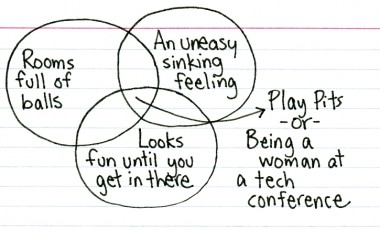
I really didn’t need to see this 1970 magazine in my twitter stream. Really, I didn’t.
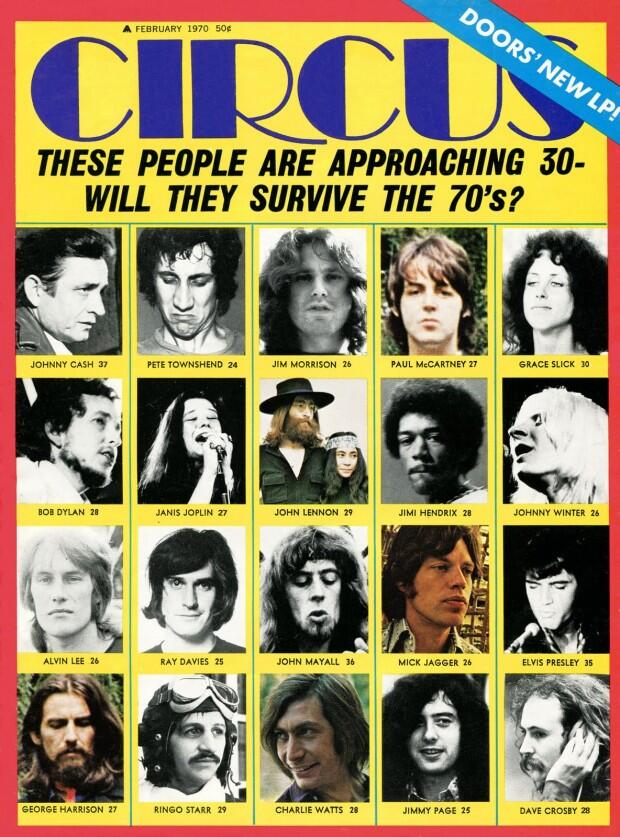
Those of you who weren’t even born in 1970…just shut up. Shhh. Hush. Go back to your video games and toys, the adults are talking now.

I really didn’t need to see this 1970 magazine in my twitter stream. Really, I didn’t.
Those of you who weren’t even born in 1970…just shut up. Shhh. Hush. Go back to your video games and toys, the adults are talking now.

Remember David Marshall? Christ the Tao? The last thread he commented in was this one, where he was his usual bumbling pretentious self, if you need a prod to the memory. He recently had a debate at Adventure Christian Church with Phil Zuckerman, the sociologist, and was creamed. The church then refused to release the video of the debate…until now.
Dear Friends,
Earlier this month our church hosted a debate featuring Dr. David Marshall speaking on Christianity and Dr. Phil Zuckerman, sharing his views on secular humanism.
The night was designed to provide a platform for each to debate their views on civil society. We hoped to encourage a sharing of thoughts and ideas between Christians, atheists and the surrounding community.
After the debate, I honestly thought the video posting was my choice to make, and I was floored to learn that our decision not to post it was considered by some as evidence of close-mindedness. I apologize for not posting this debate earlier, and now that we have clearly heard from both presenters, we are posting the debate.
I hope that the conversation about civility can continue and might return to the civil tone in which it began.
Shalom,
Pastor Rick Stedman
So he was surprised that people pressured him to release the video. How disingenuous, especially given that before he revealed it, he had posted several one-sided rebuttals. And now he has the gall to whine about ‘civility’! You gotta give it to get it, guy.
So here it is, the video Adventure Christian Church was embarrassed to show.
If he’d just quietly released it from the very beginning, probably no one would have noticed. I suppose we should thank Stedman for doing such a fabulous job advertising it.

Yikes, this is an awkward story. A teaching assistant mailed her students personal, nude photos of herself instead of homework answers. If it was a genuine mistake, and I assume it was, I feel for her — she’s going to get some unfortunate student feedback.
But to everyone giggling over it, I would say, grow up. Adults are sexual beings. They will have sex lives; they aren’t going to sacrifice that so students can pretend they’re all alabaster statues. This was an unfortunate error, but it doesn’t mean she’s something unusual: educated people, like your professors, tend to have rather adventurous and interesting sex experiences. They just don’t usually expose them.
But most of my cringing is reserved for the commenters at the link who are making much of the fact that the woman was of Asian descent, and are throwing around jokes built on offensive stereotypes. There is no shame in a person having sex. There ought to be quite a bit of shame in being a bigot.

Here’s via what the song is about.
Hozier said the song was essentially about humanity and how it was undermined by religious organisations and those who claimed to act in its best interest.
Now you’ll have to listen to it.

It’s been a rough couple of weeks in the community of science bloggers, with the abrupt downfall of Bora Zivkovic, a very well liked (I consider him a friend) and influential leader. If you haven’t been following it, here’s a summary and timeline of recent events. The simple version of the whole story is that one of the major pioneers of science blogging and one of the people most instrumental in forging a community online has been found to have abused his privileges to sexually harass women members.
I’ve been processing how I feel about it all. As I say, Bora is a long-term friend; I remember when he joined us at Scienceblogs, and I also remember meeting him for the first time — he was a genuinely enthusiastic proponent of bringing people together and building a new platform for science communication. So this is a real tragedy that he has managed to undermine his own talents.
At the same time, though, here’s what I feel now: discouragement and despair and cynicism. We’ve been through this before in the skeptic/atheist communities. It was beginning to be my expectation that any grand attempt at building new organizations and improving communication was eventually going to collapse into the sewer of patriarchal sexual politics — that this pattern of sexual inequity was hardwired into the culture as a whole, and anything rising up out of it was going to be infected with the taint and eventually succumb to it. Same ol’, same ol’, I thought — the hard slog is never going to end.
But I was surprised: the science community’s response has been strong and appropriate. There’s no excusing his behavior, and rising up and demanding better is exactly what needed to be done, painful as it was. And they did it. There’s hope? Really? The struggle might actually lead to progress?
There has been a lot of writing on this topic in the last few weeks, but I thought Scicurious captured it particularly well.
Bora is not the man I thought he was. And the science communication community was not the place I thought it was.
The whole week has been full of downs. But toward the end. I started to see #ripples of hope. Not just the hashtag (though that alone is brilliant), but from other bloggers, saying, we can, in the future, be better. We want to be better. We WILL be better. People taking decisive action.
And I have been incredibly impressed with many of my colleagues. Yes, people fought, and jumped to conclusions, and etc. But there have been no death threats or rape threats, and compared to some communities I’ve seen…well I’m impressed. I always thought I wrote with and worked with some amazingly good people. Now, I KNOW it.
I contrast that with the atheist community. We also have some amazingly good people — as I travel around, I run into them all the time, at all levels of organization, and all doing good work — but we also have a substantial number of amazingly awful people…and as it turns out, it doesn’t take many sexist jerks clawing at the structure of your organization to distract and disrupt and impede progress. We have enough atheist asshats to provide shelter and support to exploiters — and too many of us are willing to overlook the content of our leaders’ characters, as long as they are willing to say the right words about the sacred atheist cause.
I’ve been astounded at how many people demand that we plaster over an atheist’s human flaws simply because, well, he’s The Man. We’ve been building up a body of revered saints, rather than recognizing that every one of us is human and needs to be held accountable. Face reality: if Bora had chosen to be a leader of the atheist community, rather than the online science community, right now there would be a huge battle going on, with loud voices shouting that “He only talked to these women; aren’t they strong enough to resist?” And the women who spoke out would be flooded with death threats and rape threats, and would be endlessly lampooned on our little hate nests scattered about the internet. Youtube would be full of videos expressing outrage that a Good Man should have been chastised by the Shrill Harpies of Feminism.
We’ve all seen it. Every atheist woman who dares to challenge the privileged status quo and ask for a little respect gets the treatment: just ask Rebecca Watson, or Jen McCreight, or Ophelia Benson. So I feel mixed: there is the despair at the failure of atheism to motivate real change, and hope that the science online community will set a model for everyone to follow.
But I also fear that atheism’s problems are rooted too deeply. This community is full of people who are already convinced that they are better than everyone else. But to be a good person, you have to always want to be better than yourself right now.


The myth will never end. The Three Stooges…errm, I mean, the three main egos of AVoiceForMen met in a video chat to crow over their fame, and among the topics that came up was that universal obsession of MRAs everywhere, Rebecca Watson. Dave Futrelle transcribed the relevant bits so we don’t have to watch it, but it’s a remarkable demonstration of their opacity to evidence. Here’s John “the Other” Hembling, describing the most notorious elevator ride ever.
Watson then went online and did a video admonishing the male members of the atheist community, of which she was a part, “guys don’t do that,” and characterized this conversation in the elevator as if it was some sort of great, terrible, frightening threat, and crafted her victimhood out of that, and essentially used that story to launch a professional speaking career on the atheist circuit.
Really? They’re still repeating this nonsense, despite the ready availability of the video that shows they’re all wrong? She didn’t even imply that the guy was frightening, she didn’t present herself as a victim, and she was already a popular speaker on the lecture circuit — why do these guys think she was in Ireland anyway?
Apparently it’s not just religion that schools people in self-delusion.

Here’s a simple experiment: separate two people. Give one person, the sender information about two packets of money, a small sum and a larger sum. Let them then tell the other person, the receiver, about the two packets, and give them the choice of which one they can have. Will the sender lie or not, in order to trick the receiver into picking the smaller packet?
The result in college students in Canada is that roughly 50% of the subjects lie. Before we go on, be sure to put this in context: this result is only valid in one particular culture. Related economic tests have found that there are many other cultures that value giving over receiving, and that would skew the interpretation of this one, so we’re not looking at broader human properties, but solely at the properties of products of one narrow culture. OK? OK.
The interesting result is a finer breakdown of the individuals who were more likely to lie. Mostly, no consistent associations were found, except that membership in any of these three groups were more likely to predict lying: a) Business majors, b) children of divorce, and c) people who say religion is important in their lives. I’m sorry, business majors, but (a) doesn’t surprise me at all. (b) I would not expect; I wondered if financial insecurity played a role, but they report no correlation with socioeconomic status or student debt. Hmmm.
Again, (c) does not surprise me in the slightest. I’ve known too many Christians. Sorry, believers, you’re not all bad, but man have you got a lot of hypocrites in your ranks. I would actually expect that because parasites are more likely to choose to blend in with the dominant group.
I would suggest a variation on the experiment, though. Pair the senders; I’d guess that those students professing a strong religious belief would show a strong reversal, being far less likely to lie, if a co-believer were there to witness. On the other hand, I’d bet that two business majors acting as senders would high-five each other with a successful lie. Put a couple of Libertarians in there, though, and they’d grab both packets and sneak out of the room.
Yeah, I have a hierarchy of well-earned cynicism.

The prudes are going to be cornered into accepting this view eventually.

I highly recommend Aron Ra’s video and commentary on his growth towards feminism.
I have to disagree with his conclusion, though (it’s OK — I think it’s a strength that we do not passively accept our Brave Leaders’ view). He points out that we atheists are a small minority in a sea of superstitious believers, and that we shouldn’t be fighting among ourselves. And, unfortunately, he characterizes this as a struggle over trivialities that are dividing the movement.
They are not trivialities. These are issues that we must resolve now, because they will shape how our movement evolves from this point on. I’d rather affiliate with progressive theists (although I’d be carping at them constantly about their goofball faith) than with atheists who want to rationalize women into subservience. We’re in a fight for the soul of atheism — and I want atheism to be something worth fighting for.
(Note: if you want to pile on Aron Ra for that last short section of his talk, and you want to do it without watching everything that precedes it, don’t. I’ve highlighted one bit that I disagree with; the rest is good stuff. Watch it all and read his blog post before you chime in on the conversation, OK?)