Thank Gorn it’s Friday

It’s the end of the first week of classes, and for some reason my stress levels are somewhere up in the stratosphere. I really don’t know why. I know exactly what I’m doing and have to do at work, I’ve got everything planned out, and the courses I’m teaching are familiar ones. But all week I’ve been feeling jittery and have been having a tough time getting any sleep — I got up at 3am this morning, and I’m starting the day in a state of exhaustion. This is the first week, and there are 15 more to go.

Not a good start. May have to take a vacation to recover next week. I can do that, right? Students won’t mind? Administration doesn’t care? Ugh. I think the only vacation I can take is to try and get more than 4 hours of sleep a night.

About Trump’s transgender military ban

I like this blunt statement by Robert Bateman on the subject.

These people are American patriots, they’re U.S. citizens, they’re willing to put their lives on the line, and they shouldn’t be forced to hide anything. Citing costs which are in reality utterly negligible, President Trump made a broad and sweeping announcement of this ban, 140 characters at a time. It is not only stupid, it is counter-productive.

Also relevant is this cartoon about real courage.

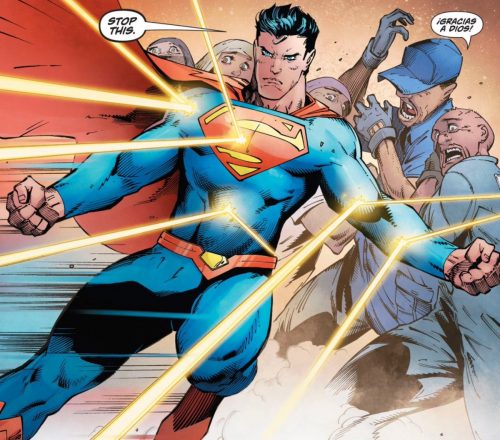
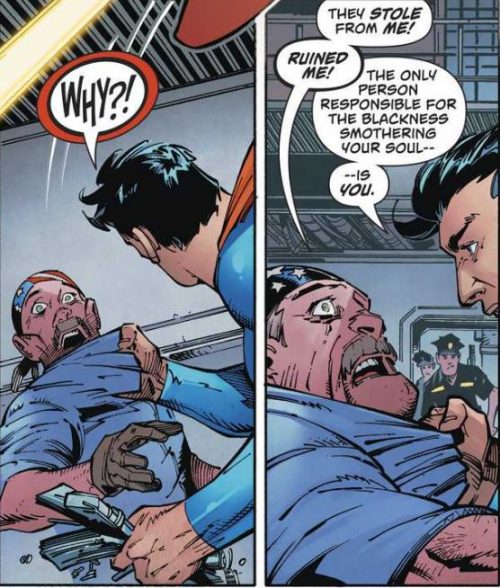
Perhaps, though, what Trump really wants is that “ass-licking acquiescence to power”.

Why choice must be supported

Kate Deloz’s grandmother died long before she could know her. And then she found out how she had died.

I was twelve years old when she finally told me the truth. Some friends and I had got into a long after-school discussion about abortion, prompted by the gruesome posters that a protester had staked in front of the Planned Parenthood in our Vermont town. I had already begun reading my mother’s Ms. magazines cover to cover, but this was the first time I’d encountered a pro-life position. When I hopped into my mom’s car after school, I was buzzing with new ideas. I had almost finished repeating one friend’s pro-life argument when I saw the look on Mom’s face. That’s when she told me: the “household accident” that had killed her mother had, in fact, been a self-induced abortion.

Her hands were tight on the steering wheel as she spoke. I realized later that it wasn’t the topic of abortion itself that made her so uneasy—she was a nurse and a Roe-era feminist who usually responded straightforwardly to even the most embarrassing health questions. Rather, her anguish arose from sharing a truth that she’d been brought up believing was too terrible to speak.

Sitting beside her in the passenger seat, I struggled to absorb the meaning of what she’d told me. I had only just grasped what abortion was a few hours earlier, and was still trying on this new pro-life idea. “O.K.,” I said, “but what about the uncle or aunt I never had?” Mom whipped toward me, face taut with a rage and fear that I somehow understood had nothing to do with me. “What about the mother I never had?” she said.

Read the whole thing. We learn that her grandmother, Winifred Haynes Maye, was an intelligent, well-educated, lively person who made a conscious decision to plan her family, and died because there was an absence of appropriate medical help. How many good people will we lose now and in the future because of the politics of ignorance?

The wage gap and women’s work

You’ve heard all the excuses to wave away the wage gap between men and women: it’s because men work harder, work longer, don’t get pregnant, and choose to work in more prestigious, higher paying fields. The people who make these arguments seem to be completely oblivious to the fact that the values that define the worth of kinds of work are entirely socially constructed (they deny the worth of the concept of social construction, for one thing). I just like to point out that if these claims were valid, and there was an objectively earned reward for hard work and time, then my father, who worked two jobs and came home exhausted with the grime of manual labor ground into his hands, should have been a billionaire.

But another point they evade is that there is an instant devaluation of a profession as soon as women begin to populate it. It’s useful to take a historical perspective and see how work is demeaned when it’s percieved as “women’s work”, as in this criticism of James Damore’s memo.

Damore seems to have bought into the conclusions of the worst kinds of evolutionary psychology. As a discipline, “evopsych” too often depends on inventing biological explanations for observed reality, rather than considering influences from culture and society. In the memo, Damore argues that “science” shows men are evolved to be more suited to computer programing. Science, of course, shows nothing of the sort. People who actually study the neuroscience of gender disagree with Damore’s conclusions. Moreover, as many folks quickly pointed out, women were the first coders. Programming was initially regarded as an extension of secretarial work, but men took over when the profession’s status (and pay) began to rise. “Computer girls” were replaced by “computer geeks” thanks to social factors, not biological ones. So much for Damore’s ideas.

There are other examples I did not know about! When men took over brewing (or when brewing became more profitable), the value of the work shifted.

Take brewing. In 14th-century England, women did most of the brewing, as Bennett first explores in a 1986 article on the village alewife. These brewsters made ale, which spoiled quickly after the cask was broached, so they would keep some for their family and sell the rest. Often, the small profits from these sales would enable them to buy ale, in turn, from other women while they waited to make a new batch. But then beer arrived in England from the Low Countries. Thanks to the preservative power of hops, it could be brewed and sold at commercial scale. The village alewife was gradually replaced by larger and larger brewing enterprises, requiring access to capital. Although there were exceptions, men had much easier access to capital than women. By the end of the 15th century, men dominated medieval English brewing.

And then there’s weaving.

One could tell a similar story about weaving, only in reverse. In the 14th century, weaving was a high-status, high-profit trade. Most weavers were men. Industrialization turned weavers into a lower-status occupation, so early-modern textile weavers in factories were generally women. It would be a mistake, as Bennett argues in her book History Matters, to merely observe the change in occupation—women become weavers—and thereby argue that women’s material or cultural status had improved. Change in occupation, she writes, does not mean transformation of status.

What I find odd is how often critics of these facts are painfully naive and ignorant about the complexity of the field they’re denying. See, for instance, this debate between Kristi Winters and Sargon of Akkad: right out of the gate, he claims the wage gap doesn’t exist at all (he also denies that campus rape is a problem…or rather, because rates are higher elsewhere, it’s a waste of time to work against it), and most significantly, just flat out rejects all of the social sciences. Which is weird, since his arguments against feminist ideas require distorting social science evidence while simultaneously claiming all social science is bogus. How does anyone know anything if you think all the disciplines that study a particular phenomenon are completely invalid?

No more excuses

It’s time to march on DC and just throw the rascals out.

Charles Pierce is having no more of these Trump supporters.

Before we get to the other stuff, and there was lots of other stuff, I’d like to address myself to those people represented by the parenthetical notation (Applause) in the above transcript, those people who waited for hours in 105-degree heat so that they could have the G-spot of their irrationality properly stroked for them. You’re all suckers. You’re dim and you’re ignorant and you can’t even feel yourself sliding toward something that will surprise even you with its fundamental ugliness, something that everybody who can see past the veil of their emotions can see as plain as a church by daylight, to borrow a phrase from that Willie Shakespeare fella. The problem, of course, is that you, in your pathetic desire to be loved by a guy who wouldn’t have 15 seconds for you on the street, are dragging the rest of us toward that end, too.

A guy basically went mad, right there on the stage in front of you, and you cheered and booed right on cue because you’re sheep and because he directed his insanity at all the scapegoats that your favorite radio and TV personalities have been creating for you over the past three decades. Especially, I guess, people like me who practice the craft of journalism in a country that honors that craft in its most essential founding documents. The President of the United States came right up to the edge of inciting you to riot and you rode along with him. You’re on his team, by god.

Sasha Abramsky is wondering what he is: a bumbling dolt out of his depth, an opportunist riding the gravy train, or is he actually, deep down, a genuine Nazi, a white supremacist.

The third possible reason is that Donald Trump—the son of KKK-supporting Fred Trump, the pupil of Joe McCarthy henchman Roy Cohn—actually is, to the very core of his being, a white supremacist, a man who always has and always will divide humanity into hierarchies based on race, ethnicity, and religion. Trump’s almost pathological inability to do what ought to be the simplest thing in American politics—issue a clear, unambiguous, eyes-looking-straight-at-the-camera denunciation of swastika-waving, weapons-toting Nazis—certainly raises this as a strong possibility. He has certainly never needed Steve Bannon’s or any other adviser’s encouragement to spout his bigoted obscenities. So Bannon’s recent ouster, however welcome, will not address the key problem we’re facing.

I can answer that! We know, and it’s never been the slightest bit ambiguous.

Our moral imperative is crystal clear: we must oppose this man. He must be driven out of office, along with his corrupt cronies. He is wrong, he is incompetent, he is a terrible person with monstrous ideas. And if you are supporting him, you are also a terrible person.

Why is a sitting president having a campaign rally 3½ years before the election?

Without even getting into the antic, hateful content of his demented speech, why is he even having this rally? He has accomplished nothing but chaos, and alternates between golfing and having ever-shrinking crowds cheer him.

Today is the first day of classes. I’m thinking I shouldn’t bother presenting a coherent lecture on the basic chemistry of organic molecules, but should just go around the classroom and demand the students tell me how much they love me. And then I’ll go play video games for the rest of the day.

Creationism at the movies

Eric Hovind has been working on (and raising money for) a movie called Genesis: Part 1: Paradise Lost: 3D or something like that. It’s supposedly a 3D animated retelling of the Christian creation myth, as interpreted by modern apologists. Hovind is constantly pumping it up as a big time real movie release.

Only…Paulogia does an interesting analysis of the expenses and what has been said about it over there in Hovindland, and it sounds like it won’t be a genuine movie distribution deal — it’s more of a one-shot promotion involving theater rentals and bused in crowds of churchgoers. It’s the usual. Just as they pretend to be scientists, they pretend to do movie production.

They should try to book the Morris Theater for their one-night release. I know there are a lot of believers in this town who’d attend, and at least one skeptic. I’d also mention it to my students and encourage them to show up and think critically, so I’d probably manage to drum up a few more for their attendance figures. Here’s the theater contact info, Eric! Make it happen!

Get ’em while they’re young

That old Jesuit motto, “Give me a child until he is seven and I will give you the man” is significant, although the age is arbitrarily specific. Shape them early and you can do all kinds of rotten things to the adult. Fundamentalist Christians also know this; we’ve seen the consequences here in the US, where they’ve invested a huge amount of time, money, and effort in school boards and corrupting the educational system. Creationists don’t just spontaneously appear, they are the product of years of indoctrination.

So what do we do about College Republicans? The school year has started, my university has over a hundred clubs (anyone can start one, for any cause or reason), and there are first year students signing up this week for the College Republicans, in a sincere belief in conservative values, and they’re going to stumble right into a toxic atmosphere.

Racial resentment has been a driving force behind College Republican recruitment for years, but at this point it’s really all they have left to offer. In the age of President Donald Trump, what inspires a young person not merely to be conservative or vote Republican, but to get active in organized Republican politics? Do you think it’s a fervent belief that Paul Ryan knows the optimal tax policy to spur economic growth? Or do you think it’s more likely to be something else?

Ha ha, no.

Our two-party system has us locked into this weirdly limiting binary dynamic, where power is driven entirely by the party qua party, both for the Democrats and the Republicans — we might as well rename the factions the Blues and the Greens. Unfortunately, it means party membership is driven more by gamesmanship and identity and hatred of the opposition than by policy and civil service and sensible leadership. The next generation is not looking any better, either.

Meanwhile, the only people entering the Republican Party candidate pipeline in the Trump era almost have to be allied with the alt-right, because the alt-right absolutely comprises the only effective and successful youth outreach strategy the GOP currently employs. The future leaders of the GOP aren’t the hooded Klan members or Nazi-tattooed thugs who presented the most cartoonish faces of hate in Charlottesville, but they are their clean-cut fellow marchers, and the many young right-wingers around the nation who sympathize with their cause.

Alex Pareene makes a terrifying prophecy.

This is the state of the GOP leadership pipeline. In a decade, state legislatures will start filling up with Gamergaters, MRAs, /pol/ posters, Anime Nazis, and Proud Boys. These are, as of now, the only people in their age cohort becoming more active in Republican politics in the Trump era. Everyone else is fleeing. This will be the legacy of Trumpism: It won’t be long before voters who reflexively check the box labeled “Republican” because their parents did, or because they think their property taxes are too high, or because Fox made them scared of terrorism, start electing Pepe racists to Congress.

It’s sad. There are some optimistic young people entering the university, and one of the mistakes they’ll make is to join CR and breathe the mind-rotting poison, and next thing you know, they join the staff of the Morris North Star (or its equivalent; it seems to have gone belly-up, but we’ve had a succession of right-wing rags with different names and different editors, all the same) and start writing bigoted drivel to qualify themselves for the wingnut welfare program.

And I can do nothing. The people who ought to be cracking down on this malignancy are the mythical Responsible Republicans, who believe in cautious conservative values, but who, it seems, don’t actually exist. Conservative has become a code word for racism and misogyny.

But it’s only a calculation and numbers

Richard Dawkins used his recently much calmer Twitter account to snipe at something he doesn’t seem to understand.


All humanity should be proud of Newton & the precision of eclipse forecasting (oh but surely an eclipse is only a social construct?)

The first part is true. We can predict these things thousands of years in advance; yesterday’s eclipse was announced years ahead of time, maps were produced that told everyone precisely when and where it would be visible, and presto, they were correct, as everyone rightly expected! There are brute facts about the relative movements of 3 astronomical bodies that can be calculated with impressive precision.

But why the snide remark about a “social construct”? The eclipse was also a social construct! We attach a value to witnessing these events, and also to conversing about them to our friends and families, and on social media. People felt awe when the sun was obscured by the moon. They wrote about it, they took pictures. They traveled long distances to witness it, and felt the effort was worth it. Some of us didn’t bother, because what we individually value is also a social construct. Eclipses would continue to happen if humanity managed to eradicate itself; the shadow will continue to move across a planet of smoke and ash and crumbling skeletons, but this other cultural dimension will have vanished, and we wouldn’t have science communicators feeling proud of their accomplishments, they wouldn’t be explaining how it occurs, and we wouldn’t be telling their children about it.

Did you know we can trace the path of totality by mapping the traffic jams afterwards? Newton did not forecast that. He couldn’t, despite the fact that traffic patterns are also a brute material fact. Because it was a consequence of the social construct built around the eclipse.

It was also weird to see that put-down of the importance of social structures in interpreting astronomical events because just a few hours earlier, he wrote this:


“Listening to the eclipse” http://bit.ly/2vh3u51 I journeyed to Austria for 1999 eclipse. There was a moving wave of human yells & whoops

What? Why did he travel all the way to Austria to watch a highly predictable shadow? Why did the humans in attendance yell and whoop, when all that happened is that it got dark for a few minutes? Stay home. Run an astronomy simulation and get the numbers and parameters. The rest is only a social construct.

Scientism is also a social construct, by the way.