A borough in the UK posted an innocuous tweet, suggesting that people should go in for cervical screening. They had to take it down because a small minority of haters complained that the words “anyone with a cervix” was offensive to women.
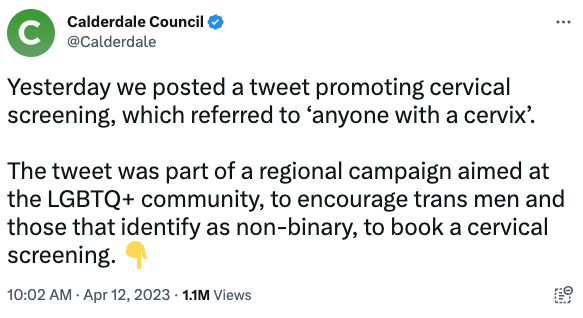
The wording was just fine! It was inclusive and was a message to an appropriate audience. In fact, if you look at the thread, there’s a deluge of support for it, with swarms of people, cis and trans, chiming in to see that the message was good and they appreciated it. There were also, of course, a few indignant assholes whining that only women have cervices, and they were the ones they had to listen to, because Calderdale deleted the tweet.
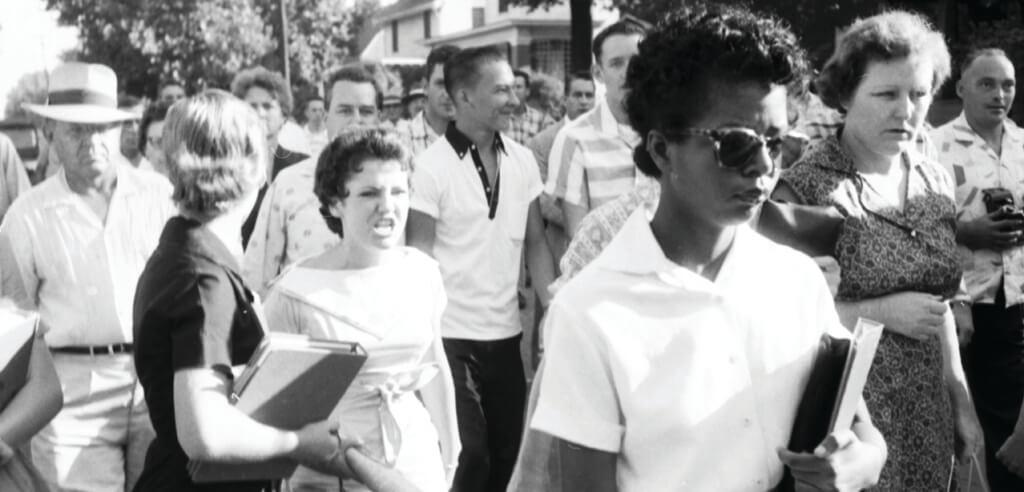
Those few vicious, mocking tweets are the modern equivalent of this, an ugliness that will stain us all for years to come:
Meanwhile, in the science world, the journal Nature is updating their policies. Language matters.
It is regrettable but true that researchers have used and abused science to justify racist beliefs and practices. As previous editorials have acknowledged, Nature has played its part in perpetuating racism — and has now pledged to play its part in tackling it, together with colleagues in the research community.
As part of this pledge, Nature and the Nature Portfolio journals are updating our advice to authors on reporting research that involves race, ethnicity and other socially constructed characteristics. Specifically, we’re asking that authors exercise care and consideration so that the highest standards of rigour are applied where these attributes are found to be an explanation for an outcome or conclusion. This is part of our ongoing updates to guidance asking authors to describe how demographic characteristics, including sex and gender, are considered in the design of studies — and, more broadly, to consider the research’s potential to cause harm.
They aren’t asking a lot. This is what Nature expects now, and I was a little surprised…shouldn’t this have been standing, routine policy all along?
So, what are we asking authors to do, if their research describes people according to race, ethnicity or other socially constructed categories? Essentially, three things. First, specify the categories used and explain why such classification is needed. Second, explain the methods used to describe people in this way — for example, did study participants self-report, or did the information come from a census, social media or administrative data? Third, we would like authors to describe how they controlled for confounding variables, such as socio-economic status. These requests will be added to a paper’s reporting checklist so it is a part of the usual editorial and publishing workflow.
I’m not going to publish in Nature, and the kind of work I do isn’t going to touch on issues of race and sex (although some will try to force it!), but I would have thought that if you were doing work in those areas of sufficient prestige that it would be published in top-tier journals, those rules would have been already incorporated. You can never underestimate the devious efforts of bigots, though!