Humans versus wildlife

Taricha torosa

Taricha torosa

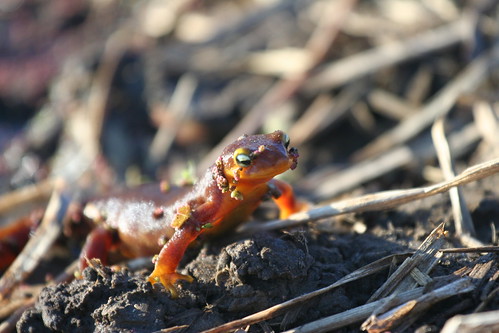
I figure we could use some less-than-apocalyptic news today. Over the last couple decades, the management of Tilden Regional Park in the hills above Berkeley, California has closed a main road artery through the park each year between November 1 and April 1 in order to protect a local amphibian. The road parallels a seasonal creek; each autumn when the rains start local members of the species Taricha torosa, a.k.a. the California newt, head for the creek to find pools in which to mate. For many of them this involves crossing the road, and even though it’s not a heavily traveled road at the busiest of times that’s still more traffic than the newts can handle.

The California newt is one of those species, like the blue-ringed octopus and the pufferfish, that counts tetrodotoxin among its defense mechanisms. There’s a recorded human fatality involving a related species  — the rough-skinned newt, Taricha granulosa, one of which was swallowed by a drunken Oregon fratboy — but as far as I know the California newt boasts neither a human body count nor spurious pharmazombie folklore like other tetrodotoxic species. The newt’s egg masses are well-endowed with tetrodotoxin as well. Some  garter snakes have developed a resistance to tetrodotoxin and can eat the eggs, but mainly they’re left alone.

Like a lot of very toxic species, the newts’ defense mechanism relies on communicating that toxicity to its attacker. Poke at a California newt and it will usually display its bright orange belly, which any sensible predator would take as a warning of a bad stomachache or worse. Sadly, this defense does little to deter a speeding Buick.

This fall the rains started early, and the newts — apparently belonging to that 47% of American species that refuse to take responsibility for their lives by checking a calendar — started crossing the road a week or two before the closure. The road started to become dotted with little bright-orange corpses. And so the discussion started up between the management of the East Bay Regional Park District and local residents. Should the Park close the road early to protect the newts, or would that add unnecessarily to the inconvenience of the seasonal road closure?

It’s not surprising that there would be conflict. What’s surprising is which parties took which sides. As the blog Berkeleyside reports, it’s the Park that’s being recalcitrant about acting to protect the newts, and the locals who would presumably be most inconvenienced who’re demanding the road be closed.

David Wake, who has lived in the Park Hills neighborhood since the late 1970s, has been studying salamanders and newts since the late 1950s. Professor of the Graduate School in Integrative Biology and Curator, Museum of Vertebrate Zoology at UC Berkeley, he said newt populations have fallen dramatically in recent years, although the closure of South Park Road has helped.

On a neighborhood listserve Wake wrote: “The movement patterns are not governed by human calendars. Males move with the first substantial rains. They migrate in the direction of the creek.  Females come later. But breeding is not completed until the creeks start receding, late in the rainy season. This means that males get knocked off in late October (our first rains typically arrive during the last two weeks of October), and females get knocked off in early- mid-April, when they leave the stream with our last rains. The closure of the road should be extended for two weeks on either end.  I have made this case for many years, unsuccessfully… The tragedy of the newts is that in most years their breeding is completely unsuccessful.”

I’ve been reporting on human-wildlife interactions for twenty years now, and these things almost always get cast as “humans versus wildlife,” as though the right of humans to build something or get a particular job or drive via the shortest route possible on the one hand, and the survival of wildlife species in the other, are of equal weight. A startlingly similar situation here in the California desert involves the Coachella fringe-toed lizard, which depends on what the ecologists call “blow-sand” habitat. Blow-sand habitat is pretty much what it sounds like: in the desert, sand flows downwind from one basin to another, creating distinct habitats with distinct assemblages of sand-adapted vegetation and fauna. The Coachella fringe-toed is one of those fauna, relying on loose sand for shelter against temperature extremes and predators, and its eponymous toe fringe helps it run across that loose sand the way snowshoes help you walk on snow.

The Coachella fringe-toed lizard has had something like three quarters of its habitat destroyed in the last 40 years by sprawl in the Coachella Valley: suburbs, strip malls, golf courses and light industrial development have exploded in the north end of the valley. One of the last stretches of open blow-sand habitat is along the course of the Whitewater River, which flows out of the San Bernardino Mountains into the valley. By the time it reaches Palm Springs the river’s water is mainly underground, and the riverbed an expanse of open sand — fringe-toed lizard habitat.

Three major roads cross that section of river. There are three or five days per year when the wind picks up even more than usual, blowing sand  reduces visibility to near zero, and the police have to close those roads. Engineers could build baffles or fences to keep the sand from blowing across the road quite so much, but that would reduce the flow of sand to the lizard habitat on the downwind side of the road. So instead some people in the Coachella Valley must, a few days a year, add two or three miles to their commute, and the local paper’s website fills with complaints about radical environmentalists prioritizing a lowly lizard over their god-given right to drive wherever the fuck they want to.

There are, of course, people in the Coachella Valley who like having the fringe-toed lizard as a neighbor, and they just don’t happen to write reactionary comments on the Desert Sun’s website. And there are certainly people in the Berkeley Hills who grumble about the goddamn newts making it take 15 minutes longer to get to the golf course. My casting the Berkeleyside piece as an indication of the more advanced ecological sentiment of people in the East San Francisco Bay area would certainly obscure some important nuance. But I’m gonna do it anyway. Even though I lived for 22.5 years before I ever got there, I think of Berkeley as my home town. Seeing my former neighbors turn the usual “humans versus wildlife” trope upside down makes me proud. And homesick.
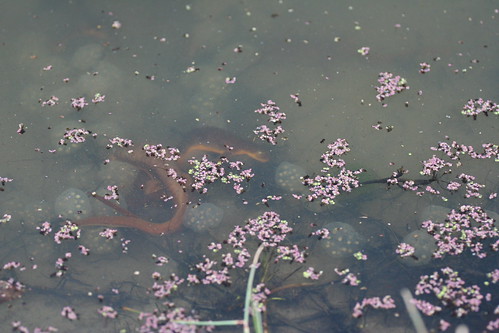
mating and egg masses.JPG

Mating California newts with egg masses

Screw those women and neuroscientists, we should let Kant make abortion decisions!

William Egginton has an op-ed in the NYT in which he suggests that neuroscience might challenge Roe v. Wade. It’s long — about 1900 words — and it’s revealing that in all the ambiguous fudging about whether a fetus is conscious, there is no consideration at all for the woman wrapped around it. In fact, she isn’t even mentioned…not once. Yes, it’s another man pontificating on the rights and privileges of the fetus as if the pregnant woman were not there. It’s astonishing how completely women vanish when they get pregnant — it’s as if some people can only see women as an incubator for the Holy and Sacred Child.

It starts out promisingly, discussing an Idaho law called the “Pain-Capable Unborn Child Protection Act”, which tries to outlaw abortions by claiming that fetuses can feel pain. This is a neuroscientific claim. So Egginton asks,

So why not call an actual neuroscientist as an expert witness instead of a scholar of the humanities?

And I thought for a moment that Egginton, who I hadn’t heard of before, was perhaps a neuroscientist offering up his expertise. Alas, at the end I discover that he’s the “Andrew W. Mellon Professor in the Humanities at the Johns Hopkins University”. He’s not making an informed contribution on the science, apparently his goal is to “criticize the hubris of scientific claims to knowledge that exceeds the boundaries of what the sciences in fact demonstrate.” So that was actually a rhetorical question which is answered by the fact that he thinks neuroscientists aren’t actually good witnesses on subjects of neuroscience. OK.

Reminder: it still isn’t an argument in which the rights of the pregnant woman are considered.

Fortunately, he dismisses fetal pain as a criterion for prohibiting abortion — not because they don’t experience pain, but because awareness of pain is not a basis for legal prohibitions. Animals feel pain, for instance, and we don’t outlaw farming and hunting. I would suggest that pain awareness is a general feature, like having a heartbeat or two eyes, that isn’t particularly indicative of a special status that demands protection (that doesn’t stop Pro-Life Across America from putting up billboards with pictures of smiling babies saying, “My heart started beating at 28 days!” — it’s an emotional appeal).

Unfortunately, Egginton then arbitrarily replaces “pain” with another amorphous concept, “personhood”.

Those wishing to abolish abortion believe that “the fetus is a ‘person’ within the language and meaning of the Fourteenth Amendment.” If, as Justice Harry A. Blackmun continues in his opinion in 1973, “this suggestion of personhood is established, the appellant’s case, of course, collapses, for the fetus’ right to life would then be guaranteed specifically by the Amendment.” If a fetus is a person, in other words, then it is not a potential human life at all, but is a fully human life deserving of full legal protection, and abortion must be murder and punishable as such. The intent of current fetal pain statutes is, clearly, to infer from the ability to feel pain on the part of a human fetus — if it can be established by neuroscience — a claim for actual human life or full personhood.

Reminder: it still isn’t an argument in which the rights of the pregnant woman are considered.

But then, in an interesting twist, Egginton uses the idea of defining personhood as a bat to pound on anti-choice activists. It would be a big mistake, he suggests, to let scientists define what a person is, because, basically, scientists are reductionist jerks, and science “can tell us nothing about the existence of God, the immortality of the soul, or the origin of human freedom”. He’s wrong. There is no god (and those humanist types can’t even freakin’ define this entity, let alone provide evidence for it), the soul is a ridiculous concept, and freedom is an interesting cognitive illusion and a political idea. He can cite Kant at me all he wants, but science has made great progress in explaining the nature of the universe and ourselves to the point where we definitely don’t know all the answers, but we know enough to constrain the wide range of possible answers to something that precludes the primitive guesses of uninformed old philosophers and theologians.

So Egginton isn’t really making an anti-abortion rant: he’s making an anti-science argument. Interesting.

When science becomes the sole or even primary arbiter of such basic notions as personhood, it ceases to be mankind’s most useful servant and threatens, instead, to become its dictator. Science does not and should not have the power to absolve individuals and communities of the responsibility to choose. This emphatically does not mean that science should be left out of such personal and political debates. The more we know about the world the better positioned we are to make the best possible choices. But when science is used to replace thinking instead of complement it; when we claim to see in its results the reduction of all the complexity that constitutes the emergence of a human life or the choices and responsibilities of the person it may develop into; we relinquish something that Kant showed more than 200 years ago was essential to the very idea of a human being: our freedom.

Well, I was trained as a neuroscientist (I’ve since drifted towards developmental biology), and if I were made dictator of the world, I can tell you what I’d say: “personhood” is not discrete and absolute, so no scientist will be able to declare a black & white switch from non-personhood to personhood (although the reverse is easier: we call it “death”). I would also say that even if we could measure it, “personhood” is a matter of degree and also is a criterion like “pain”: it’s not something we can use as a logical bludgeon to deny abortions. Even the one neuroscientist Egginton cites in his article, Antonio Damasio, talks about degrees of consciousness in animals. So much for the demonization of scientists. We are aware of the limits of our knowledge; it’s unfortunate that professors of the humanities don’t seem to be similarly aware of the boundaries of their domain.

Oh, and if I were the dictator of the world, I’d look into the eyes of the teenager who faces the sacrifice of her dreams if she bears that child, the eyes of the woman whose fetus carries a birth defect, the eyes of the victim of rape, and I’d say…”Your choice — do what is best for your life. It’s your life that matters.” That overrides all other considerations.

I’m a little surprised to learn that humanities professors don’t pay much attention to that sort of thing. Maybe we should exclude them from future deliberations on these matters.

Remember this on election day

Look back on Mitt Romney in 2011:

KING: You’ve been a chief executive of a state. I was just in Joplin, Missouri. I’ve been in Mississippi and Louisiana and Tennessee and other communities dealing with whether it’s the tornadoes, the flooding, and worse. FEMA is about to run out of money, and there are some people who say do it on a case-by-case basis and some people who say, you know, maybe we’re learning a lesson here that the states should take on more of this role. How do you deal with something like that?

ROMNEY: Absolutely. Every time you have an occasion to take something from the federal government and send it back to the states, that’s the right direction. And if you can go even further and send it back to the private sector, that’s even better.

Instead of thinking in the federal budget, what we should cut — we should ask ourselves the opposite question. What should we keep? We should take all of what we’re doing at the federal level and say, what are the things we’re doing that we don’t have to do? And those things we’ve got to stop doing, because we’re borrowing $1.6 trillion more this year than we’re taking in. We cannot…

KING: Including disaster relief, though?

ROMNEY: We cannot — we cannot afford to do those things without jeopardizing the future for our kids. It is simply immoral, in my view, for us to continue to rack up larger and larger debts and pass them on to our kids, knowing full well that we’ll all be dead and gone before it’s paid off. It makes no sense at all.

You know he’s not going to do a thing to slow the advance of global climate change (or does he think that can be done at the level of individual states, too?), and he doesn’t support federal emergency services. Why should he? Disasters like this don’t discomfit the rich.

The CephSeq Consortium has a strategy

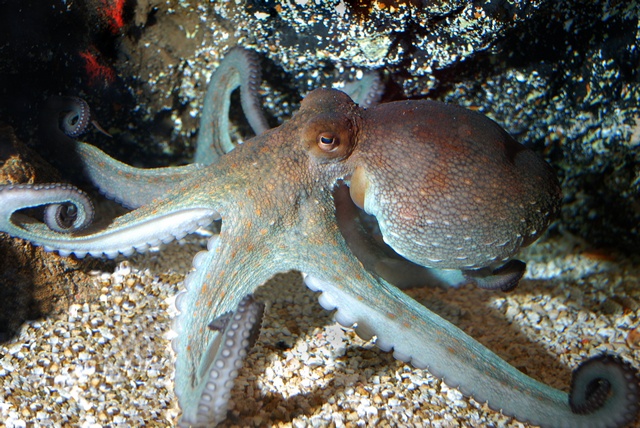
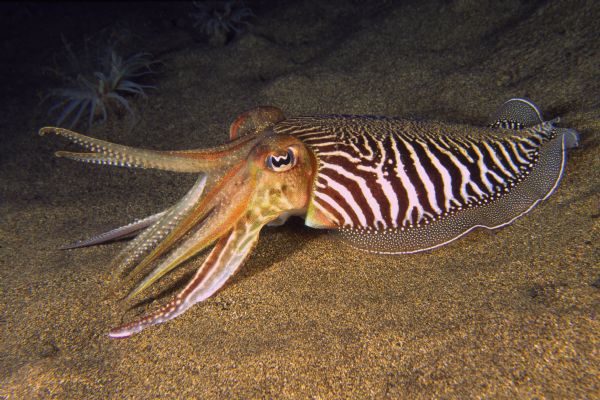
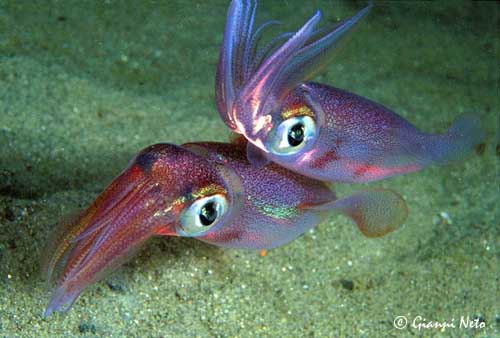
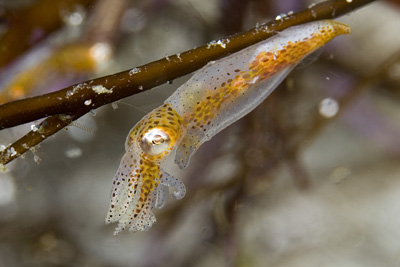
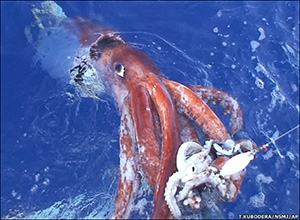
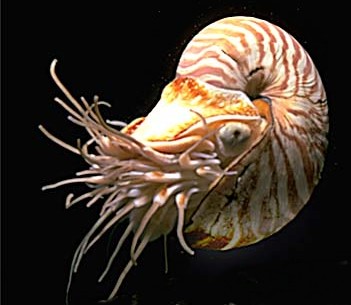
I approve this plan. A number of researchers have gotten together and worked out a grand strategy for sequencing the genomes of a collection of cephalopods. This involves surveying the phylogeny of cephalopods and trying to pick species to sample that adequately cover the diversity of the group, while also selecting model species that have found utility in a number of research areas — two criteria that are often in conflict with one another. Fortunately, the authors seemed to have found a set that satisfies both (although it would have been nice to see the Spirulida and Vampyromorpha make the cut — next round!). Here’s the initial group, table taken directly from the text with the addition of a few pretty pictures for those of you unfamiliar with the Latin names.

Table 1: Cephalopod species proposed for initial sequencing efforts.

Species Estimated genome size Current sequencing coverage Geographic distribution Lifestyle juvenile/adult Research importance
O. vulgaris 2.5-5 Gb 46× world-wide planktonic/ benthic classic model for brain and behavior, fisheries science
O. bimaculoides 3.2 Gb 50× California, Mexico benthic emerging model for development and behavior, fisheries science
H. maculosa 4.5 Gb 10× Indo-Pacific benthic toxicity
S. officinalis 4.5 Gb – East Atlantic- Mediterranean nectobenthic classic model for behavior and development, fisheries science
L. pealeii 2.7 Gb – Northwest Atlantic nectonic cellular neurobiology, fisheries science
E. scolopes 3.7 Gb – Hawaii nectobenthic animal-bacterial symbiosis, model for development
I. paradoxus 2.1 Gb 80× Japan nectobenthic model for development, small genome size
I. notoides – 50× Australia nectobenthic model for development, small genome size
A. dux 4.5 Gb 60× world-wide nectonic largest body size
N. pompilius 2.8-4.2 Gb 10× Indo-Pacific nectonic “living fossil”, outgroup to coleoid cephalopods

It’s a nice balance. There’s a pair of related octopus (Octopus vulgaris and Octopus bimaculoides) and a pair of related squid (Idiosepius paradoxus and Idiosepius notoides) so common features to each group can be recognized, a couple of model organisms used in neuroscience (Loligo pealeii) and developmental biology (Euprymna scolopes), and a couple of just plain cool animals, the blue-ringed octopus (Hapalochlaena maculosa) and the giant squid (Architeuthis dux). And of course you have to include a cuttlefish (also an important research model), and a nautilus for the outgroup.

It’s going to be challenging — cephalopods are like us in having large, sloppy genomes with lots of repeats and accumulated junk.

Like all good science, too, this is going to be open and accessible.

We therefore propose to adopt a liberal opt-in data sharing policy, modeled in part on the JGI data usage policy, which will support the rapid sharing of sequence data, subject to significant restrictions on certain types of usage. Community members will be encouraged to submit their data, but not required to do so. We plan to provide incentives for this private data sharing by (1) developing a community data and analysis site with a simple set of automated analyses such as contig assembly and RNAseq transcript assembly; (2) offering pre-computed analyses such as homology search across the entire database; and (3) supporting simple investigative analyses such as BLAST and HMMER. We also plan to provide bulk download services in support of analysis and re-analysis of the entire dataset upon mutual agreement between the requesting scientist and the CephSeq Consortium Steering Committee (see below), who will represent the depositing scientists. Collectively, these policies would provide for community engagement and participation with the CephSeq Consortium while protecting the interests of individual contributors, both scientifically and with respect to the Convention on Biological Diversity. Policy details will need to be specified and implementation is subject to funding. Our intent is to build an international community by putting the fewest barriers between the data and potential researchers, while still protecting the data generators.

I also like that there’s an appreciation of the importance of wider communication of this information beyond the sphere of nerdy genomics researchers and obsessed cephalofreaks. The authors recognize that cephalopods are important barometers of climate change and the ocean environment, and that people are just plain fascinated with them.

People are fascinated by cephalopods, from Nautilus to the octopus to the giant squid. The coupling of genomics to cephalopod biology represents a fusion of two areas of great interest and excitement for the public. This fusion presents a tremendous educational platform, particularly for K-12 students, who can be engaged in the classroom and through the public media. Public outreach about cephalopod genomics will help build support for basic scientific research, including study of marine fauna and ecology, and will add to the public’s understanding of global changes in the biosphere.

Unfortunately, this short paper is a little thin on details of particular interest to me: “Education and outreach will be emphasized for broad dissemination of progress in cephalopod genomics at multiple levels, including K-12, undergraduate and graduate students, and the public at large.” I’d be curious to see more about the how of doing that, but I’m glad it’s on their list of priorities. Part of their plan is building a website, but unfortunately when I just checked it wasn’t yet available.


Albertin CB, Bonnaud L, Brown CT, et al. (2012) Cephalopod genomics: A plan of strategies and organization. Stand Genomic Sci 7:1.

Fair warning to convention attendees

So I just got back from CSICon, which was great fun. I gave a talk on the role of chance in evolution (it’s more important than many think), and I think people recorded it. I also have a rough summary that I’ll polish up and post to Pharyngula. But…

You’ll have to wait a bit. This year I’ve decided I can no longer drive myself into total mental collapse by doing new talks all over the place, so I’m going to be recycling a fair bit. I’m going to use this same talk at Skepticon and Eschaton 2012, so if you’re going to those events too, you might want to skip one of my sessions. Except that at CSICon, I had to compress it down to a half hour, so there will be some additional stuff at those two meetings.

I’m also scheduled to do two talks at Eschaton, so I’m not going to give that same talk twice. It’ll be a talk on science education on Saturday morning, and one on evolutionary theory on Saturday evening.

And then in December I’ll post a written summary of my talk, and try to come up with something new to say for Spring meetings.

Ignore that presidential campaign over there

I don’t like Obama.

There. I said it. I think he’ll go down in history as a mediocre president — not a bad one, just one who didn’t change a flawed system at all, who was so focused on being moderate and compromising that there was no hope of any significant change. I also think his foreign policy is bloody-handed and disastrous, and if you’re interested in church-state separation and secular government, I’m sorry, but he’s had you all fooled. He’s not a closet atheist, but quite the opposite.

But next week, I’m going to go into the voting both and punch that ballot next to Obama’s name.

I’m not happy about it.

Here’s the problem: we’ve all been played. All of the focus is on the presidential election, in a winner-take-all two party system. And the presidential election is a distraction. It’s been reduced to a numbers game, a horse race where policies don’t matter, and all you have left to do is to pick one out of two. All the work has been done before you enter the voting booth, and that work is aimed at limiting your choices. So this time around, your choice is the evangelical Christian who brags about killing terrorists while making incremental improvements to the economy, or the Mormon robot who’s going to serve as a slave to the bankers and merchants of greed who destroy the economy, or nothing. So you try to pick the lesser of two evils.

I know what people will say. You have to vote on your principles, or nothing will change. When I just look at the issues, I agree: I ought to vote for Jill Stein, whose stand on just about everything agrees with mine. (Don’t tell me about Gary Johnson — I look at his positions and see a selfish moron who’d be worse than Romney). But Jill Stein isn’t going to win, and my vote would be thrown away, and worse, Jill Stein is throwing away her time and effort in a quixotic race that has already been decided. It will be one of two. The two are fixed. Third party candidates are a snare and an illusion.

I’m not saying that we’re doomed, though, just that the presidential race is the wrong place to effect change.

The right place is everywhere else. Maybe the primary campaigns would be better: we need to get candidates in place that don’t require us to hold our noses in order to vote for them. The Republican field is always a race to find the one candidate just crazy enough to satisfy a badly deranged base, while not so obviously crazy as to alienate everyone else, so forget them. The Democrats always seem to be looking for the moderate who won’t really change the system (that would be scary) and who will inspire just enough to squeak into office…but not inspire so much that people will wake up to our problems. I suspect that both parties will fundamentally resist change.

So maybe that’s not even the best place to work on fixing the election system. Especially in this election, the power of incumbency is so great that no one was even going to look seriously at an alternative to Obama.

You know where the elections really matter, where you really have a choice? At the local level. The Green Party is stupid to throw so much effort into a presidential campaign right now — they ought to be focused on building a base. I would vote for a Green for city council or district representative in a heartbeat. And once they’ve built a deep party structure, they become serious candidates for higher office, because they will have the backing of people doing good work on the ground.

This is the same advice we give to people fighting creationism. Run for local school boards, because that’s where you can make a difference. Our opponents know that; these small offices are packed with ideologically conservative Christians who can have an effect far greater than their numbers should allow. While you’re focused on who is running for president, they’ve placed a team of cretins on local government to stymie any progressive, rational efforts towards bettering the country.

Stein has served two terms as a town meeting representative in Lexington, Massachusetts, which is a good start. But we’d have been better served if she’d then moved up to a county or district office, instead of leaping for governor (failed) or president (doomed). She ran for the house of representatives, once, and lost…I’d rather she tried for that again. And I’d rather see Green Party candidates appearing all over the place, on zoning boards and city councils and school boards, rather than gambling on presidencies and governorships where they’ll preside over an army of Democrats and Republicans who’ll feel no loyalty at all to them.

So ignore the presidential campaign. We know we’re going to be stuck with the lesser of two evils, so just get it done. But what we people need to do next, and what we can do in this election, is vote everywhere else for third party candidates who better fit your values, and most importantly, donate and campaign for those candidates. Personally, I know that in the future my political donations (they aren’t much, I’m not a wealthy guy, so I’ll be realistic) will be aimed towards parties other than the Democrats. Any Greens looking for local office? Labor? Socialists? You can have my pennies. Democrats? Not until you acquire the vision to nominate real liberals and progressives. Until you stand for something other than not-Republican.