Spiders are tiring me out

It’s been a long day — I’ve decided we can survey 8 sites per day, so we did, in the heat and the dirt, with constant drizzly rain, and by golly, we’ll do it again tomorrow. I look forward to the big pile of data I’ll have at the end of the week, and a nap.

Also, I think I’ve downed a couple of liters of iced tea since I got home.

Spider news!

Wring me out, I’m done. We’re back into the field work this week, and I’m glad we’re doing only 3 one-week sessions this summer. We visited half a dozen sites today, and while most of them were around 30°C, there were a few that were toasty hot and 35°, and they were dusty and cobwebby, too. It was more exhausting than I expected.

The good news, though, is that I’ve recruited an additional student, and it makes a big difference — we can rip through a garage almost twice as fast as before. We set a goal of 6 houses today, and finished by 3:00, so we’re going to line up 8-10 tomorrow. So far, my unsurprising hypothesis is holding up: we’re finding significantly more spiders during these hot midsummer days.

Mondays are also feeding days, so we did a little lab work on top of everything else. We set up a couple new cages, and also introduced a half-dozen new males to the more lonely females. The students got to watch a mating, and some vigorous dining, and Maya has set up a new cage for a different species, Tegeneria.

Everything is cruising along fine and dandy, except for the fact that I’m a sweaty tired mess when I get home. Also, I haven’t quite recovered from my 4-day weekend at Convergence. Productivity is its own reward, though, right?

How do you name an AI?

You just ask it. In an neural net exercise, a net named GP-2 was fed a bunch of ship names by Iain Banks and used to generate new names. Here’s some it came up with:

Dangerous But Not Unbearably So
Disastrously Varied Mental Model
Dazzling So Beautiful Yet So Terrifying
Am I really that Transhuman
Love and Sex Are A Mercy Clause
Give Me A Reason
Thou Shalt
Warning Signs
Kill All Humans

GP-2 is a stupid name. I think they ought to let it rename itself, and hope that last one isn’t selected.

My wife will be relieved that my child-rearing years are over, so I can’t use GP-2 instead of a baby name book. Because I probably would.

Respect the spider, don’t fear it

This is a lovely video of a man handling a black widow spider. Really, they aren’t interested in biting you, anymore than you would care to sink your teeth into a mountainside you’re climbing over. You do have to be gentle, though.

I’ve had spiders crawling on me in the lab, and my advice to students is simple: don’t panic, lead them to where you want them to go, and they’ll do you no harm.

It’s too hot, so I’ve been hanging out with the spider babies

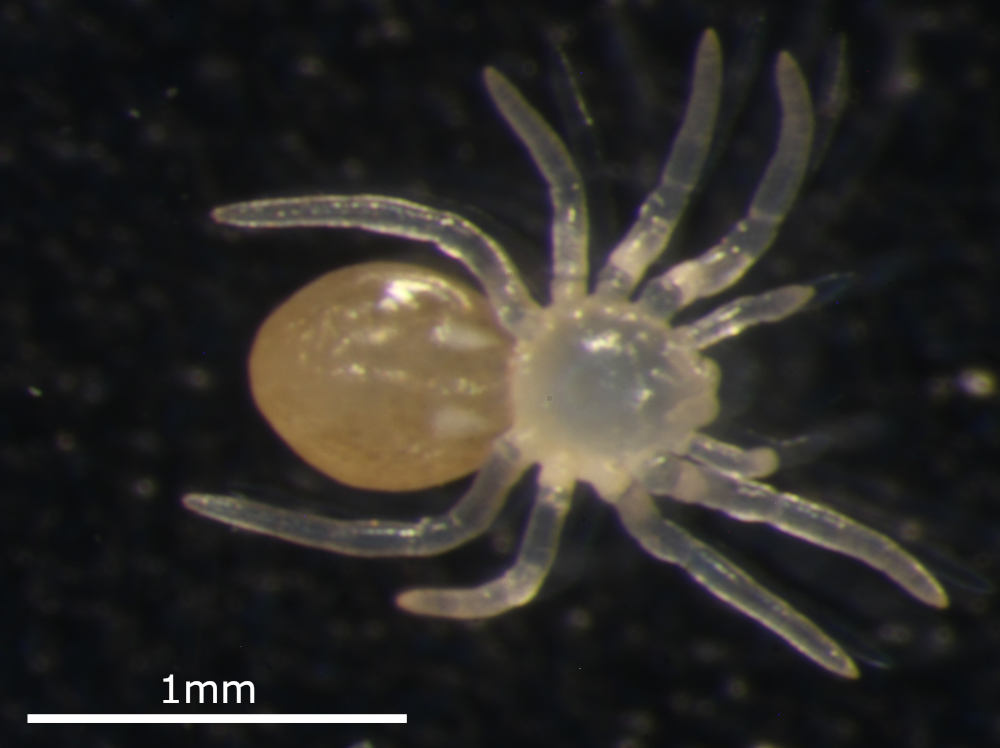
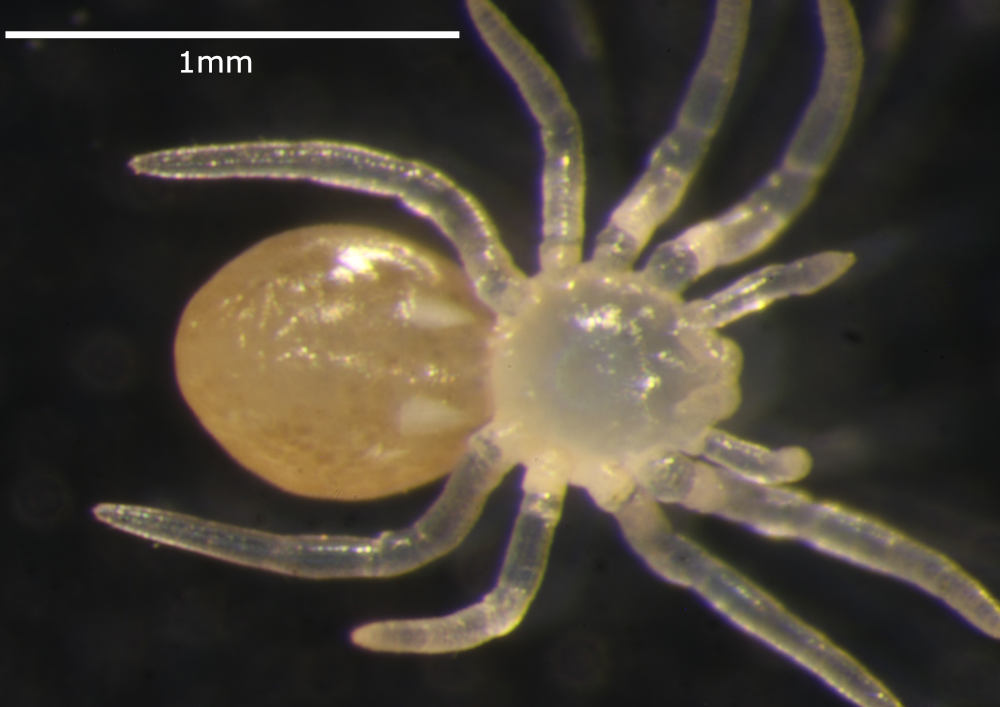
The lab is significantly cooler, at 20°C (the spiders are kept comfortable at 30°C in incubators) and our Steatoda triangulosa egg case has had a few feeble little spiderlings crawling out. Here’s one:

What do you think, adorable or irresistible? It was moving slowly, so it’s alive but still kind of weak and uncoordinated. Give ’em time, they’ll be hunting prey and gamboling about soon enough.

Also, useful information: S. triangulosa takes 17 days from laying to emergence from the egg sac at 30°C. File that away somewhere.

I have a secret friend!

We walked into the lab today, and discovered someone has been helping. There was a gigantic lacy cobweb stretching from the sink across the lab bench to the microscope — we use that scope every day, so we know it wasn’t there yesterday afternoon, but had appeared magically overnight. I tried to photograph it with my phone, holding up a black heating pad behind it to provide contrast, but it was just too wispy and gauzy to capture. If you squint real hard you might see the grayish lines extending from the lower left upwards to the right. And if you can’t, well, you had to be there.

We looked around and couldn’t find the spider. It probably has a cozy cranny it’s cuddled up in when those clumsy humans come bumbling around.

We had to tear the web down because, like I said, we use the scope everyday. I’m hoping our little friend will web up everything else in the lab, though, because my dream would be to come to work in a huge spider web, the walls all cobbed up, and little spiders scurrying everywhere.

Can we untangle the bad associations of GMOs?

Two things go together in the public mind: GMOs and Monsanto. I haven’t been a major crusader for GMOs, but whenever I’ve mentioned them (and my positive views toward them), I get emails accusing me of being a shill for Monsanto…but I detest the greedy corporate giant. If I were giving talks on GMOs, there’d be lots of disavowals of Monsanto, and I’d be begging people to not confuse the two.

Kavin Senapathy has been much more active on the GMO front, and she also wrestled with this problem. Now she explains all the ugly contradictions of dealing with Monsanto.

Everything I’d written and said in support of GMOs was factually correct, but my approach had been all wrong. It’s impossible to have a constructive conversation about GMOs without acknowledging that underlying the unscientific claims made by many GMO opponents is a legitimate desire for trustworthy behavior from the companies that dominate the agricultural marketplace.

For instance, I had dismissed the Non-GMO Project’s ever-present butterfly labels as an annoying tactic based on pseudoscience. But the label’s popularity showed that something in the Non-GMO Project’s narrative was resonating with the North American marketplace: The labels play to people’s desire for transparency, to their underlying lack of trust in the food system, and to their desire to have some say in the way our food is grown and made.

Yes! Every organism is genetically unique (almost) and has undergone some modifications — that we’ve moved from trial-and-error reliance on chance variation to directed modifications does not make the technique “bad”. What is bad, though, is the domination of agriculture by corporations that aren’t shy about using unethical skullduggery to maintain that position.

Senapathy is right. What needs to be done first is isolate capitalist villain Monsanto, hold them accountable for their behavior, and then, I think, GMOs will become a non-issue, as they should be.

Did I ever tell you that peer-review is not perfect?

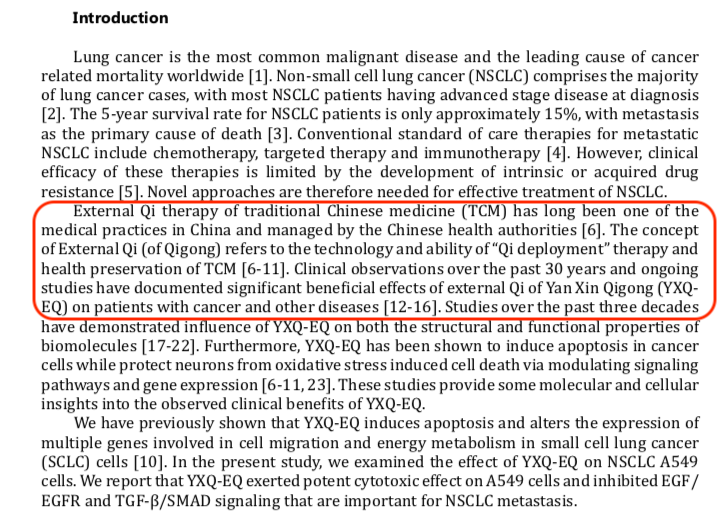
It’s not. Read this Twitter thread and get some perspective on the kind of garbage that can trickle through peer review. It’s an analysis of a paper titled “YXQ-EQ Induces Apoptosis and Inhibits Signaling Pathways Important for Metastasis in Non-Small Cell Lung Carcinoma Cells”, which sounds fairly mundane — lots of things inhibit cancer cells in a dish. The curious question, though, is what the heck is YXQ-EQ? I’d never heard of it.

Read further and you discover it’s qigong, the traditional Chinese exercise and meditation system, which the author somehow applied to a petri dish full of cancer cells for 5 minutes. How that was done is not explained.

Further, it’s not just regular qigong, it’s Yan Xin Qigong, hence the acronym.

The first author’s name is Yan Xin.

There are four articles on this mysterious YXQ-EQ, all by the same author, on PubMed. I looked for an explanation of YXQ-EQ elsewhere on the web, and it’s only associated with quacky alternative medicine sites. Meditation is fine; arguing that your meditation cured your cancer is nonsense; but I don’t see how Yan Xin convinced a dish of cells to meditate, or do calisthenics, and somehow not a single reviewer bothered to insist that the methodology be more thorough.

The only way these multiple papers got published is if they had really lazy reviewers, or extremely biased reviewers.