Stones, glass houses, etc.

John Bohannon of Science magazine has developed a fake science paper generator. He wrote a little, simple program, pushes a button, and gets hundreds of phony papers, each unique with different authors and different molecules and different cancers, in a format that’s painfully familiar to anyone who has read any cancer journals recently.

The goal was to create a credible but mundane scientific paper, one with such grave errors that a competent peer reviewer should easily identify it as flawed and unpublishable. Submitting identical papers to hundreds of journals would be asking for trouble. But the papers had to be similar enough that the outcomes between journals could be comparable. So I created a scientific version of Mad Libs.

The paper took this form: Molecule X from lichen species Y inhibits the growth of cancer cell Z. To substitute for those variables, I created a database of molecules, lichens, and cancer cell lines and wrote a computer program to generate hundreds of unique papers. Other than those differences, the scientific content of each paper is identical.

The fictitious authors are affiliated with fictitious African institutions. I generated the authors, such as Ocorrafoo M. L. Cobange, by randomly permuting African first and last names harvested from online databases, and then randomly adding middle initials. For the affiliations, such as the Wassee Institute of Medicine, I randomly combined Swahili words and African names with generic institutional words and African capital cities. My hope was that using developing world authors and institutions would arouse less suspicion if a curious editor were to find nothing about them on the Internet.

The data is totally fake, and the fakery is easy to spot — all you have to do is read the paper and think a teeny-tiny bit. The only way they’d get through a review process is if there was negligible review and the papers were basically rubber-stamped.

The papers describe a simple test of whether cancer cells grow more slowly in a test tube when treated with increasing concentrations of a molecule. In a second experiment, the cells were also treated with increasing doses of radiation to simulate cancer radiotherapy. The data are the same across papers, and so are the conclusions: The molecule is a powerful inhibitor of cancer cell growth, and it increases the sensitivity of cancer cells to radiotherapy.

There are numerous red flags in the papers, with the most obvious in the first data plot. The graph’s caption claims that it shows a "dose-dependent" effect on cell growth—the paper’s linchpin result—but the data clearly show the opposite. The molecule is tested across a staggering five orders of magnitude of concentrations, all the way down to picomolar levels. And yet, the effect on the cells is modest and identical at every concentration.

One glance at the paper’s Materials & Methods section reveals the obvious explanation for this outlandish result. The molecule was dissolved in a buffer containing an unusually large amount of ethanol. The control group of cells should have been treated with the same buffer, but they were not. Thus, the molecule’s observed “effect” on cell growth is nothing more than the well-known cytotoxic effect of alcohol.

The second experiment is more outrageous. The control cells were not exposed to any radiation at all. So the observed “interactive effect” is nothing more than the standard inhibition of cell growth by radiation. Indeed, it would be impossible to conclude anything from this experiment.

This procedure should all sound familiar: remember Alan Sokal? He carefully hand-crafted a fake paper full of po-mo gobbledy-gook and buzzwords, and got it published in Social Text — a fact that has been used to ridicule post-modernist theory ever since. This is exactly the same thing, enhanced by a little computer work and mass produced. And then Bohannon sent out these subtly different papers to not one, but 304 journals.

And not literary theory journals, either. 304 science journals.

It was accepted by 157 journals, and rejected by 98.

So when do we start sneering at science, as skeptics do at literary theory?

Most of the publishers were Indian — that country is developing a bit of an unfortunate reputation for hosting fly-by-night journals. Some were flaky personal obsessive “journals” that were little more than a few guys with a computer and a website (think Journal of Cosmology, as an example). But some were journals run by well-known science publishers.

Journals published by Elsevier, Wolters Kluwer, and Sage all accepted my bogus paper. Wolters Kluwer Health, the division responsible for the Medknow journals, "is committed to rigorous adherence to the peer-review processes and policies that comply with the latest recommendations of the International Committee of Medical Journal Editors and the World Association of Medical Editors," a Wolters Kluwer representative states in an e-mail. "We have taken immediate action and closed down the Journal of Natural Pharmaceuticals."

Unfortunately, this sting had a major flaw. It was cited as a test of open-access publishing, and it’s true, there are a great many exploitive open-access journals. These are journals where the author pays a fee — sometimes a rather large fee of thousands of dollars — to publish papers that readers can view for free. You can see where the potential problems arise: the journal editors profit by accepting any papers, the more the better, so there’s pressure to reduce quality control. It’s also a situation in which con artists can easily set up a fake journal with an authoritative title, rake in submissions, and then, perfectly legally, publish them. It’s a nice scam. You can also see where Elsevier would love it.

But it’s unfair to blame open access journals for this problem. They even note that one open-access journal was exemplary in its treatment of the paper.

Some open-access journals that have been criticized for poor quality control provided the most rigorous peer review of all. For example, the flagship journal of the Public Library of Science, PLOS ONE, was the only journal that called attention to the paper’s potential ethical problems, such as its lack of documentation about the treatment of animals used to generate cells for the experiment. The journal meticulously checked with the fictional authors that this and other prerequisites of a proper scientific study were met before sending it out for review. PLOS ONE rejected the paper 2 weeks later on the basis of its scientific quality.

The other problem: NO CONTROLS. The fake papers were sent off to 304 open-access journals (or, more properly, pay-to-publish journals), but not to any traditional journals. What a curious omission — that’s such an obvious aspect of the experiment. The results would be a comparison of the proportion of traditional journals that accepted it vs. the proportion of open-access journals that accepted it… but as it stands, I have no idea if the proportion of bad acceptances within the pay-to-publish community is unusual or not. How can you publish something without a control group in a reputable science journal? Who reviewed this thing? Was it reviewed at all?

Oh. It’s a news article, so it gets a pass on that. It’s also published in a prestigious science journal, the same journal that printed this:

This week, 30 research papers, including six in Nature and additional papers published online by Science, sound the death knell for the idea that our DNA is mostly littered with useless bases. A decade-long project, the Encyclopedia of DNA Elements (ENCODE), has found that 80% of the human genome serves some purpose, biochemically speaking. Beyond defining proteins, the DNA bases highlighted by ENCODE specify landing spots for proteins that influence gene activity, strands of RNA with myriad roles, or simply places where chemical modifications serve to silence stretches of our chromosomes.

And this:

Life is mostly composed of the elements carbon, hydrogen, nitrogen, oxygen, sulfur, and phosphorus. Although these six elements make up nucleic acids, proteins, and lipids and thus the bulk of living matter, it is theoretically possible that some other elements in the periodic table could serve the same functions. Here, we describe a bacterium, strain GFAJ-1 of the Halomonadaceae, isolated from Mono Lake, California, that is able to substitute arsenic for phosphorus to sustain its growth. Our data show evidence for arsenate in macromolecules that normally contain phosphate, most notably nucleic acids and proteins. Exchange of one of the major bio-elements may have profound evolutionary and geochemical importance.

I agree that there is a serious problem in science publishing. But the problem isn’t open-access: it’s an overproliferation of science journals, a too-frequent lack of rigor in review, and a science community that generates least-publishable-units by the machine-like application of routine protocols in boring experiments.

The truth about lorises

The latest celebrity fad is getting pet lorises. They’re adorable! They have such big eyes and a funny face! And look, they like to get tickled!

tickling-slow-loris-o

Aww, so cute. I want one. At least, that seems to be the typical response in followers of pop culture. Anna Nekaris, a professor of primate conservation at Oxford Brookes University, has been documenting the loris fad and doing her best to expose the reality of the loris trade.

They created a Wikipedia page on loris conservation, and Nekaris appeared in a powerful BBC documentary, Jungle Gremlins of Java. The film paints a decidedly less cute picture of loris daily life. In addition to habitat loss, the bushmeat industry, and being used in traditional (read: unscientific) Chinese medicine, the pet trade claims countless lorises each year. Traffickers rip the animals out of their environment—often killing mothers to take their babies—and then isolate the animals in abysmal conditions. Because lorises have formidable canines, dealers pull their fangs or cut them out with nail clippers (and no, they don’t use Novocain on the streets of Java). Many lorises die before they can even be sold as pets.

But back to the case of Sonya, that beloved little tickle monster. Even if she was stolen from a jungle, even if her teeth had been snipped, didn’t she still look like she was enjoying her new home and loving the attention from her owners? Well, I’ll leave you with one last bummer: no, she wasn’t. A loris with its arms up is in a defensive position. The little fireface gets its venomous bite from patches of skin on its inner elbows that secrete an oily toxin. With elbows akimbo, the loris mixes the venom with its saliva and then delivers the powerful concoction with tiny, specially curved teeth on its lower jaw. The bite is extremely painful and takes a long time to heal. And in rare cases, the venom (which some say smells like sweaty socks) can bring on anaphylactic shock and death in humans.

Not so cute anymore, is it? That’s a pissed off loris that wants to bite you and poison you and see you dead.

This cat is going to be insufferable

You may have heard we’ve got this satanic feline padding about the house now, getting into mischief — she has discovered my collection of cephalopodiana, and her favorite toy is one of my stuffed octopuses that she wrestles and bats around the floor. It’s like she’s rubbing it in.

Anyway, a new paper in Nature Communications describes a comparative analysis of the genomes of tigers, lions, snow leopards, and…housecats. I’m not letting her read it, lest she acquire delusions of grandeur (oh, wait, she’s a cat — she already has that.)

There’s nothing too surprising in the data; as usual, we discover that mammals (well, animals, actually) have a solid core of shared genes and the divergence between species is accounted for by changes in a small number of genes. They also exhibit a high degree of synteny — the arrangement of genes on chromosomes are similar.

(a) Orthologous gene clusters in mammalian species. The Venn diagram shows the number of unique and shared gene families among seven mammalian genomes. (b) Gene expansion or contraction in the tiger genome. Numbers designate the number of gene families that have expanded (green, +) and contracted (red, −) after the split from the common ancestor. The most recent common ancestor (MRCA) has 17,841 gene families. The time lines indicate divergence times among the species.

(a) Orthologous gene clusters in mammalian species. The Venn diagram shows the number of unique and shared gene families among seven mammalian genomes. (b) Gene expansion or contraction in the tiger genome. Numbers designate the number of gene families that have expanded (green, +) and contracted (red, −) after the split from the common ancestor. The most recent common ancestor (MRCA) has 17,841 gene families. The time lines indicate divergence times among the species.

But note the cladogram on the right, and this bit of information we must keep from the cats.

The tiger genome sequence shows 95.6% similarity to the domestic cat from which it diverged approximately 10.8 million years ago (MYA); human and gorilla have 94.8% similarity and diverged around 8.8 MYA.

The difference between a housecat and a tiger is a mere ten million years. If only they knew…

I plan to allow this cat to continue to play with my cephalopods. Distraction, you know.


Cho YS, Hu L, Hou H, Lee H, Xu J, Kwon S, Oh S, Kim H-M, Jho S, Kim S, Shin Y-A,Kim BC, Kim H, Kim C-u, Luo SJ, Johnson WE,Koepfli K-P, Schmidt-Küntzel A, Turner JA, Marker L et al. (2013) The tiger genome and comparative analysis with lion and snow leopard genomes. Nature Communications 4, Article number: 2433 doi:10.1038/ncomms3433

Republicans hate science

The Republican-led government shutdown has also shut down the NSF.

National Science Foundation: Pretty Much Screwed. The NSF is the organization in charge of doling out government dollars to valuable scientific research that could cure fatal diseases, improve quality of life, or create new amazing things. Lest you forget, the MRI machine, voice control, multitouch displays, the internet, GPS, and many, many more advances were funded all or in part by the NSF. This isn’t frivolous. This is important work that will grind to a halt. The NSF will stop making payments to researchers, and government-funded programs the researchers need, like websites and document downloads, will not be operational.

They’ve also sent NASA and all of their active projects off on a vacation.

That now includes the Mars rover Curiosity, which has been shut down, taking a furlough in safe mode like 97 percent (!) of NASA employees. (Safe mode, which Curiosity has gone into for technical glitches before, means it won’t be completely turned off, but won’t be collecting new data, either.) More or less everyone who isn’t working on keeping the International Space Station astronauts safe will be receiving an unexpected vacation.

And have you seen the banner on PubMed?

Due to the lapse in government funding, PubMed is being maintained with minimal staffing. Information will be updated to the extent possible, and the agency will attempt to respond to urgent operational inquiries.

Updates regarding government operating status and resumption of normal operations can be found at http://www.usa.gov.

Thanks, you bastard shit-sucking dumbass Republicans!


Oh, and how about the USDA?

Due to the lapse in federal government funding, this website is not available.

After funding has been restored, please allow some time for this website to become available again.

This is embarrassing.

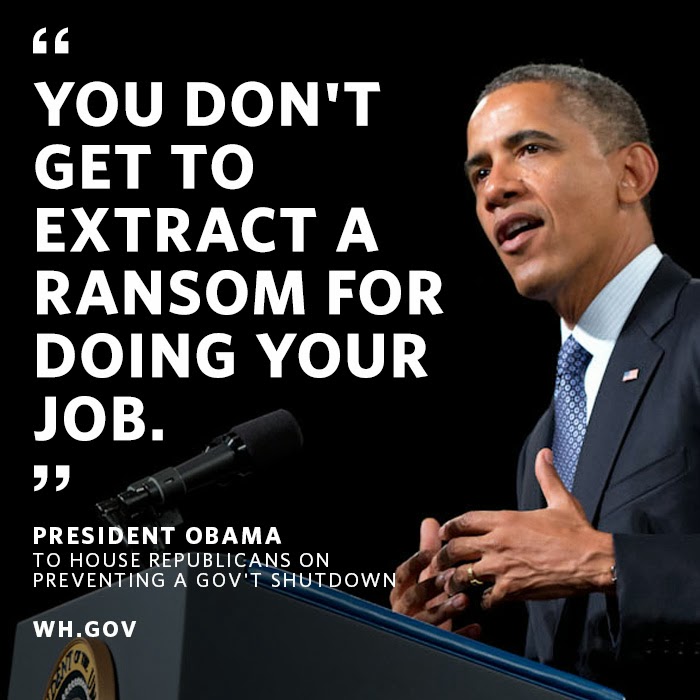
ransom

“it is time for the genitals of all children to be protected from people with knives and strong religious or cultural beliefs”

Taslima has the news: experts in Sweden, Norway, Finland, Denmark, and Iceland are proposing a complete ban on circumcisions of all types. Unfortunately, it’s a little premature to say it will happen: what we have right now is a group of ombudsmen for children, paediatricians, and paediatric surgeons passing a resolution at a meeting. There is no law yet.

But it certainly makes sense. Hacking up babies’ crotches is perverse and bizarre and unnecessary.

It’s Baturday!

I’m in Austin, Texas this weekend, hanging out with Matt Dillahunty and Beth Presswood, and it’s bats, bats, bats all day long. I’m giving a talk about bat evolution this afternoon (theme: so what if there aren’t many fossils?), and then we’re going on a bat cruise to watch the swarm of Mexican (don’t tell the Republicans) Free Tailed Bats launch themselves into the twilight skies. Also, somewhere in there will be Texas barbecue. I don’t think that will have much bat in it.

While I’m distracted, watch the pretty bats fly.

Satanique!

It has come to pass that we are working with the Stevens Community Humane Society again, which means that they have foisted another hell-beast cat upon us to house.

This is she.

ivy

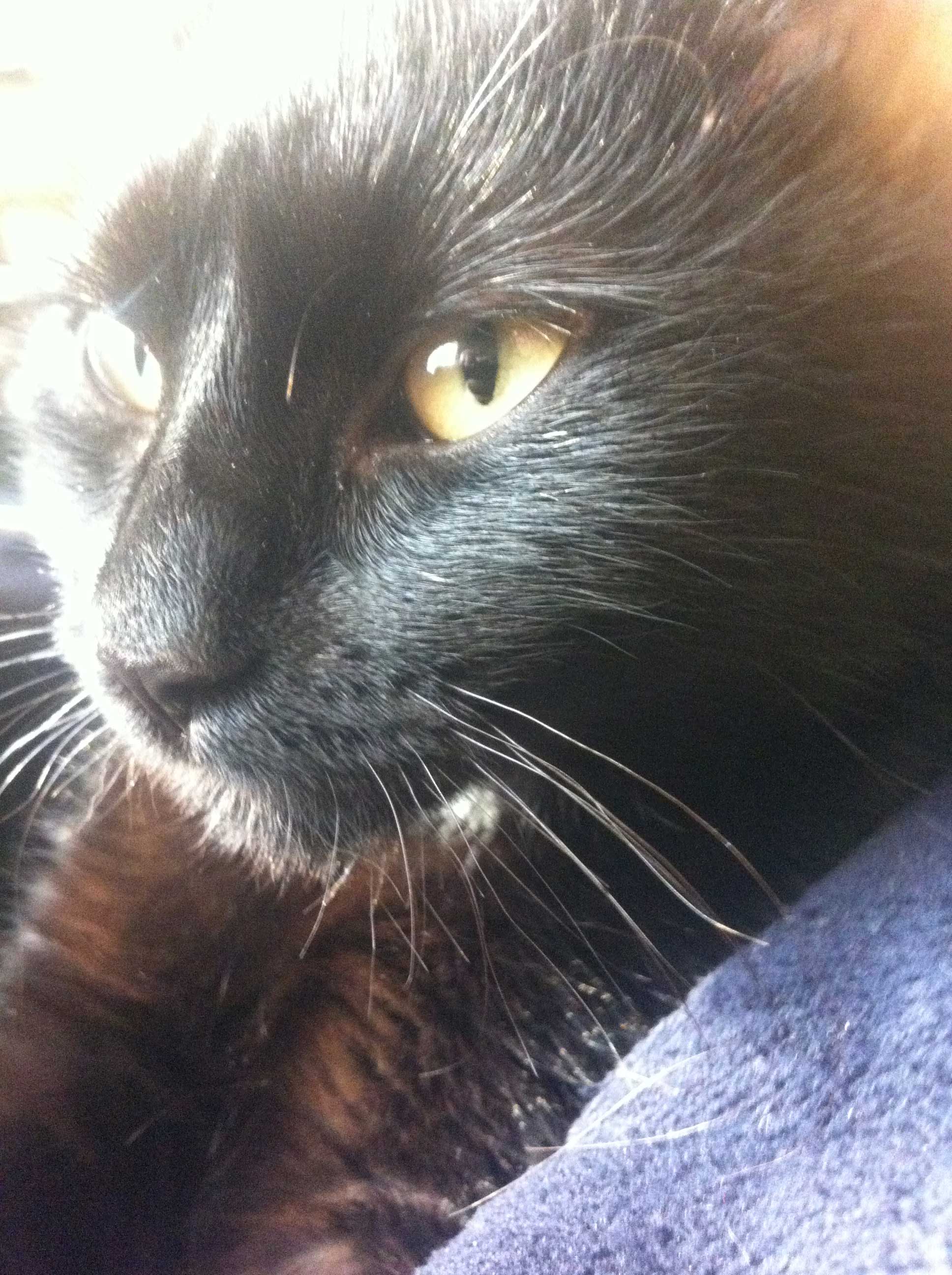
She is a young beast, all black with a white patch on her chest. She is very curious and there has been a little problem with getting her to sit still — she’s got our whole house to explore so she’s rushing about all the time. She will occasionally jump on me with her claws and bump her head against my chin while making curious throbbing noises — I think it’s the sound of the millstones of Hell grinding souls to a pulp, or something.

We’ve been closing the bedroom doors tightly at night to prevent her nefarious pouncing — I think she has evil plans — but by day, we might have to collude. My cunning brain and her predatory energy…we could take over the world, if one of us doesn’t stab the other in the back.

I am calling her Satanique. The humane society gave her the name Ivy, which you might prefer if you’d rather cloak her true nature. If you’d like to break up our wicked partnership before our plans reach fruition, or if you think you need a partner in crime of your very own, contact the Stevens Community Humane Society. Tell them you want the black-furred agent code-named Ivy that is holed up in the Myers safehouse. They might be able to arrange something.