Pharyngula
Evolution, development, and random biological ejaculations from a godless liberal


You may have heard that men and women have some subtle differences in morphology — there is considerable variation and overlap, of course, but there are discernable patterns. It’s not just the obvious breasts and shoulders and hips, either, but, for instance, slight differences in the hands. Men tend to have ring fingers that are longer than their index fingers, while those two fingers in women are of approximately equal length. Which makes it interesting that many Paleolithic cave paintings include tracings of the artists’ hands.

You can see where this is going. We should measure digit lengths in these stencils!
Archaeologist Dean Snow of Pennsylvania State University analyzed hand stencils found in eight cave sites in France and Spain. By comparing the relative lengths of certain fingers, Snow determined that three-quarters of the handprints were female.
"There has been a male bias in the literature for a long time," said Snow, whose research was supported by the National Geographic Society’s Committee for Research and Exploration. "People have made a lot of unwarranted assumptions about who made these things, and why."
There need to be massive caveats to the interpretation of the data. In modern populations, variation and overlap means that assessments of sex from digit lengths only has 60% accuracy, which is terrible — I checked out my own hands with a crude visual inspection, and by my right I’m a woman, by my left I’m a man, and both have very slight differences. Their sample size is also very small: 32 hands that were clear and sharp enough to measure. But at the same time, they report that the degree of sexual dimorphism in the hands was much greater than is seen in modern populations Well, maybe: I’d like to see the dimorphism data for modern hunter-gatherer populations, in particular from African populations with their greater genetic diversity. Also, you can’t call it sexual dimorphism if you don’t have an independent measure of the sex of the handprints. Maybe there was greater non-sexual variation in hand shape and, for instance, women made all of the stencils, but 15,000 years ago 25% of women had “man hands”.
Still, at least the data says that the cave painters were more diverse than expected, which fits better with a hypothesis that both men and women were active participants in these surviving, visible aspects of Paleolithic culture.

We’re doomed. Evolution is an ineluctable process; once it gets started, it’s not just an optional alternative, it becomes unstoppable, short of nuking the planet from orbit (and even then, all it takes is one surviving bacterium for it to begin again). Charlie Stross has noticed that books have crossed the threshold and are now poised for an adaptive radiation.
An epub ebook file is essentially an HTML5 file, encapsulated with descriptive metadata and an optional DRM layer. The latest draft standard includes support for all aspects of HTML5 including JavaScript. Code implodes into text, and it is only a matter of time before we see books that incorporate software for collaborative reading. Not only will your ebook save your bookmarks and annotations; it’ll let you share bookmarks and annotations with other readers. It’s only logical, no? And the next step is to let readers start discussions with one another, with some sort of tagging mechanism to link the discussions to books, or chapters, or individual scenes, or a named character or footnote.
We already share highlighting — I get a little annoyed when I’m reading on my kindle and suddenly there’s a block of text with a dotted underline — other people thought that section worthy of notice and have shared their emphasis with the world.
I’ve also noticed that the books I’ve bought through Amazon suddenly pop up with a ranking and suggestions page when I reach the end. It used to be you’d finish a book and close it satisfyingly and put it back on the shelf…but no, now it yells at you “Did you like me? Buy more of me!”
As Stross points out, the next dreadful steps, since a book has become code, will be the incorporation of malware and agents to sabotage competing books in your library and insert new ads around the place, or even replicate more of the authors’ works. I’ve downloaded some of those cheap or even free books into my epub library, and some of them are so bad that I suspect they are already intrinsically malware.
Our future:
Books are going to be like cockroaches, hiding and breeding in dark corners and keeping you awake at night with their chittering. There’s no need for you to go in search of them: rather, the problem will be how to keep them from overwhelming you.
Doomed, I tells you. I am squinting at my iPad right now. I think it’s plotting to get me.


Unfortunately. What that means is that an endeavor that ought to be impartial and based on reasoned evaluation of the evidence is tainted by bias and unavoidable cultural preconceptions. We’ve got religion turning some people into credulous twits, but just as poisonous, we have sexism skewing our analyses.
The first thing we did was look at more than 3,000 articles published between 1980 and 2006 in 12 leading peer-reviewed international relations journals. We then controlled for every possible factor that could contribute to one’s citation count including the quality of the publication, its venue, methodology, the subject matter, and the researcher’s home institution (to name a few). We suspected that an article written by a tenured professor from an elite university, published in a top journal and written on a popular topic would get more citations than an article written by an untenured professor at a liberal arts college on an esoteric topic in a second-tier journal. What we didn’t know was whether gender would matter once you held all of these factors constant. Did knowing the gender of the author make other scholars cite an article more or less?
The results were striking. Even when we controlled for an enormous range of factors, gender remained one of the best predictors of how often an article would be cited. If you were female, your article would get about 0.7 cites for every 1 cite that a male author would receive.
This paper has garnered a lot of press here, here, and here, not because it’s telling us something we hadn’t already suspected but because the data are incontrovertible. Crunch the numbers in different ways and the results are always the same: articles written by women in IR are cited less than men, all else equal.
The authors of that study have some productive suggestions. One is anonymous review: publishers should mask out the authorship and affiliations when sending papers out for review. You’re judging the work on its own quality, right, so who wrote it shouldn’t matter. I do something similar when I’m grading papers — I refuse to look at the students’ names until I’ve evaluated the whole thing.
This would also diminish that other unfortunate bias, judging papers by what institution they came out of, rather than their content.
Another suggestion is simply to have first and middle names always reduced to initials. That’s not a perfect solution, but it helps. (It doesn’t help if you’re already known by your initials, but that’s a different problem.)
I have another suggestion: maybe graduate students should all get some kind of education in equality as part of their training, so they don’t go on to be bigoted asshats when they go on to full science careers. I’ve heard it all: prejudice against women, against blacks, against Asians, against historically black colleges, against liberal arts institutions. Maybe scientists should learn not to pay only lip service to that scientific virtue of objectivity.

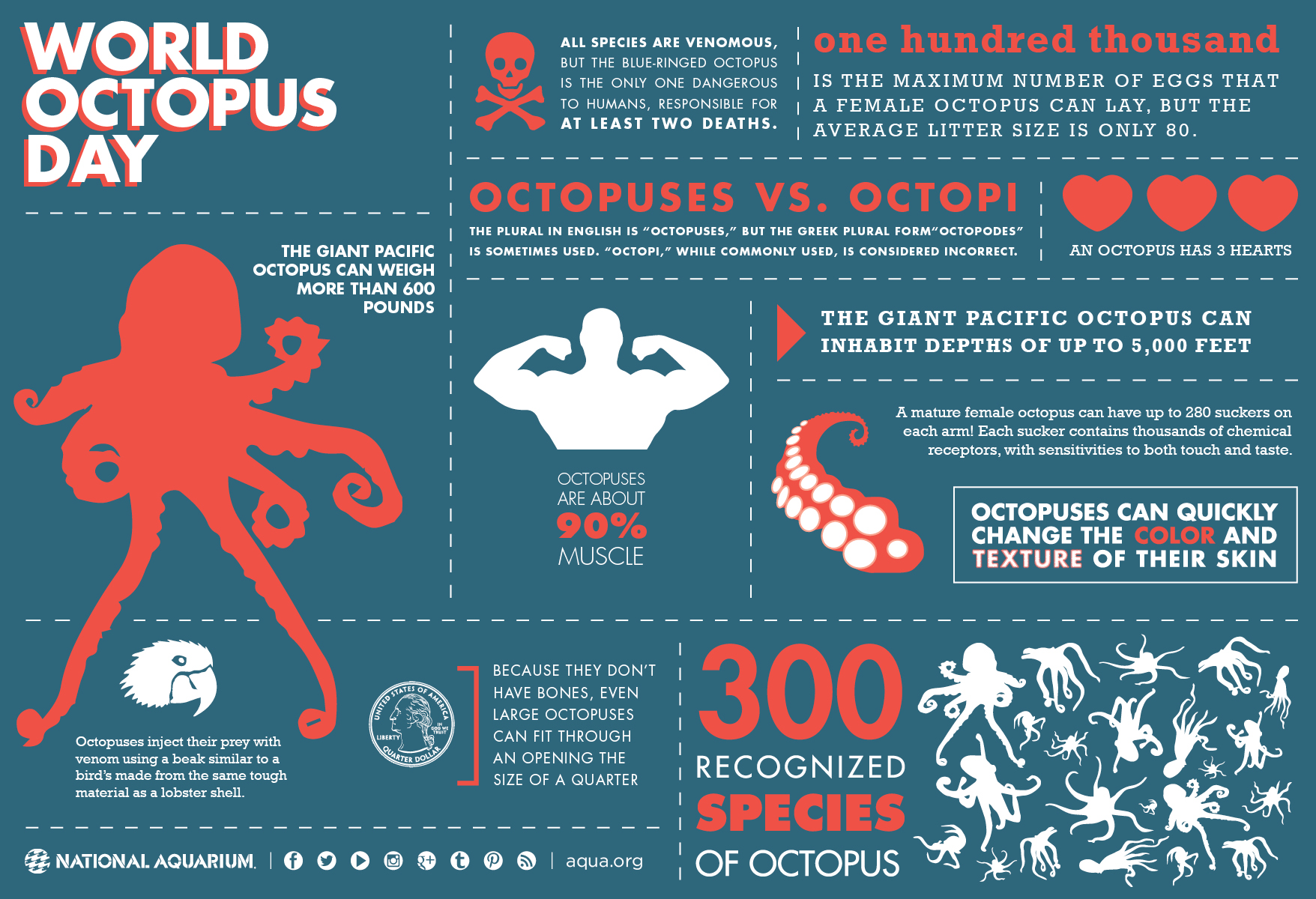
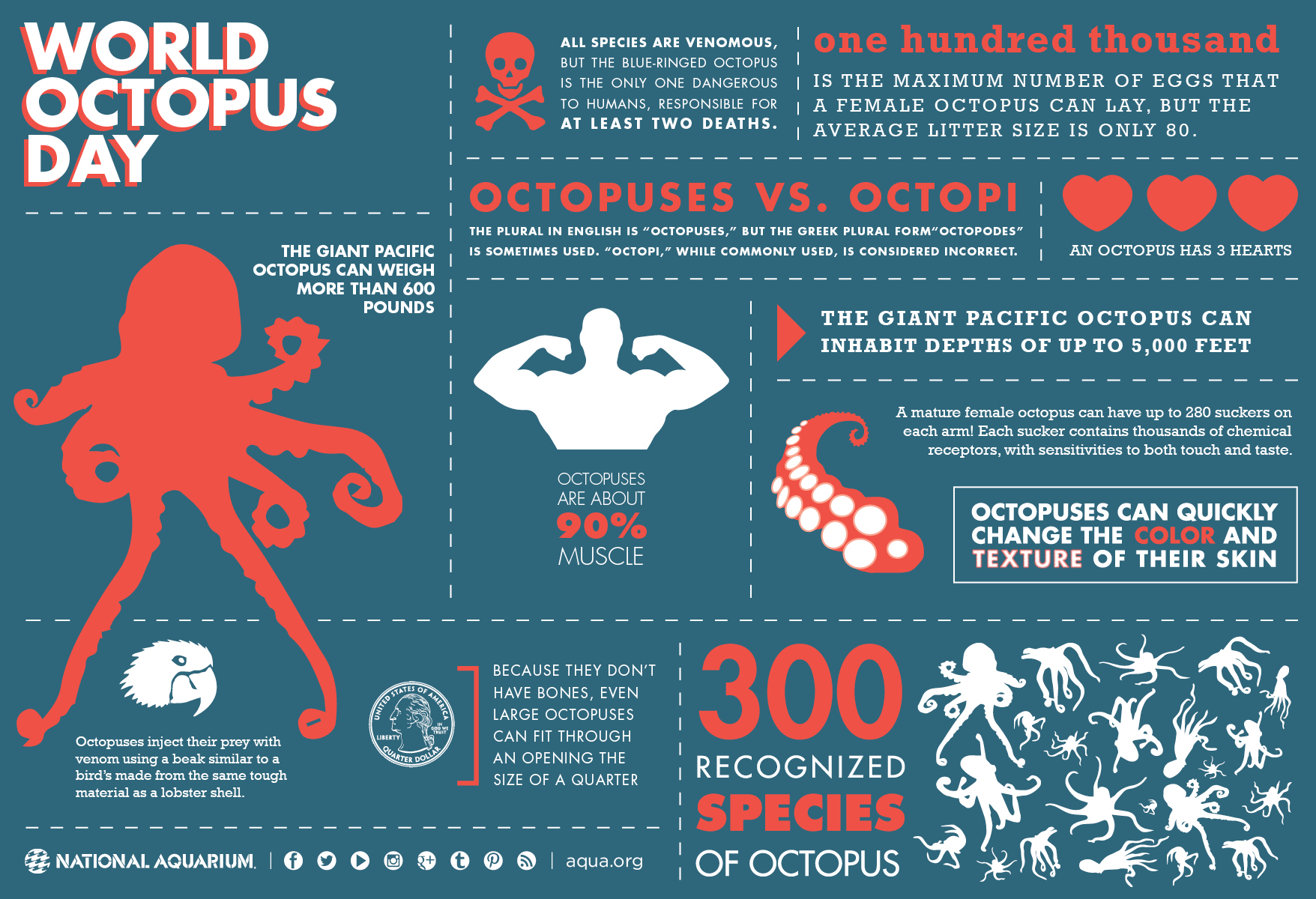
Yesterday was World Octopus Day — 10/8, don’t you know — but I didn’t celebrate it…because every day is a cephalopod day in my heart. And you don’t get to shackle my heart to beat only one day a year.

James May, one of the presenters on Top Gear, is trying his hand at providing a little science education. I want to say…please stop. Here he is trying to answer the question, “Are humans still evolving?” In the end he says the right answer — yes they are! — but the path he takes to get there is terrible.
It’s little things that make me wonder if anyone is actually editing his copy. For instance, he helpfully explains that you, the viewer, were produced by your parents having sex. Then he says:
That’s how evolution is driven: by reproduction. But is that still true?
Uh, yes? We haven’t stopped reproducing, so we should be able to stop right there then.
But no, he continues on. He tries to explain evolution, and does manage to verbally describe natural selection correctly as differential survival and reproduction, but it’s illustrated with a pair of goats with telescoping necks. That doesn’t help. He’s describing Darwinian selection and showing it as Lamarckian — it’s a very mixed signal. And as we’ll see, he still seems to be thinking like will and experience drive evolutionary changes.
And do I need to mention that he doesn’t seem aware of processes other than selection in evolution? You need to realize the importance of drift to answer the question of whether evolution is continuing in humans, especially when you’re prone to say glib nonsense like “humans have turned the process of natural selection on its head,” whatever that means.
He also claims along the way that Darwin “tracing this evolutionary process backwards proved that all life came from a common source.” No, he didn’t. A hypothesis is not proof. He found morphological evidence for the relatedness of some groups, but the evidence for common ancestry of all forms wouldn’t really become overwhelming until the molecular evidence linked animals and plants and mushrooms and bacteria together.
By the time he gets around to talking the details of human evolution, we’re mired in a hopeless mess. Apparently, one reason we’re still evolving is that “certain characteristics will improve your chances of breeding” but then he helpfully explains that “its not as if ugly and stupid people don’t get to have children”. So which is it? Is natural selection selecting away for chiseled abs, or whatever he regards as a significant advantage, or isn’t it? And if people he judges as unattractive are having children, that driving force of evolution, then isn’t that undermining his understanding of the process?
And please, if you can’t even get selection straight in your head, please don’t try to explain population structure. He has a weird discursion in which he explains that “the genetic mutations that drive evolution can be most commonly found in a small gene pool” and then somehow tries to argue that we’re “too cosmopolitan,” that the fact that people from all over the world can now intermarry somehow “cuts down on those mutations.” I have no idea what he’s talking about. I suspect he doesn’t either.
Then, as evidence that we have been evolving, he points to big screen TVs as proof that we’re smarter than Stone Age people. Great — we now have a new IQ test. Just measure the dimensions of the individual’s TV. It’ll probably work about as well as regular IQ tests.
He tries to get to specific traits: lack of wisdom teeth is evidence of human evolution, apparently. Never mind that the changes are recent and mixed, and that it’s more likely a plastic response to changes in our diet than a trait that’s been selected for specifically. It’s a very bad example, unless he’s going to argue for selection for people with fewer teeth in their jaws. Do you typically count your date’s molars?
His ultimate proof that humans are evolving is the appearance of lactose tolerance in adults. That is pretty good evidence, I’ll agree…but he messes it up completely.
10,000 years ago, before anybody had had the bright idea of milking a cow, no human could digest the lactose in milk beyond childhood. But now, after a hundred years of drinking cream and milk and squeezy cheese in a can, 99% of people can.
He doesn’t even get the numbers right. North Europeans have a frequency of lactose tolerance of about 90%; in South Europeans it is about 30%, and less than 10% in people of Southeast Asian descent. This is not a largely lactose tolerant world.
And of course, his explanation is screaming nonsense. We are not lactose tolerant because we’ve been drinking milk; we’ve been drinking milk because we’re lactose tolerant. It is not a trait that appeared in the last century.
Why is this guy babbling badly about evolution? Did he have any informed, educated scientists to consult who could tell him not to make such a ghastly botch of it all?

Randy Schekman and Thomas Südhof for their work in vesicle trafficking. We’re working through metabolism in my cell biology course right now, but clearly when we get to translation and export of proteins in a few weeks, I’m going to have to put together a new lecture to cover this subject.

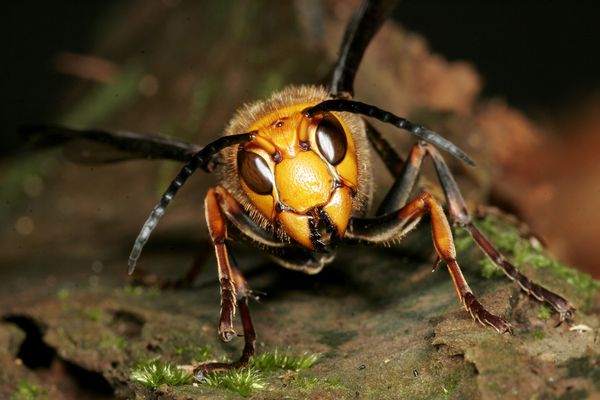
I don’t know why Mary suddenly thinks highlighting a giant man-killing hornet would be appropriate…
…but I’m not going to argue with her.

We’re fostering this wicked little kitty, and one of the things we’re trying to do is get her adopted. To do that, we’re supposed to take a photo, but there’s a problem: she doesn’t hold still. She’s running around everywhere, mauling my squid toys, stuffing her snout in her food bowl, chasing her tail, whatever entertains the tiny brain of a small cat.
So I had to use one of my superpowers. True fact: I have a magical ability to put things to sleep, as my students can attest. But also when my kids were growing up, it almost never failed, put them in my arms and clonk, zzzzz, they were out. So I have tried it on the cat. And it still works. I managed to snap a quick one just as her eyes were closing.


So if you have your own somnolence distortion field, or if you don’t mind an energetic beast, contact the Stevens Community Humane Society, and tell them you want to rescue Ivy from that hellbound Myers household.