Who trusts Marcia McNutt?

After informing us of her environmentalist cred — she drives a hybrid car and has solar panels on her home! — Marcia McNutt, editor-in-chief of Science magazine, makes a remarkable statement.

I believe it is time to move forward on the Keystone XL pipeline to transport crude oil from the tar sands deposits of Alberta, Canada, and from the Williston Basin in Montana and North Dakota to refineries on the U.S. Gulf Coast.

Environmental cred…blown.

She’d better have a really good argument for why an environmentalist ought to support the Keystone XL pipeline, given that it is a great big leaky pipe full of death that will feed America’s oil addiction. Really good. Blow my socks off with an ultra-potent, evidence-based argument, please. And here it is.

Even after accepting that Keystone XL would not accelerate extraction of the Canadian oil sands, I still opposed the project because the pipeline would cross environmentally sensitive regions, such as the Sandhills of Nebraska, a natural wetland that supports many species, including migratory birds, and the Ogallala Aquifer, one of the world’s largest groundwater resources. The project’s developers, the TransCanada Corporation, modified the pipeline to avoid sensitive areas and have promised comprehensive monitoring and state-of-the-art shutoff valves to reduce risk to the environment. No method for moving hydrocarbons can be considered completely fail-safe. At least the current permitting process can, and should, be used to ensure that Keystone XL sets new standards for environmental safety.

That’s it? The Canadians are going to continue to turn Alberta into a toxic craphole even if we don’t build the pipeline, they made a slight detour to avoid the most sensitive parts of our environment (but it’s still a great big dribbly fragile source of poison bisecting the US from Canada to Louisiana), and…

…and…

Fuck me, Transcanada promised to be really, really careful.

We all know that no fossil fuel company would ever, ever, ever lie.

Then she makes the tepid suggestion that we ought to let them build their colossal douchehose of noxious blight, and ask them nicely to contribute some small fraction of their pollution profits towards research in alternative energy.

Seriously? That’s it? That was so pathetic and unconvincing, it couldn’t possibly persuade anyone. But somehow, that’s enough to get the editor-in-chief of one of the most prominent science journals in the world to change her mind.

This does not add up.


McNutt M (2014) Keystone XL. Science 343(6173):815.

Pizza is awesome!

It’s been one of those days. Lots of grading. Lots of meetings. Lots of classes. Lots of labs. I’m tired. I come home, I fire up the laptop, and…everything is awesome!

Rupert Murdoch ends global climate change!


Wild winter in US, UK, etc. no respectable evidence any of this man made climate change in spite of blindly ignorant politicians.

You know what happens when the local fracking well explodes?

bobtownfire

FREE PIZZA! Chevron actually gave out coupons for free pizza to residents of Bobtown, Pennsylvania, after a colossal explosion of a fracking well killed one person and burned uncontrollably for five days.

Wait, these things explode?

Don’t worry, forget that. Also free 2 liter soft drink! Shut up and stuff your face!

pizza

More happy news! Further progress has been made in bringing a little bit of Alberta to America!

tarsands

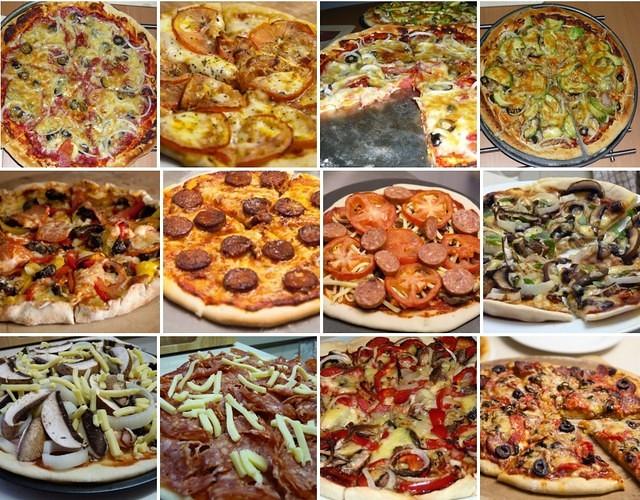
You do not think that looks good? Need I remind you: PIZZA. So many many pizzas!

pizzas

Everything is awesome!

I keep telling you, you’re a big fish

shubinandfriend

Nobody believes me. Well, not nobody…but Ray Comfort sure was incredulous, and I’m always getting these querulous complaints from people. Now, though, I can just tell them to watch Your Inner Fish, the PBS series that will be coming to your television in April.

You can’t wait? No problem. PBS has already made available an informative web site with video excerpts, interactive demos, and a classroom guide. You can see it all now! I’ve been perusing it for the last hour, and it’s all very well done.

Hmmm…and this summer, my colleagues and I have to put together a high school curriculum for teaching evolution…a good chunk of my work might already be done for me here.

You can talk about the Nye/Blackburn debate here

I watched it, and I was unimpressed. Blackburn had a smirk on her face that was baked in rock solid; Nye couldn’t close the deal; the moderator was trying so hard to be “fair” to both sides when Blackburn was full of shit. I just about threw something through the TV screen when she made that absurd argument that CO2 has only gone from 320ppm to 400ppm. Lying with a smile; it’s what the right wing frauds are great at.

Let’s look at the positive benefits of carbon! Yeah, and let’s look at the benefits of ocean-front property in central Pennsylvania.


Here’s an antidote.

Hey, why couldn’t they get someone like Peter Sinclair to debate that congressfool?

Apparently, atheism has been disproven

At least, that’s what a guy with some children’s toys thinks.

I take flour, butter, sugar, eggs, and milk and mix them up even more thoroughly than our smug Islamist fool does his Legos; then to be really, really sure, I put it in a 350° oven for 40 minutes and totally destroy the original ingredients. And out comes…CAKE (no lie!).

Thus, I have disproven god.

Look, their argument is invalid. You can’t talk about a chance-driven process shaped by selection over billions of years and so blithely compare it to a few seconds of shaking, with no selection, of building blocks. You also cannot compare one specific possible combinatorial outcome out of an uncountably vast number of possibilities and say, presto, that you didn’t get this one result implies that the process doesn’t work. Every poker hand, with its improbable individual likelihood, does not in any way imply that dealing cards is impossible.

Who set up the Nye/Blackburn debate?

I find this mystifying. Bill Nye is going to do another debate this weekend, this time on climate change. At least one site considers this a bad idea, too.

This Sunday, “Meet the Press,” the renowned televised political news forum, will host a discussion of climate change — perhaps the single most pressing issue of our time — featuring a professional children’s entertainer and a Republican member of Congress. Yes, David Gregory will be refereeing a “debate” — their word — between “Bill Nye ‘The Science Guy’ and Tennessee Republican Congresswoman Marsha Blackburn, Vice Chair of the House Energy and Commerce Committee.” Nye will be arguing the pro (climate change is real and bad) and Blackburn will be arguing the anti (climate change is made up and not bad). By the end, America will be just a little bit more stupid and doomed.

Marsha Blackburn is bonkers — not only is she a birther, a climate change denier, and a gun fondler, but she’s also corrupt and incompetent. As pointed out above, she’s being given a little more credibility by this ‘debate’.

Honestly, I expect that Nye will have no problem dealing with this wackaloon, but not because he’s brilliant on climate science…but because his opponent is a crank. Just like Ken Ham is a crank.

And that’s what I don’t get. Does Nye really want to get the reputation as the willing body ready to engage with the looniest side of any discussion, a status he’s going to reinforce with this event? It doesn’t do him any favors.

And why would Blackburn so readily accept the position of the Ken Ham proxy in this punching bag session? Is she that stupid? Or does she think playing the role of a Ken Ham equivalent is admirable?

The state of modern evolutionary theory may not be what you think it is

I was rather surprised yesterday to see so much negative reaction to my statement that there’s more to evolution than selection, and that random, not selective, changes dominate our history. It was in the context of what should be taught in our public schools, and I almost bought the line that we can only teach a simplified version of evolution in grade school, but then it sunk in that I was talking to a group of adults about the standard biological perspective, and their reactions were a mix of total bafflement, indignant rejection, and strange evasive waffling. Well, when should we talk about this stuff, then? Do I have to start making day trips to the local nursing home? Or maybe we should be honest from the very beginning about the complexity of modern evolutionary theory and how it has grown to be very different from what Darwin knew.

First thing you have to know: the revolution is over. Neutral and nearly neutral theory won. The neutral theory states that most of the variation found in evolutionary lineages is a product of random genetic drift. Nearly neutral theory is an expansion of that idea that basically says that even slightly advantageous or deleterious mutations will escape selection — they’ll be overwhelmed by effects dependent on population size. This does not in any way imply that selection is unimportant, but only that most molecular differences will not be a product of adaptive, selective changes.

These theories describe different patterns of the distribution of mutations in populations. This diagram from Bromham & Penny (2003) will help you see the difference.

Selectionist, neutral and nearly neutral theories. a | Selectionist theory: early neo-Darwinian theories assumed that all mutations would affect fitness and, therefore, would be advantageous or deleterious, but not neutral. b | Neutral theory: the neutral theory considered that, for most proteins, neutral mutations exceeded those that were advantageous, but that differences in the relative proportions of neutral sites would influence the rate of molecular evolution (that is, more neutral sites would produce a faster overall rate of change). c | Nearly neutral theory: the fate of mutations with only slight positive or negative effect on fitness will depend on how population size affects the outcome.

Selectionist, neutral and nearly neutral theories. a | Selectionist theory: early neo-Darwinian theories assumed that all mutations would affect fitness and, therefore, would be advantageous or deleterious, but not neutral. b | Neutral theory: the neutral theory considered that, for most proteins, neutral mutations exceeded those that were advantageous, but that differences in the relative proportions of neutral sites would influence the rate of molecular evolution (that is, more neutral sites would produce a faster overall rate of change). c | Nearly neutral theory: the fate of mutations with only slight positive or negative effect on fitness will depend on how population size affects the outcome.

The purple bars are mutations subject to purifying selection — that is, deleterious mutations that are culled from the population. The green bars are mutations subject to positive selection, that confer some advantage to the individual carrying them. That’s all people thought you would have under old school versions of evolution: every change would have some effect on the individual, and would be subject to selection (and then, of course, smart people started to wonder about genetic load and realizing that there were limitations to how much selection a population could tolerate).

Kimura and Ohta proposed, though, that many mutations would be neutral — that is, changes to the sequence of a gene or the protein would have no effect on fitness, and would be effectively neutral. Since the genetic code is degenerate, with most amino acids coded for by more than one triplet, you could have synonymous changes to the DNA that would produce proteins with identical amino acid sequences. Further, protein structure and function may not be as precisely dependent on specific amino acid sequences as many people assume: there are key regulatory and active sites within proteins that are extremely sensitive to small amino acid changes, but other parts of the protein may be much more fault tolerant. That means that under neutral theory, we have to recognize that beige bar, which are mutations that have no effect on fitness.

Under nearly neutral theory, the domain of selection effects shrunk further, because it was realized that quantitatively, small deleterious and advantageous mutations, that is mutations that only conferred a slight difference in reproductive success, would be invisible against a noisy background of chance variation, and therefore could not be seen by selection. That’s the blue bar; mutations that we can see might cause a slight change to the efficiency of an enzyme, for instance, but are not significant enough to cause any difference in reproductive success, or are either lost or fixed by chance.

Now you might try to salvage your faith in the ultimate power of selection by suggesting that the neutral and nearly neutral mutations are really rare and can thus be ignored as negligible, therefore returning us to the world of selection theory…with just a little fuzzy slop around the boundary between the green and blue bars. That’s untenable, though. We have molecular clocks.

When comparing the rates of change between homologous genes in different species, we had a bit of a surprise: they are very roughly, sloppily constant. That shouldn’t be true under pure selection theory, but it turns out to make a lot of sense under nearly neutral theory. There is a tradeoff in the rate of mutations occurring, and in becoming fixed in a population. A very large population size will accumulate more mutations purely by chance, but the probability of a single mutation becoming fixed in the population is reduced under large population sizes. When you do the math, you discover that population size cancels out, and the frequency of novel forms becoming fixed over time is dependent solely on the mutation rate.

Think about that. If you compare two species, the number of nucleotide differences between them is basically going to be simply the mutation rate times the number of generations separating them from their last common ancestor. That’s how we can use a molecular clock to date the time of divergence of two lineages.

Please note: this does not deny that the selection shapes specific traits in a species occurs — we do undergo evolutionary adaptation! It merely says that most of the genetic changes are random. We have to use specific analysis techniques, like the McDonald/Kreitman test, to detect the signature of selection out of the background noise of mutation.

This is just one example of an important concept that is overlooked when your education in evolution focuses solely on one simplistic version of the mechanisms of change. If you didn’t know it, it’s not your fault; I graduated from high school never having the ‘evolution’ word uttered even once by a teacher, so if you’ve heard about natural selection, you’re one up on me. But we can do better. That the high school level of instruction in evolutionary biology is stuck at around 1930 is a bug, not a feature, and we should aim to improve it.

I know, it’s hard when a significant part of the population is stuck in the first millennium BCE, but we shouldn’t use that as an excuse to dumb down education.

Now, because I so enjoyed the chaos that ensued after rejecting one small part of the Modern Synthesis, let me share with you something rather cool. It’s a table from Eugene Koonin’s The Logic of Chance, in which he summarizes some of the big changes between the Modern Synthesis that emerged in the era before molecular biology, and how most molecular biologists view evolution today. I expect an even more glorious freakout because he refers to this positively as a postmodern reassessment, and I know how much everyone loves post-modernism.

Postmodern reassessment of some central propositions of Darwin and Modern Synthesis

Proposition

Postmodern status

The material for evolution is provided primarily by random, heritable variation.

Only partly true. The repertoire of relevant random changes greatly expanded to include duplication of genes, genome regions, and entire genomes; loss of genes and generally, genetic material; HGT [horizontal gene transfer], including massive gene flux in cases of endosymbiosis; invasion of mobile selfish elements and recruitment of sequences from them; and more. More importantly, (quasi) directed (Lamarckian*) variation is recognized as a major factor of evolution.

Fixation of (rare) beneficial changes by natural selection is the main driving force of evolution.

Only partly true. Natural (positive) selection is important but is only one of several fundamental factors of evolution and is not quantitatively dominant. Neutral processes combined with purifying selection dominate evolution, and direct effects of environmental cues on the genome ([quasi] Lamarckian phenomena) are important as well.

The variations fixed by natural selection are “infinitesimally small.” Evolution adheres to gradualism.

False. Even single gene duplications and HGT of single genes are by no means “infinitesimally small,” nor are deletion or acquisition of larger regions, genome rearrangements, whole-genome duplications, and, most dramatically, endosymbiosis. Gradualism is not the principal regime of evolution. [And I would add that even point mutations can have large phenotypic effects. –pzm]

Uniformitarianism: Evolutionary processes have remained largely the same throughout the evolution of life.

Only partly true. Present-day evolutionary processes were important since the origin of replication. However, major transitions in evolution, such as the origin of eukaryotes, could be brought about by (effectively) unique events such as endosymbiosis, and the earliest stages of evolution (pre-LUCA [last universal common ancestor]) partially relied on distinct processes not involved in subsequent “normal” evolution.

Evolution by natural selection tends to produce increasingly complex adaptive features of organisms, hence progress is a general trend in evolution.

False. Genome complexity probably evolved as a “genomic syndrome” cause by weak purifying selection in small populations, not as an adaptation. There is no consistent trend toward increasing complexity in evolution, and the notion of evolutionary progress is unwarranted.

The entire evolution of life can be depicted as a single “big tree.”

False. The discovery of the fundamental contribution of HGT and mobile genetic elements to genome evolution invalidates the TOL concept in its original sense. However, trees remain essential templates to represent evolution of individual genes and many phases of evolution in groups of relatively close organisms. The possibility of salvaging the TOL as a central trend of evolution remains.

All extant cellular life forms descend from very few ancestral forms (and probably one, LUCA).

True. Comparative genomics leaves no doubt of the common ancestry of cellular life. However, it also yields indications that LUCA(s) might have been very different from modern cells.

I would add another significant distinction. Under the modern synthesis, populations are primarily seen as plastic and responsive to changes in the environment, producing species that are most strongly marked by adaptive changes. In the postmodern evolutionary view, history dominates — most of the properties of a species are a contingent product of its ancestors’ attributes. “Everything is the way it is because it got that way.” Everything you see in an organism is a consequence of its history, with the addition of a few unique adaptive fillips, and that has two significant implications: you can’t understand an organism without recognizing the impact of its phylogeny, and the modern form preserves ancestral relationships that can be analyzed to discern that history.

And that, of course, demolishes the bogus distinction between historical and observational science that Ken Ham laughably makes. When I observe a fruit fly or a zebrafish or a human being, I am seeing its history made manifest in its structure. See also John Timmer’s recent post on history and science for more.


Bromham L, Penny D (2003) The modern molecular clock. Nat Rev Genet 4(3):216-24.

Koonin EV (2011) The Logic of Chance: The Nature and Origin of Biological Evolution. FT Press.


*I’m not going to get into the evidence for quasi-Lamarckian evolution here, but I will say that there is good evidence for some of it: Koonin discusses the CRISPR-Cas system of adaptive immunity in bacteria. Maybe some other time I can write that up.