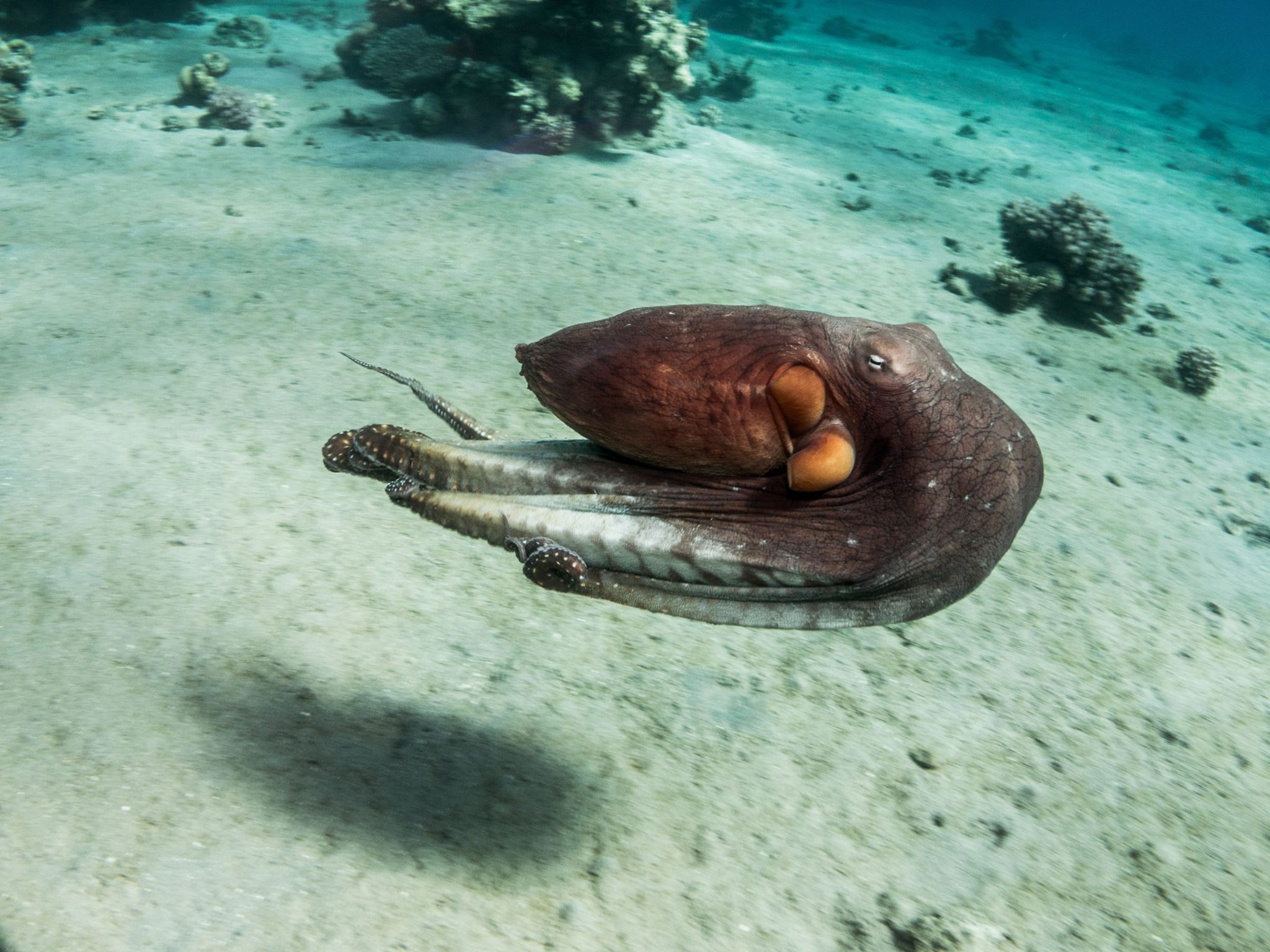
Mary’s Monday Metazoan MISANDRY

lemur

That photo is from a lovely new documentary, with this trailer.

However, I have to call attention to one troubling fact.

“All these lemurs have one thing in common – from the little one to the very largest one – they all have female dominance. The females are the leaders. The females are the ones that make the choices of where they go and what foods they eat and where they’re going to sit,” says Dr. Wright.

We must immediately call for an MRA boycott.

Years of Living Dangerously

This new documentary on Showtime is pretty good (despite the appearance of Thomas Friedman), and this is the premiere episode.

One of the most interesting aspects of the show is that it emphasizes economic issues. The standard tactic of the climate change denialists is to argue that it’s happening, we can’t do anything about it, and it would hurt our economy to take measures to reduce emissions; but this show focuses strongly on the fact that climate change is doing us economic harm right now.

The denialists are, of course, squinking furiously against it already, but they lie. They lie hard.

By the way, Harrison Ford, one of the sponsors/narrator of the show, has also done an IAmA on Reddit lately — he seems to be a cool and admirable dude.

Don’t worry, we’ll fix it by flying really fast in reverse

You all remember Lex Luthor’s scheme in the original Richard Donner Superman movie, right? Of course you do, you’re all nerds. But we nerds are all pedantic and love to start monologuing, so I’ll tell you what it was anyway.

Luthor was going to set off a nuclear bomb in the San Andreas fault and cause a giant earthquake so that California would slide into the sea, creating new, valuable ocean front real estate that he would buy up, making himself fabulously rich.

Grand plans to cause devastating earthquakes are staples of cheesy comic book villainy; they’re also a regular part of the diet of conspiracy theorists. Did you know the High-frequency Active Auroral Research Program (HAARP) is actually a scheme by the Illuminati/Men in Black/New World Order to take over the world by inducing earthquakes? It’s true. Bad guys cause earthquakes.

So what should we make of the recent disclosure that fracking causes earthquakes?

Before January 2011, Youngstown, Ohio, had never had an earthquake since observations began in 1776. In December 2010, the Northstar 1 injection well came online, built to pump wastewater produced by hydraulic fracturing projects in Pennsylvania into storage deep underground. In the year that followed, seismometers in and around Youngstown recorded 109 earthquakes—the strongest of the set being a magnitude 3.9 earthquake on December 31, 2011.

In a new study analyzing the Youngstown earthquakes, Kim finds that the earthquakes’ onset, cessation, and even temporary dips in activity were all tied to the activity at the Northstar 1 well. The first earthquake recorded in the city occurred 13 days after pumping began, and the tremors ceased shortly after the Ohio Department of Natural Resources shut down the well in December 2011. Also, the author finds that dips in earthquake activity correlated with Memorial Day, the Fourth of July, Labor Day, and Thanksgiving, as well as other periods when the injection at the well was temporarily stopped.

Further, the author finds that the earthquakes were centered in an ancient fault near the Northstar 1 well. The author suggests that the increase in pressure from the deep wastewater injection caused the existing fault to slip. Throughout the year, the earthquakes crept from east to west down the length of the fault away from the well—indicative of the earthquakes being caused by a traveling pressure front.

Comic book supervillains aren’t real. We’ve got the oil companies instead.

Should you circumcise your child?

Probably not. But the New York Times reports:

A review of studies has found that the health benefits of infant male circumcision vastly outweigh the risks involved in the procedure.

Actually, it doesn’t. Not at all. The paper is all about the frequency of circumcision in the US; this is the only real data in the paper, and notice that a good chunk of it is speculation.

Prevalence of adult circumcision in the United States during the past 6 decades (1948-2010). The solid line represents documented prevalence among adults; dashed line, [Morris's] predictions.

Prevalence of adult circumcision in the United States during the past 6 decades (1948-2010). The solid line represents documented prevalence among adults; dashed line, [Morris’s] predictions.

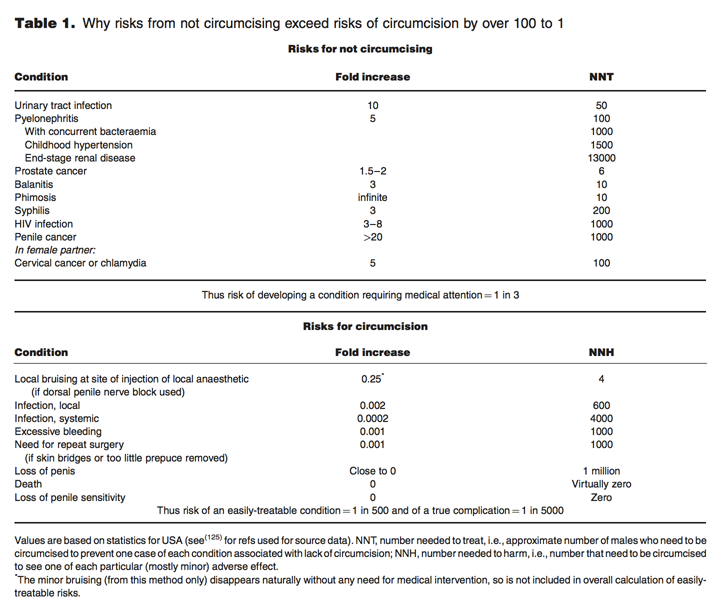
It does toss in a table purporting to show the tremendous risks of not circumcising baby boys, but this is not new — these are the same sloppy data that the author has been peddling for over a decade. With some trepidation, I give you a sample from his 2007 paper: don’t trust these numbers!

circrisks

The author is Brian Morris, better known as the Man Who Hates Foreskins. He’s a real crusader, who touts foreskin removal as just as important as vaccination — that leaving it intact imperils the child to a 1 in 3 chance of a serious condition requiring medical attention. You might immediately question how he arrives at this conclusion — by multiplying a series of dubious assertions together — and the likelihood of it being true, given that circumcision is a culturally variable practice, and that countries where it’s rare (for instance, in Scandinavia, where the frequency of circumcisions is around 2%) don’t typically have emergency rooms crowded with young boys whose penises are in painful, infected, states, raddled with disease.

I suppose it could be because glorious Scandinavian penises are perfect and universally wholesome — that’s what I’ve been told, anyway — but that would be baseless speculation and unwarranted extrapolation of anecdotes into unsupportable evidence, of the sort that Brian Morris does.

Take that first condition, the likelihood of urinary tract infections. That’s taken from a sample of 36 children, half of whom had an unknown circumcision status, and the difference was not found to be statistically significant. Yet here he just presents it as established fact, that uncircumcised children have a ten-fold greater rate of urinary tract infections.

Or look at his claim of much greater rates of HIV infection. There actually is some interesting mechanistic reasoning behind that: the foreskin represents an enlarged area of delicate membrane which could be an avenue of entry for some viruses. But the real test would be an epidemiological study: there are lots of circumcised men around, and lots of uncircumcised men, when we look at the rates of infection, is there a significant difference? It hasn’t been done very often, but when it is, the hypothesis often fails to be supported. Here’s one example of a scientist who thought heightened sensitivity to STIs was a reasonable hypothesis (his “hunch”), but found it didn’t pan out at all when examined.

Armed with this hunch, rather than set up a website I chose to do some research. Australia is a good place to do such research because there is a roughly even population split for the intervention (circumcision) and in most cases it is not a maker of ethnicity, wealth, education or religion. Unexpectedly, our research findings were uniformly negative. Circumcision did not protect against STDs in our clinic population, though we did not look at HIV because it is rare in heterosexual men in Sydney.

Then there are some of Morris’s very peculiar ideas. This is the abstract from a paper advocating more circumcision; note that one of his arguments is basically that women find uncircumcised penises ugly. As usual, no evidence for that is presented.

Circumcision of males represents a surgical “vaccine” against a wide variety of infections, adverse medical conditions and potentially fatal diseases over their lifetime, and also protects their sexual partners. In experienced hands, this common, inexpensive procedure is very safe, can be pain-free and can be performed at any age. The benefits vastly outweigh risks. The enormous public health benefits include protection from urinary tract infections, sexually transmitted HIV, HPV, syphilis and chancroid, penile and prostate cancer, phimosis, thrush, and inflammatory dermatoses. In women circumcision of the male partner provides substantial protection from cervical cancer and chlamydia. Circumcision has socio-sexual benefits and reduces sexual problems with age. It has no adverse effect on penile sensitivity, function, or sensation during sexual arousal. Most women prefer the circumcised penis for appearance, hygiene and sex. Given the convincing epidemiological evidence and biological support, routine circumcision should be highly recommended by all health professionals.

I suspect that women’s preferences are going to be shaped by culture, by familiarity, rather than some objective hideousness of the foreskin, and what the heck is appearance doing in a paper that is supposed to be summarizing medical evidence, anyway?

It’s also an argument that can cut both ways. When presented with evidence that one phenomenon, dyspareunia (painful intercourse) was found to be more common in partners of circumcised men than uncircumcised men, Morris waved it away by arguing that women in countries with lower rates of circumcision might be disturbed by the sight of a cut penis.

Morris et al. should be commended for their creative attempt to dismiss the higher prevalence of frequent dyspareunia in women with circumcised (12%) than uncircumcised (4%) spouses (ORs between 4.17 and 9.00). They suggest that Danish women with circumcised spouses may be so psychologically troubled by the shape of their spouse’s penis that it might result in painful intercourse. A more plausible explanation would be that reduced penile sensitivity may raise the need among some circumcised men for more vigorous and, to some women, painful stimulation during intercourse in their pursuit of orgasm.

But then, that’s Brian Morris all over the place. He actively tries to suppress work that doesn’t support his conclusions, he inflates any evidence that suggests circumcision might have a few benefits (there are some!), and dismisses any evidence to the contrary…or worse, twists it around to claim it supports the opposite of the author’s interpretations. All this in defiance of worldwide statements from pediatric organizations that say the evidence for health benefits from circumcision are weak, and that routine circumcision is not recommended.

One other weird thing: why are circumcision advocates so obsessed with this procedure? It’s certainly not that the benefits are as solidly established as they are for vaccination; reading the literature, the most striking observation is the murkiness and insignificance of the evidence. If you’ve got lots of studies, and they vary up and down in their conclusions, and are constantly skirting the margins of likelihood, what’s the best explanation: that there is a strong effect that can only be detected by true believers, or that we’re dealing with no effect at all and people are cherry-picking peaks and troughs from statistical noise? I lean towards the latter. The former is also the excuse used by psychics, UFOlogists, and Bigfoot hunters.

It also doesn’t help that Morris has been affiliated with the Gilgal Society a pro-circumcision organization that also published a book of ‘erotic’ circumcision stories.

Yes, you read that right. Circumcision child porn. Short excerpt below, in rot13.

Ur unq abg ernpurq choregl ohg fbba jbhyq: n srj unvef jrer fgnegvat gb tebj ng gur onfr bs uvf cravf. Arvy jnf gura nfxrq gb yvr ba gur pbhpu sbe gur cravf gb or cubgbtencurq. …gur qbpgbe grfgrq gur svg bs gjb fvmrf bs Tbzpb Pynzc oryy. Qhevat guvf cebprqher Arvy rerpgrq, ohg jnf abg rzoneenffrq ol vg naq znqr ab nggrzcg gb uvqr vg.
Znex pnzr va arkg naq ntnva qebccrq uvf gebhfref ernqvyl. Ur unq ernpurq choregl naq jnf dhvgr jryy qrirybcrq. … Vgf yvxr na ryrcunagf gehax jnf gur qbpgbef pbzzrag, gb juvpu Znex urnegvyl nterrq. … Cubgbtencuf bs uvf cravf jrer gnxra…
Ur unq ernyvfrq nsgre frk rqhpngvba yrffbaf ng fpubby gung ur unq n ceboyrz.
…gur oblf jrer tvira cyragl bs jvar gb erynk gurz. …gur qvfphffvba jnf nobhg gur frk yvirf bs gur oblf naq gurve fpubby sevraqf. Gur qbpgbe nfxrq ubj bsgra gur oblf jnaxrq. … Gur qbpgbe fubjrq gur oblf uvf zvpebfpbcr naq nfxrq vs gurl unq rire frra fcrez haqre bar. … Ur fhttrfgrq gb Znex gung vs ur jnagrq gb, ur pbhyq unir n dhvrg jnax juvyfg Arvy jnf orvat pvephzpvfrq… Guvf jnf rntreyl npprcgrq. … Ur ynl onpx jvgu uvf rlrf pybfrq naq whfg yrg gur qbpgbe trg ba.

Morris has been trying very hard to dissociate himself from Gilgal, at least, but still…eww.

“Gilgal”, by the way, is apparently Hebrew for “hill of foreskins”. Really? They needed a word for that? Double eww.


Frisch M (2012) Author’s Response to: Does sexual function survey in Denmark offer any support for male circumcision having an adverse effect? Int. J. Epidemiol 41 (1): 312-314.

Morris BJ (2007) Why circumcision is a biomedical imperative for the 21st century. Bioessays 29(11):1147-58.

Morris BJ, Bailis SA, Wiswell TE (2014) Circumcision Rates in the United States: Rising or Falling? What Effect Might the New Affirmative Pediatric Policy Statement Have? Mayo Clin Proc doi: 10.1016/j.mayocp.2014.01.001. [Epub ahead of print]

Plastic: worse than we thought

That plastic grocery bag you got at the store is something more than just an eyesore and a source of nasty chemicals, it’s also a magnet for accumulating more pollutants.

The ingredients that make up more than 50% of plastics are already deemed chemical hazards by the UN Globally Harmonized System. But as floating bits of trash, plastics pick up additional pollutants like pesticides, flame retardants and combusted oil. “We don’t know yet how long it takes plastic to fully break down, but it’s somewhere on the order of tens to thousands of years,” says Rochman. This means that plastic debris accumulates a multitude of toxic chemicals over potentially many, many years. This type of marine plastic is ending up as lunch for birds, fish and other animals.

The article goes on to detail specific effects of PAHs, PCBs, and PBDEs on medaka. It’s ugly. Now I just have to figure out a way to reduce plastic consumption at home — it’s painful how much of our food and other essentials are packaged up in plastic.

Recursive confirmation

Last month, I reported on a paper that was about to be retracted by a journal; the paper by Lewandowsky and others analyzed public articles and comments by climate change denialists and found evidence that they were populated by wacky conspiracy theorists and thin-skinned paranoid weirdos (it’s true!). Said conspiracy theorists, weirdos, and industry shills proceeded to dun the journal with threats of legal action and accusations of defamation. And eventually the journal folded and withdrew the paper.

Said nutcases regarded this as vindication. My inbox and twitter feed were filled with triumphant loons crowing about their victory. They didn’t seem to care that they excuse given by the journal was that the paper didn’t address “ethical concerns” about the “studied subjects” — which would be a legitimate issue if the subjects had some expectation of confidentiality. These were all public web posts on subjects they were proud about expounding upon, so their defense of the retraction is basically that they might be embarrassed and ashamed if someone examined their public utterances? Makes no sense. They should be embarrassed.

I guess we’re all ethically compromised for daring to discuss what Rush Limbaugh and Ann Coulter and Bryan Fischer and Deepak Chopra say on the radio and in print.

But now there’s another twist. Another editor of that same publisher of the Frontiers series of journals has resigned in protest.

Ugo Bardi was chief specialty editor of Frontiers in Energy Research: Energy Systems and Policy. He writes on his blog:

…my opinion is that, with their latest statement and their decision to retract the paper, Frontiers has shown no respect for authors nor for their own appointed referees and editors. But the main problem is that we have here another example of the climate of intimidation that is developing around the climate issue.

Later, he notes his decision:

The climate of intimidation which is developing nowadays risks to do great damage to climate science and to science in general. I believe that the situation risks to deteriorate further if we all don’t take a strong stance on this issue. Hence, I am taking the strongest action I can take, that is I am resigning from “Chief Specialty Editor” of Frontiers in protest against the behavior of the journal in the “Recursive Fury” case. I sent to the editors a letter today, stating my intention to resign.

I am not happy about having had to take this decision, because I had been working hard and seriously at the Frontiers’ specialy journal titled “Energy Systems and Policy.” But I think it was the right thing to do. I also note that this blunder by “Frontiers” is also a blow to the concept of “open access” publishing, which was one of the main characteristic of their series of journals. But I still think that open access publishing it is the way of the future. This is just a temporary setback for a good idea which is moving onward.

This is what happens when you let conspiracy theorists, weirdos, and industry shills dictate what can be published.

But of course now the climate change denialists are all pissed off at Ugo Bardi…and their responses simply confirm the conclusions of the Lewandowsky paper.

It worked!

At last I’m home after a long day, but I have good news: my genetics students have been doing a three point mapping cross for the last month or so, which is always worrisome because if they screw it up, you don’t know the results until the very end of the experiment. But now the data is trickling in, and with a quarter of the numbers done, it’s looking really good.

It’s a big chunk of time and effort, and it feels awful if it flops at the last analysis.

Mary’s Monday Metazoan: Sad pangolin

pangolin

Say goodbye to another mammal being sacrificed on the altar of ‘traditional medicine’ — pangolin scales are consumed as medicine, their blood is used in tonics, their embryos are swallowed as aphrodisiacs, and they’re just generally eaten up. They’re also incredibly fragile, and cannot be farmed; they’re all caught in the wild and they usually die of shock.

I have no sympathy at all for traditional Asian medicines. It’s all bogus sympathetic magic that leads to the slaughter of animals worldwide for absurd reasons.