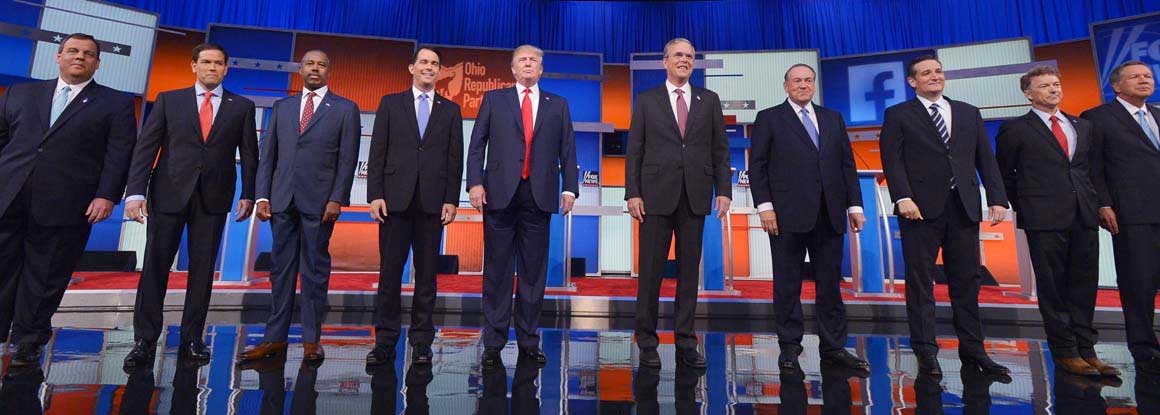
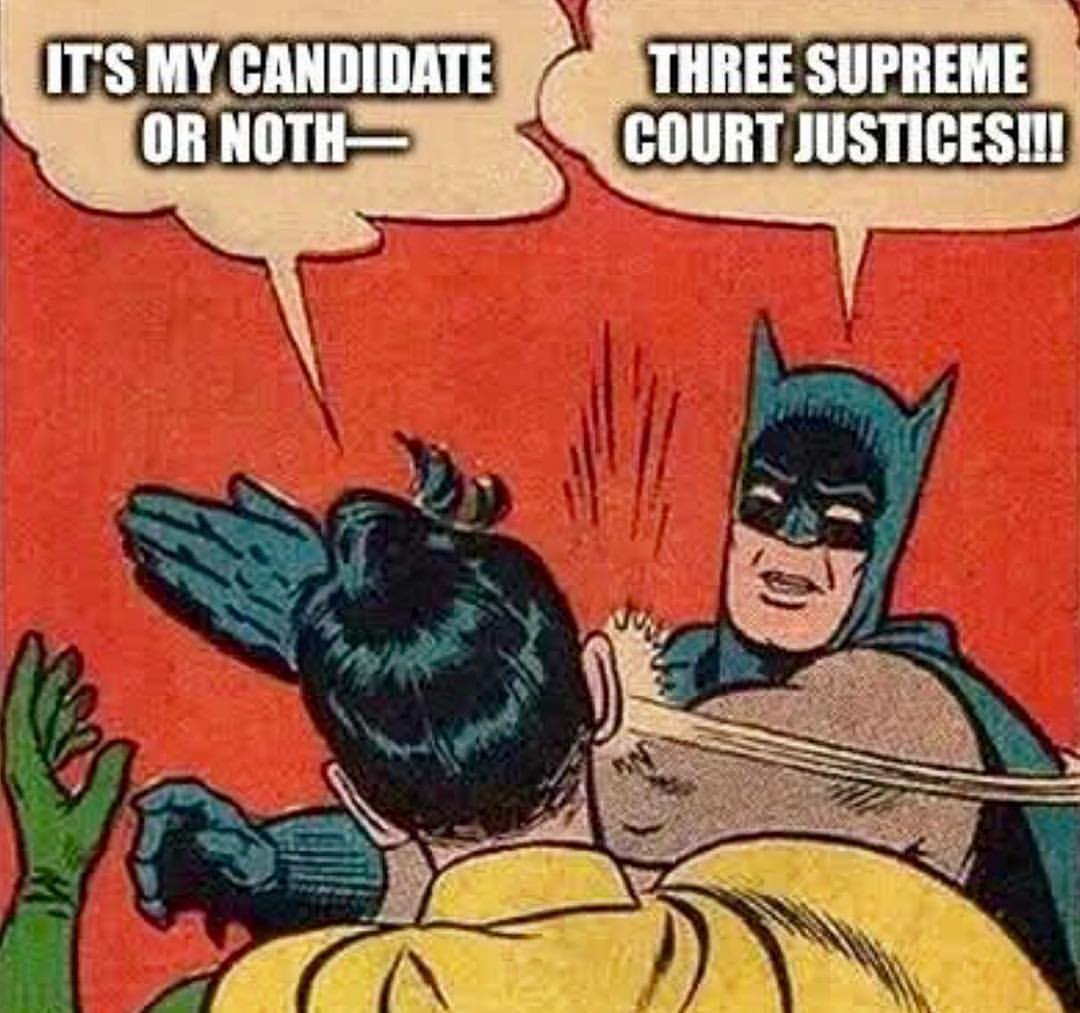
Nicholas Kristof is horrified to learn that there aren’t many academic conservatives in some disciplines. Only somewhere between 2% and 11% (depending on the discipline, and the study) of university faculty identify as Republicans.
Yancey, the black sociologist, who now teaches at the University of North Texas, conducted a survey in which up to 30 percent of academics said that they would be less likely to support a job seeker if they knew that the person was a Republican.
The discrimination becomes worse if the applicant is an evangelical Christian. According to Yancey’s study, 59 percent of anthropologists and 53 percent of English professors would be less likely to hire someone they found out was an evangelical.
Well, the thing is, we don’t ask about political or religious affiliation in job interviews, so that’s rather irrelevant. It just doesn’t come up. If a geologist or a biologist, for example, was a fiscal conservative who went to church every Sunday and thought marriage should always be between a man and a woman, I’d still be able to vote for their appointment, as long as they weren’t going to teach that the earth was 6000 years old or that climate change is fake in geology class, or that homosexuality was an abomination unto the Lord in physiology.
But here’s the deal: if I knew someone was a Republican evangelical, I would be less likely to recommend them for hiring. It’s not because of a bias on my part, but a bias on their part. It’s thanks to crank magnetism.
If you are one of those things, you are much more likely to believe in creationism, or conspiracy theories, or so-called ‘scientific racism’, or any of a number of other destructive and thoroughly debunked ideas. If you show up for an interview with sober, sensible attitudes and are able to clearly explain the established ideas in your discipline, no problem. But if you show up and let slip a bunch of babble about your wackadoodle theories, we’re going to prefer another candidate. These loons are self-winnowing, which reduces the frequency of self-professed conservatives in the applicant pool.
What Kristof misses is that faculty tend to be — and he would be shocked to hear it — conservative, in the sense that we’re not interested in bringing in a radical weirdo. We’ve got jobs to do. We’ve got a multi-year curriculum to teach. We really don’t want some wild-eyed nut throwing batty ideas at our students that we’ll have to un-teach in the next semester. (You think I’m some demented atheist fanatic on the blog? My courses are actually very straightforward and conventional.)
Kristof also overlooks something else. Democrat and Republican are not synonyms for liberal goofball and conservative. Quite the opposite: Democrats are the American conservative party, while Republicans have become increasingly fringey and bizarre and extreme over my lifetime. Hillary Clinton is conservative. Donald Trump is a kook. When you use the Democrat and Republican labels as proxies for how staid and mainstream a party is, you’ve got it exactly backwards if you think a shortage of Republican faculty is a measure of how radical a university is.
There’s also the usual stench of a persecution complex in Kristof’s essay.
“I am the equivalent of someone who was gay in Mississippi in 1950,” a conservative professor is quoted as saying in “Passing on the Right,” a new book about right-wing faculty members by Jon A. Shields and Joshua M. Dunn Sr.
Jebus. Being gay in Mississippi in 1950 (or 2016) meant you were at risk of abuse and murder. Being a Christian Republican anywhere in the US today means you are part of the dominant culture; you do not ever get to pretend to be a persecuted martyr because you didn’t get a job offer at that liberal arts college. Get in line with all the atheist Democrats who are also struggling to get a job in academia.
When you make that kind of comparison, there’s only one reasonable response: fuck you, privileged douchebag. No wonder people don’t want to hire you.