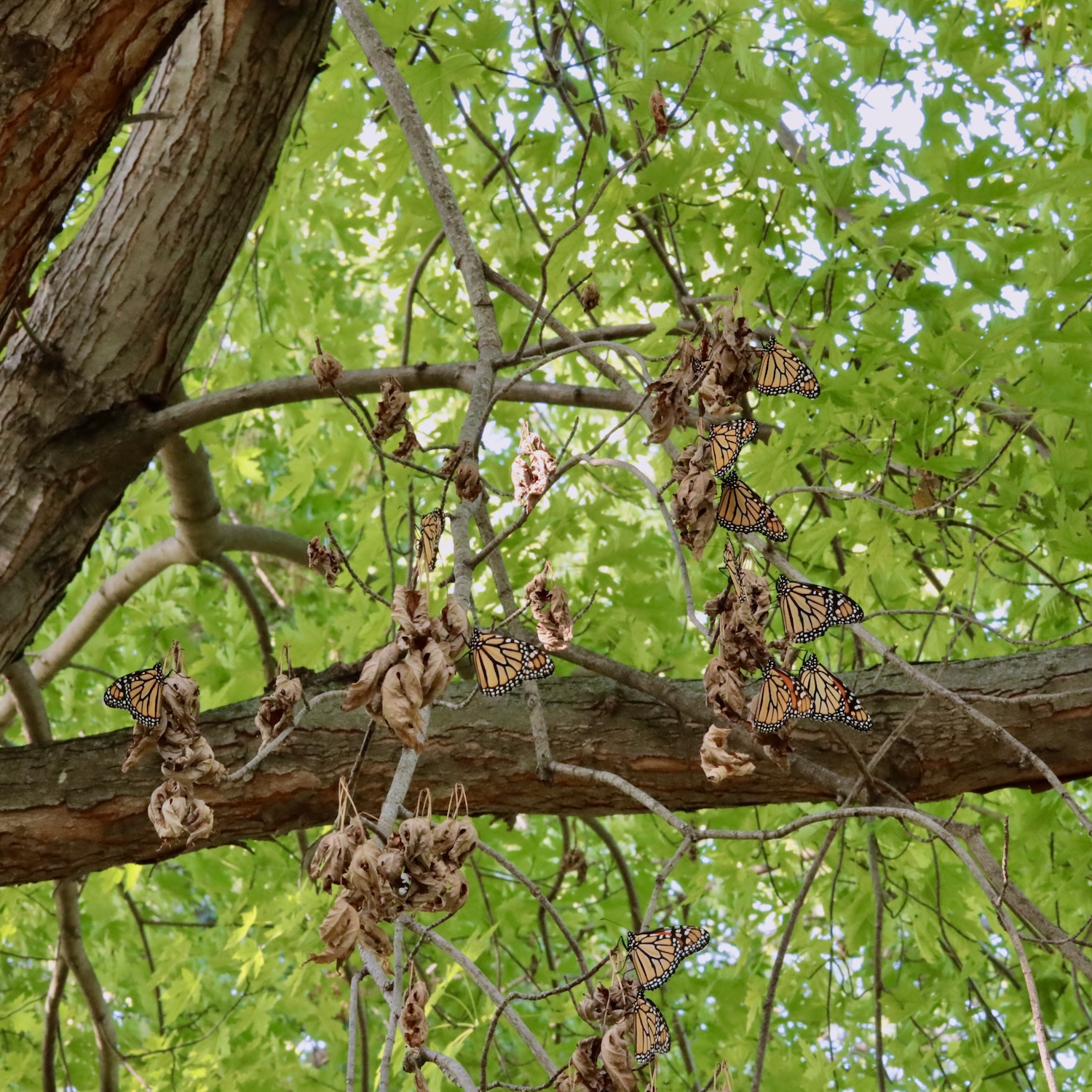
Maybe the monarchs are coming back — we spotted a roosting mass of them across the street. Can you count them all?
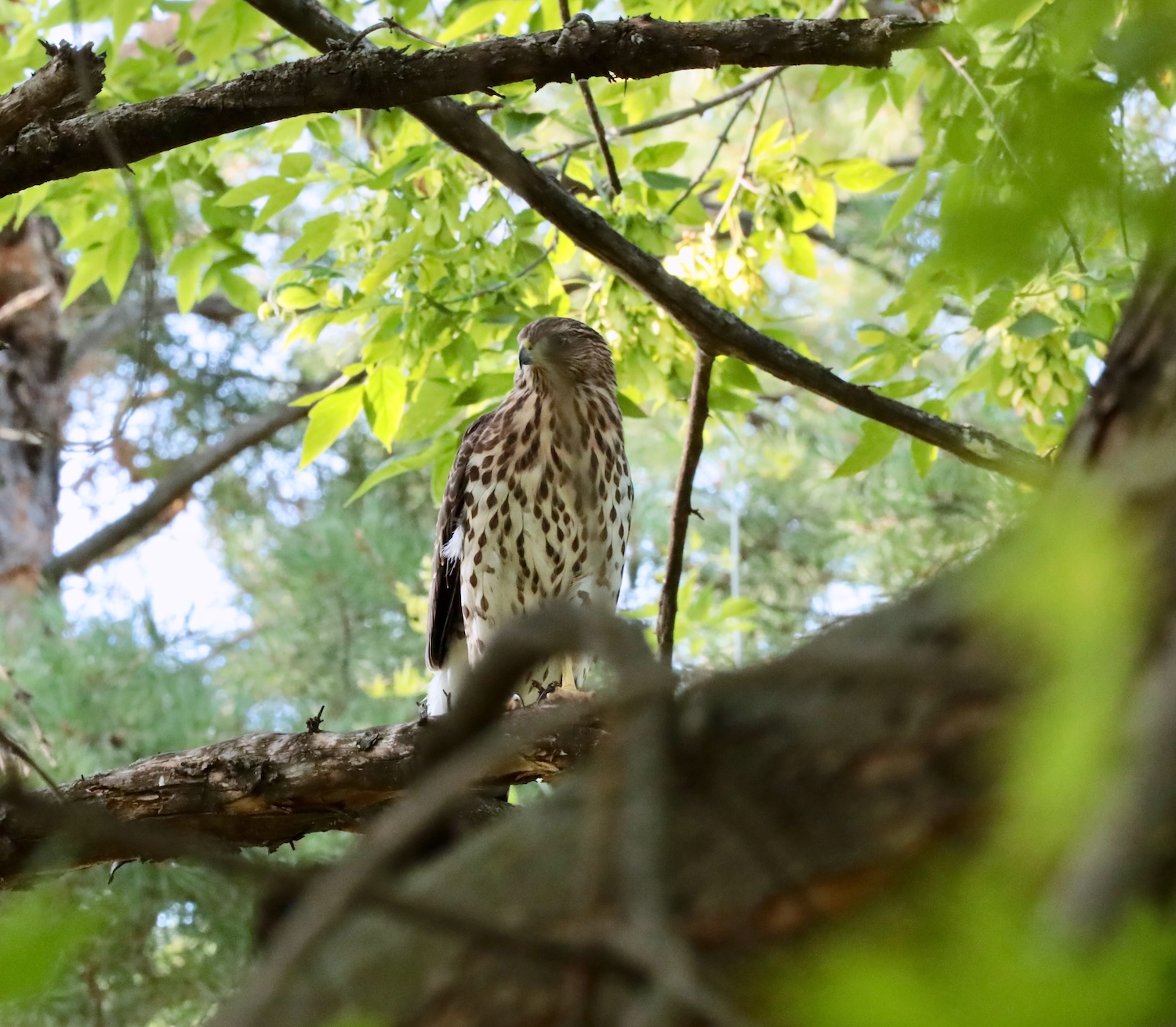
Also, on a branch just above them, there was a Cooper’s Hawk standing guard.

Maybe the monarchs are coming back — we spotted a roosting mass of them across the street. Can you count them all?
Also, on a branch just above them, there was a Cooper’s Hawk standing guard.

You must be logged in to post a comment.
20 years ago, a monarch roost would be so huge as to be nearly uncountable.
Android 16: “Birds are nice”.
.https://youtube.com/watch?v=Z_ZvVHLUkEQ
.
The library of Unseen University, Ank-Morpork’s: ‘Gods, a Spotter’s Guide’ left out Xian spotting.
“Europe’s tallest Virgin Mary statue unveiled in small Polish village” .https://share.google/JC85flKlVhPiv6v86
The interesting part of this is that Lech Walesa is alive and well.
Eleven!
Yeah, I’ve noticed that same phenomenon with birds. Used to see enormous flocks of little birds, then one day I saw such a flock and realized I hadn’t seen a big flock in I don’t know how long. I guess birds and butterflies can’t eat money either
I’ve seen a cabbage white and a monarch in our front yard.
We used to get enormous clusters of monarchs in the winter in a couple of eucalyptus groves a few miles from where I live. The counts (estimates really) were over 100,000 in the 1990s, but have been down to about 2.5k–10k in recent years. We do see more single monarchs in the summer than we used to, but here they only cluster in cool weather in the winter.
https://www.parks.ca.gov/?page_id=541
@ ^ Kevin Karplus & #3. crocswsocks
There’s a name for that phenomenon – Shifting Baseline Syndrome & saw a good meme on fb illustrating that concept a month or three ago.
Source : https://en.wikipedia.org/wiki/Shifting_baseline (Italics orginal.)
We don’t realise how depauperate our modern environments have become because we’re so used to seeing the catastrophic human impacts that we have grown up with and become more and more used to seeing and living in, acclimatised to, not realising what’s already been lost.
The monarchs show up between “No Kings” protests, right?
I looked this accipiter up. Cooper’s hawks eat birds (and mammals), and are known to survive the winter (which you sure have a lot of) by hanging around suburban bird feeders. So she is likely protecting the monarchs from being eaten by your trophy wife’s flying spiders. By having some lunch herself.
My “No Kings” sign has one side that has a picture of a monarch butterfly with the words “the only monarch we need”.
We’re seeing the same here in CA. Pacific Grove has a Monarch Sanctuary, where the butterflies are famous for spending the winter. Their numbers have been dropping by the year. BTW, hawks do hunt in the trees above the clusters of Monarchs, thus providing some natural protection. There are some gorgeous red-tailed hawks who live in the PG Sanctuary.
I think that the TX crazies have destroyed the Butterfly Sanctuary on the border in order to “build that wall”.
It will be amazing if the Monarchs are able to survive.
If some of the estimates I’ve seen are correct, there are now approximately half as many wild animals in toto on Earth as there were when I was born. That depresses the hell out of me.