My wife is working today, and before she left at 6:30am she left me a gift on my desk, a wolf spider.
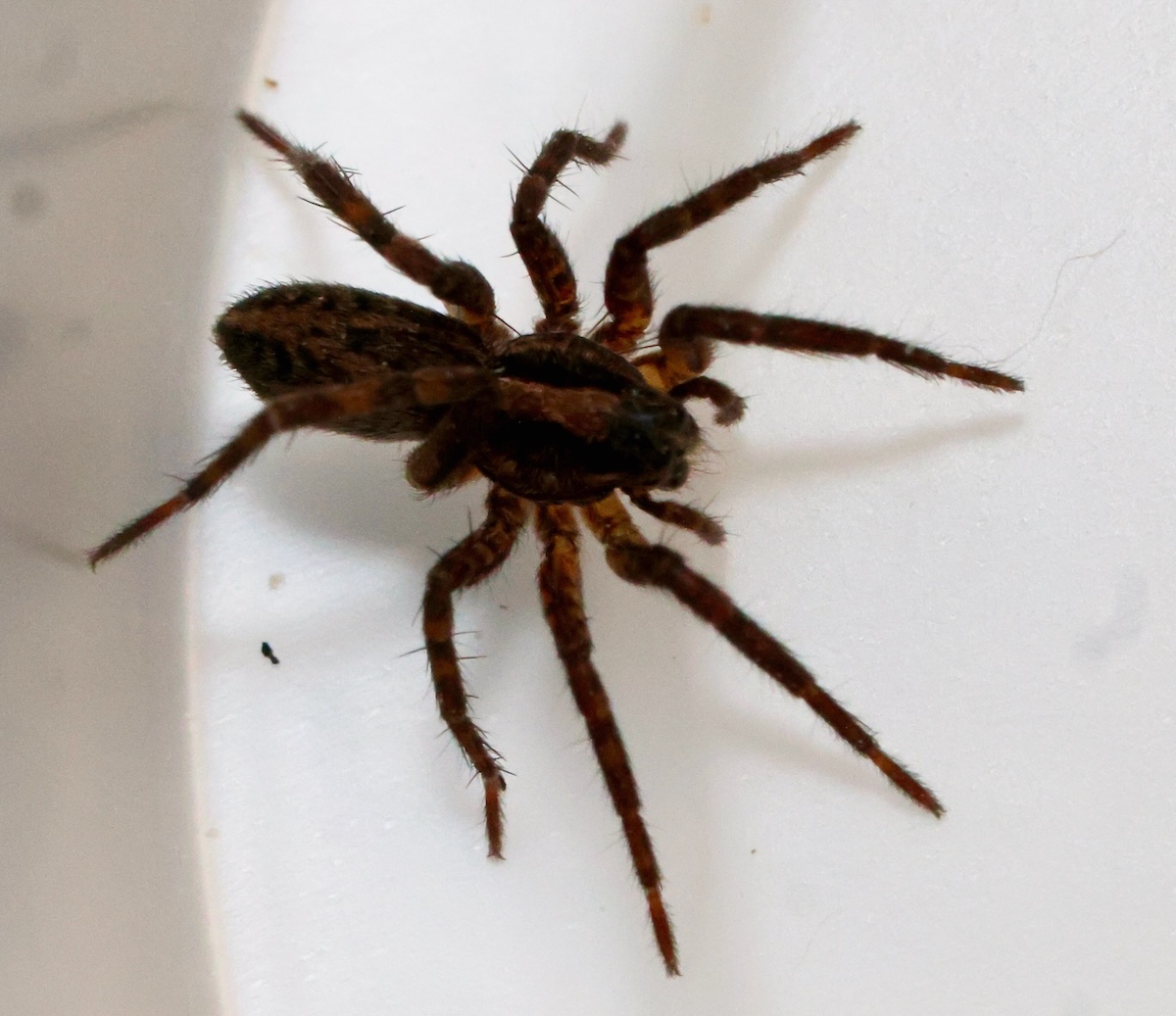
She know me well. Now, though, what do I do to reciprocate? Should I get her a prettier spider? My imagination is limited.

My wife is working today, and before she left at 6:30am she left me a gift on my desk, a wolf spider.
She know me well. Now, though, what do I do to reciprocate? Should I get her a prettier spider? My imagination is limited.

You must be logged in to post a comment.
This reminds me of the old Nat Geo specials with David Attenborough documenting the mating habits of various birds where one would give their mate some shiny trinket or a bug. Here we have Homo Sapiens Morrisona Myersi demonstrating such behavior.
I think you have to catch her a bird. Good luck!
Maybe if you increase the oxygen content in your house, you will soon be able to offer her a really big spider!
Wolf spiders are inherently evil and must be destroyed. And throw Trump in with them.
^ Maybe fill up a spider tank with Wolf spiders and then throw Trump in?
A woman who catches spiders. She’s definitely a keeper.
#5 & 6 What have wolf spiders done to you that you would throw the slime of current humanity in with them?!
Might I suggest getting her a Gigantometrus swammerdami. Its wiki page says “Its venom is not usually lethal to humans because it has arguably evolved to kill its prey by crushing it with its pincers and not by venom” so not really worse than a black widow spider, though it also says citation needed there.
Give her a new bird feeder. :-)
birgerjohansson @3:
Maybe not. Giant spider fossils haven’t turned up. Giant insects and *-ipedes, yes, and while oxygen did boost their size, predators eventually drove down their max size again, even as oxygen increased.
Wikipedia – Mongolarachne
The living Giant huntsman spider, at present-day oxygen levels, can reach a 30 cm (1 ft) leg span.
The 21-inch Late Carboniferous Megarachne was initially misidentified as a giant spider but turned out to be a medium-sized sea scorpion. Oxygen wasn’t implicated.
Convergent evolution of giant size in eurypterids (2024)
Reign of the giant insects ended with the evolution of birds (2012)
I find the expectation of quid pro quo pertinent to presents pernicious.
Someone gives you one, so then you are socially conditioned to respond, and not with a lesser one, either.
(A bit like mandatory tipping; it should be discretionary, not functionally obligatory)
Your evening present:
Kid Rock-Led ‘Rock the Country’ Festival Canceled in SC After Nearly All Performers Pull Out
It may have been cancelled in SC, but the show is still on in Sioux Falls, 2 hours south of me. Oh boy, Jason Aldean!
Vaguely reminds me of an alleged means for some spiders to avoid mate cannibalism:
https://www.science.org/content/article/gruesome-wedding-gifts-keep-male-spiders-being-eaten
Get ten thousand Wolf spiders – I have food for them.
“Shocking Names Appear in The Epstein Files! & A Presidential Poop?!”
| Have I Got News For You
.https://youtube.com/watch?v=teZWDSg9414
She got you a spider. Clearly you must reciprocate by getting her another cat.