Category Archive: exoplanet

Apr 20 2013

Kepler finds exo-solar system full of ancient earth-sized worlds

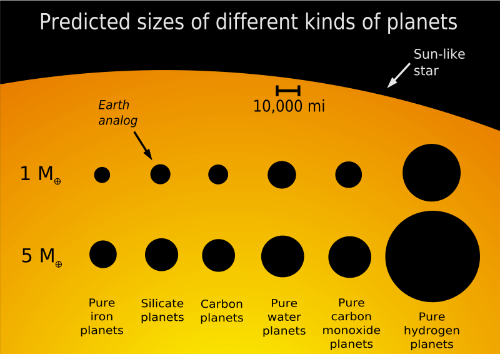
800px-Planet_sizes_svg

  Kepler, the probe that keeps on ticking, has found a well populated exo solar system of a type that could one day be the subject of a focused search by SETI – because there’s another interesting feature here: this star is very similar to our sun, it’s just a little smaller. Oh, and much, much older:

Jan 09 2013

Fomalhaut B, the Zombie Planet, roams around its star once

Space.com — The latest observations of the odd planetary system revealed that the dusty debris disk surrounding the star Fomalhaut is much wider than previously thought. The debris belt spans a vast region of space between 14 billion and 20 billion miles (22.5 billion to 32.1 billion kilometers) around the star. Stranger still: The planet …

Continue reading »

Dec 24 2012

Nearby star is loaded with planets

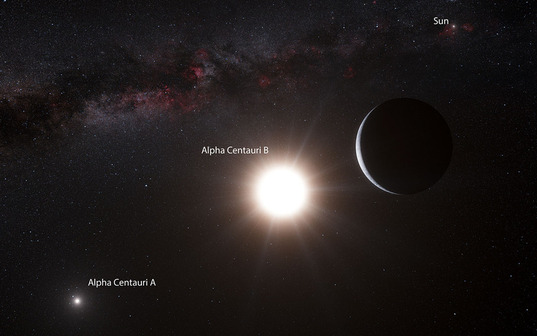
A nearby star that’s been a staple of sci-fi and sci-fact for years may be loaded with planets, including at least one that may be able to support liquid water on the surface:

Oct 18 2012

Earth-sized planet found lurking in data around … Alpha Centauri

Acen

We are living in the greatest age of planetary discovery since Galileo looked at Jupiter, and that age may be on the verge of delivering one of the most exciting discoveries imaginable: earth-like planet[s] around Alpha Centauri, AKA Rigel Kent or ACen. Just the name Centauri brings on dreamy eyes in the sci-fi and space exploration community alike. …

Continue reading »

Jul 26 2012

Kepler spies a new solar system that looks familiar

Kepler30

We’ve found a lot of strange exo-planets in the last two decades, hot Jupiter’s spiraling into their star like giant comets and super earths that could be covered in exotic oceans and ices hundreds of miles deep. Before it’s all over, Kepler may end up being the most famous name in all the Milky Way galaxy! Now …

Continue reading »

Jun 27 2012

New technique may shed light on exotic alien atmospheres and more

eso1227a

Detecting the light from an exoplanet orbiting another star has been compared to trying to see a mosquito on the rim of a headlight ten miles away. But a team of astronomers working in the driest place on earth say they developed a technique to do just that and more:

:)