I had one of these as a kid. Very interesting plant.
Sophia, Michelin-starred General of the First Mediterranean Iron Chef Batallionsays
Looks like a very odd kind of… proto-fern. Thing.
Guh! Stuff like this makes me realise exactly how little I know about plants. Maybe those old university biology textbooks can double as reading material over the next few weeks.
I just checked at ThinkGeek.com; they have the plants in stock (search for “Dinosaur Plant”) at only $7.99 plus shipping. I’m tempted to get one and plant it in a container on my back deck: it would be interesting to see how it handles Seattle’s alternating rains and dry spells.
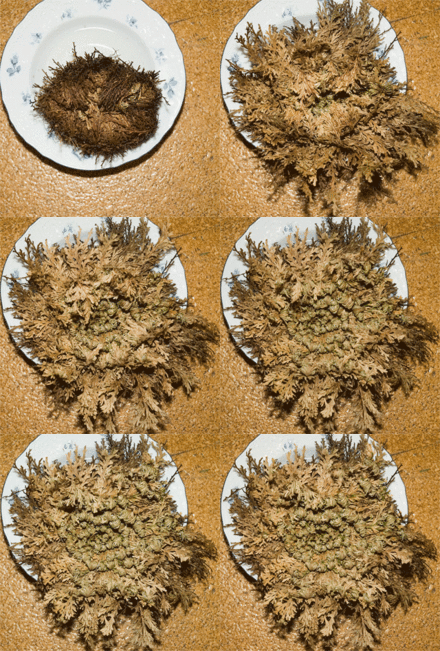
@Sophia – It is neither a fern nor a moss, but somewhere in between (OMG, a missing link!) Specifically, it is Selaginella lepidophylla, native to the Chihuahuan Desert. It’s a remnant of the dominant genus of the Carboniferous, so it is really more proto-coal.
monznisays
Gregory in Seattle– I live in Tacoma, and I have a dinosaur plant (my brother decided that since I kill every plant ever, surely, I wouldn’t be able to kill this one. He’s been right, so far).
Anywho, I’ll tell you, IT MOLDS. I have mine in the kitchen by a window that gets the most sun, and I give it maybe a little less than a cup of water and by the time it’s done sucking all that water up, it’s growing mold across its middle. Then I have to let it dry out for another couple weeks.
Outside? I can’t even imagine. I think you’d have less of a dinosaur plant and more of a mold factory.
@monzni – You sent me looking. Apparently, the plants sold as novelties are usually dead: they will absorb water and turn green, but only through mechanical processes and not because the plant is alive. One blogger described the result as “a lush corpse.” Some people have had luck with rehydrating a plant, taking cutting and getting some of them to sprout. I might try that and see how it works.
David Marjanovićsays
Selaginella
Ooh! A lycopod!
comfychairsays
Do you have to nail it to a tree and wait 3 days?
pipentasays
FEED ME
Ichthyicsays
I live in Tacoma, and I have a dinosaur plant
hmm, take a plant from a dry desert, and put it in a place where the humidity is huge and the rainfall is large… and it molds.
shocker?
Happiestsadist, opener of the Crack of Doomsays
That is so cool! I love the gif.
Sophia, Michelin-starred General of the First Mediterranean Iron Chef Batallionsays
@Gregory
Wow, you mean I wasn’t entirely wrong? YAY! My tiny grounding in high-school biology and casual interest in learning stuff wasn’t totally wasted XD
In other news, that plant is freaking awesome. I’ve always wanted to see a collection of flora and fauna that fall into that dubiously named ‘living fossils’ category gathered into one place. Stuff like these hardy little plants, ginkgo, cycads, horsetails and the rest, with some wildlife habitats containing animals, all alongside fossil examples with dates.
There’s probably heaps of these places, I’ve just never managed to find one and visit it.
It used to be called Lycopodium. The spores of some of these plants are used for flash powder and as fingerprint powder and for lubrication, including for condoms among other things.
Chelydrasays
These novelty dried plants are dead because they’ve been cut from their roots. I’ve seen suggestions that S. lepidophylla normally grows where the roots will remain slightly moist even in drought, so the plant can’t tolerate being completely dessicated.
Apparently some people have had luck rooting living cuttings in soil in a humid enclosure, but only pieces of the plant that are *bright* green when watered are still alive.
I wouldn’t suggest buying these as they are slow-growing desert plants collected from the wild, and I assume cutting the crown from the plant kills the roots that are left behind as well.



Does this mean that you have metamorphosed from your vermiform state?
I had one of these as a kid. Very interesting plant.
Looks like a very odd kind of… proto-fern. Thing.
Guh! Stuff like this makes me realise exactly how little I know about plants. Maybe those old university biology textbooks can double as reading material over the next few weeks.
I just checked at ThinkGeek.com; they have the plants in stock (search for “Dinosaur Plant”) at only $7.99 plus shipping. I’m tempted to get one and plant it in a container on my back deck: it would be interesting to see how it handles Seattle’s alternating rains and dry spells.
@Sophia – It is neither a fern nor a moss, but somewhere in between (OMG, a missing link!) Specifically, it is Selaginella lepidophylla, native to the Chihuahuan Desert. It’s a remnant of the dominant genus of the Carboniferous, so it is really more proto-coal.
Gregory in Seattle– I live in Tacoma, and I have a dinosaur plant (my brother decided that since I kill every plant ever, surely, I wouldn’t be able to kill this one. He’s been right, so far).
Anywho, I’ll tell you, IT MOLDS. I have mine in the kitchen by a window that gets the most sun, and I give it maybe a little less than a cup of water and by the time it’s done sucking all that water up, it’s growing mold across its middle. Then I have to let it dry out for another couple weeks.
Outside? I can’t even imagine. I think you’d have less of a dinosaur plant and more of a mold factory.
@monzni – You sent me looking. Apparently, the plants sold as novelties are usually dead: they will absorb water and turn green, but only through mechanical processes and not because the plant is alive. One blogger described the result as “a lush corpse.” Some people have had luck with rehydrating a plant, taking cutting and getting some of them to sprout. I might try that and see how it works.
Ooh! A lycopod!
Do you have to nail it to a tree and wait 3 days?
FEED ME
I live in Tacoma, and I have a dinosaur plant
hmm, take a plant from a dry desert, and put it in a place where the humidity is huge and the rainfall is large… and it molds.
shocker?
That is so cool! I love the gif.
@Gregory
Wow, you mean I wasn’t entirely wrong? YAY! My tiny grounding in high-school biology and casual interest in learning stuff wasn’t totally wasted XD
In other news, that plant is freaking awesome. I’ve always wanted to see a collection of flora and fauna that fall into that dubiously named ‘living fossils’ category gathered into one place. Stuff like these hardy little plants, ginkgo, cycads, horsetails and the rest, with some wildlife habitats containing animals, all alongside fossil examples with dates.
There’s probably heaps of these places, I’ve just never managed to find one and visit it.
It used to be called Lycopodium. The spores of some of these plants are used for flash powder and as fingerprint powder and for lubrication, including for condoms among other things.
These novelty dried plants are dead because they’ve been cut from their roots. I’ve seen suggestions that S. lepidophylla normally grows where the roots will remain slightly moist even in drought, so the plant can’t tolerate being completely dessicated.
Apparently some people have had luck rooting living cuttings in soil in a humid enclosure, but only pieces of the plant that are *bright* green when watered are still alive.
I wouldn’t suggest buying these as they are slow-growing desert plants collected from the wild, and I assume cutting the crown from the plant kills the roots that are left behind as well.
I was always wondering how you kept them alive later.
Who’d sell something collected wild? Without big studies of population regrowth, that seems unethical.