Pharyngula
Evolution, development, and random biological ejaculations from a godless liberal


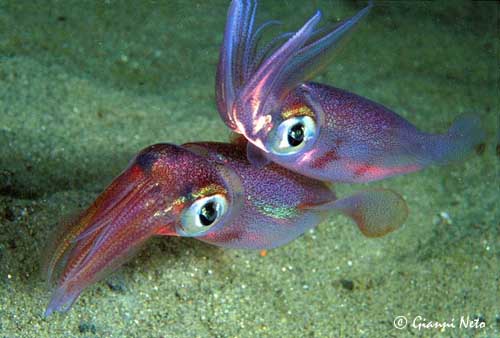
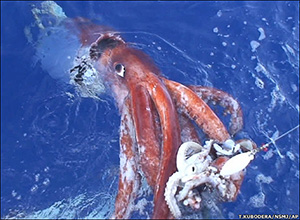
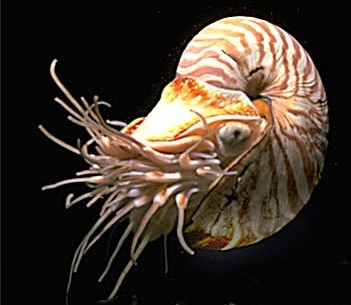
I approve this plan. A number of researchers have gotten together and worked out a grand strategy for sequencing the genomes of a collection of cephalopods. This involves surveying the phylogeny of cephalopods and trying to pick species to sample that adequately cover the diversity of the group, while also selecting model species that have found utility in a number of research areas — two criteria that are often in conflict with one another. Fortunately, the authors seemed to have found a set that satisfies both (although it would have been nice to see the Spirulida and Vampyromorpha make the cut — next round!). Here’s the initial group, table taken directly from the text with the addition of a few pretty pictures for those of you unfamiliar with the Latin names.
Table 1: Cephalopod species proposed for initial sequencing efforts.
| Species | Estimated genome size | Current sequencing coverage | Geographic distribution | Lifestyle juvenile/adult | Research importance |
|---|---|---|---|---|---|
| O. vulgaris | 2.5-5 Gb | 46× | world-wide | planktonic/ benthic | classic model for brain and behavior, fisheries science |
 |
|||||
| O. bimaculoides | 3.2 Gb | 50× | California, Mexico | benthic | emerging model for development and behavior, fisheries science |
 |
|||||
| H. maculosa | 4.5 Gb | 10× | Indo-Pacific | benthic | toxicity |
 |
|||||
| S. officinalis | 4.5 Gb | – | East Atlantic- Mediterranean | nectobenthic | classic model for behavior and development, fisheries science |
 |
|||||
| L. pealeii | 2.7 Gb | – | Northwest Atlantic | nectonic | cellular neurobiology, fisheries science |
 |
|||||
| E. scolopes | 3.7 Gb | – | Hawaii | nectobenthic | animal-bacterial symbiosis, model for development |

|
|||||
| I. paradoxus | 2.1 Gb | 80× | Japan | nectobenthic | model for development, small genome size |
 |
|||||
| I. notoides | – | 50× | Australia | nectobenthic | model for development, small genome size |
 |
|||||
| A. dux | 4.5 Gb | 60× | world-wide | nectonic | largest body size |
|
|||||
| N. pompilius | 2.8-4.2 Gb | 10× | Indo-Pacific | nectonic | “living fossil”, outgroup to coleoid cephalopods |
 |
|||||
It’s a nice balance. There’s a pair of related octopus (Octopus vulgaris and Octopus bimaculoides) and a pair of related squid (Idiosepius paradoxus and Idiosepius notoides) so common features to each group can be recognized, a couple of model organisms used in neuroscience (Loligo pealeii) and developmental biology (Euprymna scolopes), and a couple of just plain cool animals, the blue-ringed octopus (Hapalochlaena maculosa) and the giant squid (Architeuthis dux). And of course you have to include a cuttlefish (also an important research model), and a nautilus for the outgroup.
It’s going to be challenging — cephalopods are like us in having large, sloppy genomes with lots of repeats and accumulated junk.
Like all good science, too, this is going to be open and accessible.
We therefore propose to adopt a liberal opt-in data sharing policy, modeled in part on the JGI data usage policy, which will support the rapid sharing of sequence data, subject to significant restrictions on certain types of usage. Community members will be encouraged to submit their data, but not required to do so. We plan to provide incentives for this private data sharing by (1) developing a community data and analysis site with a simple set of automated analyses such as contig assembly and RNAseq transcript assembly; (2) offering pre-computed analyses such as homology search across the entire database; and (3) supporting simple investigative analyses such as BLAST and HMMER. We also plan to provide bulk download services in support of analysis and re-analysis of the entire dataset upon mutual agreement between the requesting scientist and the CephSeq Consortium Steering Committee (see below), who will represent the depositing scientists. Collectively, these policies would provide for community engagement and participation with the CephSeq Consortium while protecting the interests of individual contributors, both scientifically and with respect to the Convention on Biological Diversity. Policy details will need to be specified and implementation is subject to funding. Our intent is to build an international community by putting the fewest barriers between the data and potential researchers, while still protecting the data generators.
I also like that there’s an appreciation of the importance of wider communication of this information beyond the sphere of nerdy genomics researchers and obsessed cephalofreaks. The authors recognize that cephalopods are important barometers of climate change and the ocean environment, and that people are just plain fascinated with them.
People are fascinated by cephalopods, from Nautilus to the octopus to the giant squid. The coupling of genomics to cephalopod biology represents a fusion of two areas of great interest and excitement for the public. This fusion presents a tremendous educational platform, particularly for K-12 students, who can be engaged in the classroom and through the public media. Public outreach about cephalopod genomics will help build support for basic scientific research, including study of marine fauna and ecology, and will add to the public’s understanding of global changes in the biosphere.
Unfortunately, this short paper is a little thin on details of particular interest to me: “Education and outreach will be emphasized for broad dissemination of progress in cephalopod genomics at multiple levels, including K-12, undergraduate and graduate students, and the public at large.” I’d be curious to see more about the how of doing that, but I’m glad it’s on their list of priorities. Part of their plan is building a website, but unfortunately when I just checked it wasn’t yet available.
Albertin CB, Bonnaud L, Brown CT, et al. (2012) Cephalopod genomics: A plan of strategies and organization. Stand Genomic Sci 7:1.

Probably. ProjectEvoMap is collecting data on where researchers in evolutionary biology can be found. It’s a little sparse right now — I know there’s a lot more research groups than appear on it so far — so you might want to add yourself (if you’re doing evolution research!) and help populate the data set.

Evolution News & Views, the DI’s Pravda, did something good for a change: they alerted me to the availability of BBC 2’s show, Secret Universe: The Hidden Life of the Cell. Here it is!
Of course, you can see why the DI would like this video, since it uses all their favorite buzzwords like “complexity” and “machines” to describe processes in the cell. And it’s true that the cell is complex and contains complex machinery, but that, as I’ve been trying to get through to them for years, does not imply that they did not evolve, because evolution routinely generates complex machines. The evolutionary explanations given are not “spin”, as the DI explains, but good answers for the origin of these processes.
One major caveat: the star of this show is the CGI animation of the molecular activity of the cell, and as usual, it portrays everything as excessively linear and deterministic, and the necessary omission of water from the animation grossly skews the chemistry. One of the scientist narrators, Bonnie Bassler, does briefly explain that everything is stochastic, with molecules bouncing about randomly rather than zooming through empty space directly to their destination. But otherwise, it is a nice basic and rather cartoony overview of what goes on in a cell.

Sean Carroll puts limits on reality. Good stuff; no gods, no magic powers, no life after death…just us as part of a universe with rules.

You should go read this excellent post on Technosociology, which makes two points, one that I’ve written about before and one that I’ve been meaning to write. The first is a rebuke to the free speech fetishists of the internet who regard their ability to shout at someone as an absolute right rather than a responsibility.
…the common equation between not wanting governments to regulate offensive speech on the Internet and the position “therefore everyone should be allowed to post whatever they want” is not just wrong, it is likely going to be the end of the kind of free speech we want to protect because sooner or later, most governments who do want to ban speech on the Internet for political reasons are going to be able to legitimately point at these sites and most parents and other sane people will come down for strong regulations on the Internet. Yes, I believe that these regulations will then be used to crack down on “unwanted” political speech but be assured that most people in the world, including the United States, will choose “less speech” criticizing the powerful if they are convinced that without such restrictions, there is no way to stop predation of children and violating women’s dignity and privacy from proliferating on mainstream sites. (There is high-quality poll data from the General Social Survey which confirms this–free speech as an absolute value is a minority position in the United States). It is up to the Internet community to make this a false equivalence and this requires that “but it’s free speech” is not the first, intermediate and last and only phrase we utter when faced with offensive or intimidating content.
The internet has an abundance of freedoms and a dearth of accountability and responsibility. Somehow we’ve acquired the notion that because it’s possible to create throw-away accounts and use pseudonyms, it is therefore good to create them at will and discard any sense of identity while still pretending to be a good faith contributor to online discussions. And then we get people who are outraged that you won’t listen to them when they rant under an obscene pseudonym that they will change again when you ignore them; and in fact, they get particularly outraged when you do ignore them, because they think they have the right to speak while everyone else has the obligation to listen. The petty obsessives of internet free speech all have a bit of Dennis Markuze in them.
And further, the Violentacrez case has highlighted another mistaken idea: their privilege to abrogate all other rights held by others in the name of their right to free speech. Suddenly, anonymity also becomes their right and no one else’s — they can splatter the faces of teenagers in their underwear on the web to serve their right to masturbation material, but if you dare to reveal that they are human beings with identities in the “real” world, you’re violating their rights.
That’s the second thing I appreciate in this essay. It’s time to stop thinking of stuff we say on the internet as somehow not part of the real world. For many of us, the bulk of our communication with others is through this medium; we have more friends who we know well and talk to regularly here on our screens than we meet face-to-face.
Another variant of the argument has been that “it’s just the Internet.” Chill. This, of course, rests of on something I’ve long been railing against, the notion that the Internet is somehow not real, that it’s virtual or that it is “trivial.” (My friend Nathan Jurgenson coined the phrase “digital dualism” to refer to this tendency). In fact, a reddit contributor makes the argument that Gawker, by publishing the real name and location of the person behind “creepshot” did real harm they have “purposefully taken this off the internet and into real life” and this affects “violantacrez’s future employment and immediate safety.”
“JoelDavis” on Reddit: The reason that axiom [It’s Just the Internet] has taken hold is because the idea is that even if a website gets bogged down in even the worst trolling imaginable, all you have to is realize the website’s no longer worth going to anymore and stop going. Problem solved. With this, a formerly anonymous reddit user has to worry about physical attacks in real life by someone who would view a person like that as a target. In other words, Adrian Chen has purposefully taken this off the internet and into real life so it’s no longer “just the internet.” This affects violentacrez’s future employment and immediate safety. All so Chen could make some money, and no other reason.
This snippet is very revelatory in how it reveals how the construction of what is real, trivial or virtual is indeed an assertion of power & privilege. “JoelDavis” considers predatory photos of children to be “just the Internet” but a person’s name –just their name linked to real acts they committed—to be “real life.” (I again refer to Lili’s great post about what this reveals).
It’s an odd phenomenon, too. When the printing press allowed newspapers to appear, when people sent correspondence around the world through the mail, did anyone suggest that this process was insignificant and that the discussion was less “real” than talking? I don’t think so. I have the opposite impression, that people felt that writing made the ephemera of conversation have more substance and permanence — the act of weighing words carefully and making the effort to lay them down in print made them more powerful, and publication was a conjuration of great power.
The internet made publication trivial. It apparently diminished the substance of communication — no more crackling bits of paper that pile up on your desk. Media like twitter and facebook encourage you to blurt casually, with little attention to the words you write. It leads to the illusion that communication online is as insubstantial as the conversation you had with your cat.
But it isn’t. In the vast howling noise of the internet, what you say has become more important — voices that babble and shriek don’t rise to prominence and become regular draws (they can be brief freak show sensations, though, and we do see a tendency for voices of minimal talent or intelligence striving to become louder through more extreme viciousness or stupidity). Because something is written in the intangible pattern of electrons doesn’t make it less substantial, but instead makes it easier to distribute, copy, and archive — you could burn an incriminating letter, but once it is on the internet, it is spread far and wide and, while not completely unerasable, is harder to remove…and actively trying to remove something tends to make it more noticeable and more widely disseminated. Meanwhile, I’m finding hardcopy to be less useful — I get dunned with so much junk mail, all those crackling bits of paper that offer me new credit cards at low low rates and advertisements for big screen TVs on sale and sweepstakes I must enter to win millions of dollars, that I increasingly devalue stuff that is written down. I used to photocopy journal articles every week and file them away in a cabinet — I’ve still got a huge pile of these things from 20-30 years ago — but now I rarely print anything, it’s far more useful to have a searchable, indexable, archived PDF that I can also instantly email to students and colleagues.
Just because some old fogies don’t comprehend or appreciate the volume and content of all the communication that goes on by this medium doesn’t make it less real. The internet is not the place where a billion ghosts chatter over matters of no consequence — it’s the new reality, the tool that many of us use to make connections that matter. It’s the greatest agent of information and communication humanity has yet invented, and it deserves a little more respect than dismissal as something “unreal” where trolls can roam unchecked.
(via Stephanie Zvan)

(This is part of a list of bad arguments I heard at the Texas Freethought Convention.)
I save the worst for last: the pro-choice (Matt Dillahunty) vs. “pro-life” (Kristine Kruszelnicki) debate on Saturday. Poor Ms Kruszelnicki, a recently declared atheist who opposes abortion, was hopelessly outclassed and outgunned at every point, and relied entirely on bad arguments.
Dillahunty went first, and he staked out a clear and narrowly focused position: that the personhood or “human” status of the embryo/fetus were totally irrelevant to his argument, and that he was building his case entirely on the right to bodily autonomy of the woman. Even if the fetus was judged entirely deserving of consideration as a person (a point he personally does not accept), it would not matter: a woman must retain the right to control her own body.
So what does Kruszelnicki do? Announce right at the beginning that her entire argument was that the embryo is fully human from the instant of conception, and therefore abortion is wrong. She made it clear that she opposes a whole gamut of basic rights: birth control methods that prevent implantation are wrong, because that’s just like strangling or starving a baby; no abortion in cases of rape or incest, because the baby doesn’t deserve punishment; she did allow for abortion in cases that threaten the life of the mother at times before fetal viability, simply because in that case two fully human lives would be lost.
So right from the beginning she was building an argument that entirely ignored anything Dillahunty would say, while Dillahunty would spend the next hour and a half directly refuting the relevance of her case. It was a humiliating rout.
What made it worse, though, was the quality of Kruszelnicki’s arguments. Would you believe that at one point she showed us a grisly video of the outcomes of abortions? Bloody severed body parts, slack gooey limp bodies, puddles of blood with twitching bits of flesh, that sort of thing. There were several different reactions from people I talked to afterwards. Many were just repulsed, and had closed their eyes or walked out of the room when it was shown (oh, yeah, that was an effective tactic in a debate: disgust the audience). Everyone was appalled that such a blatant and logically irrelevant emotional appeal was being made; that’s another brilliant move, insult the intelligence of the audience by assuming that they won’t be able to detect the patent emotional manipulation being practiced.
I had a somewhat different response. I’ve seen surgeries (and done surgeries on animals), and let me tell you, they are unspeakably violent: bodies being cut into and violated, bones broken and cut, torsos cracked and wrenched open — from a naive perspective, every surgery, no matter how benevolent, is terrifyingly brutal. I was unimpressed by a movie that showed the reality of our biological condition. We are full of blood and slime and squirming guts and twitchy tissues, and you aren’t going to sway me by telling me that an invasive surgical procedure is messy and gross.
But the part that really annoyed me is that she repeatedly announced that SCIENCE had declared the conceptus at the moment of fertilization to be fully human. To demonstrate this, she cited several familiar names: O’Rahilly and Moore, for instance. These are people who have authored descriptive embryological texts that take a phenomenological approach, describing the different stages of development. They are not sources that are good for understanding mechanisms or processes, and they definitely do not represent a deep modern understanding of the progressive and emergent properties of development. What she was relying on is that these kinds of texts will state simple facts, like that fertilization produces a zygote with the complete human genetic complement, which they’ll summarize with some shorthand statement that it is a human embryo (rather than a mouse, or a frog, or a fish). From this, the anti-choicers have spun out unwarranted extensions of reductionist statements to claim that they are making definitive statements about personhood or that they’re discussing something as complex as humanity rather than a minimalist statement about genetics.
And they’ve been doing this for decades. That Kruszelnicki is an atheist does not change the fact that she’s using a ridiculous canard that has similarly been used by religious anti-abortionist zealots; she was basically lying about what deveopmental biologists say, and trying to use an unfounded argument from authority as the basis of her debate performance. Bad move.
I actually got to ask her about that. I told her that she was using old descriptive sources and inappropriately extending the implications; I asked her if she had more modern sources with a little more depth, and she waffled and told me that she had lots of recent papers on the subject and that embryologists all agreed on this point (obviously, no they don’t) and she waved a few papers in my direction.
I went up to her after the debate and asked if I could see those sources she waved at me. Suddenly, she couldn’t find them any more. She mumbled something about a “white paper” by an author whose name was unclear, and that she’d find it for me later. She never did, although she and I were both there at the conference for at least 3 more hours. I also mentioned that a “white paper” is not the same thing as a scientific reference; it would be an advocacy statement from an organization with an agenda, and would have very little weight with me.
Here’s the truth: SCIENCE does not make a definitive statement about the moment at which personhood is acquired. It is a product of a complex process with multiple inputs and interactions and no sharply defined transitions that can be pinned to anything as difficult to define as consciousness, identity, and independence. All we can say is that none of those things are there at conception, and all of them are there are sometime after birth, and that anyone who tries to tell you that they are all there unambiguously at some discrete instant in development is lying to you.


