I had to make a video when the blog was down.
Transcript below the fold.

Yuck, I had my head deep in the bowels of the beast. I finally got BlueHost to accept me as the Man in Charge, but it still wasn’t working, and they told me I had to work through Digital Ocean (yeesh, boy is that complicated) and get them to tell cloudflare to accept our domain address…and it was looking like a nightmare. And then I suddenly look up and it was working! For now!
This job is so easy. I have no idea what I’m doing.

I come from a working class family. I grew up watching my father struggle, often working two jobs, just to make poverty level wages. He’d come home with calloused hands stained with oil and grease, and would be too tired to play with his kids. My mother was a full-time homemaker, with 6 kids, and she worked just as hard — and later, when I was in high school, she also took on a full time job. They both worked at Boeing, a capricious employer, that would lay them off if they didn’t get a contract one year, and then they’d have to scramble to find new jobs. They managed to keep us kids fed and clothed, but I don’t know how, as I managed to crawl up to the middle class, and I wouldn’t have been able to cope with the stress and responsibility of just 3 kids.
And that is why I can never support any Republican, and way too many Democrats, because they’re the ones making the smug statements Zinn describes here.
“I’ve always resented the smug statements of politicians, media commentators, corporate executives who talked of how, if you worked hard you would become rich. The meaning of that was if you were poor it was because you hadn’t worked hard enough. I knew this was a lie, as I saw my father and millions of others, men and women who worked harder than anyone, harder than financiers and the politicians,- harder than anybody, still struggle in poverty.”
– Howard Zinn.
Throw the rascals out in November.


You may recall that last Spring, a chemistry professor at Macalester College in St Paul, Minnesota was accused of urinating on student belongings, and was dismissed from his position. His troubles have greatly increased: he has been formally charged with a felony.
There has been a confession.
Urination had been found in trash cans, individuals’ water bottles and inside professors’ decorations, the state criminal court document said.
Investigators determined Fischer was responsible for the series of urine-related cases, and he resigned from Macalester College, where he had spent 25 years working.
Authorities confronted Fischer before charging him, the court document said. He allegedly shared that “during the last one and a half to two years he developed a habit of urinating in a cup and disposing the contents in either trash cans or lab sinks around campus”, according to the document.
Calling it a “habit” doesn’t make it better.
Hot tip for any young people hoping for a career in the sciences: having a criminal record of peeing all over your workplace is the kiss of death for your employment prospects. Dr Fischer has flushed away his 25-year teaching career with his “habit”.


In a horrible, tragic incident, a man with a history of mental illness climbed a fence at a South Yorkshire zoo and walked up to a Siberian tiger, which did what a tiger does. It swiftly killed him. His family is grieving. It’s all over the news — this was such a rare and unusual event.
Our mentally ill president, who watches television constantly, saw the video, and rather than doing something anywhere close to presidential, or what a sober adult would do, like expressing his sympathies, chose to eruct on social media.
Donald Trump reposted a silent 41-second video apparently showing the attack on his Truth Social account on Tuesday, captioning it: “Don’t ever mess with nature! President DJT.”
A minute later, he posted a 24-second video compilation of lion attacks on people, this one accompanied by jaunty music.
So presidential. So dignified.
Can someone take him to the zoo and leave a few cage doors unlocked?
“President Trump posted a wild AI-generated video late Tuesday that showed him chasing, tackling and befriending a Siberian tiger, hours after he had warned his Truth Social followers: ‘Don’t ever mess with nature!’” the New York Post reports.

OK, so yesterday morning I posted that ridiculous AI video of an ark excavation. How about another stupid video?
That’s straight from Answers in Genesis. It’s official dogma at AiG that all the dinosaurs were vegetarian. And they still rake in hundreds of thousands of dollars from the rubes.
Meanwhile, the fully articulated and intact skeleton of Cuvier is spinning in his grave.

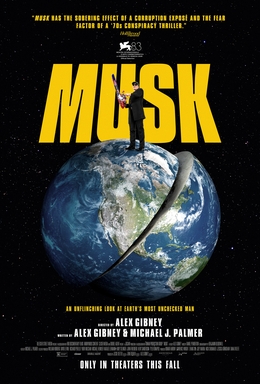
This sounds like a fascinating, factual documentary.
Oscar-winner Alex Gibney’s 4-hour documentary about Elon Musk may be the most important film of the year. After the first two hours, audiences will learn that he is better at engineering everything around him to suit his ego and his bank account than he is at engineering his many products. We see the damage he has inflicted, including horrific dash-cam footage of fatal accidents involving self-driving cars. Many who watch it will be rattled but consider it as remote if they don’t buy a Tesla or have stock in SpaceX.
The second two hours are when it gets really scary, because that is when audiences learn how he affects every one of our lives, in the United States and throughout the world. Gibney asks, “How could Musk assume so much power and why had we given it to him?”
Musk hates it. What’s really scary, though, and demonstrates the chilling effect billionaires have on our lives, is that it’s already being censored.
The documentary is facing more than a war of words from Musk, however. The film’s distributor, Bleecker Street, has not been able to run paid advertisements on several major social media platforms. As of Sept. 25, YouTube, Meta, TikTok and X had all refused. YouTube, where the trailer had been available through regular channels, and Meta have since reversed course, saying that it had been flagged for “political content.”
There are also concerns about whether “Musk” will eventually land on HBO as originally planned in the aftermath of the Skydance merger, the new entertainment giant created by Paramount’s takeover of Warner Bros. Discovery. CEO David Ellison’s father, Larry Ellison, is friendly with Musk.
WOoooOOOOOooooo! Who needs Hallowe’en when the ghouls have taken over?
If that’s just too depressing for you, here’s a comic to cheer you up.

Oh, what a happy fantasy!
(There’s a whole series of anti-billionaire comics at that site. Expect the creator to be censored soon.)

Trump has been raging against Ilhan Omar for years, and now he has had her home raided…on suspicion of what? It’s not at all clear. There was no reason to think a sitting congressperson was somehow involved in any kind of criminal activity, and no evidence of such has been presented. It’s nothing but targeted harassment driven by a fat old pig’s bigotry.
And Ohio crowd chanted “deport” as President Donald Trump blasted Rep. Ilhan Omar, D-Minn., during a campaign rally speech on Monday night.
Trump held the rally in Youngstown, Ohio, just hours after federal agents executed a search warrant on Omar’s home in relation to a criminal investigation.
Trump took aim at Omar and the wider Somali community in Minnesota.
“She’s a disaster. She comes in from a country without laws, without police, without military. All they do is shoot each other, and she comes into our country and she says, ‘I have a constitutional right,'” Trump joked. “She’s got a constitutional right. She’s telling us about the Constitution and she’s coming from one of the worst countries anywhere on the planet.”
That’s the real reason for the raid: he just hates all people from a country in Africa. This is criminal prejudice and an abuse of federal law enforcement for a partisan purpose. Arrest Trump, not Omar.
I’m not in her district, but if I were, after this I’d be even more committed to voting for her, and I’m also more committed to seeing Trump impeached. It’s too bad congress is stacked with corrupt and stupid Republicans so that won’t happen.
He should have been gone after this blatant criminality.

I can’t believe that they found boxes of stolen classified documents in Ilhan Omar’s bathroom?
Oh wait, that was Trump’s public bathrooms in Mar-a-lago.
Just in case you were wondering what the difference between fascism and investigating actual crimes looks like.

I’m thinking that most probably aren’t stupid enough to fall for this, so maybe this is the floor.
That comes from a Muslim channel that has other stupid AI-generated videos, like this. All they tell me is that you have to be seriously deluded to accept any of the claims of religion.


I was trying to think of romantic dates to go on with my wife, and I came up with a brilliant idea: I should take her out to Shakey’s Pizza. That was our standard destination back in the 1970s, go out to Shakey’s, sit in a booth with a pineapple pizza and a diet coke, and talk for hours. Yeah, that’s the ticket, an evening of nostalgia and sentiment and good memories.
One problem, though. When we weren’t looking, the entire chain shriveled up and died. There’s a cluster of them still alive in Southern California, and apparently they’re thriving in the Philippines, but none in Minnesota, and only one left in Washington state, in Pasco. Near as I can tell even the old location in Kent, WA has been replaced with a Chuck E. Cheese. I guess I’ll just sit at home, looking dour. See, this is why old people have a reputation for crankiness.
What do the teenagers do nowadays on a Saturday night? What did you do, once upon a time?

