
She’s beautiful.
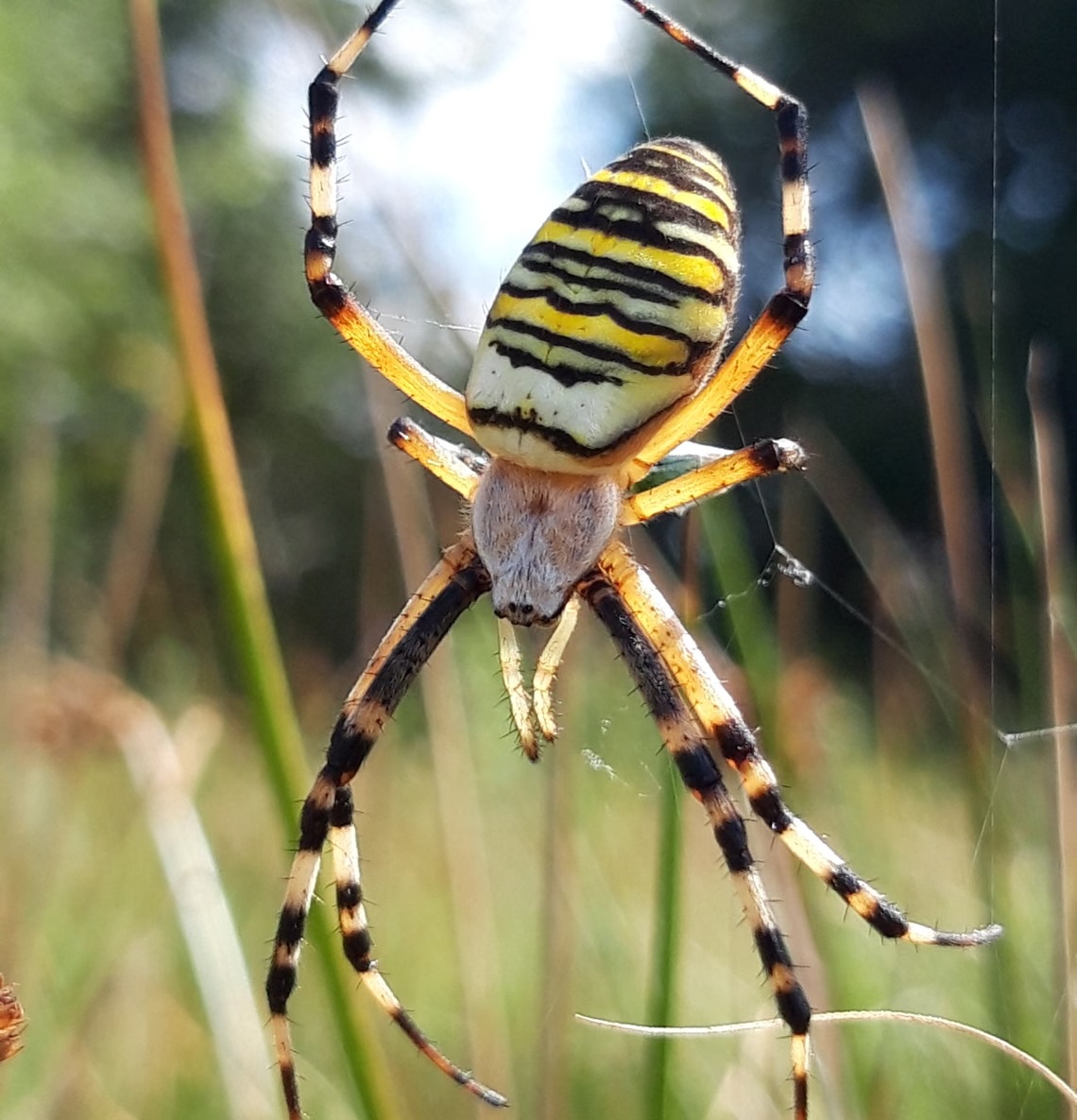
Argiope bruennichi
The colloquial name is the wasp spider, and they’re not normally spotted in Cheshire, but one was found in a recent survey. There is some concern when a non-native species shows up — is this a sign of climate change? Also, English northerners are not accustomed to these big honkers.
“You know your big, chunky house spiders – the ones you think are massive and frighten the life out of you in your living room? A female wasp spider is probably a bit bigger than those,” said Scott Wilson, head of field programmes at the zoo.
I’d be thrilled and surprised if I saw a wasp spider — they’re native to Europe and North Africa, and I haven’t seen any here. We instead have two equivalent native species, Argiope aurantia and Argiope trifasciata (we have a lovely A. aurantia living in our backyard right now). Maybe they are a sign of a warming trend in the UK, but they are quite nice animals, inoffensive and helpful in clearing out your grasshoppers and crickets. They just look a little intimidating. Don’t be frightened.

Found one recently in my corner of Germany. Seems they weren’t exactly unknown in the country but limited to a few warmer areas, which here definitely isn’t. Wasn’t.
I vividly recall a plate in the local Karlsruhe Museum of Natural Knowledge, where it stated in no uncertain terms that global warming does drive a northward migration of spider species, as well as (sadly) an overall decline of biodiversity.
Chances are your specimen is there due to global warming.
We have lovely Argiope keyserlingi here in Sydney and call them St Andrew’s Cross spiders because of the stabilimentum it puts in its web. They’re smaller than your example (and especially considering the size of the other spiders we live with in Australia!
As a lifelong arachnophobe, I have to admit this is one beautiful spider. I only wish they were friendly to humans, like cheetahs, purring as they crawled up my leg.
weylguy, you’re in luck!
https://www.smithsonianmag.com/smart-news/listen-dulcet-purr-wolf-spider-180955482/
Not uncommon in the south of England, however, have seen one in Dorset