
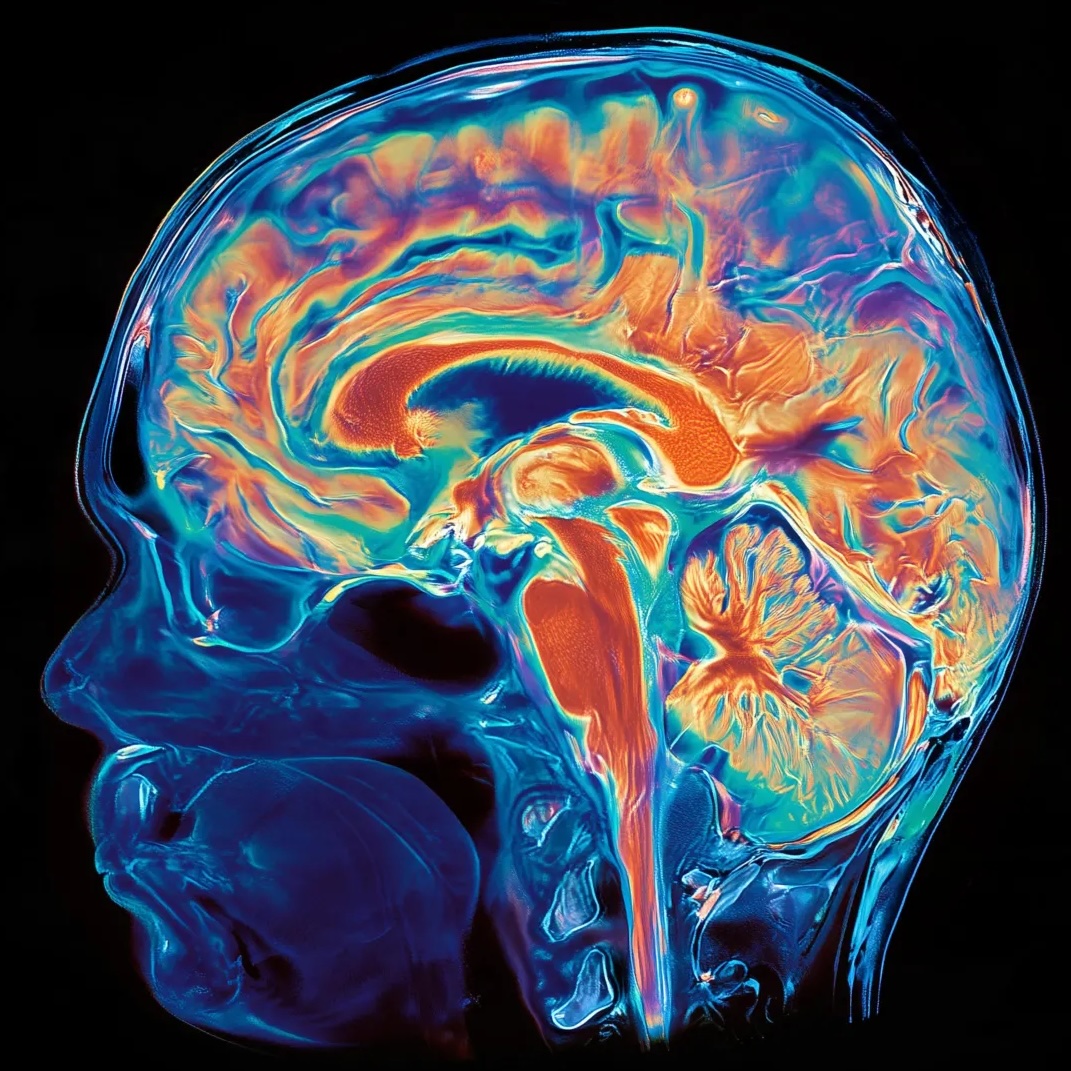
This figure, used by ScienceDaily, is totally irrelevant to the topic and has a caption that doubles-down on the nonsensical part of the article: “The human brain may actually be two ancient nervous systems fused into one, a discovery that could transform how scientists study brain development and devastating neurological diseases.”
I guess I should address this, since so many people are emailing me about it. There is an article titled “Stanford scientists discover the human brain may actually be two separate organs”, which takes a basic reality of developmental biology and blows it up with a ridiculous conclusion. No, your brain is not two separate organs, any more than your liver is multiple organs because it contains multiple tissue types — that, for instance, there are different lineages of hepatic progenitor cells in liver differentiation that produce hepatocytes and cholangiocytes. We take this for granted; development is a hierarchical, branching process, and so yeah, we see sequential separation of developmental lineages. It’s to be expected! We don’t promote the work by claiming various organs are in fact multiple organs.
The sensationalist spin is being placed on competent work that traces markers that distinguish regions of a single organ, markers that have a deep history in both development and evolution. Calm down. This is a routine observation that does have some practical uses.
The weird twist was put on it by the Stanford press office and ScienceDaily. The actual paper (which is fine) it is based on is titled “Two parallel neural ectoderm progenitors contribute to the developing brain”, a much more sensible and accurate title, although it also claims that the brain is a “composite organ”, which is a little bit silly. Every organ is a composite organ in some sense. We are a multicellular gemisch with some regional organization.
Development is hierarchical and sequential. It’s disappointing that this isn’t taught in grade school.

THANK YOU PZ!!
I have read the paper, which is very good, but I have been having trouble with the “two brains” spin. Even the acorn worm has the same juxtaposition of Otx2+ and Gbx2+ progenitors that we do, and there’s no jellyfish in the pre-publication version that I read.
But without the hype, I might have missed this very useful paper altogether.
C. elegans rule
I would like to think I helped goad you into this post, but thanks for bringing it up regardless. I had run across the research article pre-print but haven’t read it yet. The abstract seemed more mundane than the press release, which really bugged me with this:
Does the research article navel gaze so anthropocentrically like that? And even the hyped release we then see the research was done in mice who have the same basic noggin architecture and that the “two-brains” split is rooted quite deeply in chordate phylogeny. Distinctly human?
I did take a few snarky shots at the also ridiculous triune idea that just won’t die because lizard brain evokes a certain something for people I guess. The fore/mid and hindbrain “split” precedes “reptiles” (or amniotes) so…
The practical medical implications of this research finding may help with better understanding spinal muscular atrophy and amyotrophic lateral sclerosis while the phylogenetic aspects may need more reflection and teasing out.
I didn’t read the paper. I saw the movie.
The Man with Two Brains (1983)
Here’s the preprint if interested:
https://www.biorxiv.org/content/10.1101/2025.07.02.662771v2
I’m getting cynical about “science news”. I saw that Two-Brain headline and said to myself, “I bet that’s not quit the story.” Leave it to PZ to clarify. It’s the same old story I suspect: science isn’t very exciting, so the PR department has to gin up the story to get media attention and get the donors to deliver.
In other science news, there’s this from the Guardian: “Huge El Niño projected to cause 450,000 deaths in next six months”. This is based on info from the University of Chicago’s Climate Impact Lab and UCLA’s Climate Lab. Of course, the oligarch assholes running the show won’t see it, and even if they do, they won’t do anything about it because they don’t care.
Lots of tissue types move around during embryonic development. Since some bones in the ear are derived from bones near the gills I assume they move about.
This kind of thing is why I prefer getting my science news from scientists with relevant degrees and social media. Thanks for all the years of insight, PZ.
I’m of two minds about this posting.
*flees….
robro @6 –
I have a similar distrust for at least the headlines on science stories. In order to get more people to view them, they always seem to make claims that are either totally at odds with the actual research or at least greatly exaggerated. I also find the use of phrases like “this changes everything!” or “this overturns all previous theory!” to be both amusing and annoying, because in 99% of the cases it does no such thing.
Both organs of my brain agree with you, PZ.
Seriously, in politics, business, medicine and now science; there is so much deceptive BS being thrown out to try to sound credible and gain a ‘reputation’ it is hard to tell the wheat from the weevils. I too, say Thanks, PZ for your informed, honest help in knowing which is which.
The image of a banner at the top this article says it all!
https://mockpaperscissors.com/2026/09/22/news-that-will-drive-you-to-drink-2526/
I just found that and needed to share it as proving PZ’s headline statement!
Steve Novella over at Science-Based Medicine also just posted an article about this, though his article is less about the stupid sensationalistic headline and more about the actual medical implications. Which mostly boil down to “Well, that explains why various past attempts at using stem cells to treat hindbrain motor problems never worked, because the hindbrain comes from different stem cells than the forebrain.”
So, behind the sensationalism and oversimplification this might actually lead to potential treatments in a decade or so.
Thanks Jenora Feuer @14 for linking and summarizing that.
Perhaps someone read about Jaynes bicameral mind and thought:
but, but, but, what if it were b i o l o g i c a l? Hmmm?
I’m swinging by this thread again to drop a very good layman’s summary of the paper and the correct (one brain!) interpretation of it: https://arstechnica.com/science/2026/09/contrary-to-some-reports-you-dont-have-two-brains/
The continual quest for excitement in ‘the popular press’ has been getting more and more annoying across my life. Excitement is a response to danger that is sometimes co-opted as a response to something good. But good experiences are much more reliably pleasant at the time and in memories if they are experienced without excitement with its perception and analysis distorting characteristics. I am far more partial to satisfaction than I am excitement. A clear and complete explanation of what is happening is far more valuable and satisfying than having an excess of adrenaline in your veins.