
Today was the day I planned to start breeding my spiders. I have a group of definitely female black widows — they are easily recognizable, because they’re solid black spheres of voracious spiderhood.
Then I have another group set aside that I tentatively identified as male: they were smaller, had more slender abdomens, and just generally looked male. But their small size and slower growth meant they were still juveniles, and assigning sex was a bit more problematic. But they were growing fast, and I anticipated when I went into the lab today that at least some of them would be ready for mating.
I got a terrible surprise. Many of those males had died, unexpectedly. I suspect an epidemic of blue pedipalps, or that I’d waited too long and they died of unrequited love. I still have some vials with smaller presumptive males that I was afraid to offer to the females, because cannibalism, you know.
I had one large surviving male, I thought. Gawain. Gawain will come through for me and inseminate my females. Yes, Gawain would be the hero of the day! Except…
Gawain had become a girl.
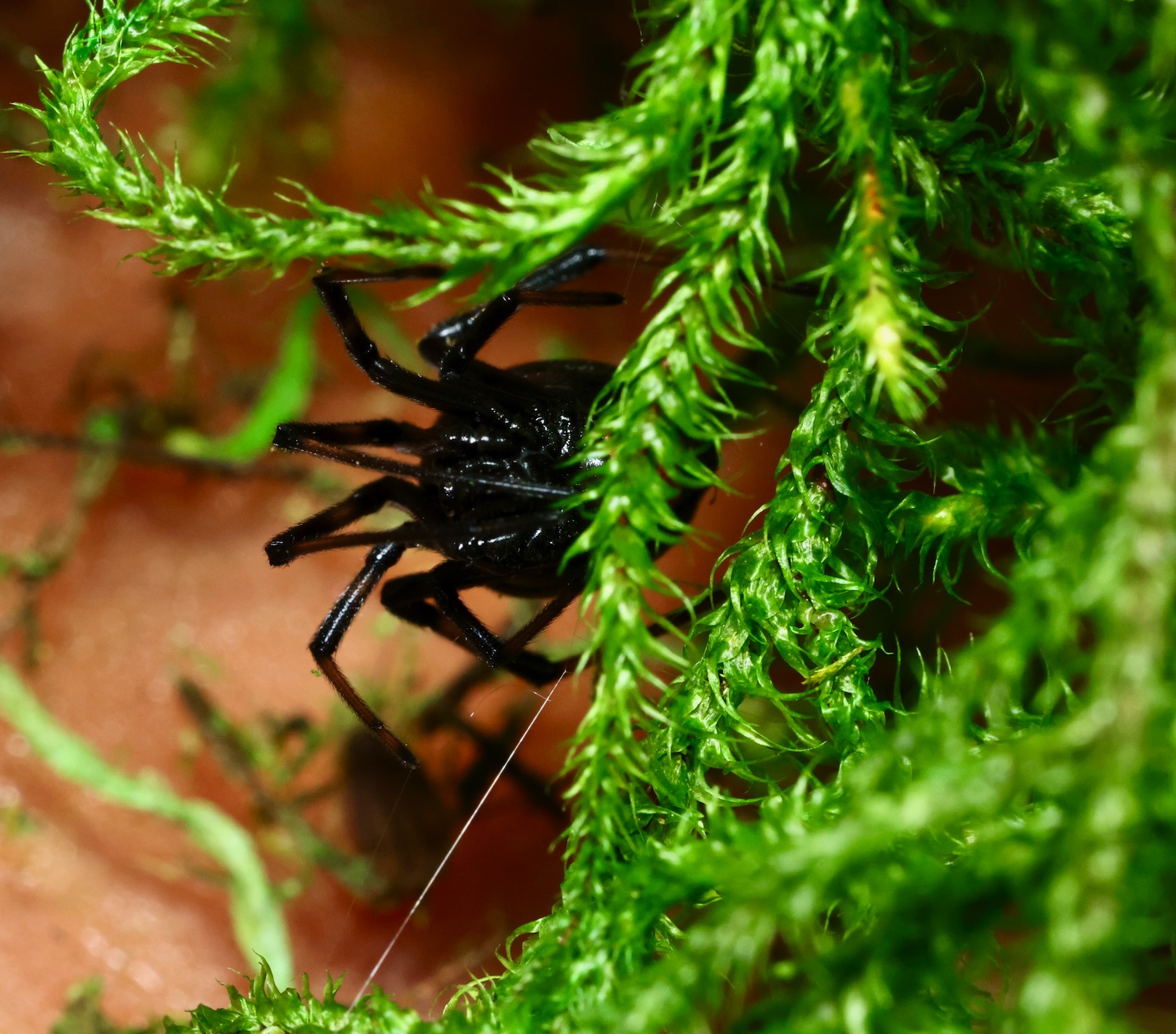
Curse that campus-wide epidemic of infectious transgenderism!
She was actually almost certainly female all along, but had just matured enough that her sexual characteristics were inescapable. There go all my plans. She is quite pretty, though.
So now I have to be brave and maybe introduce some of the remaining diminutive males to the ladies, or I’m going to have to order some more black widows.
Sorry, the Christmas eve spider orgy has been cancelled.

Didn’t Benny Johnson say that transgender spiders killed his deified buddy charley kirk!
What if Guinevere and Gawain are lesbians, and would like nothing more than some hot girl-spider on girl-spider Sapphic action for Christmas?
Admittedly my own attempts to secure lesbian fun times for animals in the past have been less than successful, but hope springs eternal. I’m pretty sure my cat is entirely asexual and despises other members of her species so much that sex isn’t even an option now. I’m beginning to feel that way about my own, truth be told.
Dunno about that. It seems to me to be more complicated than for mere mammals, this sex thing.
https://www.mdpi.com/2073-4425/11/8/849
↓
—
Merry Xmas.