The Phelps power struggle takes a familiar turn

Fred Phelps is out at Westboro Baptist. He’s off dying in a hospice. Apparently his sin was asking for more kindness. The former big voice of WBC, Shirley Phelps-Roper, has fallen out of favor. She has been replaced by a Council of Elders…all men, of course.

Pastor Fred Waldron Phelps Sr. was excommunicated from the Westboro Baptist Church after advocating a kinder approach between church members.

The excommunication occurred after the formation of a board of male elders in the church. The board had defeated Shirley Phelps-Roper, the church’s longtime spokeswoman, in a power struggle, and Fred Phelps Sr. called for kinder treatment of fellow church members.

The board then ejected Fred Phelps Sr., who founded the church in the 1950s.

Amazing. Yet, somehow, entirely unexpected. How could a woman be expected to run a Bible-based organization? How could kindness be tolerated in a church supposedly built around the teachings of Jesus? That goes against the entire history of Christianity!


Good essay on the propagation of sexist culture

Nate Silver’s new tech journalism startup is catching some flak lately for promoting a sexist attitude that excludes women — which he denies. They’re nerds, he says, they can’t possibly be anything like the piggish jocks who picked on them in high school. Not so, says Zeynep Tufekci. That logic doesn’t follow.

How does that relate to the Silver’s charged defense that his team could not be “bro-y” people? Simple: among the mostly male, smart, geeky groups that most programmers and technical people come from, there is a way of existing that is, yes, often fairly exclusionary to women but not in ways that Silver and his friends recognize as male privilege. When they think of male privilege, they are thinking of “macho” jocks and have come to believe their own habitus as completely natural, all about merit, and also in opposition to macho culture. But if brogrammer culture opposes macho culture, it does not follow that brogrammer culture is automatically welcoming to other excluded groups, such as women.

Oh, man, so familiar. If atheist culture opposes religious culture, or skeptic culture opposes woo-ey culture, it does not follow that they’re automatically inclusive. If anything, atheists and skeptics have tended to be more male-focused (admittedly, that is changing fast now) than the religious or New Age culture they opposed.

It takes effort by the oblivious majority to include an excluded minority. Doesn’t matter who the majority are. It’s a rule.

In praise of rudeness

You may have heard that the replicability of much biomedical research has been called into question, in particular by the Ioannidis paper in 2005 that demonstrated that a heck of a lot of junk got into print, largely as a consequence of statistical noise being treated as significant, for a host of reasons. It was a bit of a wake-up call (unfortunately, most people just rolled over an smacked the snooze button), but one person who is on full alert is Dan Graur. Graur is being impolite again, and has a recommendation to improve the problem.

Interestingly, the rate with which junk claims are published in the field of experimental physics is nowhere near the stratospheric rates that are found in biology and medicine. Why the difference? Dr. Ioannidis thinks that there are two reasons for the difference. First, it seems that in the biomedical research community there exists an aversion to publish negative results, especially negative results of failed replications.

Second, it seems that there are sociological differences between the physics community and the biomedical community. In physics, there seems to be a higher “community standard for shaming reputations.” If people step out of line and make unsubstantiated claims, they are shamed in public.

Wait — I have to call a foul on the play. The Ioannidis paper certainly does say the first difference, but the second…nope. The quoted phrase about shaming doesn’t appear anywhere in the source Graur links to — I’d like to see where it came from.

I’m inclined to agree with it, except that I don’t have any evidence of any public shaming going on in the physics community. I’d like to know more about how physicists police their own than is given here.

This is the abstract from Ioannidis — you can easily see that there is a focus on removing bias and better statistics, there isn’t anything about using shame as a tool.

There is increasing concern that most current published research findings are false. The probability that a research claim is true may depend on study power and bias, the number of other studies on the same question, and, importantly, the ratio of true to no relationships among the relationships probed in each scientific field. In this framework, a research finding is less likely to be true when the studies conducted in a field are smaller; when effect sizes are smaller; when there is a greater number and lesser preselection of tested relationships; where there is greater flexibility in designs, definitions, outcomes, and analytical modes; when there is greater financial and other interest and prejudice; and when more teams are involved in a scientific field in chase of statistical significance. Simulations show that for most study designs and settings, it is more likely for a research claim to be false than true. Moreover, for many current scientific fields, claimed research findings may often be simply accurate measures of the prevailing bias. In this essay, I discuss the implications of these problems for the conduct and interpretation of research.

But don’t let that stop Graur, he’s on a roll!

In biomedicine, the search for truth is no longer a virtue, politeness is. According to an editorial in Nature Methods that singled out our work for criticism, one should avoid “harsh and offensive words” at all costs. “Civility in discourse is essential,” proclaim the editors of Nature Methods. Do not shame reputations! Well… by not shaming reputations, we have built a field of study where bombast thumps substance, and where wasters of public money are rewarded. By paying attention to “manners” we have prostituted science to a degree where “most published research findings are false.”

Rudeness has nothing to do with science. Science is not about abiding by a code of behavior put forward by Miss Manners. In criticizing ENCODE, our style of writing was meant to bring to the attention of the public a problem generated by the ENCODE propaganda barrage.

Face it, ENCODE for creationists was like “water memory” for people believing in homeopathic medicine. ENCODE deserved the same treatment as the “water memory” paper that was published in Nature by Jacques Benveniste. ENCODE needed to be shredded to pieces in a manner similar to the way Great Randy [the Amazing Randi] shredded “water memory.” The Great Randy [the Amazing Randi] was so rude, that his criticism was likened by Benveniste to a “Salem witch hunt.”

In science, sometimes a strong rude voice is needed to fight self-promotion and self-delusion. My favorite example of a rude voice concerns Theodor Roosevelt and his refutation of Abbott Thayer’s theory on all coloration in nature being “concealing” (e.g., the famous flamingoes in the sunset). Thayer’s book was shredded to pieces by Theodor Roosevelt (one year after completing his presidency). I wish my mastery of the English language would allow me to emulate Roosevelt’s viciousness. Alas, English is my third language.

We need strong and impolite voices to fight “stem cells created by acid baths,” “cold fusion,” “arsenic-based life,” and other feats of self delusion. People still believe that Svante Pääbo sequenced ancient DNA from an Egyptian mummy in 1985. Why? Because there were no strong and impolite rebuttals. Every criticism was whispered and “soto voce.” Science has become a collection of Yes Men (and Women) afraid of the big shots and their own shadows.

I agree, and I’d like to see more vigorous responses to the boring lot of trivial phenomenology that is cluttering up some of the journals I like to read. We’re getting to a point where the literature is swamped with kipple that could benefit from some housecleaning, and a little less emphasis on publishing for the sake of publishing. But we rely so often on the quantity of articles published as a metric for academic success, rather than the quality.

But I’d also like to see a stronger analysis comparing the literature in physics and biomedicine — is it really that different?

The biological species concept is not an anti-choice argument

Oooh, I have annoyed Secular Pro-Life so much. I disagreed with the confusion they sow by equating status as a human being with being members of the species Homo sapiens; the former is a property of an entity, the latter a property of a class. It is highly problematic to freely switch between the two, and it is especially misleading to use a class definition to assign rights and privileges to a subset, particularly when it involves denying the existence of clear distinctions between members of the group. It is also dishonest to declare that the authority of science specifies a sharp, clear boundary line in development, when what science actually says is that there is a continuum, and cannot define the instant when a clump of human cells makes the transition into having “fully equal” human status.

Here’s their complaint:

If PZ could give a commonly accepted definition of "species" that debunked the idea that human organisms–including zygotes, embryos, and fetuses–are part of the human species, he would. If he could give a commonly accepted definition of "organism" that did not include zygotes, he would. But he doesn’t give those definitions. He can’t. Because zygotes are organisms, and human organisms are part of the human species. PZ can do a bunch of hand wavy complaining about how he’s not sure what Kristine means (and try to assert that his alleged lack of understanding equals her dishonesty), but that’s all he’s got. There’s no substance here.

He’s right that there are many ways of thinking about the concept of "species." But Kristine’s perspective doesn’t rely on some obscure, slippery definition. How about a group of organisms having common characteristics and capable of mating with one another to produce fertile offspring? You can find that description on the lying, anti-woman, secretly religious website: Biology Online.

Kristine claims "science defines a fetus as a biological member of our species." PZ tries to brush off Kristine’s perspective as "traditional and colloquial" (as if those attributes, in themselves, make an idea anti-scientific), but in reality Kristine’s assertions rely on a very common–and scientific–species concept: the biological species concept. UC Berkeley’s "Understanding Evolution" website describes the biological species concept as the concept used "for most purposes and for communication with the general public." How dare Kristine fail to define that for someone like PZ–he only has decades of background in developmental biology. That must have been very confusing for him.

That’s exactly what I mean! You cannot cavalierly apply a definition appropriate to populations to individuals. Here’s that definition: “The biological species concept defines a species as members of populations that actually or potentially interbreed in nature”. If you take that literally, then sterile individuals are not members of the human species. No one takes it that literally. Even the site they link to spells out problems with the BSC, and lists a small subset of other species concepts.

Another problem with the BSC is that it doesn’t address development, and this really is a problem in developmental biology. What does “potentially interbreed” mean? Are embryos part of the gene pool? How about menopausal women? Do men with vasectomies lose their ontological status with that little snip? If you’re going to say that embryos have the potential to reproduce, then you can’t deny that sperm and ova also have that potential, and SPL’s distinction that sperm don’t count is invalid. Scientists are also crystal clear in defining human sperm and human ova; does the use of the label imply that sperm therefore have all the rights of a human being?

The biological species concept doesn’t apply to this problem, and it is not only scientifically invalid to try and use it that way, it is offensive. We do not and should not define a person’s status in society by their reproductive potential. We do not measure the broader social and familial relationships of individuals by reducing them to biological abstractions — having the right number of chromosomes, complementary sperm-egg recognition proteins, matching genitalia for efficient intromission and docking. The species problem is a whole different problem from the humanity problem! And when your argument rests on a willful conflation of two completely different issues, you’ve got a credibility problem. And claiming that science decrees a simple clear answer when it actually says the answer is murky and complex and ambiguous on multiple levels means you’ve got an honesty problem.

But yes, please do try to imagine a world where your status as a human being was determined by applying the biological species concept to individuals. Dystopias are fun logical exercises, if not so fun to live through.

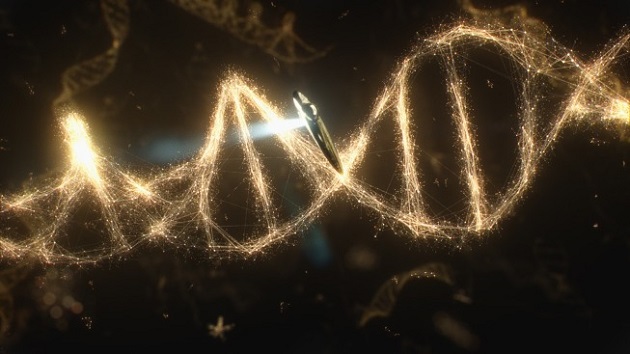
I do have one little quibble with Cosmos

I don’t want to give the impression that I think it is perfect — there are some flaws. This one had me scratching my head.

What the hell is this?

cosmos_dna

I’m used to noticing if a diagram of DNA has the correct right-handed twist of B-DNA or the proper number of bases per rotation of the spiral, but jebus…what are these random dots and lines and this strange stringy attenuated look that corresponds to nothing in the molecular structure? Is this what happens when an astronomer tries to draw a molecule?

I wonder if every other biologist’s brain came to a screeching halt when this animation came on the screen.

A Discovery Institute hack watches Cosmos

I told you that the Discovery Institute really hates Cosmos. On Sunday night, Jay Richards, Master of Divinity, Master of Theology, Ph.D. in philosophy and theology, former instructor in apologetics at Biola, Senior Fellow of the Discovery Institute, watched the show and occasionally curled his lip in disdain on Twitter. It was very amusing, and rather revealing. These guys really are just gussied-up creationists.

I can’t help myself. I have to reply to these nonsensical complaints.

On #Cosmos, Neil Degrasse Tyson is recapitulating Darwin’s non sequitur that artificial selection + time = natural selection.

Oh, right: his Twitter name is “FreemarketJay”. You are allowed to laugh.

Cosmos introduced the concept of selection by first describing how dogs were domesticated by selection for a subset of animals that were less fearful of humans and could scavenge from our garbage; we have since selected for variations that produce the great diversity of dog breeds, much of it done over the last few centuries. The lesson: you can get radical biological change from artificial selection in a very short time.

Then Neil deGrasse Tyson explained how you don’t need humans to provide the selection: the environment can also favor different variants, using the example of bear coat colors.

Where was the non sequitur? It was quite clear that the situations were analogous and obvious, and remarkably hard to argue against. Artificial selection demonstrably works, natural selection requires no novel mechanisms, it all hangs together beautifully.

Anyone think Neil Degrasse Tyson will summarize the known evolutionary limitations of random genetic mutations? Nah. #Cosmos

Oh. That’s his objection, that there are some imaginary evolutionary limitations. Yes? What are they? Richards doesn’t say. Go ahead, explain how you can make Great Danes and Chihuahuas by selection from an ancestral generic, wolf-like dog, but you can’t possibly have pigment mutations produce white bears from brown bears.

He won’t be able to. The actual limitations are nothing but the inability of creationists to comprehend a simple process that makes them uncomfortable.

Cool. Dogs evolve into … dogs, and bears…into bears. #Cosmos

If only the dogs had evolved into frogs, and the bears into broccoli, then at last he’d be able to accept evolution. Sorry, guy, evolution predicts that dogs will only evolve into doglike descendants, and that the ancestor of modern dogs and bears was a primitive mammal (but they’re still only mammals!) and before that, primitive tetrapods (but we’re all still only tetrapods!) and before that, primitive animals (but we’re still only animals!).

That Richards would think that is a reasonable objection is just more evidence that he doesn’t understand even the simplest basics of evolution.

On eye evolution, the #Cosmos editors again failed to do a Google search: http://www.discovery.org/scripts/viewDB/filesDB-download.php?command=download&id=1061

Cosmos referred to the calculations by Nilsson and Pilger that the morphological changes to transform a flat light sensitive patch into a spherical eye ball with a lens that could form an image on a retina would require conservatively a few hundred thousand generations. They did this by incrementally modeling the shape of an eye is it transformed, determining that a) 1,829 steps with a magnitude of a 1% change in shape were required, and b) calculating the optical acuity at each step, and showing that each 1% change would increase acuity slightly (no backtracking or loss of optical quality was required in any step). They then used reasonable estimates of heritability and phenotypic variance and weak selection to calculate that a 0.005% change in shape in each generation was possible, meaning that you could easily get the whole transformation in 364,000 generations.

At every step they used minimal, conservative estimates for all parameters. The whole point was to demonstrate that this one process could be easily completed in geologically tiny amount of time.

Richards cites an awful attempt at a rebuttal by David Berlinsky, which consists mostly of sneering and posturing and complaining that it was improper to refer to the calculations as a “simulation” (never mind that a computer simulation of the process was produced; the paper describes the calculations). I have to say — why would anyone complain that the Cosmos writers hadn’t made note of a sloppy and pretentious internal document — it was not published anywhere — that actually didn’t refute the content of the Nilsson and Pilger paper in the slightest? Maybe because Richards has a ridiculously inflated view of the importance of his nest of loons in Seattle.

An eyeball isn’t a visual system. #Cosmos

Nor has it ever been claimed to be. They were talking about one piece of the visual system, and demonstrating that natural processes can produce that structure in a fraction of a million years. The Discovery Institute claims that no significant physiological or morphological change can occur at all, so simply demonstrating that making an eyeball from an eyespot is possible effectively refutes the Intelligent Design creationism position.

They’re just moving the goalposts. They say that making an eyeball is impossible; we show that it is, and not that hard, and they then say we have to show that every single step is possible. You know, we can show the molecular basis for light perception is present in single-celled organisms, that all of the molecular pathways are homologous and linked, and that general developmental processes can produce functional connections between sensory cells and visual perception centers of the brain, and they still claim that it requires their magic deity.

I can’t believe how bad #Cosmos is. They must have given up all hope of persuading anyone but the already persuaded.

No, but I’m sure we’ve all given up any hope of persuading the dogmatic, the ignorant, and the obtuse. Someone first has to be willing to look at the evidence, and if you’re up to that, then yes, I think Cosmos can be an effective tool for letting people understand the basics of evolution.

All bets are off for IDiots.


One more. Richards’ latest tweet:

Another confirmation that the universe had a beginning: Astronomers discover echoes from expansion after Big Bang http://reut.rs/1ivSjez

So confirmation of a specific and empirically founded physical theory is going to be used by these kooks as confirmation of their superficial and stupid explanation of the origins of the universe because it supports one trivial observation? The universe had a beginning. So what? The question is how it started, and no, that ain’t in the Bible.