
The Probability Broach, chapter 12
We’ve previously seen that in the anarcho-capitalist North American Confederacy, everything is cheap and everyone is rich. There’s no hunger, no poverty and no homelessness. In this chapter, L. Neil Smith makes his most direct attempt at explaining how this can be.
His character Ed Bear narrates that all it took was getting rid of government and all the taxes and other burdens it imposes. When they did that, people immediately became much wealthier, with no downsides. The advanced technology they have is a distant second-place explanation for their prosperity:
“Things aren’t unnaturally cheap. Win, we simply don’t tolerate a parasite that takes half your income and then builds more taxes into everything you buy! You people have been trying to get by on a quarter of your productive capacity—an eighth, when you count the costs of regulation—while the State eats up the rest! It’s a wonder you’ve survived at all!”
Last week, I responded to the preposterous claim that government “eats up” more than three-quarters of people’s productive capacity. If that were true, government spending would have to account for a large majority of GDP. It simply doesn’t.
Smith claims that “the costs of regulation” count for a significant fraction of the costs we pay. And it’s true: Regulation does create costs.
Safety gear makes window-washers more expensive to hire. Sanitary rules make restaurants more expensive to run. Trucking companies have to have rest periods every fourteen hours or so, forcing them to hire more drivers (rather than just buying cheap amphetamine pills). Pollution rules mean that chemical manufacturers can’t dump their waste in the nearest river. Pharmaceutical companies have to run large, expensive clinical trials to make sure that drugs work and are safe before they can sell them.
But he avoids the obvious followup: What are the costs of non-regulation?
You can’t just look at one side of the ledger and assume all the money you spent on compliance is wasted. What dollar value do you place on having clean air to breathe, clean water to drink, healthy food to eat that isn’t tainted or adulterated, and roads that aren’t littered with the smoking wrecks of unsafe vehicles? What’s the monetary value of workers not being killed on the job, or consumers being able to trust that the products they buy won’t poison them, or burn their house down, or do nothing at all?
L. Neil Smith describes government as a “parasite”, which is a telling analogy for how he sees the world. A parasite saps its host of energy for its own benefit, providing nothing in exchange.
This description only works if government is, literally, worthless – if it does nothing valuable, provides no services, confers no benefits. If government creates any value, then abolishing it isn’t a straightforward, no-brainer conclusion. It’s a matter of comparing the harms it inflicts to the benefits it provides, to see whether it’s a net positive in people’s lives. Smith doesn’t want to do that kind of cost-benefit analysis, so he insists every dollar paid in taxes just vanishes into a black hole.
But this is obviously false, whether he wants to admit it or not. Government does do useful things: roads, bridges, canals, water pipes, sewer systems, trash pickup, schools, fire departments, post offices, trading standards, stable currencies, and all the other infrastructure that our civilization depends on.
These things are built and maintained by tax dollars, with government as the coordinating mechanism to channel and focus the collective power of society. No single person could fund it all themself, and if millions of sovereign individuals tried to collectively organize these projects without hierarchy, they’d get bogged down in endless arguments over what should be done and who should do it. In Atlas Shrugged, I called this the “Hume’s Meadow” problem, after a thought experiment by the great skeptic.
Somehow, none of this reasoning makes an impression on L. Neil Smith and libertarians like him. They have a blind spot to all the ways that government improves their lives. They believe these valuable institutions just spring up out of nowhere when we need them.
Then they look around, wonder what government has ever done for them, and grumble that their tax dollars are going to waste. It’s Monty Python’s “what have the Romans ever done for us” skit, except it’s not being presented as parody, but as a straightfacedly literal argument in political theory.
In the very best case for an anarcho-capitalist, private companies would step in to provide the same services. They’d own the roads, the bridges, the sewers, and so on. But even if that happened, why wouldn’t these for-profit businesses squeeze people for at least as much revenue as the government takes in taxes?
Free-market competition isn’t going to help here. It’s not as if you’re going to have multiple road networks (or multiple sewer pipes!) connected to your house. And even if that somehow happened, why wouldn’t the companies that owned them conspire among themselves to fix prices so that they could all make more profit? There’s no law against that in this world!
After their lunch, Ed and Win follow up on the next lead in their case:
Laporte University, Ltd. is the local push-back-the-barriers joint where Bertram’s people shared facilities. The Confederacy draws no distinction between applied science and pure research. Those who can, do. They also teach. Those who can’t, maybe they wind up in Congress like back home.
Dora Jayne Thorens didn’t belong in Congress, unless you prefer the delicate way they put things in Victorian novels. A six-foot platinum blonde with a figure that should have won her a staple through the navel, she was also chief of paratronics research.
Win is the one narrating this leering paragraph, and I’d say the text was trying to depict him as a crudely sexist ogler, except it seems clear this is the author’s predilection being expressed through the character.
There’s no plot reason she had to be a beautiful woman (I puzzled over “a staple through the navel” until I figured out it meant she looks like the centerfold model of a man’s magazine). It’s just that Smith wants to populate his utopia with gorgeous blondes for himself to write his drooling fantasies about.
“Mr. Bear?” She looked at Ed, and then at me.
“We’re both Mr. Bear, Ed and Win. Did you lose this felt-tip recently?”
“I’ve got a deskful just like it. Is this what detectives do these days? It’s certainly service.”
Win says he found the pen in a desk drawer in the United States of America, and a light dawns. Dr. Thorens runs off, shouting to her colleagues that they’ve done it.
New reviews of The Probability Broach will go up every Friday on my Patreon page. Sign up to see new posts early and other bonus stuff!
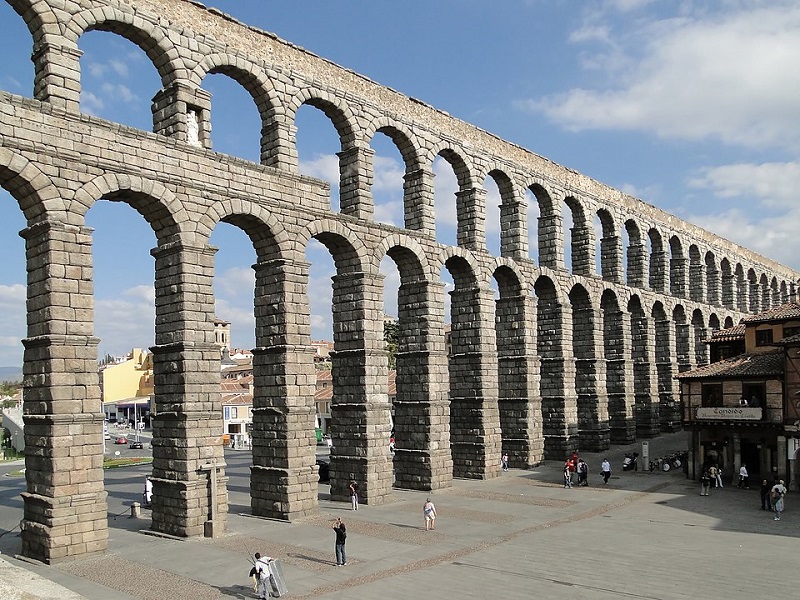
Image credit: Bernard Gagnon, released under CC BY-SA 1.0 license

Other posts in this series:
Is Smith going to tackle religion? Churches don’t pay taxes, but they get the advantage of electricity and (landline) phone service and paved and maintained roads to get there, paid for by taxes. Also, if they need the police or fire department, those taxpayer-funded entities will be provided to the churches.
We’re seeing in realtime what the cuts to food inspectors has caused, as the never-ending list of contaminated foods makes the news. How much is slipping under the radar?
healthcare in the us is a huge example of allowing corporations to have a role producing outrageous gouging, because all we have to do is compare to other countries with single payer. it’s not as clean of an example because it is heavily regulated (can u fucken imagine it less regulated yikes), and they’d just say that’s the problem – it hasn’t been purified of gov yet. but the gouging is already there. what would keep it from getting worse, el Neil?
medicare is a good example of how UBI will fail unless paired with housing reform. the gov subsidizes it but leaves a gap for private insurers, who exploit the subsidy to skim profits while providing worse service.
forgot to complete the analogy. gov gives 500 ubi and in two minutes everybody’s rent goes up 500 – or more.
A good chunk of the rank and file libertarians that I have talked too are people that own their own small business. Small enough that they do a lot of their own paperwork. This makes them very aware of how much paperwork there is, how much they are paying in taxes, the ways the government regulation makes their work more complex, etc. There is nothing pointing out all the ways the government helps them. So it feels unbalanced to them. I would guess that is a good reason for a lot of the general popularity of the party.
there were so many small business owners at the january 6 coup attempt.
Totally agree with JM @4 – lots of libertarians are small business owners, and it probably has a lot to do with it being obvious to them how government regulations make their lives more difficult, while the benefits are invisible/taken for granted.
” The Confederacy draws no distinction between applied science and pure research. Those who can, do. They also teach. Those who can’t, maybe they wind up in Congress like back home.”
Dude, what? “Pure research” does not automatically equate to a teaching position. And teaching is it’s own skill — being in cutting edge research does not mean you can therefore teach Physics 101.
I got the staple-in-her-navel because I’m old enough I’ve heard variations of that joke before. But yeah, this reminds me of why people were so stunned the female scientist in the Andromeda Strain movie was a middle-aged woman rather than a starlet.
It’s a childish way of thinking – like a kid thinking they could do without Mom and Dad because they know how to use the fridge and the toaster, but not understanding who fills the fridge and pays for the electricity (or even that electricity needs paying for).
Sean McFarlane had a bit on Family Guy about a wonderful world without religion
https://www.youtube.com/watch?v=cc1anrSbdjM, but a) he was telling a joke, and b) even in the joke he mentioned some possible downsides of a world completely without religion (not in this clip). Smith is serious.
I guess in a world where nearly everyone is kind and generous and honest and smarter than L. Neil Smith, and those who aren’t quickly become homeless bandits with short lifespans, one could maybe do a purely donations-based alternative to taxes, where non-profit organizations take over the roles where corporations aren’t well-suited for. But then you’d have to question why such people would choose anarcho-libertarianism in particular over any of the alternatives, since such people could probably make nearly anything work really well, and the average person most attracted to that ideology is very much not like that. You’d also have to explain how everyone ended up that way; most people don’t change rapidly, some would refuse to change at all, and “suddenly we decided not to do government” has a rather short timeframe before things start going kablooey. I’m saying that, even if it were somehow feasible, we’re talking a multi-generation project, not something you can throw together in a few years or whenever.
Or, alternatively, the North American Confederacy is a collection of Automatopias, where super-advanced, self-sustaining, autonomous technology takes care of all the local background details so that people don’t need to worry about any of it. That would very much need explaining how such technology (or at least the beginnings of it) existed in the 1790s. Maybe aliens?
@Snowberry: Let’s not ruin the Culture by crossing it over with this series… unless it’s just to have the Minds complain that they are doing a stateless society incorrectly, of course.
@Brendan Rizzo: LOL. Wasn’t even thinking of that. Reminds me that I need to get around to actually reading at least some of that series.
I hope this joke doesn’t spoil anything, but…
Sma *sees the NAC* : Really? You claim to have freed yourselves from the state, yet still have capitalism? Is this the best your species can do?
Why do you not have those little avatar pictures for commenters?