
The Probability Broach, chapter 8
After debating alternate histories with Ed, and contemplating the possibility that his own universe no longer exists to return to, Win is sleepless with worries:
I had a hard time sleeping that night. I was exhausted, and not only from exertion and gunshot wounds. Clarissa’s wonderful machines were healing me at a rate that taxed my reserves and made me ravenous about every forty-five minutes. But sleepy I was not. Lying around in bed all day wired up like Donovan’s brain is not exactly conducive to a solid night’s hibernation.
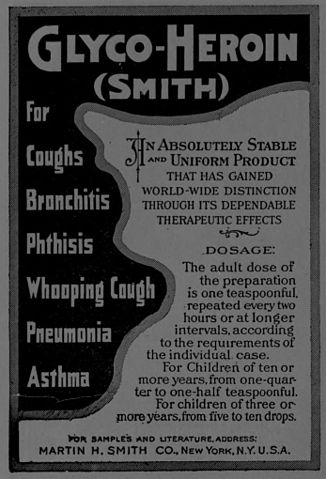
I’m not the warm-milk type, and booze has never helped me sleep. This anarchist’s Disneyland apparently hadn’t any prescription laws. Ed’s medicine cabinets contained everything from aspirin to morphine.
I’ll give Smith points for consistency, at least, for highlighting an implication of his worldbuilding that some authors might shy away from depicting. In an anarchist society, there’d be no such thing as controlled substances. Anyone who wanted any drug, from cocaine to heroin to crystal meth, would be able to buy it over the counter.
Now picture it from the other side of the cash register. In an anarcho-capitalist society, there’s nothing stopping you from making drugs that are as addictive as you can possibly make them and selling them to everyone, including kids.
Given what we know about how capitalism works, every company under the sun would rush to do just that. Why struggle with competition, why subject yourself to the whims of the market, when you can rake in obscene profits by cultivating a customer base that literally can’t stop buying your product?
We’ve seen this exact thing play out in the real world, most infamously with tobacco companies. For decades, they schemed to get their customers addicted. They deliberately took steps to make cigarettes more addictive: genetically modifying tobacco plants to contain more nicotine, or adding bronchodilator chemicals to speed the absorption of nicotine into the body.
Another destructive story of corporate greed producing human tragedy is America’s opioid epidemic. By many accounts, it began with OxyContin. Purdue, OxyContin’s manufacturer, promised it would provide 12-hour pain relief with minimal addiction risk. However, many people complained that it wore off too soon, leaving them to suffer as they counted down the hours.
Instead of having patients take the drug more frequently – which would surrender their claimed advantage over other painkillers – Purdue told doctors to prescribe bigger and bigger doses. This created a rollercoaster of highs and lows that, for many people, was a prelude to addiction. Instead of providing a steady level of relief, it trains the brain to crave the next hit of the drug. This paved the way for desperate people in withdrawal to seek out even stronger opioids, like heroin and fentanyl.
Last but not least, there’s Feel Free. It’s a tonic sold in gas stations and smoke shops. Its manufacturer describes it as a “plant-based herbal supplement” and markets it as a healthy and natural alternative to alcohol, and it comes in a blue bottle that looks like an energy drink. But it’s not caffeine: it contains kratom, a plant with natural opioid-like compounds.
Many consumers of Feel Free report an intense addiction that sets in almost immediately, coupled with debilitating withdrawal symptoms if they try to stop. A class-action lawsuit has been filed against the maker for allegedly concealing its health risks and addictive potential.
But, again, in an anarchist society, there’s no such thing as consumer-protection laws. There wouldn’t even be these safeguards, as flimsy and inadequate as they are. Makers of dangerous, addictive drugs could conceal the risks, could market and sell them in any way they like, and there’d be nothing that anyone could do about it. This makes it all the more implausible that there are no poverty-stricken or homeless people in Smith’s North American Confederacy: you can easily blow any amount of money and ruin your life on drugs.
As I’ve said before, I’m not a prohibitionist. I’m skeptical of any law that tries to control what consenting adults do with their own bodies. Addiction isn’t a sign of poor character; it’s a medical problem, and it should be treated as one.
Of course, people who drive drunk, steal or commit other crimes to feed a drug habit may have to be imprisoned, both for everyone else’s safety and so they can be compelled to get treatment. But putting people in prison simply for using drugs doesn’t solve anything. It makes a bad situation worse by forcing addicts into the shadows and making them afraid to get help. It furnishes a ready excuse for aggressive overpolicing of minorities and the poor. It feeds a black market where criminal gangs wage turf wars over territory and adulterate their products with toxic additives – all problems that America has experienced firsthand during its long, violent history of prohibition.
However, here’s where I draw the line: there are good reasons society shouldn’t permit some people to profit off of other people’s addictions.
In my ideal world, no recreational chemicals would be banned. But advertising would be forbidden, there’d be stringent safety regulations, and drugs with high addictive potential (especially alcohol and tobacco!) could only be sold at cost, not for profit, with added taxes to fund the treatment of those who need help. This eliminates the incentive for companies to try to get their customers hooked.
Getting back to the book: for whatever reason, Win chooses not to avail himself of Ed’s medicine cabinet. He lies awake, tossing and turning. However, in yet another of those author-scripted convenient coincidences, his insomnia saves his life:
Lying restlessly in the dark, I tried arguing Ed’s terminal out of something to read. Then I heard it: a humming, soft but unmistakable. I might have slept through it. I turned. In the dim backlight of distant street lamps, I could make out a shadow against the windowpane.
…The window, hinged at the top, opened outward. A shadow silently threw its leg over the sill. One step across the floor, two, three. Starlight glinted on naked steel.
Win has a derringer – a miniature gun with only one shot – under his pillow. He tries to draw it without alerting the intruder that he’s awake:
He was on me! A huge knife swung in a glittering arc and I twisted the gun to bear as his blade tangled in the wiring around me, skittered along the cast on my arm, and was deflected. The derringer went off in a blinding explosion, missing his face by a handspan. I dropped the gun from stinging fingers, grabbing at his wrist. He jerked it back—I let him, pushing the razor-sharp edge toward his face. It caught under his jaw, pivoting where it bit, slicing flesh and corded muscle, spraying us both with blood.
…Suddenly he let go, ripped himself from my failing grasp, and dived head-first out the window as—Slap! Slap! The glazing dissolved in a million crystalline shards.
The lights came on. Ed slumped against the door frame, a spidery wisp of smoke drifting from the muzzle of his .375. I sagged back into the sweat-soaked bed; Clarissa’s careful circuitry a dangling ruin. The bloody knife lay on the blanket, millimeters from my shaking, gun-bruised hand. Ed’s glance traveled from my blood-streaked face to the foot-long blade. “Don’t you know better than to try shaving in the dark?”
The fact that Ed is so nonchalant about a home invasion – going so far as to make action-hero-style quips about it – suggests that he’s used to it. That would make sense. In a society with no police and no government, where the only law is what you can get away with, these kinds of crimes ought to be common.
As we’ll see in a later chapter, L. Neil Smith implausibly insists this isn’t the case and that crime is actually very rare in his lawless, laissez-faire paradise. But if the average citizen of the North American Confederacy never has to fire a gun at a would-be murderer, why would his protagonists be so unfazed?
Smith probably didn’t mean anything by this line, other than trying to establish the badass credentials of his heroes. But in a meta sense, it could be seen as a big, glaring hint that this world isn’t as peaceful as its author wants us to believe it is.
New reviews of The Probability Broach will go up every Friday on my Patreon page. Sign up to see new posts early and other bonus stuff!
Other posts in this series:
Ah! But you forgot to mention kratom, being sold at gas stations, CBD places, and dispensaries. It’s highly addictive, but it’s “it’s NATURAL!” and “it’s veeeeeegan!”, people think it’s harmless. Our toothless FDA doesn’t have to tools to chase after every harmful substance anymore.
Over the decades of my life, I’ve had a number of medical interactions (from wisdom teeth removal to various surgeries at various times) and I was given oxycontin for all of them. I took it as prescribed, for as long as prescribed, and never had an issue. The spouse recently had a dental emergency, and our dentist of 30 years sadly told him he was no longer allowed to prescribe anything but Tylenol because other people abuse stronger drugs.
I think there’s just a certain percentage of the population that’s going to be prone to addiction. Certain populations (Native American, Slavic people, Scandinavians for example) tend to have a higher proportion of addicts. And in Appalachia, they’ve been making moonshine for more than a century and using home-cooked meth since before oxycontin was on the market.
Leaving aside the topic of pharmaceuticals (recreational and non-) in a world with no government and (I think?) no military but every citizen goes armed to the best of their ability to pay for it: of course there would be nonstop break-ins and assaults. Especially if there are weapons and drugs in the home! <– yup, I went there again.
And that being the case, why in the world would there *not* be bullet-proof and assault-proof windows to keep the inhabitants safe? How stupid is Ed to have easily-breakable windows in his home?
@OP:
I’d say there’s evidence that part was quite deliberate. After prison labour became the primary legal form of slavery in the U.S., part of Jim Crow was finding ways to ensure that people who weren’t white could get sent to prison; having lots of little crimes like drug possession where being charged was entirely up to the officer’s discretion meant that ‘good upstanding (white) citizens’ could get leeway others didn’t.
See also the fact that the scary foreign-sounding word ‘marijuana’ was used in the U.S. as the default word for cannabis, rather than the existing English word. Treating the drug name itself as a foreign invasion was absolutely deliberate.
@Katydid:
While it is true that some people are almost certainly just more prone to addiction than others (I seem to recall that twin studies have suggested at least some genetic component to alcoholism, though nothing’s been pinned down), it’s also true that ‘as prescribed’ is a significant contributor. As noted in the OP, part of the problem with oxycontin was overprescription due to the drug itself not lasting as long as the manufacturer claimed it did. For decades the general opinion on opiate pain relievers is that ‘as long as they’re being used only to dull existing pain, they’re not generally addictive’. It’s once they get overused and the roller coaster effect starts that things get bad.
I agree that prohibition (at least in and of itself as the #1 priority in drug policy) has been a miserable bloody failure. But I really don’t think legalization is a good solution to drug-addiction either. (Just for starters, there’d be conflicts with other countries’ laws and drug policies to consider.) None of the regulations you advocate would stop anyone from selling addictive drugs, either over or under the table.
I think the best policy to combat drug-abuse and addiction would be to keep prohibition, but de-emphasize it in favor of public healthcare and easily-accessed rehab programs. Spend less money and attention on militarized law-enforcement, and more on science-based medicine and mental-health treatment.
All that happens when you criminalise drug use is you deter people from seeking help early on, when it is most likely to be effective. Nobody wants to stigmatise themself before their peers, nor to have to rat on their suppliers, with whom they have bonded; and you can easily end up descending deeper into addiction until events overtake you, one way or another, for good or for ill.
A better solution by far would be to end criminalisation, have discreet, licensed, quality-controlled suppliers but no advertising, treat addiction as a misfortune, offer addicts real help, not twelve-step programmes convincing them they are worthless wretches, and give people real alternatives to getting wasted in the first place. Addiction is a really lousy way of getting a bit of meaning into your life, but all too often it’s the only thing on offer.
Such an approach has already been shown to work. The Cadbury family knew the best way to keep booze out of Bournville was to give people good reasons to stay sober. They created a thriving community, with leisure activities laid on that did not feature drinking. The second alcohol licence was granted only ten years ago (the sports pavilion had been licensed in the 1940s, for the benefit of visiting teams) to a local newsagent and convenience store, for off-sales.
The Quakers’ definition of doing the Lord’s work — by which they mean all the Lord’s work, not just the smitey bits but also keeping the world beautiful and the people in it happy — is actually pretty close to humanist ideals.
All that happens when you criminalise drug use is you deter people from seeking help early on…
That really depends on how you treat drug-users. If people can voluntarily seek treatment without being ratted out, then criminalization, or lack thereof, shouldn’t deter them, as long as counselors and healthcare providers are available and can maintain doctor-patient confidentiality.
Nobody wants to stigmatise themself before their peers…
The stigma of drug-addiction doesn’t come from criminalization; it comes from the behaviors of addicts, which other people don’t want to deal with. Criminalization, right or wrong, is a symptom of that response, not a cause.
A better solution by far would be to end criminalisation, have discreet, licensed, quality-controlled suppliers but no advertising, treat addiction as a misfortune, offer addicts real help…
First, there would still be a black market for much stronger stuff. And second, haven’t we tried that already? I remember just such a thing being shut down in Switzerland because the neighbors got tired of all the addicts continually hanging around.
…not twelve-step programmes convincing them they are worthless wretches…
WTF are you talking about? I don’t remember hearing any such drivel in any 12-Step program I’ve been to.
The Cadbury family knew the best way to keep booze out of Bournville was to give people good reasons to stay sober. They created a thriving community, with leisure activities laid on that did not feature drinking…
Sounds great — this is what civil society (not just its drug policies) is always supposed to do. Problem is, there will always be economic downturns, social upheaval and dislocation, programs getting defunded for various reasons, and people in dysfunctional circumstances. So you’ll still need some sort of drug-control policy as part of your Plan B, because Plan A can’t be expected to always work well for everyone.
In the sort of world Smith is creating the homes would be more heavily defended. If everybody is walking around armed to protect themselves, their homes would be guarded also. The windows would have bars or be otherwise impossible to enter, doors would be reinforced, there would be alarms. Somebody like Ed, who is a professional detective, might even have tighter security. Even if people did not really expect attacks they would do it for the same reason they carry guns, to protect themselves and their homes if it did. If homes are too easy to steal from theft would be a huge problem. Thieves can count and wait for everybody to leave the house, making guns not a big concern.
I like the idea but it wouldn’t work. It’s too fine a line to draw. All painkillers are both useful and recreational. When a drug becomes addictive is impossible to define because people have different levels of physical tolerance and different psychological makeups. Even for a single person both will vary over time.
The best you can do is tax them based on how much trouble they cause, in terms of addiction, crime and anything else. Even there you run into the problem that too high of a tax could cause a black market.
If everybody is walking around armed to protect themselves, their homes would be guarded also. The windows would have bars or be otherwise impossible to enter, doors would be reinforced, there would be alarms. Somebody like Ed, who is a professional detective, might even have tighter security…
And chances are, every home sold or rented would have those standard features built into them. Which would make homes more expensive. So what happens to people who can’t afford all that? Maybe all the criminals avoid poor people ‘cuz they obviously don’t have anything worth stealing? Except…criminals never do that in real life, do they?
@Katydid:
One study that changed my view about drug abuse was Bruce Alexander’s Rat Park addiction experiment.
Rat Park was an update of an earlier study, where rats given free access to drugs got addicted, sometimes to the point of starving themselves to death because they chose drugs over food. That study was used to support the “just say no” idea that drugs are inherently dangerous and the only way to deal with the problem is to ban them.
In Alexander’s updated study, two groups of rats were given access to drug-laced water. Just as in the earlier study, rats in small, bare metal cages drank lots and lots of it. However, rats in spacious, enriched environments weren’t that interested in the drugs:
https://en.wikipedia.org/wiki/Rat_Park
https://www.reddit.com/r/askscience/comments/y56jte/is_there_truth_in_the_allegation_that_rats_in/
The conclusion he drew is that addiction usually doesn’t come out of nowhere. It’s a compensating mechanism for other things that are missing or unpleasant in your life.
Yeah, lots of studies with apparently obvious social implications turn out to have follow-ups with results that imply very different implications.
@ Adam, agree with what you said, but also leaning on the genetics. In my own family (Scandinavian ancestry, 2nd generation American), there are 2 children who are alcoholics and 2 children who can have an occasional drink and not be interested in drinking more. All of us grew up in the same household with the same rules. All 4 of us had adult lives that traveled along similar paths. I have extended family who can’t keep Nyquil in the house or they’ll drink it to get buzzed. When I host the extended family, the first thing I do is get rid of any alcohol I might have in the house before anyone comes over. No cough syrup, nothing like that. A few years back, one relative drank a 6-pack of kombucha hoping to get drunk off the residual alcohol and wound up in the ER with gastro-intestinal disaster. (Narrator: the amount of alcohol in kombucha is vanishingly small).
What is the solution to best manage drug addiction? I can’t say. I do know that places that have tried for more lenient attitudes on drug use have come to regret it. Not just in the USA, but abroad as well. For example, my Dutch friends were open to open drug use 20 years ago, but they’re fed up with the crime and filth and danger to their grandchildren from addicts even where they can get drugs easily.
A huge knife swung in a glittering arc …his blade tangled in the wiring around me, skittered along the cast on my arm, and was deflected.
Damned amateurs.
But if this baddie had brought a gun, he’d probably have done no better than those who shoot at Clint Eastwood and Harrison Ford.
This whole story has just been laughably bad. 🙂 it’s been a fun diversion.
I’m sort of waiting to see whether L. Neil Smith is going to mention a funfair where everyone struggles to walk out under the sheer weight of all the prizes they have won; or reveal that in this alternative model of society, no-one plays games because games have rules, and rules lead to people losing.
I’m thinking this is wish-fulfilment for someone who had a very sheltered childhood, and was nominally an adult yet still with a single-digit mental age the first time someone told him “no” for a good reason.
There’s certainly a lot of magical thinking in evidence, and not much theory of mind.
I’m sort of waiting to see whether L. Neil Smith is going to mention a funfair where everyone struggles to walk out under the sheer weight of all the prizes they have won…
…or maybe a casino where everyone walks out rich enough to retire on the spot…
I don’t have much to say about the plot here (because there isn’t much of it) but I got to point out that it’s only libertarians (ancaps) whose society has no consumer protection. There are ways of protecting consumers’ health without the state, but L. Neil Smith wouldn’t accept any of them, because they can’t work under capitalism.
Here’s another point I thought of: how does anyone eat safely? So many people died unnecessarily before federal watchdogs stepped in to stop flour from being adulterated with chalk, milk being adulterated with various substances, and to oversee the general cleanliness of facilities that process food! Factory shutdowns for unsanitary facilities (processed lunch meat and baby formula were just two) save lives. The book The Jungle by Upton Sinclair was published in 1906, calling attention to the unsanitary and exploitive conditions in meat packing plants. Because of this book, the government stepped in with their inspection program and things got a bit safer for the public. If Smith was not aware of The Jungle when he was writing his book, then he should have been because it’s a high school literature class staple.
Nobody can grow all their own food, especially if they have another job with unpredictable and/or long hours away from home, as Ed does. Particularly if they live in an area prone to drought, as Ed does. Or if they enjoy eating a variety of foods not available year-round in their area, as Ed does. So he’s got to depend on other people to provide him with safe food that is what is says it is…and what recourse does anyone in that society have if not?
I think it’s just more of Smith’s magical thinking. He has developed the idea that government is intrinsically bad, probably because he was once stopped from doing something he wanted to do that might have harmed someone else he did not recognise as human. Now he is trying to re-imagine a world where he gets his own way all the time, and by extension everyone gets their own way all the time (even, somehow, the person who wants to shoot someone and the person who doesn’t want to get shot); but he has not thought through the full ramifications of any of his ideas.
Because whatever changes to empirically-observed laws of nature are necessary to make his society work, would necessarily end up altering life in ways he has not considered. If people are already doing all the things that make society work out of the goodness of their hearts, all the time, and don’t need anyone to tell them what to do, what are all the weapons for?
A society where people don’t need to be told what to do, but always do the right thing anyway is barely distinguible from a society with 100% successful law enforcement. “No litter on the streets” can be achieved with iron-fisted enforcement against anyone dropping litter, or by somehow persuading everyone that dropping litter is utterly unthinkable; but if (as seems probable, because it serves the evolutionarily-useful function of dislodging bad superstitions) taboo-busting is simply hardwired into some people, then it’s Not Going To Happen.
@11 Katydid: Libertarians are typically believers in the idea that the market will sort it out. People will avoid bad food and buy good food. Companies that produce bad food will improve or go out of business. This sort of idealized model of markets only exists in introduction to economics books. Real markets are more a list of ways that doesn’t work without government intervention.
The bigger and more complex the markets the more ways companies can exploit their superior knowledge and control of the markets. In a medieval farming village when you buy a chicken from your neighbor he grabs a chicken from the coop and gives it to you, you have a good idea what your buying. Now your buying a can of chicken, there is a complex list of ingredients, some of those ingredients are chemical concoctions that are hard to understand, and you have no idea how it was raised or processed. And that is if you have a government to force the company to tell you what is in it at all.
In many ways one of the primary functions of a modern government is to try and force free markets on the economy. By forcing companies to list ingredients and maintain sanitary standard in food they make food more interchangeable and closer to an idealized model market. The libertarians don’t want to hear that, it gets in the way of their faith.
Huh. I’m going to guess that in this world, homelessness is not a major issue because anyone who can’t land a new job quickly will become desperate people needing to steal to survive, but once they run out of ammo they’ll find the hard way that relying on a knife gets you dead quickly. And because of that, maybe some of them don’t bother and save their last bullet for themselves. So one way or another, you won’t be homeless for long.
There’s an easy way to make sure no-one needs to steal to survive, which is to provide all the essentials of life for free. But this isn’t compatible with Smith’s vision of everything depending on private property (which itself was a bodge to deal with the scarcity that already existed in nature) and requires the existence of a state to set it up in the first place.
Once you had created a system that guaranteed everyone all the essentials of life — food, shelter, clothing, healthcare, energy, transport — in exchange for no more or less than their fair share of whatever portion of the labour necessary to bring it about could not be automated out of existence, there would be less need for private property. Necessities would already be in surplus — so why would you bother to steal them? And with anyone who has done their lifetime’s worth of work (a 20-hour week until their middle thirties is easily achievable, with sufficient levels of automation, even with present-day technology) free to pursue their own projects, there would be a thriving market for luxury goods — yet stolen ones would be too obvious to have any resale value.
Superabundance of all essential material goods in the absence of a state would require technological leaps indistinguible from magic; you would need autonomous, self-repairing factories and delivery networks to simulate all kinds of manufactured goods growing on trees — a kind of artificial jungle in which humans can survive essentially as herbivorous foragers. That seems exactly the the kind of thing that could only be created by a state; and in order to survive a change to a less-benign régime than the one that created it, such an autonomous human life-support system would need to include enough robustness against attacks, essentially to be impossible to upgrade.
Why would you need a state for that?
Simply, because I think it would be fair to describe any organisation with the power to apportion resources equitably as possible as a state.
Okay, but that isn’t what the word “state” means.
Brendan: Actually, yes, an organization that has that much power to redistribute wealth and resources — with or without the consent of those at the top who would have the most to lose — would indeed be, for all practical purposes, a state. What salient features would a state have, that would not be needed to accomplish such redistribution?
@JM, yes, and thank you sincerely for that explanation! I get most of my meat from a friend who actually is a farmer, so from that perspective, I do know what I’m getting–in no small part because I have known the animal most of its life and know the conditions of the pastures they’re rotated through and the barn they’re kept in during inhospitable weather. But in the larger world, there are always recalls for greens and cantaloupe and other items that seem perpetually contaminated with e. coli or listeria or some other pathogen, and the average person simply can’t tell just by looking. In part, the food is contaminated because of the brutal conditions that exist in many commercial farming operation that don’t allow sick workers to stay home, or allow sufficient bathrooms and clean water to wash hands.
I’m not sure what the supply chain for food looks like in Smith’s alternate world. I’m pretty sure he doesn’t, either.
So, a lot of the sheer magical thinking about the free market here, especially with regards to things like food safety… I’ve commented elsewhere that this sort of thing is basically ‘government becomes victim of its own success’.
To elaborate, the obvious example is anti-vaxxers. Measles used to claim hundreds of lives per year in the U.S. alone, at least double that number suffered brain damage, and tens of thousands were hospitalized. Polio used to leave children stuck in iron lungs. Events like this are still within living memory… but only just barely now. Nowadays we have children being born to parents who were born after measles was declared eradicated from the U.S. (in 2000) and whose grandparents were born after the vaccine was standardized in 1968. Which means that the parents making decisions on vaccination now have absolutely no personal experience with what the disease can do. They’re getting their ideas of measles from Brady Bunch re-runs.
They don’t see any benefits to vaccination because they have no visceral sense of what things were like before, of what’s being prevented.
Food safety is the same thing. We’ve had good laws and regulations (even if they’ve not been enforced as well as they should) for long enough that nobody alive really remembers what things were like before. As Katydid notes, The Jungle was published in 1906… the number of people still alive from then is, if not 0, probably single digit globally.
Fundamentally, most libertarians seem to fall into the category of ‘if you think that’s oppression, you’ve lived a sheltered life’. People who, through age and socioeconomic status, have never really seen what life is like without the state that they complain so much about. It’s the water that they, as fish, completely ignore unless the current is going the wrong way for them, and then they complain that it all needs to be go, because they only ever ‘see’ it if it’s doing something they don’t like, rather than the background stuff they assume is just somehow natural law.