Historical and observational science

Dealing with various creationists, you quickly begin to recognize the different popular flavors out there.

The Intelligent Design creationists believe in argument from pseudoscientific assertion; “No natural process can produce complex specified information, other than Design,” they will thunder at you, and point to books by people with Ph.D.s and try to tell you they are scientific. They aren’t. Their central premise is false, and trivially so.

Followers of Eric Hovind I find are the most repellently ignorant of the bunch. They love that presuppositional apologetics wankery: presuppose god exists, therefore god exists. It’s like debating a particularly smug solipsist — don’t bother.

The most popular approach I’ve found, though, is the one that Ken Ham pushes. It’s got that delightful combination of arrogant pretense in which the Bible-walloper gets to pretend he understands science better than scientists, and simultaneously allows them to deny every scientific observation, ever. This is the argument where they declare what kinds of science there are, and evolutionary biologists are using the weak kind, historical science, while creationists are only using the strong kind, observational science. They use the distinction wrongly and without any understanding of how science works, and they inappropriately claim that they’re doing any kind of science at all.

A recent example of this behavior comes from Whirled Nut Daily, where I’m getting double-teamed by Ray Comfort and Ken Ham (don’t worry, I’m undaunted by the prospect of being ganged up on by clowns.)

According to Ken Ham’s blog at Answers in Genesis, Minnesota professor PZ Myers, who was interviewed by Comfort, said: “Lie harder, little man … Ray Comfort is pushing his new creationist movie with a lie. … What actually happened is that I briefly discussed the evidence for evolution – genetics and molecular biology of fish, transitional fossils, known phylogenies relating extant groups, and experimental work on bacterial evolution in the lab, and Ray comfort simply denied it all – the bacteria were still bacteria, the fish were still fish.”

But Ham explained that Comfort “asks a question something like this: ‘Is there scientific evidence – observable evidence – to support evolution?’ Well, none of them could provide anything remotely scientific. Oh, they give the usual examples about changes in bacteria, different species of fish (like stickleback fish) and, as to be expected, Darwin’s finches. But as Ray points out over and over again in ‘Evolution vs. God,’ the bacteria are still bacteria, the fish are still fish, and the finches are still finches!”

Isn’t that what I said? I gave him evidence, which he denied by falling back on a typological fallacy: the bacteria are still bacteria. What he refuses to recognize is that they were quantitatively different bacteria, physiologically and genetically. To say that something is still X, where X is an incredibly large and diverse group like fish and bacteria, is to deny variation and diversity, observable properties of the natural world which are the fundamental bedrock of evolutionary theory.

But the giveaway is that brief phrase “scientific evidence — observational evidence”. That’s where the real sleight of hand occurs: both Comfort and Ham try to claim that that all the evidence for evolution doesn’t count, because it’s not “observational”. “Were you there?” they ask, meaning that the only evidence they’ll accept is one where an eyewitness sees a complete transformation of one species to another. That is, they want the least reliable kind of evidence, for phenomena that are not visual. They’re freakin’ lying fools.

All scientific evidence is observational, but not in the naive sense that all that counts is what you see with your eyes. There is a sense in which some science is regarded as historical, but it’s not used in the way creationists do; it does not refer to science that describes events in the past.

Maybe some examples will make that clearer.

We can reconstruct the evolutionary history of fruit flies. We do this by observation. That does not mean we watch different species of fruit flies speciate before our eyes (although it has been found to occur in reasonable spans of time in the lab and the wild), it means we extract and analyze information from extant species — we take invisible genetic properties of the flies’ genomes and turn them into tables of data and strings of publishable code. We observe patterns in their genetics that allow us to determine patterns of historical change. Observation and history are intertwined. To deny the history is to deny the observations.

Paleontology is often labeled a historical science, but it doesn’t have the pejorative sense in which creationists use it, and it is definitely founded in observation. For instance, plesiosaurs: do you think scientists just invented them? No. We found their bones — we observed their remains imbedded in rock — and further, we found evidence of a long history of variation and diversity. The sense in which the study of plesiosaurs is historical is that they’re all extinct, so there are no extant forms to examine, but it is still soundly based on observation. Paleontology may be largely historical, but it is still a legitimate science built on observation, measurement, and even prediction, and it also relies heavily on analysis of extant processes in geology, physics, and biology.

The reliance on falsehoods like this bizarre distinction between observational and historical science that the Hamites and Comfortians constantly make is one of the reasons you all ought to appreciate my saintly forebearance, because every time I hear them make it, I feel a most uncivilized urge to strangle someone. I suppress it every time, though: I just tell myself it’s not their fault their brains were poisoned by Jesus.

News from the world of fish drudgery

I’ve been away from my office and computer all day doing manual labor. Our little fish facility had a problem: the tanks all drain into these custom built trays (we made them from sheet plastic with PVC angle rods glued and caulked around the edges), which then drain into the reservoir tank. It turns out they leak, not much, just a few drops an hour, but when you multiply that by two dozen tanks and 24 hours 7 days a week, it adds up. The custodians complained.

That constitutes a full scale emergency, you know. As every scientist learns early in their careers, the two groups of people you cannot ever piss off are 1) the department secretaries, and 2) the custodians.

So I bought a bunch of solid strong trays (Christian trays, no less) and a pile of bulkhead fittings, and have spent most of the day with a hole saw punching tidy precise holes in their bottoms and clamping on watertight fittings and adding vinyl tubing for precision delivery of waste water, and then ripping out old trays and putting in the new ones.

Now I’m all damp and sweaty. But now water goes in, and water goes out, and I can account for every last drop, so we’re all good.

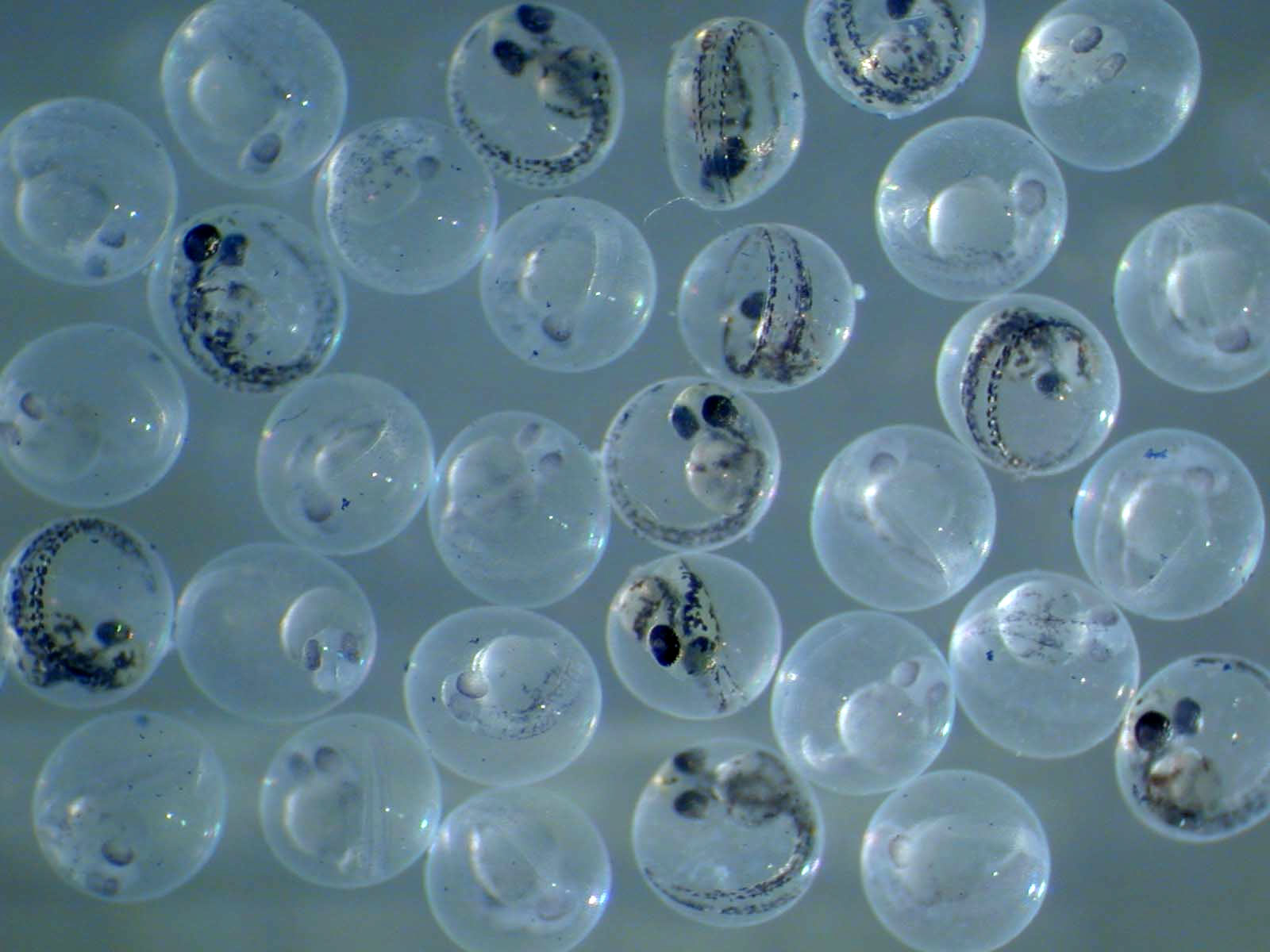
Also, by the way, we’re getting steady production of about 50 eggs a day, and I’ve got about a hundred larvae I’m nursemaiding every day, with more on the way. We’re struggling with the science side of things now that the production side seems to be working smoothly.

zebrafishembryos

It’s not just the pipelines we have to worry about

The new oil extraction techniques involve injecting super-heated steam under high pressure deep into the ground, liquefying the hardened, tarry stuff so it can be extracted. Only…sometimes there is a blowout, and the toxic gunk starts oozing out in all kinds of unexpected places. Exactly as is happening in Cold Lake, Alberta, on the lands of the Beaver Lake Cree First Nation.

“This is a new kind of oil spill and there is no ‘off button,’” said Keith Stewart, an energy analyst with Greenpeace who teaches a course on energy policy and environment at the University of Toronto. “You can’t cap it like a conventional oil well or turn off a valve on a pipeline.

“You are pressurizing the oil bed so hard that it’s no wonder that it blows out. This means that the oil will continue to leak until the well is no longer pressurized,” which means the bitumen could be seeping from the ground for months.

Would you believe the oil companies are keeping the media and photographers away from multiple blowout sites? Of course you would.

But wait! We Americans don’t have to worry — these tar sand extraction blowouts happen around the site of origin. The US gets the benefit of the oil (less the aforementioned pipeline leaks), while Canada poisons itself.

Thanks, guys! This is the season when I see those obscene mega-recreation vehicles tooling around on the highways, and it’s nice to know you’re willing to murder your beaver in particularly nasty ways, and to kill your majestic trees with toxic chemicals leaching into the ground, all so some smug retired Republican can drive a house down the road.

A short argument against immortality

This weekend, I got into an argument with Eneasz Brodski, Eliezer Yudkowsky, and David Brin about immortality. We each took a few minutes to state our position, and I prepared my remarks ahead of time, so here they are, more or less.

First, let me say that I’m all in favor of research on aging, and I think science has great potential to prolong healthy lives…and I’m all for that. But I think immortality, or even a close approximation to it, is both impossible and undesirable.

Why is it impossible? I’ll cite the laws of thermodynamics. Entropy rules. There is no escaping it. When we’re looking for ways to prolong life indefinitely, I don’t think there’s enough appreciation of the inevitability of information loss in any system in dynamic equilibrium, which is what life is — a chemical process in dynamic equilibrium. What that means is that our existence isn’t static at all, but involves constant turnover, growth, and renewal.

We already have a potent defense against death put in place by evolution: it’s called more death. That sounds contradictory, I know, but that’s the way it works. Every cell replication has a probability of corruption and error, and our defense against that is to constrain every subpopulation of cells and tissues with a limited lifespan, with replacement by a slow-growing population of stem cells (which also accumulates error, but at a slower rate). We permit virtual immortality of a lineage by periodic total resets: reproduction is a process that expands a small population of stem cells into a larger population of gametes that are then winnowed by selection to remove nonviable errors…but all of the progeny carry “errors” or differences from the parent.

In all the readings from transhumanists about immortality that I’ve read, none have adequately addressed this simple physical problem of the nature of life, and all have had a naively static view of the nature of our existence.

The undesirability of immortality derives from the proponents’ emphasis on what is good for the individual over what is good for the population. There’s a kind of selfish appeal to perpetuating oneself forever, but from the perspective of a population, such individuals have an analog: they are cancers. That’s exactly what a cancer is: a unit of the organism, a liver cell or skin cell, that has successfully shed the governors on its mortality and achieved immortality…and grows selfishly, at the expense of the organism.

Of course, it then all spun on from that and much more was said on all sides.

The transhumanists certainly had an ambitious vision for the future — they talked rather blithely about living for billions of years or more, but just their idea of individuals living for 10,000 years seemed naive and unsupportable to me. I don’t think it’s even meaningful to talk about “me”, an organic being living in a limited anthropoid form, getting translated into a “me” existing in silico with a swarm of AIs sharing my new ecosystem. That’s a transition so great that my current identity is irrelevant, so why seek to perpetuate the self?

Scenes of violence and horror

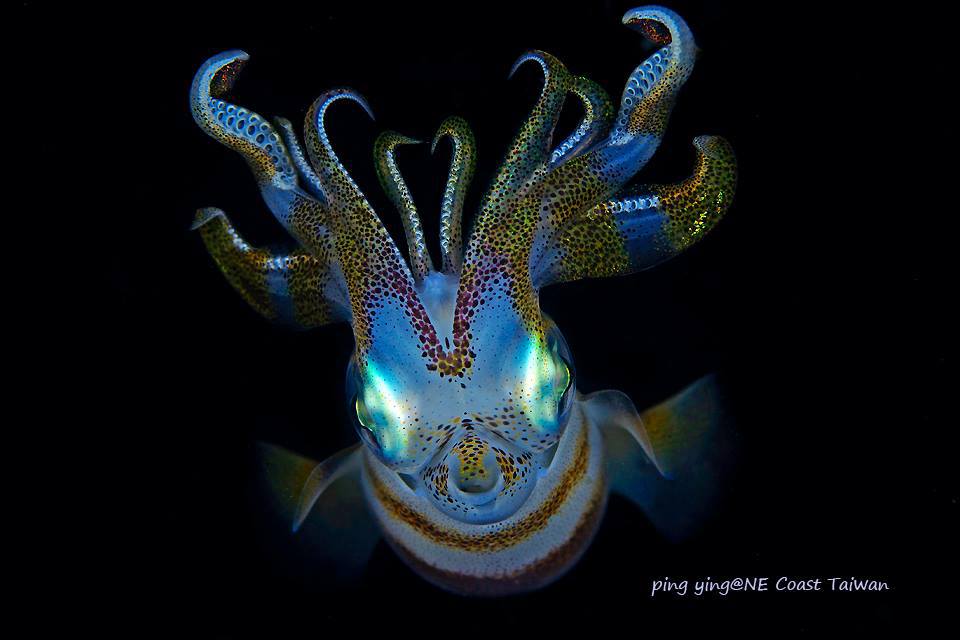
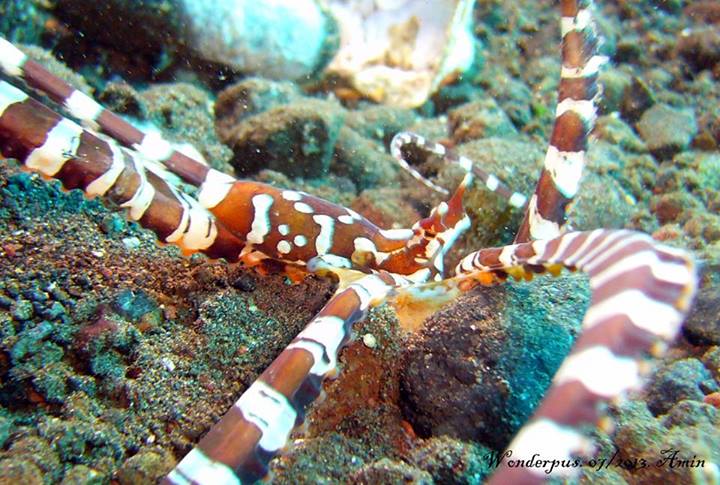
Think about what you’re seeing in this video of the floor of the Sea of Japan: through most of it, small animals are getting gouged and shredded and dragged down into sarlacc pits and chewed up alive or swallowed whole. When the cephalopods show up, it’s a relief — they’re just looking pretty onscreen (or in the case of the baby cuttles, looking adorable).

OK, and the orange frogfish with her hopeful suitor toddling along was also nonviolent. But it’s mostly a horrible world!