A useful guide for spring accidents

It’s early yet — the birds don’t seem to have started nesting yet, although I am starting to hear more of racket in the trees in the morning — but you should be prepared for the inevitable tragic accidents that will occur.
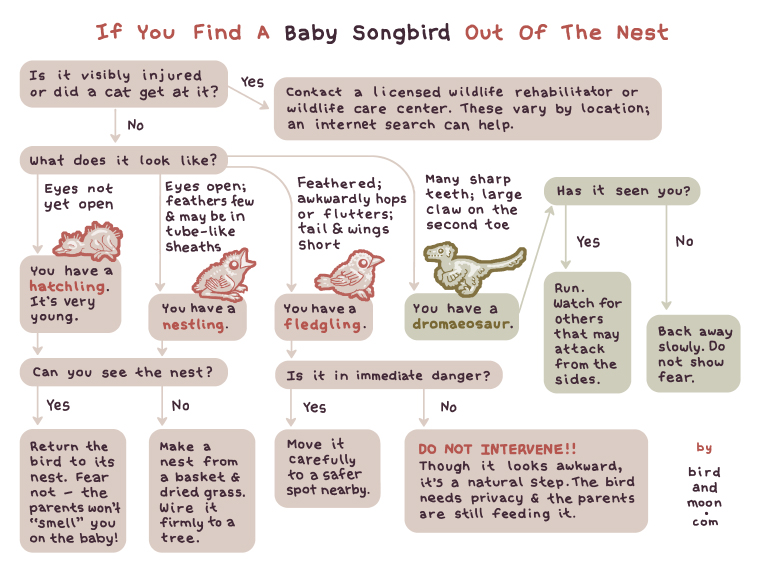
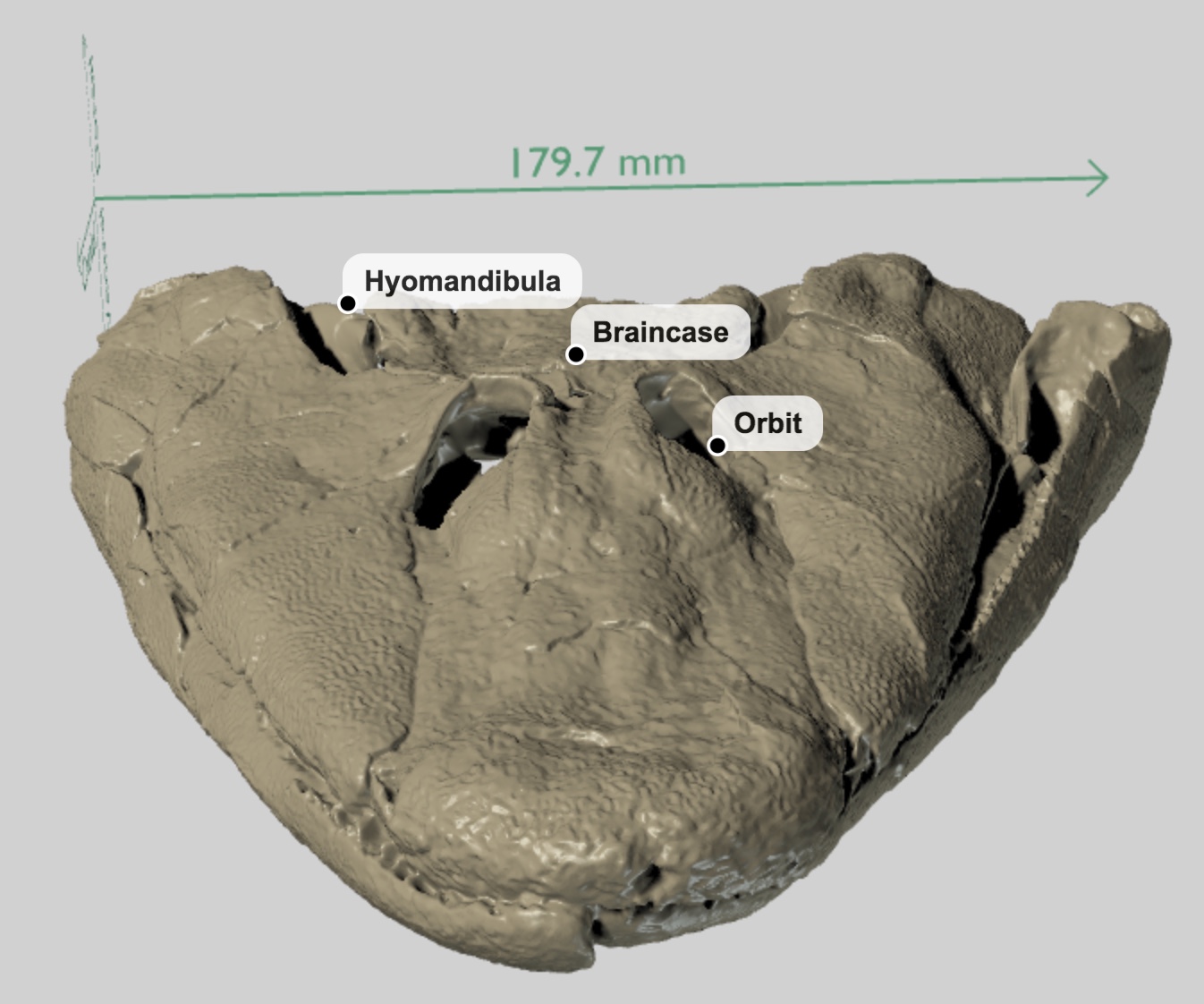
Quite coincidentally, I found this on my back porch yesterday.
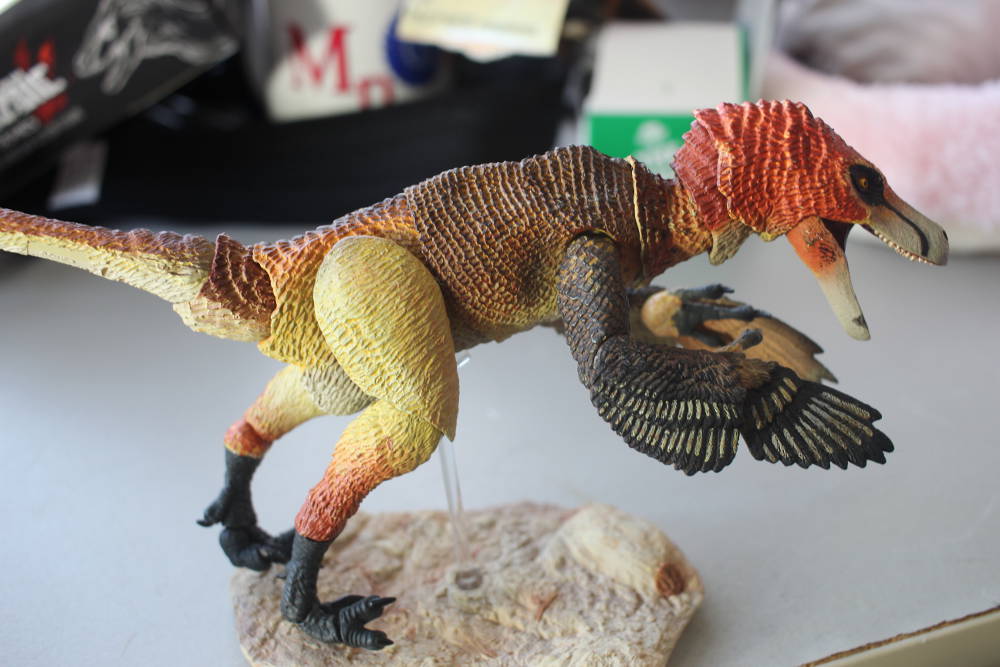
It’s definitely feathered, and doesn’t seem to be in danger, so I guess I should have left it alone. Unfortunately, it is now occupying my desk.

The social media dilemma

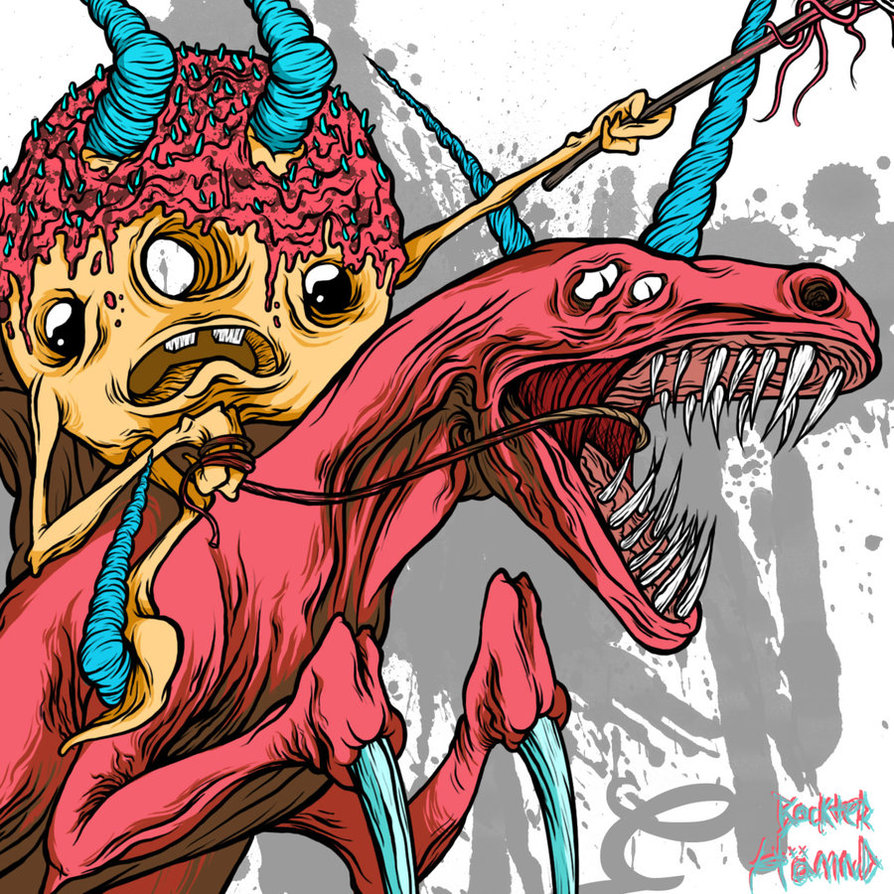
Facebook is objectively evil. But at the same time, it’s so delicious. It’s like an evil donut that you can’t resist nibbling on, but it’s going to kill you in the end. I have friends on Facebook! It’s where I go to get my grandbaby photo fix! I have connections there!

But now I’m thinking I really ought to #DeleteFacebook. The arguments are annoyingly strong.

Some say, “I don’t want to stop using Facebook, I want them to change.” And that is wrong. Keeping up with your friends is good. But Facebook’s business and data model is fundamentally flawed. For you, your data is who you are. For Facebook, your data is their money. Taking it from you is their entire business, everything else is fancy decoration.

Others will say, “I need Facebook because that’s where my audience is, and my livelihood depends on that.” And it is true. But depending on Facebook is not safe in the long-term, as others have learned the hard way. Ever changing, opaque algorithms make it harder and harder to reach “your” audience. So even in this case it’s wise to look for other options and have contingency plans.

It would make it easier for me to leave if all of you would go, too, because it’s not Facebook I like (it’s evil, remember), it’s the people. We need an alternative, but the Zuck seems to have devoured them all. Is there something similar emerging from the non-corporate world, like Mastodon, the better Twitter alternative?

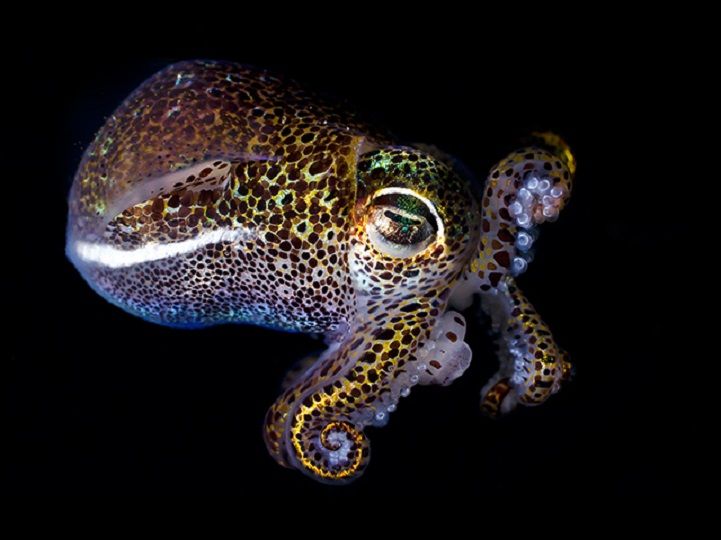
Friday Cephalopod: Female cuttlefish are conspiring together!

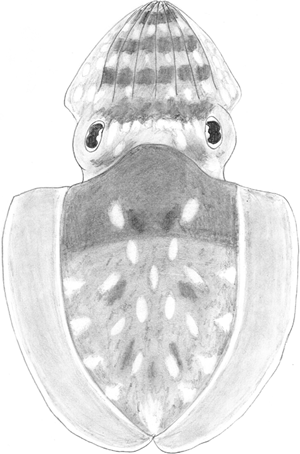
Oh, sure, you all hear about the bold dominance displays of male cuttlefish, and their camouflage, and the flashing color changes, but this is a new one on me. The females have a unique display, that they only show to other females (or to themselves in a mirror).

Here it is an a drawing: elegant, understated, quite nice.

What I find disturbing is that they do not display this signal to any other males — it’s like a secret code for the lady cuttlefishes only. What are they communicating? Are they talking about me? Do they have secrets no male is permitted to discover?

I bet it’s for the cuttlefish whisper network.

M. E. Palmer, M. Richard Calvé, Shelley A. Adamo (2006) Response of female cuttlefish Sepia officinalis (Cephalopoda) to mirrors and conspecifics: evidence for signaling in female cuttlefish. Animal Cognition 9(2):151-155.

Role models for the modern man

Guys — you’ve been told that Nature wants you to be like lobsters, or fiddler crabs, or bighorn sheep. Those suggestions are all superseded by the True Message of Mother Nature — you’ve been doing everything wrong. You are ambulatory bags of sperm, and your one goal should be to fling yourself at a female, who will extract the entirety of your purpose to propagate offspring. Like the deep sea anglerfish. Isn’t she beautiful? Wouldn’t you love to become…attached?

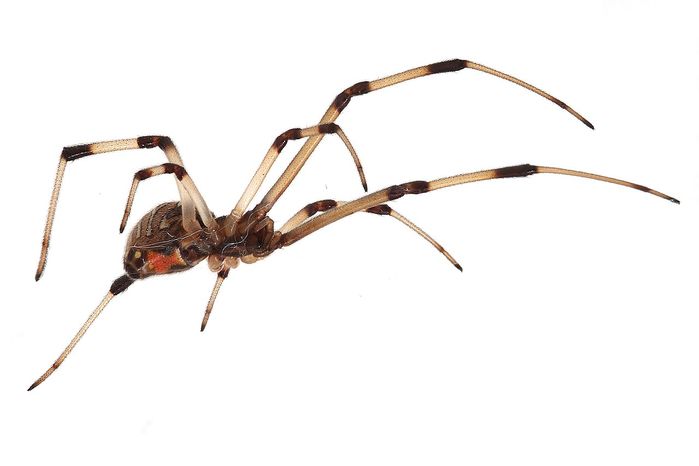
Or behold the Brown Widow Spider. The older the female, the more likely she is to cannibalize her suitors…but at the same time, the more alluring she is to the males, and the more likely they are to discard all discretion and throw themselves at her gonopore, and subsequently, to stagger from their dalliance into her chelicerae.

Just letting you know that you should fear the naturalistic fallacy, if you didn’t already.

There is such a thing as a stupid question

Here’s click-baity title it’s hard to resist: Science Still Can’t Explain This Biological Mystery, But Scientists Like to Pretend Otherwise. Oooh. What is that “biological mystery”? I want to know!

It’s a bad sign, though, when the author has to strain to stave off criticism before he gets around to spilling the beans.

Those of us who embrace science are growing increasingly impatient with religious and spiritual traditions. To us, absolute faith in claims scribed by backwards people thousands of years ago is delusional. We think it’s time for the faithful to get over themselves. The culture wars will end when it finally does. We’re waiting, though not patiently, because much is at stake.

Much is indeed at stake, but we’re actually waiting for the scientific to get over themselves. I say this as an atheist fully committed to science as the best method yet for discovering the nature of reality.

“I’m an atheist, so you know you can trust me” (oops, no, I can’t), “now you scientists better address my demands!” OK, I know who needs to get over themselves, and it isn’t the scientists here.

But finally, what is the mystery?

Between science and faith, I think faith is te more honest about what the scientific community seems perversely averse to explaining: Organisms: what they are and how they emerge from chemistry. Scientists explain organisms away or simply assume them without explaining them. At least the faithful recognize that life’s purposefulness needs explaining, even though their explanation is no explanation at all.

Organisms? One broad, very general word, and we have to explain it to him? Try this. Go up to a plumber, and say “Pipes. Pipes are a mystery. You can’t explain them to me.” Or a refrigerator repairman: “I am confused by cold. Explain it. I think religion is more honest than physics in describing temperature.” What can you say? And he does go on and on trying to emphasize his ignorance — he’s not much different from Bill O’Reilly saying, “Tide goes in, tide goes out, you can’t explain that.” He even has his very own quaint definition of what an organism is.

Unlike inanimate things, organisms engage in functional, fitted effort. Effort is purposeful work, an organism trying to achieve what is functional – of value to it, fitted or representative of its circumstances. Effort value and representation only make sense with respect to organisms. Organisms try to benefit themselves given their environment. Inanimate things don’t.

I’m just going to have to short-circuit this whole argument. The author, Jeremy Sherman, has simply reified the word “organism” to mean something discrete and unitary — it’s a thing that functions. That’s not very useful, especially since he’s setting it up as thing that cannot have a predecessor.

To a biologist, an organism is an integrated complex of replicating chemical reactions. It’s chemistry. The search for some vital distinction between chemistry and biology is over, there isn’t one, and they simply grade into one another. Sherman is erecting an imaginary wall and telling us we can’t get past it, but all the scientists are looking at him and wondering why they should take this challenge at all seriously — show us that there is a wall, don’t ask us to prove your fantasy is non-existent.

So look at viruses. Just chemistry, right? A bit of nucleic acid, a protein and carbohydrate coat. But they replicate, are functional, and are “fit” (I’m not sure that the “fitted” Sherman is talking about is at all similar to the “fitness” a biologist would discuss) in that some viruses are better at replicating than others. We can replicate RNA with just a nucleic acid strand, an enzyme, and a few cofactors.

Sherman nags that scientists have to get over themselves and come up with an explanation that satisfies him. The thing is, though, that lots of scientists are working on origin of life research, and are asking more sensible questions than “Organisms? WTF?”.

Seriously. Mr Sherman needs to get over himself and try reading any of the wealth of books on the subject. It’s not as if there is a shortage of scientists writing in an informed way about the origin of life comprehensibly for the public.

There are many ways to be a science communicator

Science magazine published a peculiar opinion piece titled Why I don’t use Instagram for science outreach. It’s peculiar because it starts off well, and then reaches an ugly conclusion, and because it’s coming from a graduate student who is going to be looking for a job, and there’s no effort to give her anonymity while promoting a controversial opinion and, frankly, bad reasoning. Here’s that promising beginning that could have gone off in a far more productive direction.

Science Sam is a big name on campus. She’s a Ph.D. candidate in the sciences who wants to pursue a career outside of academia, like me. But unlike me, she is our school’s science communication, or #scicomm, superstar. Her Instagram page, which aims to show the “fun and trendy” side of science, was recently celebrated in the school’s newsletter for increasing the public’s trust in scientists. At a career workshop, graduate students were urged to follow Science Sam’s example and use #scicomm to build our personal brands as we enter the job market. I already have an Instagram account, but it reflects my interests in photography and baking more than my love of science. The workshop got me thinking: Should my posts focus less on pastries and more on pipettes?

OK, so I took a look at Science Sam’s Instagram account. I’ll be honest, it personally left me cold. I’m not into Instagram, the format lends itself to superficialities, it’s focused a great deal on selfies of a photogenic young woman, and I won’t be subscribing or following it in the future. But that’s just me. There exists a large instagram-centered subculture, Science Sam is good at fitting into it, and I am glad there is someone doing science outreach there, and doing it well.

I think the @scicomm community would also agree that the point isn’t to conform, but to express yourself freely and share your appreciation of science in ways that fit your personality and interests. There should be no message that says you must be a slender woman with a large fashionable wardrobe and artful skill in applying makeup in order to be a good science communicator — I’m kind of the opposite of all that, so I (and many of the science communicators I know) would be right out of the business from the get go. David Attenborough would also be out of work.

At this point, my advice to this grad student would be yes, focus on the pastries and the photography as a hobby. You be you. There is another huge subculture that is interested in the visual arts and food, and you can be science’s ambassador to those people. If the message you got from your university’s career workshop is that you have to imitate Science Sam, they fucked up. The career workshops I’ve participated in emphasize the breadth of possibilities, and should definitely not be telling new scientists that they have to follow the path of performative traditional femininity. That is one path out of many.

But this grad student confesses to “increasing bitterness” over the example of Science Sam. She has somehow come to the conclusion that another person’s approach is directly harming her.

When I next interview for a job, I won’t have an Instagram page to show that my love of science doesn’t make me boring and unfriendly. Publicly documenting the cute outfit I wear and the sweet smile I brandish in the lab isn’t going to help me build a fulfilling career in a field where women hold less senior positions, are paid less, and are continuously underrated. Time spent on Instagram is time away from research, and this affects women in science more than men. That’s unfair. Let’s not celebrate that.

Jeez, someone needs to talk to whoever put together that career workshop, because at least one student has come out of it with a seriously warped perspective. You shouldn’t have to flash a sweet smile and a cute outfit to get a job (I know, often women are expected to, which not right and grossly unfair), but you do have to have an enthusiasm for the work, which even homely grizzled old geezers like me can achieve. If you’re trying to do science outreach, bitterly policing other people’s approach is a negative — find your own strengths and explore and expand them. You’ll be happier doing that than feeling like you have to conform to a role you detest. There also has to be work/life balance — if Science Sam enjoys spending time on Instagram as her avocation, she should! If there’s something outside of work that makes you happy, you should do it without guilt!

Seriously, too, while there’s absolutely nothing wrong with Science Sam’s angle, and she’s going to be effective at reaching some people, I’d find an instagram account about photography much more interesting. So would other people. Let a thousand flowers bloom.

I really hope whoever was in charge of that career workshop is feeling rebuked by the fact that the bitterness it invoked was highlighted in Science.