
Little Marco Rubio has taken decisive action and ended an oppressive policy.
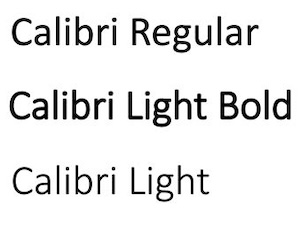
U.S. Secretary of State Marco Rubio on Tuesday ordered diplomats to return to using Times New Roman font in official communications, calling his predecessor Antony Blinken’s decision to adopt Calibri a “wasteful” diversity move, according to an internal department cable seen by Reuters.
The department under Blinken in early January 2023 had switched to Calibri, a modern sans-serif font, saying this was a more accessible font for people with disabilities because it did not have the decorative angular features and was the default in Microsoft products.
…
“To restore decorum and professionalism to the Department’s written work products and abolish yet another wasteful DEIA program, the Department is returning to Times New Roman as its standard typeface,” the cable said.
Yay! I feel lighter and freer already — Calibri is a woke font, after all.
Unfortunately, Calibri is a Microsoft font that isn’t automatically installed on Mac systems, so I guess I won’t be sending any diplomatic messages in the near future.

To me, Times New Roman is more of a fatty font.
I thought we wanted to get rid of the fatsos.
Obligatory Comic Sans reference.
I have Calibri on my Mac, and have had for years. Perhaps that’s because I’ve had Microsoft Word and Excel installed on my Macs for years…business you know. I’m not really sure when I first got them. It’s been 41 years since I first started using Macs doing Mac software testing for Apple. I believe we used Microsoft Excel to track bug reports on a Mac at some point in there.
The publisher department of our organization with decades of experience in the field, knows that for many people with less than perfect eyesight and as has been used as the most readable for decades, serif fonts (not necessarily times new roman) are easier to read in long written passages. Also, though this comment will be in a serif font, sans serif fonts often make it difficult to discern the difference among small ‘l’, numeral one ‘1’ and a capital ‘I’ without a clear context included.
Yeah, I know how to get calibri — just download the microsoft office installer, then extract the font resources from that. I’m just not interested in that particular font.
Good. Easier for real countries to detect at a glance that any “official” documents put out by the offices of pustulating Rubio contain nothing but shit.
I only pay attention to government missives in Monotype Corsiva. No other font commands my assent.
For years, the big battle in publishing has been serif versus san serif fonts. My eyes aren’t as good as they used to be but I still prefer san serif…which is what I’m using right now to edit this message. I find san serif easier to read. In any car, it’s been demonstrated repeatedly that people don’t read by identifying individual letters except the first and last one. All reading is by context.
Inquiring minds want to know: If they’re redoing their templates, who got that contract? And if they’re republishing their comms, who got that contract?
Perhaps someone should complain to Don Dong, Hexshit, Marco, and the gang that serif fonts are kind of girlie with all those frilly bits.
I did look, and most studies show fuck-all difference. Nothing really recent, but.
However, this commercial site does take a stance: https://www.teachingvisuallyimpaired.com/font-legibility.html
(Sorry, shermanj, but the opposite conclusion to yours)
Me, I do think font (typeface) size matters more than the style, so long as it’s not over-elaborate.
I find it absurd that such an ordinary typeface can be considered “wasteful.” If it was say, Jokerman, then I’d be worried over ink being used in printouts within a large organization.
Both Times New Roman and Calibri are licensed fonts. It would be better to switch to something free.
Since computers are not going away, and might be running things soon, a modern font with clear distinction between numeral zero and upper case ‘O’, between upper case ‘I’ and lower case ‘l’ and numeral ‘1’ would be a good idea. A large government adopting good fonts would help drive its adoption in the wider world.
Times New Roman is actually my favorite font, but it wouldn’t be a big deal either way to me. Dragging claims about DEI into it is a typically ludicrous move by the administration.
Precisely, springa73.
UK analogue: https://www.politico.eu/article/uk-push-crown-logo-pint-glass-brexit/
Totally agree about wanting to distinguish “I”, “l” and “1”, along with “O” and “0”. It’s a minor problem for reading text, but things like programming and passwords? Awful if you can’t tell them apart.
Now, there also been the ancient dispute about whether you “slash” the letter O or the zero: somewhat like ø ; IIRC CDC people slashed the letter O, others slashed the zero.
And if you don’t want to pay? Use Computer Modern Roman.
“Totally agree about wanting to distinguish “I”, “l” and “1”, along with “O” and “0”. It’s a minor problem for reading text, but things like programming and passwords? Awful if you can’t tell them apart.”
Ahem.
We’re talking about official communications, which typically don’t use programming or show passwords.
(Of course, anyone who is not utterly incompetent can render any text string in any font at any time)
(ǝɯıʇ ʎuɐ ʇɐ ʇuoɟ ʎuɐ uı ʇxǝʇ ɓuıɹʇs ʇxǝʇ ʎuɐ ɹǝpuǝɹ uɐɔ ʇuǝʇǝdɯoɔuı ʎןʇʇǝɹʇn ʇou sı oɥʍ ʎuɐuo ǝsɹnoɔ ‘ɟO)
SNL – Papyrus (3:05)
Dang it, you jinxed me by minutes! I came here to say ‘Papyrus FTW’
It might also be appropriate to the era to which this administration seems hell-bent on dragging the US back
Seems a little bit anachronistic now. If they are talking about paper text as being official OK. Then it is not unlike formal text in pen and ink calligraphy I would have thought that most of the written messages would all be going digitally by now any way (with the appropriate security protocols)
sure sounds REALLY MPORTANT!
Considering how far backward the US is becoming Marco should ditch Times New Roman and go full Gothic 𝔗𝔥𝔦𝔰 𝔣𝔬𝔫𝔱 𝔦𝔰 𝔢𝔳𝔢𝔫 𝔪𝔬𝔯𝔢 𝔰𝔱𝔲𝔭𝔦𝔡.
Trump’s speeches should be typed in wingdings. They might make more sense that way I reckon!
Rubio’s such an idiot. Eurostile is still the one for me.
Cuneiform is the only governmental font that I will ever actually bother to read. Hieroglyphs are a distant second.
I’m surprised they didn’t go with Antiqua, aka “Normalschrifterlaß.”
.
They really are following the playbook, literally down to the letter. smh
“Decorum and professionalism.” Great, hopefully this means the end of “I don’t give a shit what you call it” and “You’re going ho ho home” style communication.
more could be said on the topic. Much more …
Can the Mericans please make a rule that all Maga people use a specific font, so we can see instantaneously what is BS and what needs attention?
.
BTW I had expected the administration to favor the official font used by Das Vaterland 1933 – 45 but Hegseth clearly lost out to Marco Rubio.
Next important issue: standardise which paperclips to use in the federal administration. And those arab numerals need replacing!
I’m more of a Bookman Antiqua fan muyself, but I would have thought serifs themselves are wasteful. Is Rubio a shill for big ink?
I mean, not to put too fine a point on it, but while there might be all kinds of reasons for preferring one font over another, the one primary one is its ability to be read most quickly and reliably by the greatest number of people. A secondary reason might be that it’s comfortable,and a third that it’s pleasing or beautiful. Down somewhere around the “you flunked out of idiot school” level, is that it’s wasteful.
@21 StevoR
My immediate thought was similar, but more extreme. Wingdings should be the only font allowed for Dump and all of his appointees (direct and indirect). None of them have any use for actual words anyway. And the funny shapes would keep the more cognitively impaired like Brain Worm Kennedy, Hegseth, and the DoJ amused so they could not do any more damage to the Republic.
@9 john wrote: Nothing really recent, but. However, this commercial site does take a stance: https://www.teachingvisuallyimpaired.com/font-legibility.html
I reply: For commercial purposes I agree with the validity of that. Commercial (as in ads, headlines and short passages that are impactful) publishers favor flexibility in font choice.
As a computer dinosaur, I know one reason for serif preference is a holdover from when computer screens and dot matrix printers ruled, serif fonts didn’t ‘scale down’ well, so, often sans serif fonts were used for smaller point sizes.
That supports John’s comment ‘I do think font (typeface) size matters more than the style’
However, many well respected typographic sources have studied ‘readability’ and still conclude that for long passages, serif fonts are less prone to eye strain and facilitate error-free reading.
We are confident in our position, since, our organization has been involved in and studied fonts and page layout parameters in the academic realm as publishers for many decades. We have studied our collection of over 4,000 non-proprietary truetype, screen and print fonts.
This site has an objective and reasoned statement that supports our position:
https://graphicdesign.stackexchange.com/questions/10778/serifs-improve-fast-easy-readability-for-long-text-myth-or-truth
So, old-school wisdom (certainly, how I was taught back in the day) says that serif text improves the readability of long passages of text. The eye passes over the text more easily, there is less “fatigue” on the eye, and reading speed is improved. As I was taught, this is the reason why book typesetters almost always use moderately florid serifs like Garamond. Sans-serifs, according to traditional wisdom, are better for legibility – the letters are simpler, less room for error – and so are better suited for short text, like road signs.
I don’t think wordpress will correctly render this standard html, It didn’t in the preview:
i want to make l point about a11 the fonts.
i want to make l point about a11 the fonts.
ALSO:
@27 birgerjohansson wrote about the official font used by Das Vaterland 1933 – 45
I reply: even some of their writings used Fraktur, the traditional germanic font for many centuries.
@ XXVIII birgerjohansson wrote And those arab numerals need replacing!
I reply: The romans agree M percent.
oops, meant to write: I know one reason for sans serif preference is a holdover from when computer screens and dot matrix printers ruled, serif fonts didn’t ‘scale down’ well, so, often sans serif fonts were used for smaller point sizes.
People do NOT read from context, and neurologists have proven the first letter last letter thing involves more brainpower for longer times. It is demonstrable from images showing what parts of the brain are working how and when to prove that the extra time is from using different modules and from switching them in and out. That is to say, your brain is spending time translating it first into the module it uses for reading and then reads it.
The ability to read from first letter last letter happens so fast that it seems to us that can do it readily that it is facile. But it is not.
shermanj, https://dl.acm.org/doi/fullHtml/10.1145/3502222 has much, much more detail.
TL;DR is there is no ‘one size fits all’, and different people have different prefs for speed and comfort.
This one directly supports your claim: https://direct.mit.edu/desi/article-abstract/39/3/30/116623/The-Influence-of-Fonts-on-the-Reading-Performance but I can only access the abstract.
Matthew @29, “I’m more of a Bookman Antiqua fan myself, but I would have thought serifs themselves are wasteful. Is Rubio a shill for big ink?”
Heh. Not bad, but I reckon wasteful there is not a literal material resource claim (more ink, more toner, more cost), but rather presupposes that any DEIA program is inherently illegitimate, unnecessary, and ideologically objectionable.
Pretty sure the “waste” is asserted as a property of any DEIA program by nature.
(𝓘𝓭𝓮𝓸𝓵𝓸𝓰𝔂, 𝓷𝓸𝓽 𝓮𝓶𝓹𝓲𝓻𝓲𝓬𝓲𝓼𝓶 𝓸𝓻 𝓹𝓻𝓪𝓰𝓶𝓪𝓽𝓲𝓬𝓼)
@ John Morales, of course I know that in this case Rubio was likely saying the action of changing fonts was wasteful, which makes his statement a different but less enjoyable form of stupidity, because it begs the question of what he thinks was wasted. The only way the order was wasteful would be exactly the same way a counter-order would be. I’m sure Rubio considers anything that even hints at DEIA illegitimate, unnecessary, and ideologically objectionable, which is stupid enough, but to consider “wasteful” as a meaningful synonym for any of those makes sense only if one is the sort who considers thinking about things to be a waste of brain space.
Ah, fair enough, Matthew.
(As I said, not bad)
I’m surprised I’ve gone through this thread without making an Undertale reference of some kind. Probably because I couldn’t think of any real jokes. For those unfamiliar with the game, it features a pair of skeleton brothers, Sans (whose text is Comic Sans) and Papyrus (with matching text). Sans is lazy and Papyrus is always trying too hard.