Neat. Always something more to see when it comes to cephalopods.
a miasma of incandescent plasmasays
I think you meant “Pephalocod Flutterby”
Nancy New, Queen of your Regulatory Nightmaresays
I was charmed to discover that Dr Oliver Sacks is a cephalopod fan.
The following quote is from Dr. Sack’s most recent newsletter.
Today, New York Live Arts announces their first annual festival of arts and ideas in New York City, a series called Live Ideas. The inaugural festival, from April 17-21, 2013, is devoted to “The Worlds of Oliver Sacks.” …..
…..
Dr. Sacks says he is honored to have his work celebrated in this way, and adds that the festival “brings together a number of my own passions—music, ferns, cephalopods among them—alongside many of the neurological conditions I have spent a lifetime studying: Parkinson’s disease, Tourette’s syndrome, stereo vision, etc. The connections of these conditions with the dramatic arts is a deep one.”
Oho, it’s the women who have the blankets. I blame Rebecca Watson and Jen McCreight. They stole them from their rightful owners, the male octopods, didn’t they?
mobiussays
Neat. Is it seining for plankton?
JohnnieCanucksays
Wiki says it’s to deter predators by making her appear much larger.
Also some intriguing information about the (much smaller) male’s member breaking off during mating and crawling by itself up inside her mantle. Soon after, the male dies. Perhaps that’s a mercy, there couldn’t be much left to live for.
johnfraser1says
i guess that makes butterflies cephalopods of the air.
I didn’t know that stereo vision was a neurological condition. Oh, wait . . . it must be, mustn’t it? Because eyes don’t see, they just gather light and make it electric. Brains see. Now I get it.
The aquatic flutterby is most engaging. Appears to have a cute little anthro-face too. So, it’s made up of what, 94, 96 percent water? And it doesn’t just dissolve? Must be the salt. Or connective tissue. Strong stuff, connectivity.
Damn things just keep popping up, don’t they?
artificialbenevolencesays
Hi all,
I’ve just joined Freethought blogs and this is my first post.
I’m hoping this Friday Cephalopod thing is a regular event as they are one of the most fascinating classes of animals
I read a paper a couple of years back when I was studying for my degree (marine biology naturally LOL) about cuttlefish signalling saying that when threatened by a predator, cuttlefish were able to simultaneously adapt their colouration in one wavelength of light to deter the predator, and in another wavelength visible only to conspecifics to warn them of the predators presence.
How frickin cool is that!?
I can’t remember the original paper or journal, but there was a New Scientist article that covered it entitled The Secret Language of Cuttlefish which is well worth a read if like me you’re a fan of these mazin molluscs
F [nucular nyandrothol]says
I’m hoping this Friday Cephalopod thing is a regular event
Feel free to browse the archives. :)
How frickin cool is that!?
Insanely frickin’ cool.
BTW, the Digital Cuttlefish uses language quite publicly.
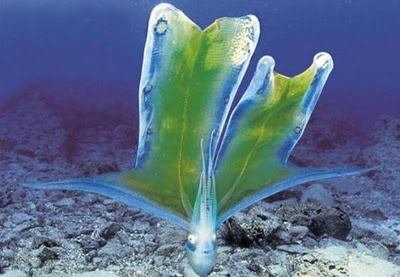


Neat. Always something more to see when it comes to cephalopods.
I think you meant “Pephalocod Flutterby”
I was charmed to discover that Dr Oliver Sacks is a cephalopod fan.
The following quote is from Dr. Sack’s most recent newsletter.
Today, New York Live Arts announces their first annual festival of arts and ideas in New York City, a series called Live Ideas. The inaugural festival, from April 17-21, 2013, is devoted to “The Worlds of Oliver Sacks.” …..
…..
Dr. Sacks says he is honored to have his work celebrated in this way, and adds that the festival “brings together a number of my own passions—music, ferns, cephalopods among them—alongside many of the neurological conditions I have spent a lifetime studying: Parkinson’s disease, Tourette’s syndrome, stereo vision, etc. The connections of these conditions with the dramatic arts is a deep one.”
Crap, is that thing full of chlorophyll?
Vid from FB link
Oho, it’s the women who have the blankets. I blame Rebecca Watson and Jen McCreight. They stole them from their rightful owners, the male octopods, didn’t they?
Neat. Is it seining for plankton?
Wiki says it’s to deter predators by making her appear much larger.
Also some intriguing information about the (much smaller) male’s member breaking off during mating and crawling by itself up inside her mantle. Soon after, the male dies. Perhaps that’s a mercy, there couldn’t be much left to live for.
i guess that makes butterflies cephalopods of the air.
PZ: Not sure if you’ve done this one yet:
http://en.wikipedia.org/wiki/File:Papierboot_Argonauta_200705181139.jpg
I didn’t know that stereo vision was a neurological condition. Oh, wait . . . it must be, mustn’t it? Because eyes don’t see, they just gather light and make it electric. Brains see. Now I get it.
The aquatic flutterby is most engaging. Appears to have a cute little anthro-face too. So, it’s made up of what, 94, 96 percent water? And it doesn’t just dissolve? Must be the salt. Or connective tissue. Strong stuff, connectivity.
Damn things just keep popping up, don’t they?
Hi all,
I’ve just joined Freethought blogs and this is my first post.
I’m hoping this Friday Cephalopod thing is a regular event as they are one of the most fascinating classes of animals
I read a paper a couple of years back when I was studying for my degree (marine biology naturally LOL) about cuttlefish signalling saying that when threatened by a predator, cuttlefish were able to simultaneously adapt their colouration in one wavelength of light to deter the predator, and in another wavelength visible only to conspecifics to warn them of the predators presence.
How frickin cool is that!?
I can’t remember the original paper or journal, but there was a New Scientist article that covered it entitled The Secret Language of Cuttlefish which is well worth a read if like me you’re a fan of these mazin molluscs
Feel free to browse the archives. :)
Insanely frickin’ cool.
BTW, the Digital Cuttlefish uses language quite publicly.