I look forward to Jordan Peterson’s inevitable decline into dishonorable obscurity

Partly because I’m growing tired of the frequent puncturings of his obvious lunacy, even the well-written ones, because he and his fanboys just keep blithering on. The latest, though, by Pankaj Mishra in the New York Review of Books, seems to have had some effect — Peterson is raging on Twitter and threatening to slap him. You know, that “underlying threat of physicality” that Peterson believes to be a necessary part of our social interactions.

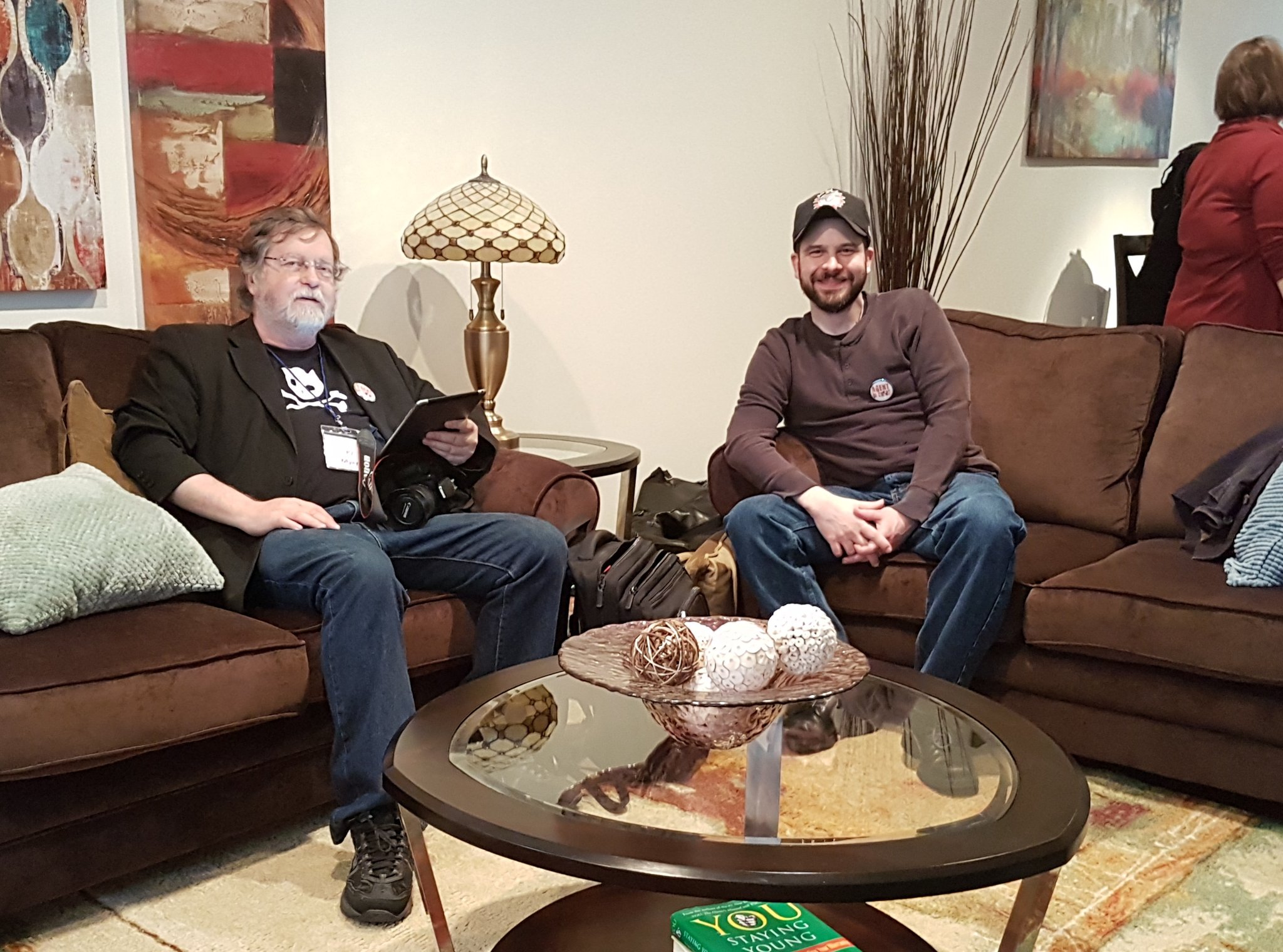
I sympathize. If I met Mishra, I’d have to get physical too, and shake his hand.

Closer examination, however, reveals Peterson’s ageless insights as a typical, if not archetypal, product of our own times: right-wing pieties seductively mythologized for our current lost generations.

Peterson himself credits his intellectual awakening to the Cold War, when he began to ponder deeply such “evils associated with belief” as Hitler, Stalin, and Mao, and became a close reader of Solzhenitsyn’s The Gulag Archipelago. This is a common intellectual trajectory among Western right-wingers who swear by Solzhenitsyn and tend to imply that belief in egalitarianism leads straight to the guillotine or the Gulag. A recent example is the English polemicist Douglas Murray who deplores the attraction of the young to Bernie Sanders and Elizabeth Warren and wishes that the idea of equality was “tainted by an ideological ordure equivalent to that heaped on the concept of borders.” Peterson confirms his membership of this far-right sect by never identifying the evils caused by belief in profit, or Mammon: slavery, genocide, and imperialism.

Reactionary white men will surely be thrilled by Peterson’s loathing for “social justice warriors” and his claim that divorce laws should not have been liberalized in the 1960s. Those embattled against political correctness on university campuses will heartily endorse Peterson’s claim that “there are whole disciplines in universities forthrightly hostile towards men.” Islamophobes will take heart from his speculation that “feminists avoid criticizing Islam because they unconsciously long for masculine dominance.” Libertarians will cheer Peterson’s glorification of the individual striver, and his stern message to the left-behinds (“Maybe it’s not the world that’s at fault. Maybe it’s you. You’ve failed to make the mark.”). The demagogues of our age don’t read much; but, as they ruthlessly crack down on refugees and immigrants, they can derive much philosophical backup from Peterson’s sub-chapter headings: “Compassion as a vice” and “Toughen up, you weasel.”

Peterson’s response:

Yeah, if those quotes were attributed to me, I’d be pissed off, too.

There is such a thing as a stupid question

Here’s click-baity title it’s hard to resist: Science Still Can’t Explain This Biological Mystery, But Scientists Like to Pretend Otherwise. Oooh. What is that “biological mystery”? I want to know!

It’s a bad sign, though, when the author has to strain to stave off criticism before he gets around to spilling the beans.

Those of us who embrace science are growing increasingly impatient with religious and spiritual traditions. To us, absolute faith in claims scribed by backwards people thousands of years ago is delusional. We think it’s time for the faithful to get over themselves. The culture wars will end when it finally does. We’re waiting, though not patiently, because much is at stake.

Much is indeed at stake, but we’re actually waiting for the scientific to get over themselves. I say this as an atheist fully committed to science as the best method yet for discovering the nature of reality.

“I’m an atheist, so you know you can trust me” (oops, no, I can’t), “now you scientists better address my demands!” OK, I know who needs to get over themselves, and it isn’t the scientists here.

But finally, what is the mystery?

Between science and faith, I think faith is te more honest about what the scientific community seems perversely averse to explaining: Organisms: what they are and how they emerge from chemistry. Scientists explain organisms away or simply assume them without explaining them. At least the faithful recognize that life’s purposefulness needs explaining, even though their explanation is no explanation at all.

Organisms? One broad, very general word, and we have to explain it to him? Try this. Go up to a plumber, and say “Pipes. Pipes are a mystery. You can’t explain them to me.” Or a refrigerator repairman: “I am confused by cold. Explain it. I think religion is more honest than physics in describing temperature.” What can you say? And he does go on and on trying to emphasize his ignorance — he’s not much different from Bill O’Reilly saying, “Tide goes in, tide goes out, you can’t explain that.” He even has his very own quaint definition of what an organism is.

Unlike inanimate things, organisms engage in functional, fitted effort. Effort is purposeful work, an organism trying to achieve what is functional – of value to it, fitted or representative of its circumstances. Effort value and representation only make sense with respect to organisms. Organisms try to benefit themselves given their environment. Inanimate things don’t.

I’m just going to have to short-circuit this whole argument. The author, Jeremy Sherman, has simply reified the word “organism” to mean something discrete and unitary — it’s a thing that functions. That’s not very useful, especially since he’s setting it up as thing that cannot have a predecessor.

To a biologist, an organism is an integrated complex of replicating chemical reactions. It’s chemistry. The search for some vital distinction between chemistry and biology is over, there isn’t one, and they simply grade into one another. Sherman is erecting an imaginary wall and telling us we can’t get past it, but all the scientists are looking at him and wondering why they should take this challenge at all seriously — show us that there is a wall, don’t ask us to prove your fantasy is non-existent.

So look at viruses. Just chemistry, right? A bit of nucleic acid, a protein and carbohydrate coat. But they replicate, are functional, and are “fit” (I’m not sure that the “fitted” Sherman is talking about is at all similar to the “fitness” a biologist would discuss) in that some viruses are better at replicating than others. We can replicate RNA with just a nucleic acid strand, an enzyme, and a few cofactors.

Sherman nags that scientists have to get over themselves and come up with an explanation that satisfies him. The thing is, though, that lots of scientists are working on origin of life research, and are asking more sensible questions than “Organisms? WTF?”.

Seriously. Mr Sherman needs to get over himself and try reading any of the wealth of books on the subject. It’s not as if there is a shortage of scientists writing in an informed way about the origin of life comprehensibly for the public.

“Shameless” implies that there is something to be ashamed of

This story bugs me: it argues that Stormy Daniels is just like Donald Trump in shamelessness. I can agree that her tactics are interesting and she has a good chance of smacking Trump upside the head, but implicit in the story is the idea that she ought to be ashamed, and her refusal puts her in the same plane as Trump. So the story contrasts her with the respectable women who have accused the president of harassment.

Many of the women alleging that Trump victimized them (which Daniels, by the way, does not) have proceeded by insisting on their own respectability: They want nothing from him; they simply spoke up because they’d been harassed or assaulted by a presidential candidate, and they wanted to do the right thing. The Trump campaign’s response was to characterize his accusers as attention-hungry profit-seekers. In one case, he implied that she was too ugly to harass.

OK, but why shouldn’t they have insisted on their respectability? They did nothing wrong. The only thing that prevented them from being effective is the complicity of the media, who have been very willing to downplay women’s concerns. Those characterizations by the Trump campaign should have been a whole big story on their own, and should have brought him down. They weren’t, and they didn’t.

But Stormy Daniels is “different” than other women. She’s shameless.

Stormy Daniels is immune to these attacks. Just as Trump bragged about not paying a dime in taxes — “that makes me smart,” he said during one presidential debate — Daniels is open about her desire to profit. Why wouldn’t she? She says she has a story to sell, and she’s 100 percent open about her desire to sell it. She’s the only person in this story as shameless as the president himself. And the White House is reeling as a result.

It’s a truism at this point that Trump benefited from a tiresome double standard. The reality TV star entered an electoral landscape filled with intelligent and image-conscious suits who understood respectability as the sine qua non of political viability. Trump refused to be respectable. He embraced his image as a corny, narcissistic, overtanned procurer of women’s bodies, and twirled and winked at the mountain of crimes and improprieties he stood accused of. It worked: No single charge could stick for very long. Particularly — and this is the nub — because he didn’t seem to mind. For a scandal to stick to someone, they have to worry about it. Trump may talk endlessly about people “laughing” at the United States, but when it comes to his own image, he has the lifelong rich man’s imperviousness to the opinions of the poor. That has protected him from scandal. His narcissism only extends to those he sees as equals or superiors; everyone else is expendable.

Every point there is correct, but it’s just the bias that bothers me. Daniels is open and honest about her career as a sex worker, and she should be. She has nothing to be ashamed of — she hasn’t lied and swindled and trampled over others (I assume — I suppose she could be the Donald Trump of the porn industry, but I haven’t seen anything to suggest it). To claim that she is shameless implies that she has something to be ashamed of, which assumes that sex work is automatically disgraceful.

Donald Trump, on the other hand, is a corrupt liar who is doing his damnedest to wreck the country, and is engaged in shameful behavior — he is harming people, and harming the nation, which Daniels is not doing. This is not about shamelessness, it’s about honesty, and in that regard Daniels and Trump are completely different.

Maybe the alt-right is non-binary

Jason Wilson writes about the alt-right’s tactics. Here’s one perfect example: Andy Ngo is a kind of inflammatory yellow journalist whose specialty is capturing tiny slices of left wing events that he then distorts into the kind of lie useful for enraging the Fox News/Breitbart crowd. For instance, here’s how he handled a visit by James Damore to Portland State:

In the lead-up to Damore’s appearance, Ngo penned an article for the Wall Street Journal alleging that the event had been threatened, writing that that “we expected controversy. But we also got danger.” The evidence of danger, as reported in Willamette Week, was “two violent threats on Facebook, three diversity events held on campus as counter-programming, and a scornful blog post”.

This was more than enough for Fox News, who ran an item under the headline “Antifa targets ‘Google memo’ author James Damore’s talk at Portland State”.

Impressive. Everything is coming up antifa nowadays. I suspect this post makes me antifa, at this rate.

Then the ever-ridiculous Peter Boghossian chimes in. This is where it gets really interesting, because there is a phenomenon many of us have noticed before: people who like to claim to be on the Left, usually referring to themselves as “classical liberals” or “centrists”, who are remarkably consistent in siding with the Right to deplore anything and everything anyone on the Left does, yet also pay lip service to rejecting the traditional Right. Maybe we ought to start recognizing that the usual political binary is often invalid, and that there are multiple axes of polarization. Maybe we ought to appreciate that someone like me can despise, for example, Bill Donohue, and so can a Boghossian, and at the same time, Boghossian and I can mutually reject each other. It’s amazing! More than two categories? Brains will explode!

Still, people will cluster in domains of mutual sympathy, it’s just that there are definitely many more than two of them. Boghossian helpfully engages in a little taxonomy for us, in the process of saying stupid stuff.

Boghossian does seem to see members of her discipline in a dark hue. At the Damore event, he said that “diversity is a Trojan horse for a political agenda.”

When asked later what was inside the Trojan horse, he said “the diversity they try to create is the most superficial kind of diversity and doesn’t include ideological diversity.”

When asked who “they” were, Boghossian replies “all disciplines infected by postmodernism, and women’s studies and gender studies in particular.

“It’s intersectionality, it’s diversity, it’s those values which are riding in the wake of postmodernity,” he added.

“Jordan Peterson speaks about this, Gad Saad speaks about this, Steven Pinker speaks about this, there’s a whole circle of us speaking about this.”

Despite his criticisms of the campus left, however, Boghossian insists that he is not rightwing, that he “can’t stand Republicans”, and complains about recent accusations that he is “alt-right”. He insists it’s all about Enlightenment values.

Ngo too. “I identify as a centrist if I was forced to answer”, he writes, adding that “Freethinkers is a nonpartisan organization”.

Strange, then, that they, and the movement that Boghossian claims membership of, take such trouble over antagonizing the left, and drawing rightwing attention.

I’m actually kind of impressed here. There are quite a few people mentioned in the article who I, as an outsider to their group, would have lumped together, and there’s Boghossian, unconsciously affirming my taxonomy. Yes — Boghossian, Peterson, Saad, Pinker, they all belong in a single taxon. The defining character seems to be, at least in the context of this excerpt, that they are all pretentious academics who do not understand the meaning of the word “post-modern”, while hating it fiercely, all while huddling under the banner of the Enlightenment, an 18th century movement that they believe entitles them to consider themselves progressive. They also consider themselves liberal while hating diversity in a multicultural nation, and despising gender and women’s studies at universities that are encouraging students, who are mostly women, to examine the complexity of our social and cultural environment.

They’re a weird, regressive bunch. Their clique also includes other people mentioned in the article, like Christina Hoff Sommers, the anti-feminist who calls herself a feminist, and Dave Rubin, the cheerleader for right-wingers who insists he is a centrist, Enlightenment liberal.

I’m perfectly willing to recognize that this is an ugly mess of a beast that is completely different from the ugly mess of a beast called the Republican party. The American landscape is filling up with a diverse collection of shambolic monsters, united only in their willingness to shit on anything that resembles a progressive vision of our future.

Oh, no, it’s the last day of Spring Break!

Crap. I think I blinked and missed it all. What should I do with my last day of freedom, aside from polishing up my preparations for class tomorrow and writing a couple of exams?

I do have to think about proposing something for OrbitCon on 13-15 April. You knew about this, right? An online conference about social justice? You can participate if you have something to say — just submit a proposal.

That’s also the week after the Secular Social Justice conference in Washington DC. I’ll be there, spectatin’ and learning. April is shaping up to be a good month for humanists.

But today…I should probably check my office and make sure there is no surprise grading lurking there. I thought I’d chased it all away, but you can never be sure — it’s sneaky and keeps leaping out at me when I don’t expect it.

There are many ways to be a science communicator

Science magazine published a peculiar opinion piece titled Why I don’t use Instagram for science outreach. It’s peculiar because it starts off well, and then reaches an ugly conclusion, and because it’s coming from a graduate student who is going to be looking for a job, and there’s no effort to give her anonymity while promoting a controversial opinion and, frankly, bad reasoning. Here’s that promising beginning that could have gone off in a far more productive direction.

Science Sam is a big name on campus. She’s a Ph.D. candidate in the sciences who wants to pursue a career outside of academia, like me. But unlike me, she is our school’s science communication, or #scicomm, superstar. Her Instagram page, which aims to show the “fun and trendy” side of science, was recently celebrated in the school’s newsletter for increasing the public’s trust in scientists. At a career workshop, graduate students were urged to follow Science Sam’s example and use #scicomm to build our personal brands as we enter the job market. I already have an Instagram account, but it reflects my interests in photography and baking more than my love of science. The workshop got me thinking: Should my posts focus less on pastries and more on pipettes?

OK, so I took a look at Science Sam’s Instagram account. I’ll be honest, it personally left me cold. I’m not into Instagram, the format lends itself to superficialities, it’s focused a great deal on selfies of a photogenic young woman, and I won’t be subscribing or following it in the future. But that’s just me. There exists a large instagram-centered subculture, Science Sam is good at fitting into it, and I am glad there is someone doing science outreach there, and doing it well.

I think the @scicomm community would also agree that the point isn’t to conform, but to express yourself freely and share your appreciation of science in ways that fit your personality and interests. There should be no message that says you must be a slender woman with a large fashionable wardrobe and artful skill in applying makeup in order to be a good science communicator — I’m kind of the opposite of all that, so I (and many of the science communicators I know) would be right out of the business from the get go. David Attenborough would also be out of work.

At this point, my advice to this grad student would be yes, focus on the pastries and the photography as a hobby. You be you. There is another huge subculture that is interested in the visual arts and food, and you can be science’s ambassador to those people. If the message you got from your university’s career workshop is that you have to imitate Science Sam, they fucked up. The career workshops I’ve participated in emphasize the breadth of possibilities, and should definitely not be telling new scientists that they have to follow the path of performative traditional femininity. That is one path out of many.

But this grad student confesses to “increasing bitterness” over the example of Science Sam. She has somehow come to the conclusion that another person’s approach is directly harming her.

When I next interview for a job, I won’t have an Instagram page to show that my love of science doesn’t make me boring and unfriendly. Publicly documenting the cute outfit I wear and the sweet smile I brandish in the lab isn’t going to help me build a fulfilling career in a field where women hold less senior positions, are paid less, and are continuously underrated. Time spent on Instagram is time away from research, and this affects women in science more than men. That’s unfair. Let’s not celebrate that.

Jeez, someone needs to talk to whoever put together that career workshop, because at least one student has come out of it with a seriously warped perspective. You shouldn’t have to flash a sweet smile and a cute outfit to get a job (I know, often women are expected to, which not right and grossly unfair), but you do have to have an enthusiasm for the work, which even homely grizzled old geezers like me can achieve. If you’re trying to do science outreach, bitterly policing other people’s approach is a negative — find your own strengths and explore and expand them. You’ll be happier doing that than feeling like you have to conform to a role you detest. There also has to be work/life balance — if Science Sam enjoys spending time on Instagram as her avocation, she should! If there’s something outside of work that makes you happy, you should do it without guilt!

Seriously, too, while there’s absolutely nothing wrong with Science Sam’s angle, and she’s going to be effective at reaching some people, I’d find an instagram account about photography much more interesting. So would other people. Let a thousand flowers bloom.

I really hope whoever was in charge of that career workshop is feeling rebuked by the fact that the bitterness it invoked was highlighted in Science.

Petty and vindictive

That’s the message Donald Trump is sending about himself with the firing of Andrew McCabe, 26 hours before he would have earned his full pension for 21 years of service in the FBI. What amazes me is that he thinks he’s sending a positive message.

“a great day for the hard working men and women of the FBI”…I think what those hard-working men and women ought to see is that their retirement is now subject to the whims of a tyrant — that what they earn can be whisked away at the last moment by a president who is going to gloat over his ability to punish them. Every federal employee has got to be questioning how reliable their employer actually is.

Get ready. Trump is surrounding himself with sycophants and is probably thinking of firing Mueller next. Do you think Republican-controlled congress will react responsibly to that?

The kids have the right idea

An asshole pulled a knife at a school meeting to demonstrate that gun control was pointless, because he’d be able to murder the 17 year old girl in front of him.

“I’m considerably larger than you, OK?” the man tells the student in cell phone video recorded during the incident. “If something happened, if I decided to attack you, it would take the cops three to five minutes to come here — probably 10 if the traffic’s bad.”

The man, whose name was not released, apparently disagreed with 17-year-old senior Jade Pinkenberg, who spoke up during the school board meeting to argue against arming teachers.

“What are you going to do now?” the man says, as the teen backs away.

Jesus. You could also pick up a rock outside and kill someone with it. That’s not the point. These weapons enable a violent attitude, and give individuals to commit mass murder in minutes. That’s why we want these weapons removed from society.

Fortunately, the kids in the audience are smarter than Ol’ Knifey.

“I protested peacefully this morning and got suspended,” student Jo Herman tweeted. “A man threatened a kid with a knife at a PTA meeting and got gently escorted from the school. Show me the logic.”